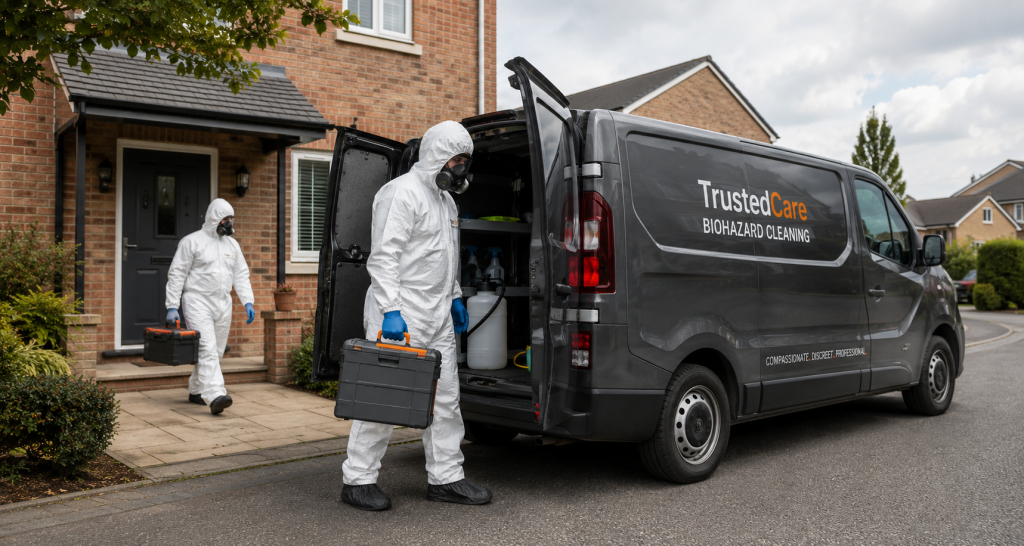
After Death Cleaning Swansea
Need after death cleaning in Swansea? Trusted Care provides discreet specialist cleaning for unattended deaths, odour removal, contamination cleaning, and property sanitisation.
✓ Fully Insured
✓ Insurance Claims Welcome
✓ Nationwide Coverage
✓ Commercial & Domestic
Trusted Care provides discreet after death cleaning in Swansea for families, executors, landlords, letting agents, housing providers and property managers dealing with the condition of a property following a death.
These situations can be emotionally difficult and practically complicated. The property may contain bodily fluids, decomposition-related contamination, persistent odours, affected furnishings or materials that cannot be safely handled using ordinary domestic cleaning methods.
Our role is to assess the affected area, remove or treat contamination and help return the property to a safer and more manageable condition. Every case is handled confidentially and with respect for the person who died, their belongings and those responsible for the premises.
We assist with after death cleaning in private houses, flats, rented accommodation, sheltered housing, supported living properties and other residential settings throughout Swansea and the surrounding area.
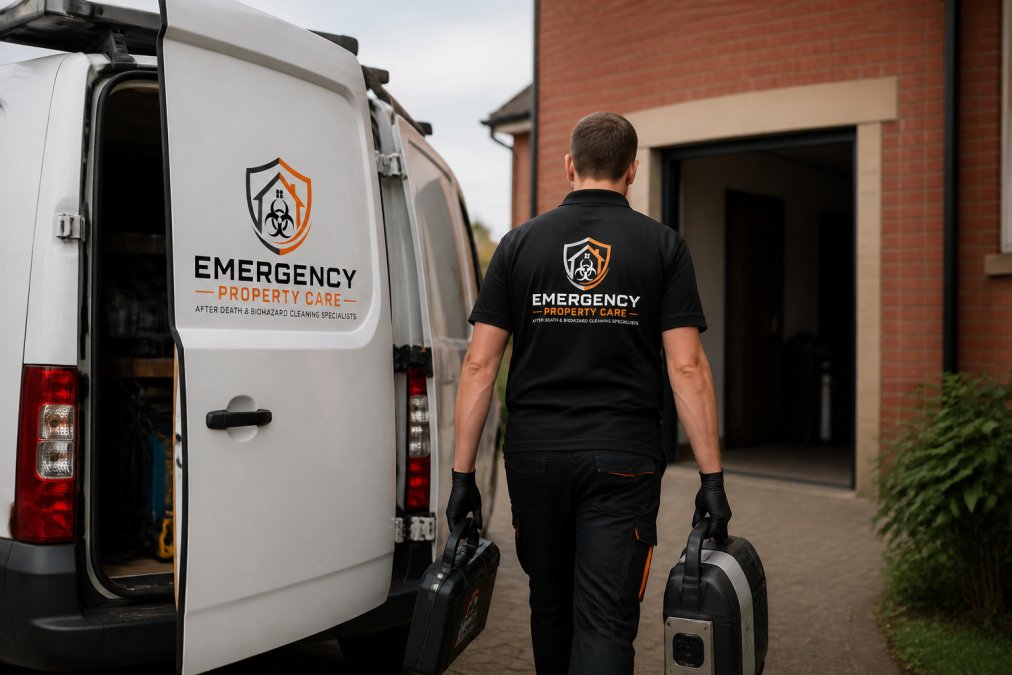
Specialist after death cleaning in Swansea
After death cleaning is different from routine household cleaning. Where a death has affected the surrounding room, biological material can pass into carpets, underlay, mattresses, furniture, floor joints and other absorbent surfaces.
The visible area may only represent part of the problem. Fluids can travel beneath floor coverings, reach the edges of a room or remain within porous materials after the surface has been wiped. Strong odours may also continue if contaminated material remains hidden within the property.
Depending on the circumstances, specialist cleaning may include:
- assessment of the affected room and nearby areas
- removal of bodily fluid and decomposition-related contamination
- cleaning and disinfection of suitable hard surfaces
- removal of contaminated carpets, underlay, furnishings or mattresses where required
- controlled handling and removal of biohazardous waste
- treatment of persistent decomposition odours
- cleaning of adjoining areas where contamination or odour has spread
- preparation of the property for inspection, repair, clearance or reoccupation
The amount of work required depends on the length of time before discovery, the materials affected, ventilation, room layout and whether the contamination has entered the structure of the property.
For broader information about our work, visit After Death Cleaning Services UK.
For confidential advice, request a private callback or call 0330 633 5334 for assistance.
Cleaning after an unattended death
An unattended death is one that is not discovered immediately. The period involved may be relatively short or may extend over several days or longer. As time passes, biological changes can increase the likelihood of fluids, odours and insect activity affecting the surrounding environment.
Where someone has remained undiscovered, contamination may affect:
- carpets and underlay
- laminate, vinyl or timber flooring
- mattresses and upholstered furniture
- skirting boards and lower wall surfaces
- floorboards, joints and gaps beneath coverings
- personal belongings positioned close to the affected area
Opening windows, using air fresheners or applying ordinary disinfectant may temporarily reduce the smell, but these measures do not remove contamination beneath the surface. Effective odour control normally depends on identifying and dealing with the source.
Relatives and property representatives should avoid lifting carpets, moving mattresses or disturbing affected furniture before the area has been assessed. Doing so can increase exposure and transfer contamination into other parts of the property.
Further information is available in After Death Cleaning in the UK: What It Is, When It’s Needed, and What Happens Next, How Much Does After Death Cleaning Cost in the UK? Pricing, Factors and What to Expect and How Long Does After Death Cleaning Take? Timeframes and What Affects Them.
Who may need after death cleaning in Swansea?
The person arranging the work is not always a close family member. After a death, responsibility for the property may pass to an executor, landlord, managing agent, housing officer or another authorised representative.
We regularly assist:
- families dealing with the death of a relative
- executors and estate representatives
- private landlords and letting agents
- housing associations and local housing teams
- supported-living and sheltered-housing providers
- solicitors and professional property managers
- care providers coordinating access to an affected home
The aim is to make the property safer for the next necessary stage. This may involve allowing relatives to enter, enabling an inventory to take place, preparing for repairs or helping a landlord move towards refurbishment and re-letting.
Situations where specialist cleaning may be required
After death cleaning may be needed where:
- a person died alone and was not found immediately
- bodily fluids have affected flooring or furniture
- decomposition odours remain after the property has been ventilated
- flies or larvae are present around the affected area
- a mattress, chair or carpet cannot be cleaned safely in place
- the property contains wider neglect, waste or poor hygiene conditions
- landlords or housing staff cannot safely continue with an inspection or handover
Each property must be assessed according to its actual condition. A contained incident within one room may require targeted treatment, while a prolonged unattended death can involve flooring removal, wider decontamination and more extensive odour treatment.
Why professional cleaning matters
The main concern after a death is not simply how the room looks. Biological contamination can create hygiene risks and may remain within absorbent materials after ordinary surface cleaning.
Specialist cleaning provides a structured way to identify affected materials, control exposure and prevent avoidable spread. It also reduces the likelihood of contractors, relatives or housing staff entering the room before it is ready.
Personal belongings are handled carefully. Items outside the contaminated area can often remain in place for the family or estate representative to review. Where an item has been directly affected and cannot be safely retained, the position should be explained before removal whenever circumstances allow.
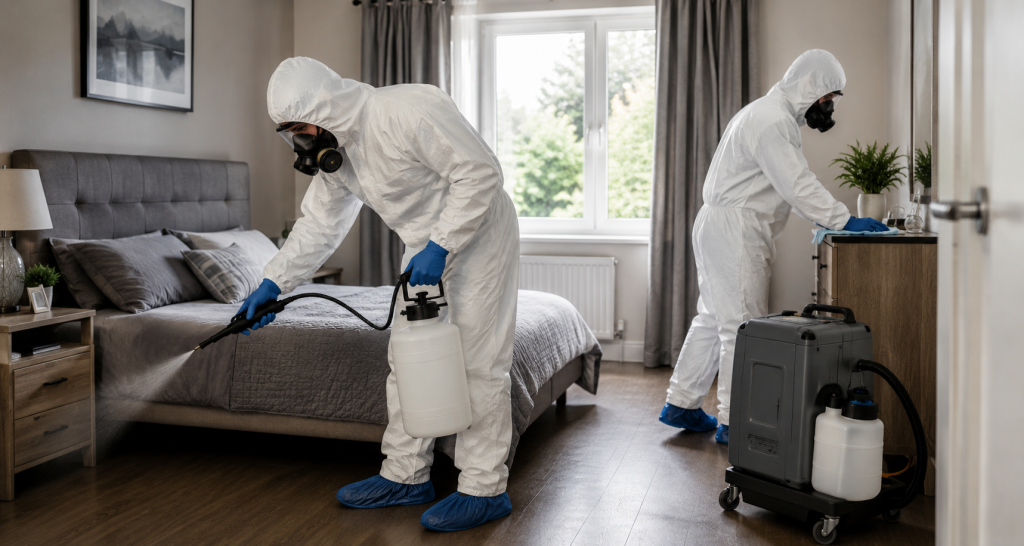
After death cleaning across Swansea’s varied property types
Swansea has a broad mixture of city-centre flats, Victorian and Edwardian terraces, student accommodation, suburban family homes, social housing, coastal properties and newer residential developments. The type and location of a building can affect access, ventilation, the movement of odour and the way contaminated materials need to be removed.
In Swansea city centre, the Marina and SA1 area, a call may involve a modern apartment, converted building or managed block with communal corridors, lifts and controlled entry. Equipment and waste may need to be moved through shared areas, making discretion and careful planning especially important.
Where a property is part of a larger development, access may need to be arranged with a concierge, building manager, landlord or letting agent. Parking restrictions, loading arrangements and lift use can also influence how the work is organised.
Areas such as Uplands and Brynmill contain many older terraces, converted properties, rented homes and houses in multiple occupation. These buildings can have narrow staircases, compact rooms and shared entrances. In some cases, an odour from one room may reach a hallway, landing or neighbouring part of the building before the source is identified.
Older suspended floors are another consideration. Where contamination reaches beneath carpet or underlay, it may enter gaps between boards or spread towards the room edges. Cleaning only the visible surface would not address the source, so the affected layers may need to be lifted and assessed.
Sketty, Killay, Dunvant and parts of Upper Killay include a wide range of semi-detached, detached and long-established family homes. Following a death in a property occupied for many years, relatives may also be dealing with a large number of possessions, estate administration and decisions about sale or probate.
In these situations, the contaminated area can often be separated from the rest of the home. This allows the urgent hygiene work to be completed while unaffected belongings remain available for the family to sort through at a later stage.
Coastal districts such as Mumbles, West Cross, Norton and Langland present a different property mix, including apartments, older houses, retirement accommodation and high-value homes. Access can sometimes be restricted by narrow roads, limited parking or steep approaches, particularly close to the seafront and older residential streets.
Careful planning is therefore needed before attendance, especially where the keyholder is not local or where a solicitor, agent or family representative is coordinating access remotely.
Morriston, Clase, Penlan, Townhill and surrounding districts include a mixture of terraced homes, post-war housing, flats, social housing and privately rented properties. After a death in managed or rented accommodation, several people may become involved, including relatives, housing officers, support workers, contractors and estate representatives.
Clear access arrangements are especially important in these cases. The property should not be entered unnecessarily before the affected area has been assessed, and maintenance teams should not begin work in a contaminated room until specialist cleaning has been completed.
Llansamlet and the eastern side of Swansea combine residential areas with business parks, industrial sites and larger road connections. Properties may include family homes, flats, converted accommodation and housing close to commercial areas. Access is often more straightforward than in the city centre, but key collection, parking and waste removal still need to be planned carefully.
Gorseinon, Loughor, Pontarddulais and Clydach have their own mix of older terraces, suburban housing, sheltered accommodation and newer developments. In these locations, families may be travelling from outside Swansea to manage the property, particularly where the person who died lived alone.
Trusted Care can often coordinate the work through an authorised keyholder, solicitor, landlord, letting agent, executor or housing representative. This can reduce the need for relatives to remain at the property during the cleaning process.
Across Swansea, the layout of the property can influence how contamination and odour behave. In a detached house, the issue may remain largely within one building. In a flat, converted house or HMO, odour can move into shared hallways, stairwells or adjoining rooms.
Where this happens, the source still needs to be treated within the affected property. Spraying communal areas or using fragrances may temporarily mask the smell, but it will not resolve hidden contamination beneath flooring, furniture or absorbent materials.
Swansea also has a large student rental market, particularly around Uplands, Brynmill, Mount Pleasant and areas close to the city centre. Although most after death cleaning cases do not involve student accommodation, HMOs and shared houses can create additional access and privacy considerations where other occupants remain in the building.
In shared accommodation, it may be necessary to restrict access to one room while considering whether odour or contamination has affected communal areas. The circumstances should be handled discreetly so that unrelated occupants are not given unnecessary personal information.
Properties in and around Swansea may also contain wider issues such as hoarding, heavy clutter, spoiled food, pest activity, poor sanitation or long-term neglect. These conditions can make access difficult and may prevent technicians from reaching the affected area safely.
Where wider property problems are present, the biological contamination should normally be addressed first. Further clearance, deep cleaning or property preparation can then be planned once the immediate hygiene risks have been controlled.
Our Swansea coverage includes the city centre, Marina, SA1, Uplands, Brynmill, Sketty, Killay, Dunvant, Mumbles, West Cross, Morriston, Llansamlet, Clase, Penlan, Townhill, Gorseinon, Clydach, Loughor, Pontarddulais and surrounding South Wales communities.
If you are comparing nearby coverage areas, see After Death Cleaning Cardiff, After Death Cleaning Derby, After Death Cleaning Reading and After Death Cleaning Portsmouth.
After death cleaning for landlords and housing providers
A death in rented or managed accommodation can prevent normal property procedures from continuing. Landlords, agents and housing staff may be unable to carry out inspections, inventories, repairs or tenancy handovers until the affected area has been cleaned.
Trusted Care assists private landlords, letting agents, housing associations, supported-living providers and property managers across Swansea. The work can often be arranged without the property owner attending in person, provided access and authorisation have been agreed.
Property professionals may require help with:
- assessing a room following a tenant’s death
- removing contaminated flooring, furniture or mattresses
- treating decomposition odours before contractors enter
- making the property safer for an inventory or inspection
- coordinating access with housing officers, agents or keyholders
- preparing the home for repair, clearance, sale or re-letting
Specialist cleaning is not automatically the same as a full property clearance or refurbishment. The biohazard cleaning stage can be completed first, allowing wider work to continue once the affected area is safer to enter.
Responsibility, access and estate matters
After a death, there may be uncertainty about who is responsible for arranging or paying for cleaning. The answer can depend on the type of property, tenancy arrangements, insurance, estate administration and who has legal control of the premises.
A family member should not assume that they must immediately enter and clean the property themselves. Where contamination is present, the priority is to confirm that the premises have been released by the relevant authorities and that the person arranging the work has appropriate authority.
In rented housing, the landlord or managing agent may need to coordinate the practical response. In an owner-occupied home, an executor, next of kin, solicitor or estate representative may be responsible for making arrangements.
For more information, read Who Is Responsible for After Death Cleaning in the UK? (Landlords, Families & Estates), Does Insurance Cover After Death Cleaning in the UK? What You Need to Know and After Death Cleaning in Rented Properties: Landlord vs Tenant Responsibilities.
Decomposition odour treatment
Decomposition odour can remain after the visible area has been wiped or cleared. This often means that contaminated material is still present within the room.
Potential sources include:
- carpet backing and underlay
- timber flooring and joints
- mattresses and upholstered furniture
- skirting boards and gaps around room edges
- porous belongings close to the affected area
The first stage of effective odour treatment is source removal. Contaminated absorbent materials may need to be taken out, while suitable hard surfaces are cleaned and disinfected.
Deodorisation can then be used as part of the wider process. It should not be relied on as a substitute for dealing with contaminated material.
In apartment blocks, HMOs and converted houses, neighbours may notice an odour in communal areas. This does not automatically mean that adjoining properties are contaminated, but the originating room should be assessed promptly.
What affects the cost of after death cleaning in Swansea?
The price of after death cleaning depends on the actual condition of the property rather than the location alone. Two rooms of a similar size can require very different amounts of work.
Important pricing factors include:
- the size of the affected area
- the severity and spread of contamination
- how long the person remained undiscovered
- whether carpets, flooring or furniture need removing
- the amount of biohazardous waste involved
- the level of odour treatment required
- access, parking, stairs, lifts or restricted loading
- whether wider cleaning or clearance is also needed
A contained incident affecting one small area will usually require less work than an unattended death involving several materials, hidden contamination and persistent odour.
Photographs and accurate property information can sometimes help with an initial assessment. Nobody should enter an unsafe room solely to obtain images.
For more detailed pricing information, see How Much Does After Death Cleaning Cost in the UK? Pricing, Factors and What to Expect.
How the Swansea cleaning process works
The first step is to gather enough information to understand the likely scope of the work. You may be asked about the property type, the room affected, when the death was discovered and whether the premises have been released by the relevant authorities.
We may also ask whether flooring, furniture, mattresses or belongings appear to be contaminated and whether strong odours or insect activity are present.
Once the circumstances are understood, we can explain the likely cleaning process, access requirements and quotation. On arrival, the technicians confirm the affected areas before beginning work.
If hidden contamination is discovered beneath flooring or furniture, this is considered as part of the ongoing assessment. The work should be based on what is actually found rather than only what was visible before cleaning began.
The time required varies. A contained incident may be completed relatively quickly, while more extensive unattended-death cleaning can involve removal, detailed decontamination and odour treatment over a longer period.
Preparing the property for what happens next
The purpose of after death cleaning is to help move the property safely towards its next stage. That stage will be different for every client.
It may involve:
- allowing relatives to enter the property
- completing an inventory or probate valuation
- enabling repair or flooring contractors to begin work
- preparing a rented property for refurbishment
- continuing with clearance or estate administration
- making the home ready for sale or eventual reoccupation
Where further work is needed, specialist cleaning can be treated as the first stage rather than an attempt to complete every property task at once.
Arrange after death cleaning in Swansea
If you are responsible for a property following a death in Swansea, Trusted Care can provide confidential guidance on the likely cleaning requirements.
Before contacting us, gather any information you already have about the affected room, access arrangements and whether the property has been released. Do not enter a contaminated area to collect further details if it may be unsafe.
What to Do Before After Death Cleaning Begins in Swansea
Once the police, ambulance service or other relevant authorities have completed their involvement and access to a property has been released, families can be left wondering what they are supposed to do next.
There can be a natural urge to start cleaning immediately, particularly when relatives want to restore some order to the home.
Where blood, bodily fluids or decomposition are present, however, it can be better to leave the affected area undisturbed until the specialist cleaning requirements are understood.
TrustedCare provides after death cleaning in Swansea for families and those responsible for properties where biological contamination requires professional attention.
Avoid Cleaning the Affected Area With Household Products
Ordinary disinfectants, carpet cleaners and household cleaning products are not necessarily suitable for dealing with an area affected by decomposition or bodily fluids.
Attempting to scrub visible contamination can also make it more difficult to establish how far liquids have penetrated into surrounding materials.
Similarly, using a domestic vacuum cleaner or carpet-cleaning machine within a contaminated area may expose equipment that will subsequently be used elsewhere in the home.
The safer approach is to identify the affected area and determine what can be cleaned, what requires specialist treatment and whether any materials need to be removed.
What If You Need Medication, Documents or Other Essential Items?
Families sometimes need something from the property before a full clean can be arranged.
This might include medication, identification, keys, financial documents or paperwork required for dealing with the person’s affairs.
Whether an item can be safely retrieved depends on where it is located in relation to the affected area.
If an important possession is inside or immediately adjacent to an area containing biological contamination, avoiding unnecessary entry until advice has been obtained can prevent accidental contact or transfer to other surfaces.
Items elsewhere within the property should not automatically be considered contaminated simply because they are in the same home.
Information That Can Help When Arranging the Clean
Providing some basic information about the situation can help establish what may be required before work begins.
Useful details can include:
- The type of property
- The room in which the person was found
- Whether there is visible biological contamination
- Whether carpets, a mattress or furniture appear to be affected
- Whether a strong odour remains inside the property
- How easy the property is to access
- Whether there are large quantities of belongings surrounding the affected area
Photographs can also be useful where they can be taken without somebody entering or disturbing a contaminated area unnecessarily.
This information does not replace assessment of the property, but it can provide a clearer starting point for planning the Swansea after death clean.
You Do Not Need to Prepare the Scene for the Cleaners
Families should not feel that they need to tidy the affected room before specialist cleaners arrive.
Beds do not need to be stripped, contaminated belongings do not need to be bagged and furniture does not need to be moved out of the way beforehand.
These actions can potentially increase contact with contaminated materials.
Leaving the affected area substantially as it is allows the cleaning requirements to be assessed systematically and means relatives do not have to undertake one of the most difficult parts of dealing with the property themselves.
For confidential advice, request a private callback here or call 0330 633 5334 for urgent assistance.
Frequently asked questions about after death cleaning in Swansea
What does after death cleaning in Swansea include?
The work may include assessment of the affected area, removal of contaminated materials, cleaning and disinfection of suitable surfaces, biohazard waste handling, decomposition odour treatment and preparation of the property for inspection, repair or further clearance.
Can you clean a property after an unattended death?
Yes. We assist with properties where a person was not discovered immediately. The amount of work depends on the time before discovery, the materials affected and whether contamination has spread beneath flooring, into furniture or beyond the original room.
How quickly can after death cleaning be arranged in Swansea?
Availability depends on the location, access and scale of the incident. The property must also have been released by the relevant authorities before specialist cleaning can begin. Providing accurate details about the affected room helps us assess the likely response required.
Should family members remove contaminated items first?
No. Relatives should avoid moving affected mattresses, carpets, furniture or belongings. Disturbing contaminated materials can increase exposure and transfer biological material into previously unaffected areas.
Can decomposition odour be removed from a flat or house?
Odour can often be substantially reduced or removed once the contaminated source has been identified and treated. Effective treatment may require removal of affected flooring, underlay, furnishings or other absorbent materials before deodorisation is carried out.
Do you provide after death cleaning for Swansea landlords?
Yes. Trusted Care works with private landlords, letting agents, housing associations, supported-housing providers and property managers following a tenant’s death. Cleaning can help make the premises safer for inspection, repairs, refurbishment or eventual re-letting.
Can work be arranged if the family lives outside Swansea?
Yes. Access can often be coordinated through an authorised keyholder, executor, solicitor, landlord, housing officer or managing agent. The person arranging the work does not normally need to remain at the property throughout the cleaning process.
How much does after death cleaning in Swansea cost?
Pricing depends on the size of the affected area, the severity of contamination, waste removal, odour treatment, property access and whether carpets, flooring, mattresses or furniture need to be taken out. A contained incident will usually cost less than a prolonged unattended-death case involving hidden contamination.
Do you cover Mumbles, Sketty and Morriston?
Yes. Our Swansea coverage includes Mumbles, Sketty, Uplands, Brynmill, Morriston, Llansamlet, Killay, Dunvant, Gorseinon, Clydach, Loughor, Pontarddulais and surrounding South Wales locations.
When can builders or flooring contractors enter the property?
This depends on the extent of contamination and the cleaning completed. Once the biological cleaning stage is finished, we can explain whether the area is ready for inspection, flooring replacement, repair work or further property clearance.
Useful after death cleaning guides
The following independent guides provide further information about the cleaning process, costs, timescales, insurance and responsibility:
- After Death Cleaning in the UK: What It Is, When It’s Needed, and What Happens Next
- How Much Does After Death Cleaning Cost in the UK? Pricing, Factors and What to Expect
- How Long Does After Death Cleaning Take? Timeframes and What Affects Them
- Who Is Responsible for After Death Cleaning in the UK? (Landlords, Families & Estates)
- Does Insurance Cover After Death Cleaning in the UK? What You Need to Know
- After Death Cleaning in Rented Properties: Landlord vs Tenant Responsibilities
Related after death cleaning pages
- After Death Cleaning Services UK
- After Death Cleaning Cardiff
- After Death Cleaning Derby
- After Death Cleaning Reading
- After Death Cleaning Portsmouth
- After Death Cleaning in the UK: What It Is, When It’s Needed, and What Happens Next
- How Much Does After Death Cleaning Cost in the UK? Pricing, Factors and What to Expect
- Who Is Responsible for After Death Cleaning in the UK? (Landlords, Families & Estates)
Confidential support for a property in Swansea
After death cleaning can be a difficult service to arrange, particularly when relatives are grieving, the property is part of an estate or several organisations are involved. Trusted Care provides a calm and practical response focused on the condition of the premises and the work required to make the affected area safer.
We assist with private homes, rental properties, flats, supported accommodation, sheltered housing and other residential settings throughout Swansea. Work can be arranged by families, executors, landlords, agents, housing providers and authorised property representatives.
If the property contains bodily fluids, decomposition contamination, persistent odour or affected flooring and furnishings, avoid entering or disturbing the room unnecessarily. Secure the area where possible and seek specialist guidance before beginning any clearance or repair work.
To discuss after death cleaning in Swansea, visit our contact page, request a private callback or call 0330 633 5334.