Fire Damage Cleaning Glasgow
Specialist smoke, soot, odour and fire-related contamination cleaning for homes, tenements, managed buildings and commercial premises across Glasgow and surrounding areas.
A fire can leave smoke and soot well beyond the room where it started. Residue may travel through a Glasgow tenement close, stairwell, roof space, service void or neighbouring flat before settling on walls, ceilings, furnishings and equipment. Firefighting water can create a separate problem in the affected property and floors below.
TrustedCare supports homeowners, tenants, landlords, factors, housing providers, managing agents, insurers and businesses. We establish the specialist cleaning requirement and help suitable parts of the building move towards drying, repair, decoration, handover, reoccupation or reopening.
First Steps After a Fire in Glasgow
Only enter after the responsible authority has allowed access. Follow Scottish Fire and Rescue Service instructions and notify the insurer, landlord, factor or building manager where relevant. Structural concerns, unsafe utilities and unstable materials need the appropriate qualified professionals.
When contacting TrustedCare, provide the Glasgow postcode, building type, incident date, affected rooms, visible soot, smoke odour, firefighting water, access information and any loss-adjuster or property-management instructions.
What Specialist Fire Cleaning May Include
The correct method depends on what burned, the residue produced and the material underneath. A process suitable for a sealed floor may damage painted plaster, timber, stone, textiles, decorative finishes or sensitive equipment.
Soot Removal
Controlled cleaning of suitable walls, ceilings, floors, doors, fixtures and fittings while limiting unnecessary spread.
Smoke Residue Cleaning
Techniques selected for the deposit and surface rather than using one product throughout every room.
Odour-Source Treatment
Cleaning or removing agreed contaminated sources before appropriate deodorisation is considered.
Contents Sorting
Agreed separation of potentially recoverable belongings from items needing further assessment or authorised disposal.
Fire-Affected Waste
Removal of approved damaged material and cleaning waste within the agreed scope and site arrangements.
Repair Preparation
Leaving suitable cleaned areas ready for drying, inspection, reinstatement or decorating by the next contractor.
Glasgow Buildings Create Distinct Cleaning Challenges
Glasgow includes traditional sandstone tenements, terraces, suburban houses, converted properties, modern apartments and large managed developments. Commercial buildings range from city-centre retail and hospitality venues to offices, workshops, warehouses and industrial units.
Homes and Managed Housing
- Tenement flats and shared closes
- Terraced, semi-detached and detached homes
- Converted buildings and modern apartments
- Rented and housing-provider property
Commercial Property
- Retail, restaurants and hospitality venues
- Offices and mixed-use premises
- Workshops, warehouses and storage units
- Communal and building-managed areas
Porous plaster, timber and masonry can retain residue and odour. Tall tenements may involve several dwellings, a communal close, roof voids and multiple responsible parties. A mixed-use building may need residential access protected while business recovery work proceeds below.
Smoke, Soot and Water in Tenement Buildings
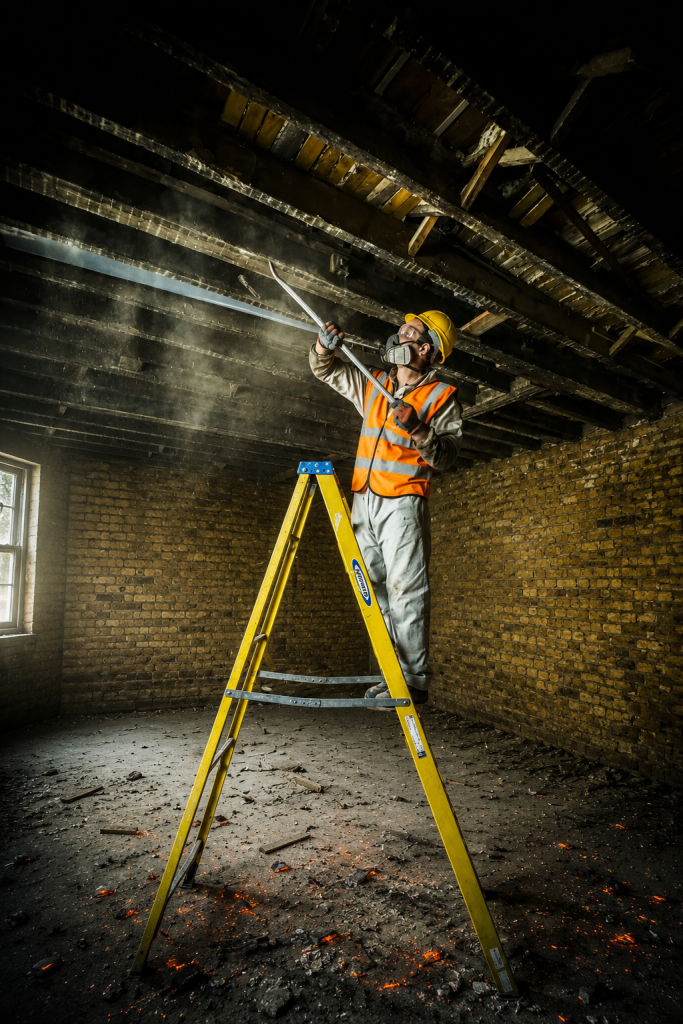
Warm smoke can move up a close, around doors and pipework, through ceiling gaps and into loft areas before cooling and depositing particles. The original flat may have the heaviest damage, while stairs, landings or another dwelling show lighter residue or a persistent odour.
Water can pass through suspended floors and ceilings into lower properties. Document affected private areas and common parts separately, and identify who can authorise work in each location. For further information, see Smoke Odour Removal UK and Soot Removal Cleaning Services UK.
Our Glasgow Fire Cleaning Process
- Initial details: we record the location, incident, building use, affected areas, residue, odour, water and access.
- Assessment: safe and accessible rooms and materials are reviewed to establish the likely specialist cleaning requirement.
- Authorisation: the scope is agreed with the customer, landlord, factor, manager, insurer, loss adjuster or business contact where needed.
- Area controls: routes, cleaner rooms, residents, neighbours, stock and other contractors are considered before work starts.
- Specialist cleaning: suitable methods are applied according to the residue, surface and authorised scope.
- Contents and odour: approved belongings are sorted or treated and contaminated sources are addressed before deodorisation.
- Handover: completed areas are documented for drying, repairs, decoration or the next approved stage.
TrustedCare provides specialist cleaning. Structural certification, electrical testing, gas-safety decisions and fire investigation must be handled by the appropriate qualified professionals.
Factors, Housing Providers and Shared Areas
A fire in a managed block may affect a private dwelling, communal close, entry system, lift, service cupboard or roof space. Ownership, factoring arrangements and insurance can determine who authorises each part of the response.
Good coordination establishes keys, resident communication, protected routes, working hours, waste movement and any access needed by other contractors. Cleaning one flat alone may not resolve residue that has reached common areas or an adjoining unit.
Access Planning in Central and Residential Glasgow
Permit controls, restricted loading, one-way streets, secure entries and limited parking can affect equipment and waste movement. Upper-floor tenements may also involve stairs with no lift, narrow landings and occupied common routes.
Before attendance, identify parking or loading options, entry codes, key holders, floor level, lift availability, protected routes and any hours set by the factor or business. These practical details reduce delays and disruption without making unrealistic promises about timing.
Retail, Hospitality and Industrial Fire Cleaning
Shops, restaurants, offices, workshops and warehouses may contain stock, food-contact areas, records, electronics or machinery that need separate decisions. The business, landlord and insurer should agree what can be cleaned, isolated, stored, assessed by another specialist or authorised for disposal.
Where a business shares a building with residents or neighbouring units, work routes and operating restrictions require careful planning. Visit Commercial Fire Damage Cleaning UK for more information.
Insurance, Evidence and Authorisation
Responsibility depends on ownership or occupancy arrangements, the affected part of the building, the incident circumstances and policies in force. Buildings, contents and commercial cover may involve different insurers and approvals.
If an insurance claim may apply:
- Notify the insurer and obtain a claim reference
- Photograph safely accessible damage before cleaning
- Ask whether a loss adjuster must inspect
- Keep significant affected items until disposal is authorised
- Confirm what emergency and cleaning work can proceed
- Retain quotations, invoices and key correspondence
Only the insurer can confirm cover. Read Fire Damage Insurance Claims UK for practical guidance.
Avoid DIY Cleaning of Widespread Soot
Ordinary vacuuming, brushing, hard wiping or unsuitable chemicals can spread fine deposits and permanently mark finishes. Painting over untreated residue may allow staining and odour to return. Photograph the condition and seek advice before moving affected contents through cleaner parts of the building.
Call TrustedCare – 0330 633 5334Fire Damage Cleaning Costs in Glasgow
Cost depends on building size, affected rooms, residue type and severity, surfaces, odour penetration, firefighting water, contents, waste, access and working conditions. A contained kitchen incident differs from smoke across several tenement floors, a hospitality venue or an industrial unit.
Photographs may help an initial discussion, but an accurate quotation must reflect the condition and approved work. View Fire Damage Cleaning Cost UK →
When Can the Property Be Used Again?
There is no standard waiting period. The responsible parties must consider structure, escape routes, electricity and gas, smoke and soot, damp materials, essential facilities and any insurer, factor or building-manager requirements.
Cleaning does not certify a building as safe. Appropriately qualified professionals must make the relevant safety decisions. See Can You Stay in a House After a Fire?.
Areas Covered Across Glasgow and Nearby
TrustedCare supports fire-affected homes, managed buildings and commercial premises throughout Glasgow and surrounding areas, including:
Other Fire Damage Cleaning Areas
Related Fire and Smoke Damage Services
Helpful Fire Recovery Guides
Discuss Fire Damage Cleaning in Glasgow
Contact TrustedCare with the postcode, property type, incident date, affected areas, visible soot, smoke odour, water damage, contents concerns, access restrictions and any insurer, factor or landlord instructions.
Get a Free Glasgow QuoteCall 0330 633 5334WhatsApp TrustedCareFrequently Asked Questions
What does fire damage cleaning in Glasgow include?
It may include soot removal, smoke-residue cleaning, odour-source treatment, authorised waste removal, contents sorting and preparation for drying, repair or redecoration.
How quickly can fire cleaning be arranged in Glasgow?
Timing depends on safety, location, access, severity, availability and any insurer, factor or property-manager instructions. Contact TrustedCare with the postcode and incident details.
Which areas around Glasgow do you cover?
Coverage includes Glasgow City Centre, Partick, Shawlands, Govanhill, Govan, Pollok, Dennistoun, Maryhill, Bearsden, Bishopbriggs and surrounding areas.
Can smoke spread through a Glasgow tenement?
Yes. Smoke can move through the close, stairs, roof spaces, gaps and service routes. Other flats and communal areas may require separate assessment.
Can insurance cover fire damage cleaning in Glasgow?
Some policies may cover eligible cleaning, but this depends on the policy, circumstances, excess and insurer approval. Notify the insurer before major work where possible.
How much does Glasgow fire damage cleaning cost?
Cost depends on property size, affected rooms, residue severity, odour, water, waste, contents and access. An assessment is normally required for an accurate quote.
Can TrustedCare clean Glasgow commercial premises?
Yes. We can support retail, hospitality, offices, workshops, warehouses and other commercial premises, subject to the agreed scope and access requirements.
Should I move smoke-affected contents before assessment?
Avoid moving affected items through cleaner areas unless necessary for safety. Record their position, seek insurer guidance and agree handling before disposal.
Does TrustedCare certify a fire-damaged building as safe?
No. TrustedCare provides specialist cleaning. Structural, electrical, gas and wider building-safety decisions require appropriately qualified responsible professionals.