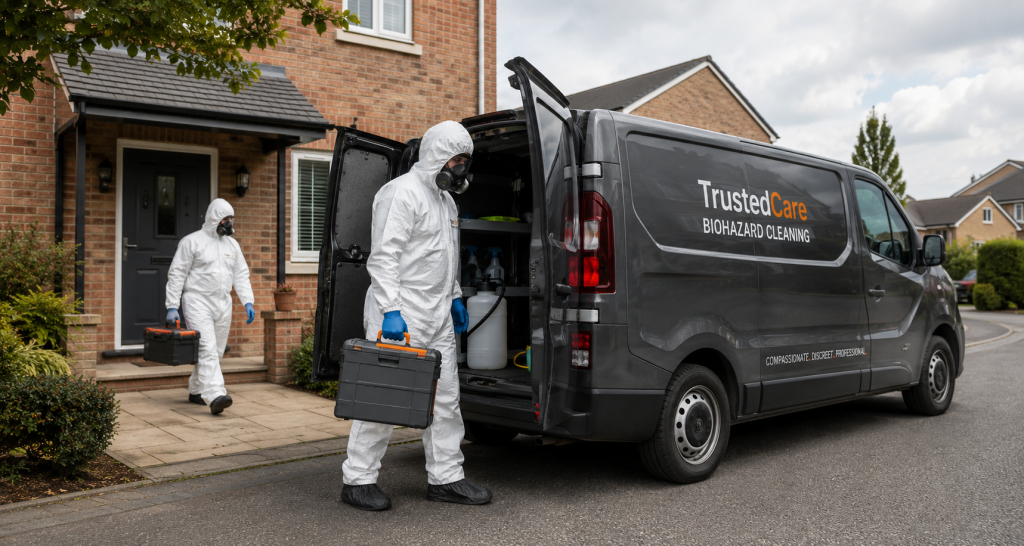
After Death Cleaning Southampton
For professional after death cleaning in Southampton, trusted specialists provide discreet cleaning, odour removal, and property sanitisation after death cleaning Southampton.
✓ Fully Insured
✓ Insurance Claims Welcome
✓ Nationwide Coverage
✓ Commercial & Domestic
Trusted Care provides discreet after death cleaning in Southampton for families, executors, landlords, letting agents, housing providers and property managers who need specialist support following a death within a home or other residential property.
Every situation is different. Some properties require cleaning within one contained room, while others involve decomposition, bodily fluids, persistent odours, contaminated furnishings or wider hygiene concerns that require specialist attention before the property can be safely entered or restored.
Our role is to assess the affected areas, manage biological contamination appropriately and help return the property to a safer condition with professionalism, sensitivity and complete discretion. We understand these situations are often emotionally challenging, so our approach remains calm, respectful and confidential throughout.
We provide after death cleaning throughout Southampton for private homes, rented accommodation, flats, retirement housing, supported living properties and other residential premises where specialist biohazard cleaning is required.
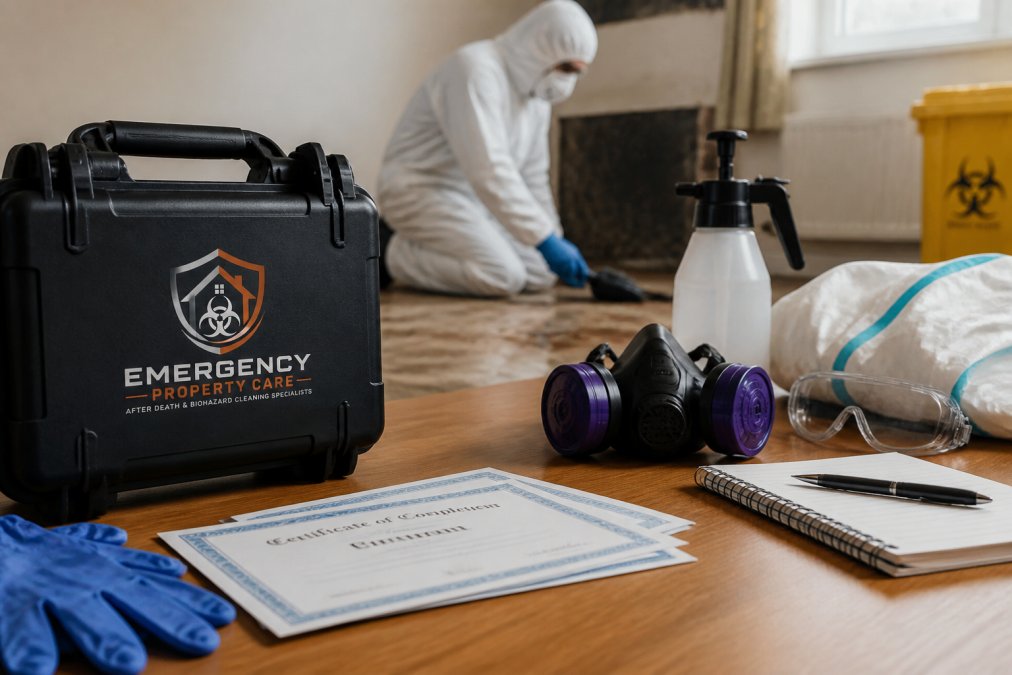
Specialist after death cleaning in Southampton
Cleaning after a death requires considerably more than ordinary domestic cleaning. Biological contamination may affect carpets, underlay, mattresses, furniture, flooring and other absorbent materials that cannot be made safe using household cleaning products alone.
Where somebody has remained undiscovered, contamination may spread beneath visible surfaces while decomposition odours continue long after the initial incident. Professional assessment helps establish exactly which materials have been affected before cleaning begins.
Depending on the circumstances, specialist cleaning may include:
- assessment of affected rooms and surrounding areas
- removal of bodily fluid and decomposition contamination
- cleaning and disinfection of suitable hard surfaces
- safe removal of contaminated carpets, mattresses and furnishings where required
- biohazard waste handling and disposal
- decomposition odour treatment
- cleaning of adjoining areas affected by contamination or odour
- preparing the property for inspection, repair, sale or future occupation
The amount of work required depends on the condition of the property, how long the person remained undiscovered, the materials involved and whether contamination has spread beyond the immediate area.
For more information about our nationwide service, visit our After Death Cleaning Services UK page.
For confidential advice, request a private callback or call 0330 633 5334 for immediate assistance.
Cleaning following an unattended death
An unattended death occurs when somebody is not discovered immediately. As decomposition progresses, biological contamination may spread into surrounding materials while odours become increasingly difficult to remove without specialist intervention.
Contamination following an unattended death can affect:
- carpets and underlay
- timber, laminate and vinyl flooring
- mattresses and upholstered furniture
- skirting boards and lower wall surfaces
- subfloor structures beneath floor coverings
- personal belongings close to the affected area
Opening windows or using air fresheners may temporarily reduce the smell but will not remove the underlying source. Effective treatment generally involves identifying contaminated materials, removing them where necessary and completing specialist cleaning before deodorisation begins.
Relatives and property representatives should avoid moving carpets, mattresses or furniture before the affected area has been assessed. Disturbing contaminated materials can increase exposure and spread contamination into previously unaffected parts of the property.
Further information is available in After Death Cleaning in the UK: What It Is, When It’s Needed, and What Happens Next, How Much Does After Death Cleaning Cost in the UK? Pricing, Factors and What to Expect and How Long Does After Death Cleaning Take? Timeframes and What Affects Them.
Who arranges after death cleaning in Southampton?
The person arranging specialist cleaning is often not the closest relative. Responsibility may rest with an executor, landlord, housing provider, solicitor, managing agent or another authorised representative responsible for the property.
Trusted Care regularly assists:
- families following a bereavement
- executors and estate administrators
- private landlords
- letting agents
- housing associations
- supported living providers
- property management companies
- care organisations coordinating access
Our objective is to make the property safer so that probate, inspections, repairs, refurbishment or eventual occupation can continue without unnecessary delay.
Situations where specialist cleaning may be required
After death cleaning in Southampton may be required where:
- someone has died alone and remained undiscovered
- bodily fluids have affected flooring or furnishings
- persistent decomposition odours remain
- flies or insect activity have developed
- carpets, mattresses or furniture have become contaminated
- landlords need the property prepared before refurbishment or re-letting
- additional issues such as neglect, waste or hoarding are also present
Every property requires an individual assessment. Some incidents remain confined to one room, while others require wider decontamination, removal of affected materials and specialist odour treatment before further work can begin.
Why specialist cleaning is important
The visible condition of a room rarely shows the full extent of contamination. Biological material can penetrate porous surfaces and remain beneath flooring or furnishings even after the surface appears clean.
Professional after death cleaning helps reduce hygiene risks, prevents unnecessary exposure for relatives and contractors, and prepares the property for the next stage of estate administration, repairs or occupation.
Where belongings have not been affected, they can often remain available for relatives to review later. Items directly impacted by contamination should only be removed following proper assessment and, wherever possible, discussion with the responsible party.
After death cleaning across Southampton’s varied property types
Southampton has a diverse housing landscape ranging from city-centre apartments and converted waterfront developments to Victorian terraces, suburban family homes, retirement accommodation and modern residential estates. The age, layout and construction of each property influence how specialist cleaning is carried out and how contamination is managed.
The city centre, Ocean Village and the waterfront contain many apartment blocks where access is controlled through communal entrances, lifts and shared corridors. Careful planning helps minimise disruption while maintaining privacy for residents and neighbouring properties.
Portswood, Shirley and St Denys include a substantial number of rented properties, HMOs and student accommodation associated with the University of Southampton and Solent University. Shared accommodation can create additional access considerations where other occupants remain within the building while specialist cleaning is taking place.
Bitterne, Bitterne Park, Woolston and Weston contain a mixture of long-established family homes, post-war housing and modern developments. Many properties have been occupied by the same families for many years, meaning relatives often face both emotional and practical responsibilities following an unexpected death.
Traditional houses throughout Southampton may include suspended timber floors beneath carpets, allowing biological contamination to reach areas that are not immediately visible. This is one reason why specialist assessment is essential before cleaning begins.
Southampton also serves as a major commercial port and transport hub, bringing together residential neighbourhoods, retirement communities, social housing and large numbers of privately rented homes. It is common for family members to travel from elsewhere in the UK to deal with probate, estate administration and practical arrangements following the death of a loved one, making discreet coordination particularly important.
Areas including Freemantle, Millbrook, Redbridge, Lordshill, Coxford, Thornhill, Harefield, Bassett and Highfield all contain different styles of housing, from older semi-detached properties to modern developments and supported accommodation. Every property presents its own access requirements, construction methods and practical considerations during specialist cleaning.
Where a property forms part of a retirement complex, apartment building or managed housing development, work often needs to be carefully organised with building managers or housing providers to minimise disruption while protecting the privacy of everyone involved.
Southampton’s coastal location also means many homes experience higher levels of humidity throughout the year. While this does not create contamination, moisture can allow decomposition odours to linger within absorbent materials if affected furnishings or flooring remain in place for an extended period before specialist cleaning takes place.
Many enquiries involve family homes that have been occupied for decades. Alongside bereavement, relatives are frequently faced with sorting possessions, arranging probate, organising clearance companies and preparing the property for sale or future occupation. Specialist cleaning allows these next steps to begin once affected areas have been safely addressed.
Where contamination is confined to one part of the property, unaffected belongings can often remain untouched until family members have time to decide what they wish to keep, donate or remove. This helps reduce unnecessary distress while allowing essential hygiene work to be completed first.
Southampton has a significant private rental sector, including student accommodation, HMOs and managed apartment developments. In shared properties, specialist cleaning may need to be coordinated while other residents continue living within the building, requiring careful planning and a discreet approach throughout the process.
Where decomposition odours have spread beyond the original room, neighbouring occupants may become aware that something is wrong long before the source has been identified. Successfully resolving these situations depends on removing the contamination itself rather than attempting to disguise the smell.
Some properties also present wider challenges including hoarding, accumulated waste, pest activity or prolonged neglect. These additional factors often influence both the cleaning process and the time required to prepare the property for its next stage of recovery.
Trusted Care provides after death cleaning throughout Southampton, including Bitterne, Bitterne Park, Shirley, Portswood, Woolston, Weston, St Denys, Highfield, Bassett, Freemantle, Millbrook, Lordshill, Totton, Hedge End, Eastleigh and surrounding Hampshire communities.
If you are comparing nearby locations, see After Death Cleaning Stoke-on-Trent, After Death Cleaning Wolverhampton, After Death Cleaning Coventry and After Death Cleaning Newcastle.
After death cleaning for landlords, agents and housing providers
When a death occurs within rented accommodation, specialist cleaning is often required before maintenance work, inspections, inventories or refurbishment can begin. Biological contamination and persistent odours can delay re-letting if they are not dealt with appropriately.
Trusted Care regularly assists private landlords, letting agents, housing associations, supported housing providers and property management companies throughout Southampton. Cleaning can often be arranged through an authorised keyholder, housing officer or managing agent without requiring relatives to remain at the property.
Property professionals commonly request assistance with:
- assessment following a tenant’s death
- safe removal of contaminated carpets, mattresses and furnishings
- decomposition odour treatment
- preparing properties for inspection
- coordinating access with managing agents or housing officers
- making the property ready for refurbishment or re-letting
Specialist biohazard cleaning is often one stage within a wider property recovery process. Once the affected areas have been cleaned and made safer, clearance companies, decorators, flooring contractors and surveyors can usually continue with the next phase of work.
Responsibility for arranging the cleaning
Following a death, it is not always immediately obvious who should arrange specialist cleaning. Responsibility depends on the ownership of the property, tenancy arrangements, estate administration, insurance and who has legal authority to make decisions regarding the premises.
Relatives should not feel they have to clean an affected room themselves. Where biological contamination is present, obtaining professional advice before disturbing carpets, furniture or other materials is generally the safest approach.
Further guidance is available in Who Is Responsible for After Death Cleaning in the UK? (Landlords, Families & Estates), Does Insurance Cover After Death Cleaning in the UK? What You Need to Know and After Death Cleaning in Rented Properties: Landlord vs Tenant Responsibilities.
Treating decomposition odours
Persistent decomposition odours usually indicate that contaminated materials remain somewhere within the property. Successfully treating the smell requires identifying the source rather than masking it with air fresheners or fragrances.
Potential sources include carpets, underlay, mattresses, upholstered furniture, timber flooring, skirting boards and other porous materials close to the affected area.
Once contaminated materials have been removed where necessary, suitable surfaces can be cleaned, disinfected and treated using specialist deodorisation techniques to help restore the property.
What affects the cost of after death cleaning?
Every quotation is based on the condition of the property rather than the location alone.
Pricing is influenced by:
- the size of the affected area
- severity of biological contamination
- time before discovery
- extent of odour treatment required
- removal of contaminated flooring or furnishings
- quantity of biohazard waste
- access restrictions
- additional cleaning or clearance requirements
Photographs can sometimes help provide an initial indication of the work required, although nobody should enter an unsafe room solely to obtain images.
Further pricing guidance is available in How Much Does After Death Cleaning Cost in the UK? Pricing, Factors and What to Expect.
Our cleaning process
The first stage is understanding the circumstances surrounding the property. We will normally ask about the number of affected rooms, access arrangements, the condition of the property and whether the premises have been released by the relevant authorities.
Once sufficient information has been gathered, we can explain the likely cleaning requirements, discuss the quotation and arrange attendance where appropriate.
During the work, technicians assess both visible contamination and any hidden areas discovered beneath flooring or furnishings. The cleaning process is then adapted to reflect the property’s actual condition rather than assumptions made beforehand.
Completion times vary considerably. Smaller incidents may be resolved relatively quickly, while extensive unattended death cases involving decomposition, odour penetration and contaminated building materials naturally require more time.
Helping the property move forward
Specialist after death cleaning prepares the property for whatever comes next, whether that involves probate, repairs, estate clearance, refurbishment, sale or future occupation.
Once the biohazard cleaning has been completed, family members, estate agents, surveyors, contractors and property professionals can usually continue with the next stage of the property’s recovery.
Arrange after death cleaning in Southampton
If you require confidential advice regarding an affected property in Southampton, Trusted Care can explain the likely cleaning requirements and discuss the most appropriate next steps.
Where possible, have details available about the property type, the affected room and current access arrangements. Avoid entering contaminated areas simply to obtain additional information.
Why Conditions Inside a Property Can Affect an After Death Clean
Two unattended deaths that remain undiscovered for a similar length of time can leave very different cleaning requirements.
The temperature inside the property, ventilation, where the person died and the surrounding furnishings can all influence the condition of the affected area.
A warm, closed room may present a different situation from a cooler and well-ventilated part of a property. This is why the likely scope of after death cleaning in Southampton cannot reliably be determined simply by knowing how many days have passed.
TrustedCare assesses the actual condition of the affected environment before determining what specialist cleaning and decontamination are required.
Should Windows Be Opened to Remove the Smell?
When relatives or property representatives first enter a home with a strong decomposition odour, opening every available window can seem like the obvious response.
Ventilation may reduce the concentration of odour in the air, but it does not remove contamination responsible for producing it.
Once windows are closed again, an untreated source can continue to produce an unpleasant smell.
The priority is therefore to establish where the odour originates and whether biological material has affected furnishings, flooring or other materials.
Odour treatment is most effective when it forms part of the wider decontamination process rather than being used as a substitute for it.
Why the Number of Days Does Not Tell the Whole Story
People sometimes want to know whether a property will require specialist cleaning based on how long the person remained undiscovered.
Time is important, but it is only one factor.
Conditions inside individual Southampton properties can vary significantly. Heating may have been operating, windows may have remained closed, direct sunlight may have warmed a room or the death may have occurred against absorbent furnishings.
The affected area itself therefore provides more useful information than applying a standard cleaning requirement based solely on a particular number of hours or days.
Different Rooms Can Create Different Cleaning Challenges
The location within the home can also affect the work required.
A death occurring on a bed or upholstered furniture can involve highly absorbent materials. An incident within a bathroom may involve very different surfaces. A person found directly on flooring presents another set of considerations.
Specialist cleaning can consequently involve different combinations of removal, cleaning, disinfection and odour treatment depending on the room and materials involved.
The rest of the property can then be assessed separately rather than assuming every area has experienced the same level of contamination.
Assessing the Property Before Making Decisions
Following an unattended death, families may understandably want the property dealt with as quickly as possible.
However, immediately removing furniture, flooring and belongings before establishing what has been affected can result in unnecessary disposal.
Our approach to Southampton after death cleaning is to determine the likely boundaries of the affected area first.
This allows contaminated materials to be dealt with appropriately while possessions and parts of the home that have not been affected can remain separate from the specialist cleaning process.
For confidential assistance, request a private callback or call 0330 633 5334.
Frequently asked questions about after death cleaning in Southampton
What does after death cleaning involve?
After death cleaning may include assessment of the affected area, removal of contaminated materials, specialist cleaning, disinfection of suitable hard surfaces, biohazard waste handling, decomposition odour treatment and preparing the property for repairs, inspection or future occupation.
Can you clean a property after an unattended death?
Yes. Trusted Care provides specialist cleaning following unattended deaths where decomposition, bodily fluids, odours or biological contamination have affected the property. The exact work required depends on the condition of the premises and the materials involved.
How quickly can after death cleaning be arranged in Southampton?
Response times depend on technician availability, access arrangements and the scale of the work required. Before specialist cleaning begins, the property should normally have been released by the relevant authorities and sufficient information should be available to assess the likely scope of work.
Should contaminated carpets or furniture be moved before you arrive?
No. It is generally safer to leave affected furnishings and flooring in place until they have been professionally assessed. Moving contaminated materials can spread biological contamination into unaffected parts of the property.
Can decomposition odours be completely removed?
Persistent odours can often be significantly reduced or eliminated once contaminated materials have been identified, removed where necessary and appropriate cleaning and deodorisation have been completed. Successfully treating the source is far more effective than simply masking the smell.
Do you work with landlords and housing providers?
Yes. We regularly support landlords, letting agents, housing associations, supported housing providers and property managers following the death of a tenant or resident, helping prepare properties for inspection, refurbishment or re-letting.
Can arrangements be made if I live outside Hampshire?
Yes. Many clients live elsewhere in the UK. Cleaning can often be organised through an authorised keyholder, solicitor, estate representative, landlord or managing agent without requiring family members to remain at the property.
How much does after death cleaning in Southampton cost?
Costs depend on the size of the affected area, the severity of contamination, odour treatment requirements, waste removal, access arrangements and whether contaminated furnishings or flooring need to be removed. Every quotation is based on the property’s individual condition.
Which areas around Southampton do you cover?
We cover Southampton city centre, Ocean Village, Bitterne, Bitterne Park, Shirley, Portswood, Woolston, Weston, Highfield, Bassett, Freemantle, Millbrook, Totton, Hedge End, Eastleigh and surrounding Hampshire communities.
When is the property usually ready for repairs or refurbishment?
This depends on the extent of contamination and the work completed. Once specialist biohazard cleaning has been carried out, the property can often progress to inspection, repairs, decoration, flooring replacement or estate administration.
Helpful after death cleaning guides
If you would like more detailed information about after death cleaning, legal responsibilities, insurance or typical costs, the following guides may be useful:
- After Death Cleaning in the UK: What It Is, When It’s Needed, and What Happens Next
- How Much Does After Death Cleaning Cost in the UK? Pricing, Factors and What to Expect
- How Long Does After Death Cleaning Take? Timeframes and What Affects Them
- Who Is Responsible for After Death Cleaning in the UK? (Landlords, Families & Estates)
- Does Insurance Cover After Death Cleaning in the UK? What You Need to Know
- After Death Cleaning in Rented Properties: Landlord vs Tenant Responsibilities
Related after death cleaning pages
- After Death Cleaning Services UK
- After Death Cleaning Stoke-on-Trent
- After Death Cleaning Wolverhampton
- After Death Cleaning Coventry
- After Death Cleaning Newcastle
- After Death Cleaning in the UK: What It Is, When It’s Needed, and What Happens Next
- How Much Does After Death Cleaning Cost in the UK? Pricing, Factors and What to Expect
- Who Is Responsible for After Death Cleaning in the UK? (Landlords, Families & Estates)
Confidential after death cleaning support in Southampton
Dealing with the practical arrangements following a bereavement can be overwhelming, particularly where biological contamination, decomposition odours or unsafe living conditions are involved. Trusted Care provides a discreet, respectful service designed to help families and property professionals move forward with confidence.
We support homeowners, relatives, executors, landlords, letting agents, housing providers and property managers throughout Southampton and the surrounding Hampshire area. Every enquiry is treated sensitively, with advice based on the specific condition of the property rather than assumptions about the circumstances.
If contamination or decomposition is suspected, it is generally advisable to avoid disturbing the affected area until specialist guidance has been obtained. This helps reduce unnecessary exposure while allowing the property to be assessed correctly and cleaned safely.
To discuss after death cleaning in Southampton, visit our contact page, request a confidential callback or call 0330 633 5334.