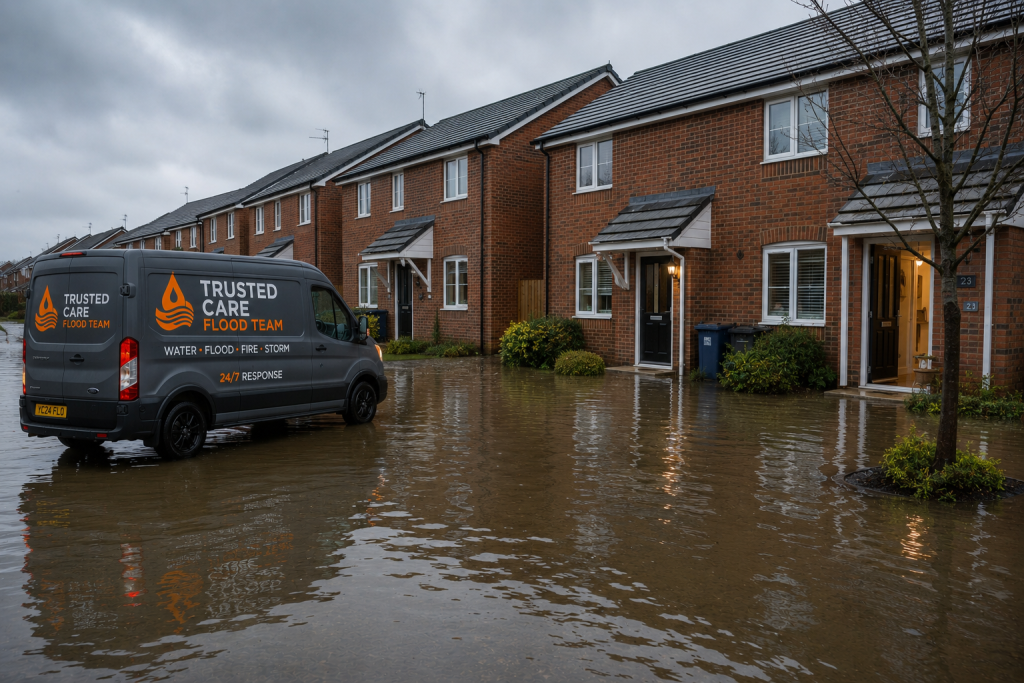
Flood Damage Restoration vs Flood Damage Cleaning
Learn the difference between flood damage restoration and flood damage cleaning, including drying, repairs, insurance and the flood recovery process.
✓ Fully Insured
✓ Insurance Claims Welcome
✓ Nationwide Coverage
✓ Commercial & Domestic
Many people use the terms flood damage cleaning and flood damage restoration interchangeably, but they describe different stages of recovering a property after flooding. Understanding the difference helps property owners know what work may be required and what services are covered by cleaning contractors, drying specialists and restoration companies.
TrustedCare provides specialist flood damage cleaning and drying services across the UK, helping residential and commercial clients recover safely after flood damage.
What Is Flood Damage Cleaning?
Flood damage cleaning focuses on making the property safe and hygienic following flooding.
This may include:
- Water extraction
- Removal of contaminated materials
- Cleaning and disinfection
- Odour treatment
- Preparation for drying
- Safe waste disposal
The aim is to remove water, contamination and immediate health risks.
What Is Flood Damage Restoration?
Flood damage restoration is the wider process of returning a property to its pre-loss condition after cleaning and drying have been completed.
Restoration work may include:
- Replacing plasterboard
- Installing new flooring
- Painting and decorating
- Joinery work
- Electrical repairs
- Kitchen and bathroom reinstatement
Restoration normally begins once the building has reached acceptable moisture levels.
Where Does Structural Drying Fit In?
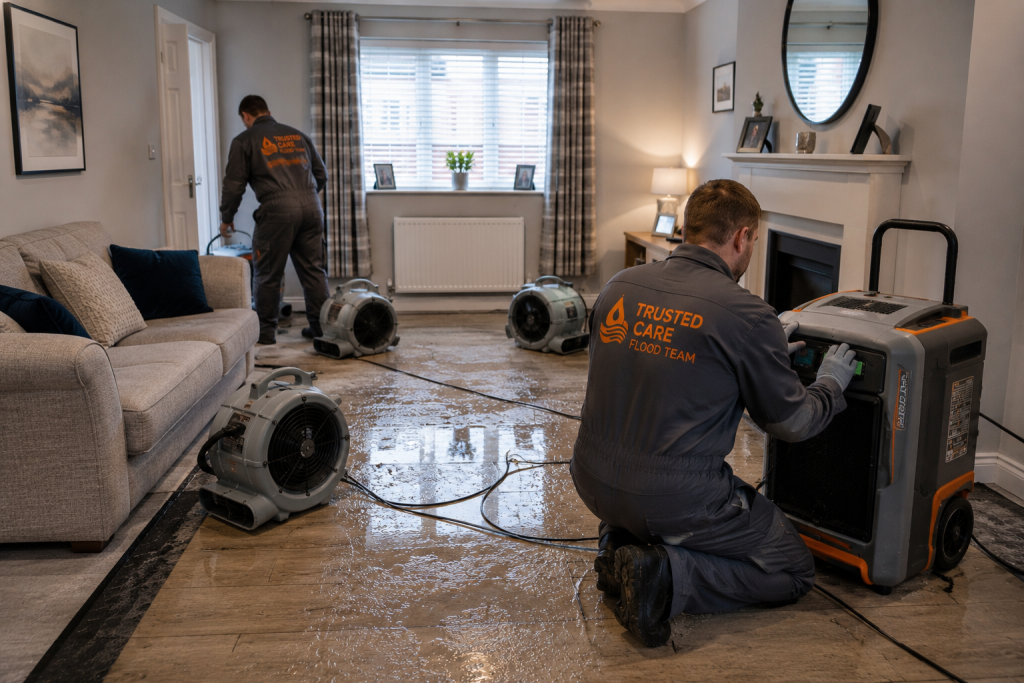
Structural drying sits between cleaning and restoration.
After contaminated materials have been removed and the property has been cleaned, professional drying removes hidden moisture from walls, floors and structural materials before repairs begin.
Related service: Drying After Flood Damage UK
Why Cleaning Comes Before Restoration
Beginning restoration too early can trap moisture inside the building, leading to:
- Mould growth
- Damp problems
- Structural deterioration
- Damage to new finishes
- Insurance disputes
Professional drying and moisture monitoring help determine when restoration work can safely begin.
Insurance and Flood Restoration
Insurance policies may cover different stages of flood recovery depending on the policy wording. Cleaning, drying and restoration may all form part of the overall claim.
Related service: Flood Damage Insurance Claims UK
Helpful guide: Does Insurance Cover Flood Damage Cleaning?
Commercial Flood Recovery
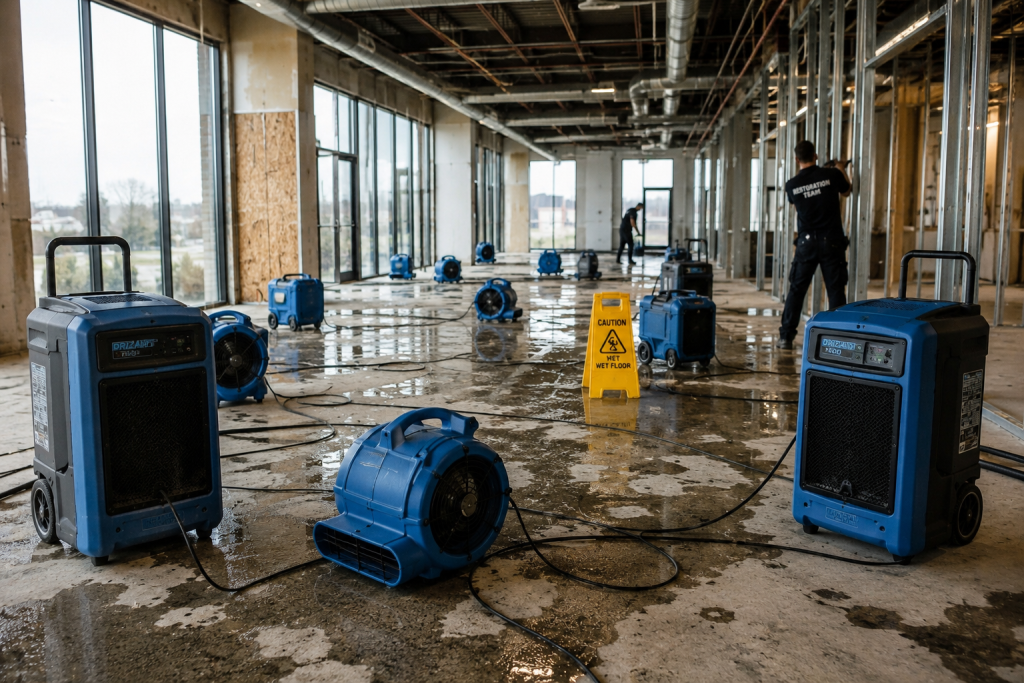
Commercial properties often require phased cleaning, drying and restoration to minimise business interruption. Work may be carried out in stages to allow unaffected areas to remain operational where possible.
Related service: Commercial Flood Damage Cleaning UK
Related Flood Damage Pages
- Flood Damage Cleaning Cost UK
- Emergency Flood Damage Cleanup UK
- Flood Damage Insurance Claims UK
- Drying After Flood Damage UK
- Flood Damage From Burst Pipes UK
- Sewage Flood Cleanup UK
- Commercial Flood Damage Cleaning UK
- Flood Damage Cleaning for Landlords UK
- Can You Stay in a Property After Flood Damage?
- Flood Damage Restoration vs Flood Damage Cleaning
Helpful Flood Damage Guides
- Flood Damage Cleaning UK
- Flood Damage Cleaning Cost UK
- Insurance Cover Flood Damage Cleaning UK
- How Long Does Flood Damage Cleaning Take?
- Can You Live in a Property After Flood Damage?
- Flood Damage Odours and Damp Returning
- Black Water vs Grey Water Flooding
- Who Is Responsible for Flood Damage Cleaning?
- Who Pays for Flood Damage Cleaning?
Frequently Asked Questions
What is the difference between flood damage cleaning and restoration?
Flood damage cleaning removes water, contamination and immediate health risks, while restoration focuses on repairing and reinstating the property after cleaning and drying are complete.
Does drying happen before restoration?
Yes. Structural drying is normally completed before repairs and reinstatement begin to ensure hidden moisture has been removed.
Can restoration begin before the property is dry?
No. Beginning restoration before drying is complete can trap moisture inside building materials and lead to mould growth and further damage.
Does insurance cover flood restoration?
Many insurance policies cover flood restoration where it forms part of an approved flood damage claim, subject to the policy terms and conditions.
Can TrustedCare provide flood cleaning and drying services?
Yes. TrustedCare provides specialist flood damage cleaning, drying and recovery services to support the restoration process.