What Is Salvageable After a House Fire? | TrustedCare
What Is Salvageable After a House Fire?
A practical UK guide to deciding which belongings may be cleaned, which need specialist assessment and which are likely to require replacement.
Many belongings can be saved after a house fire, but appearance alone does not provide a reliable answer. Heat, soot, smoke residue and water used during firefighting can affect different materials in different ways. The condition of each item, the type of residue and the cost or personal value of restoration all matter.
Do not rush to dispose of everything. Where an insurance claim is involved, photograph the damage and speak to the insurer before significant cleaning or disposal, unless an item presents an immediate safety risk. The Association of British Insurers advises policyholders to contact their insurer promptly, keep records and avoid disposing of damaged items before receiving advice.
What to Do Before Sorting Belongings
Only enter the property once the fire and rescue service or other responsible professional has confirmed that access is permitted. Fire can weaken floors, ceilings and stairways, while damaged gas and electrical systems may create risks that are not obvious.
Contact your insurer as soon as practical. Ask whether a loss adjuster needs to inspect the property and whether the insurer requires approval before items are moved, cleaned or discarded. Photograph rooms and individual items where it is safe to do so. Keep a written inventory and retain receipts for emergency purchases or temporary measures.
How Fire, Smoke and Water Affect What Can Be Saved
A specialist does not decide by item type alone. Two similar chairs in the same house may need different treatment because one was close to the fire while the other received only light smoke exposure.
Heat and flame
Charring, melting, warping and cracking can permanently weaken an item or destroy its finish.
Smoke and soot
Residue can travel beyond the fire room and settle on surfaces, inside cupboards and around fittings.
Firefighting water
Water can swell timber, damage paper and textiles, affect electrics and create a need for controlled drying.
The main questions are how porous the material is, how heavily it was affected, whether residue or water has penetrated inside it, and whether cleaning can return it to a suitable condition. Sentimental value can also justify specialist restoration even when replacement would cost less.
Items That Are Often Salvageable
The following materials are often good candidates for cleaning, although their actual condition must still be checked:
- Glass, glazed ceramics and many metal items may be cleaned if they are not cracked, distorted, deeply pitted or otherwise damaged.
- Solid wood furniture may respond to specialist surface cleaning and refinishing when it has not been badly charred or saturated.
- Sealed stone, tile and some hard flooring can often be cleaned once the residue and surface finish have been assessed.
- Tools and hardware may be recoverable through cleaning and corrosion treatment.
- Jewellery and precious metals often survive, although stones, settings and heat damage should be checked by a jeweller.
Cleaning methods must suit both the surface and the residue. Soot from a slow, oxygen-starved fire can behave differently from the dry residue produced when natural materials burn. Using the wrong product can smear the contamination or damage the finish.
Items That Need Professional Assessment
| Item | Why assessment matters | Possible next step |
|---|---|---|
| Clothing, curtains and other textiles | Fibres can retain soot and odour; water exposure can cause dye transfer or microbial growth. | Specialist textile cleaning or replacement, depending on condition and value. |
| Upholstered furniture | Smoke and water may penetrate fabric, foam, fillings and the internal frame. | Inspect the depth of contamination and compare restoration with replacement cost. |
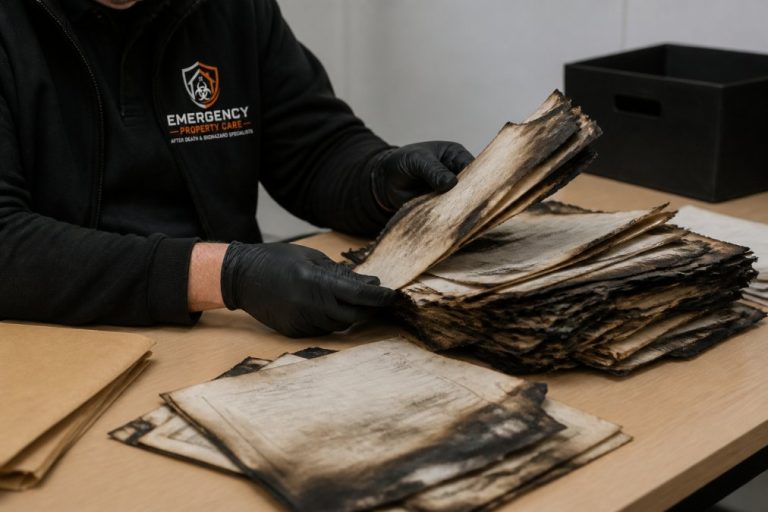
| Books, photographs and documents | Incorrect drying or handling can cause permanent distortion, staining and adhesion. | Document recovery, controlled drying or careful digitisation. |
| Electronics and appliances | Residue and moisture can affect internal components even when the outside looks clean. | Keep switched off and arrange an electrical or specialist assessment. |
| Leather, artwork and antiques | Finishes and dyes can react badly to ordinary cleaners. | Use a conservator or specialist appropriate to the material. |
Need Help Assessing Fire and Smoke Damage?
Tell TrustedCare what happened, where the property is and which rooms or contents are affected. Photographs can help us understand the likely cleaning scope when they are safe to take.
Items That Are Commonly Replaced After a Fire
Some belongings are difficult to clean reliably or safely. Food, medicines and cosmetics affected by heat, smoke, soot or firefighting chemicals should not be used. Follow the product manufacturer, insurer or relevant safety authority when deciding how they should be disposed of.
Heavily charred items, melted plastics and materials that have lost structural integrity are usually unsuitable for restoration. Mattresses, pillows, duvets, stuffed toys and heavily contaminated upholstery may also require replacement because residue or water can penetrate beneath the visible surface.
Do not assume every porous item is automatically a loss. A specialist can consider the contamination, material, time exposed and value of the item. Apart from immediate hazards, obtain the insurer’s advice before disposal so that evidence needed for the claim is preserved.
Can You Clean Soot from Belongings Yourself?
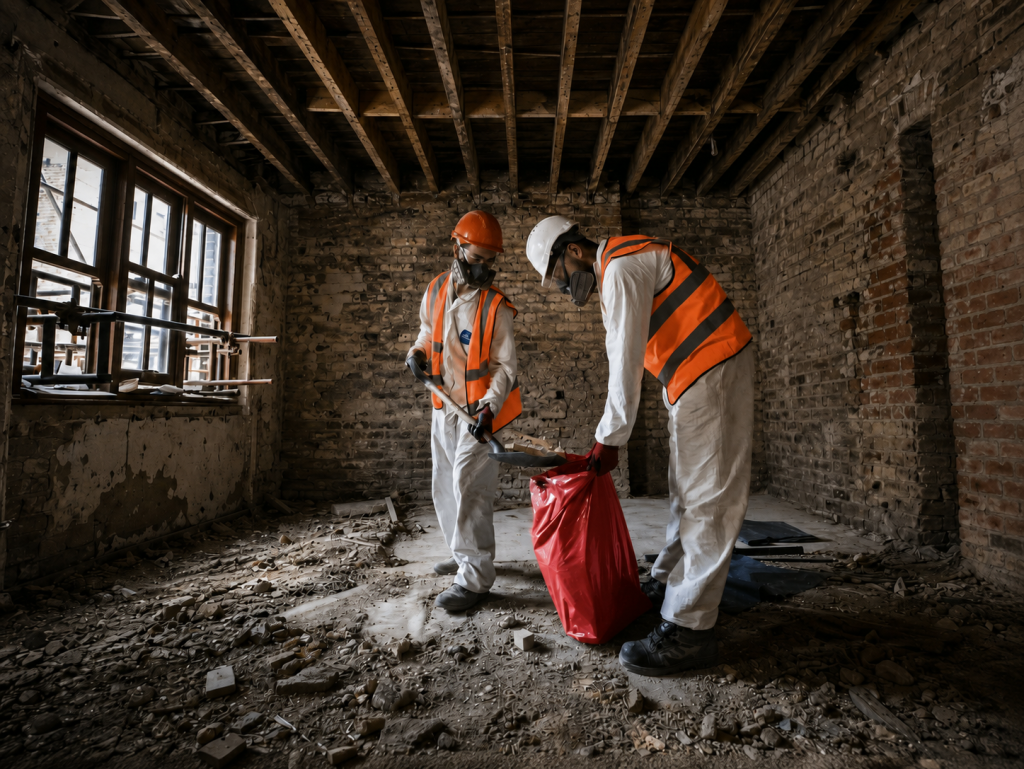
Very light residue on a small number of washable, non-porous items may be manageable after the property is safe to enter and the insurer has given any required approval. Wear suitable gloves, isolate affected items from clean rooms and follow the manufacturer’s cleaning instructions.
For workplaces, landlords and contractors, the Health and Safety Executive’s COSHH guidance explains the duty to assess and control exposure to hazardous substances.
Stop if the soot smears, an odour persists, the item is porous, or you do not know what burned. Avoid ordinary vacuum cleaners, vigorous brushing and untested cleaning chemicals. These can spread fine residue or set stains into the material. Significant soot, burnt synthetic materials, oily deposits, contaminated ventilation and multi-room smoke spread need professional assessment.
For further help, see TrustedCare’s soot removal cleaning service and smoke odour removal guide.
Insurance Claims and Documenting Damaged Contents
Buildings and contents policies commonly cover fire damage, but the exact cover, excess and settlement method depend on the policy. Ask the insurer what evidence it needs and whether it will appoint a loss adjuster.
- Take wide photographs of each affected room before moving contents.
- Photograph individual items and visible damage.
- Record the item description, approximate age, original cost if known and current condition.
- Keep receipts, valuations, serial numbers and proof of ownership where available.
- Separate items only when it is safe and the insurer allows it.
- Do not dispose of non-hazardous items until the insurer has advised you.
TrustedCare can document the cleaning scope and affected areas within the work agreed. Read more about fire damage cleaning and insurance claims.
How Professional Fire-Damage Contents Cleaning Works
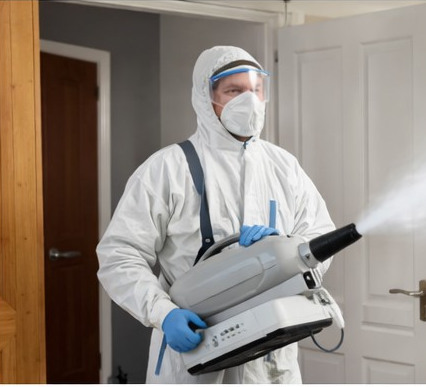
The exact process depends on the property and agreed scope. It may include:
- Safety and access checks: cleaning starts only when entry is permitted and required structural, gas or electrical checks have been completed.
- Damage documentation: affected areas and contents may be photographed and recorded.
- Contents sorting: items are separated into likely cleanable, specialist-assessment and likely replacement groups.
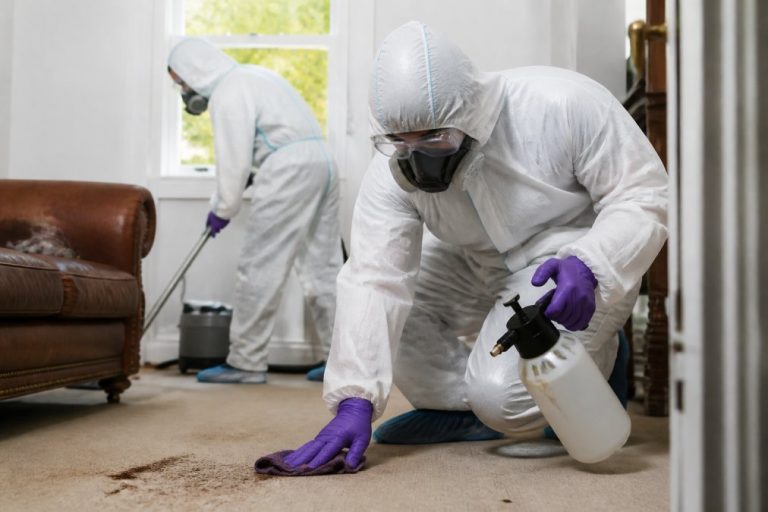
- Surface and contents cleaning: suitable methods are selected for the material and type of residue.
- Odour treatment: remaining odours are treated after source contamination has been reduced.
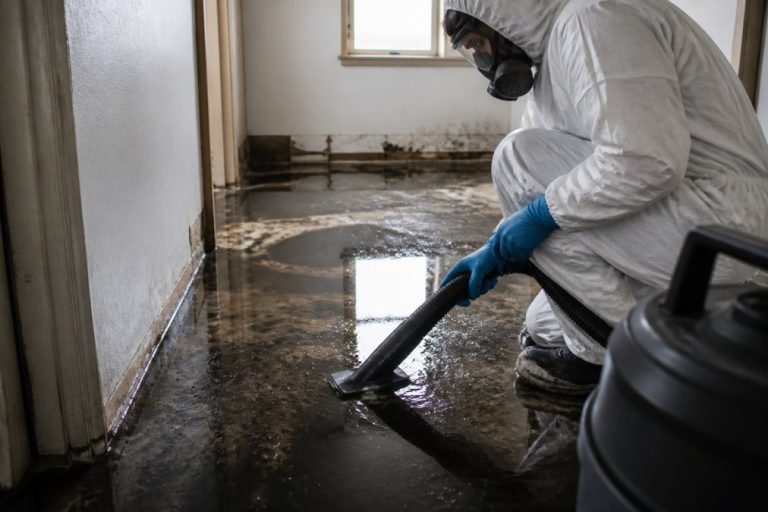
- Water and moisture work: where firefighting water is present, extraction, drying, monitoring or removal may be required.
- Handover: cleaned areas are prepared for insurer inspection, repairs, decoration or the next recovery stage.
TrustedCare focuses on specialist fire, smoke and soot cleaning and preparation for the next stage of recovery. Building repairs, electrical work and specialist conservation may need separate qualified contractors. View the main fire damage cleaning services UK page for the full service scope.
For pricing guidance, see fire damage cleaning costs in the UK. Every incident still requires its own assessment and quotation.
Frequently Asked Questions
What belongings can usually be saved after a house fire?
Many glass, ceramic, metal, sealed hard-surface and solid-wood items may be salvageable if they have not been distorted, deeply charred or heavily penetrated by residue. Every item still needs an assessment based on its material and condition.
Should I throw away smoke-damaged belongings immediately?
Do not dispose of non-hazardous belongings before documenting them and speaking to your insurer. Immediate safety hazards may need to be isolated or removed, but the insurer may require photographs, an inventory or an inspection for the claim.
Can smoke-damaged clothes be cleaned?
Some clothing and household textiles can be restored using suitable specialist cleaning. The result depends on fibre type, dye stability, the residue involved and whether the items were also saturated with water.
Are electrical appliances safe after a fire?
Do not switch them on merely because they appear undamaged. Heat, soot and moisture may have affected internal components. Arrange an assessment by an appropriate electrical or appliance specialist.
Does home insurance cover damaged belongings after a fire?
Contents insurance commonly includes fire damage, but cover varies between policies. Contact the insurer promptly, check the excess and exclusions, and ask what approval and evidence it requires before cleaning or disposal.
How quickly should fire-damaged contents be assessed?
Arrange assessment once the property is safe to access and any insurer approval has been obtained. Early action can limit further staining, corrosion, odour absorption and water-related damage.
Speak to TrustedCare
We provide fire, smoke, soot and associated water-damage cleaning across England, Scotland and Wales. Contact us for clear advice and a quotation based on the actual condition of the property.

TrustedCare Editorial Team publishes UK guidance on specialist cleaning and biohazard remediation, including after-death cleaning, flood restoration and contamination control. Content is written for homeowners, landlords and housing providers seeking clear, practical information.