Biohazard Cleaning Certifications for Landlords: 2026 Guide
TrustedCare Landlord Guidance
Biohazard Cleaning Certifications for Landlords
A practical guide to checking training, insurance, working methods, waste arrangements and documentation before appointing a biohazard-cleaning contractor.
Confidential enquiries for landlords, letting agents and property managers across England, Scotland and Wales. Current attendance is confirmed when you contact us.
Quick answer: no single badge or course certificate proves that a contractor is suitable for every biohazard incident. Landlords should check relevant experience, technician training, insurance for the proposed work, risk controls, waste arrangements, quotation terms and completion records.
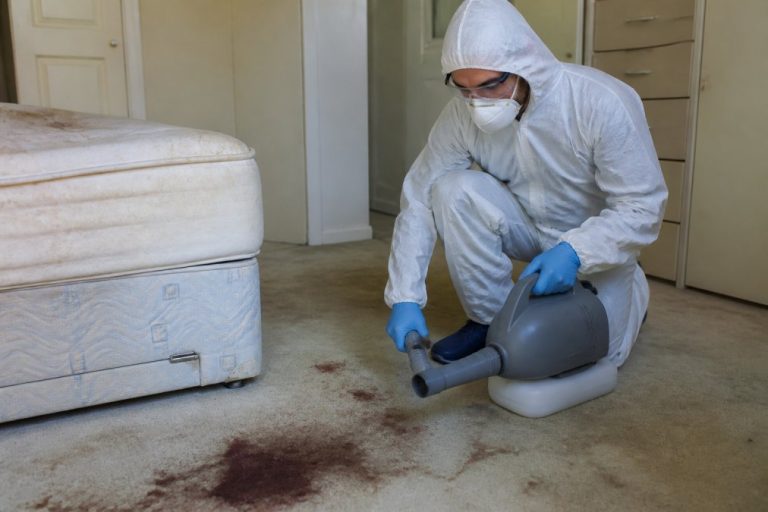
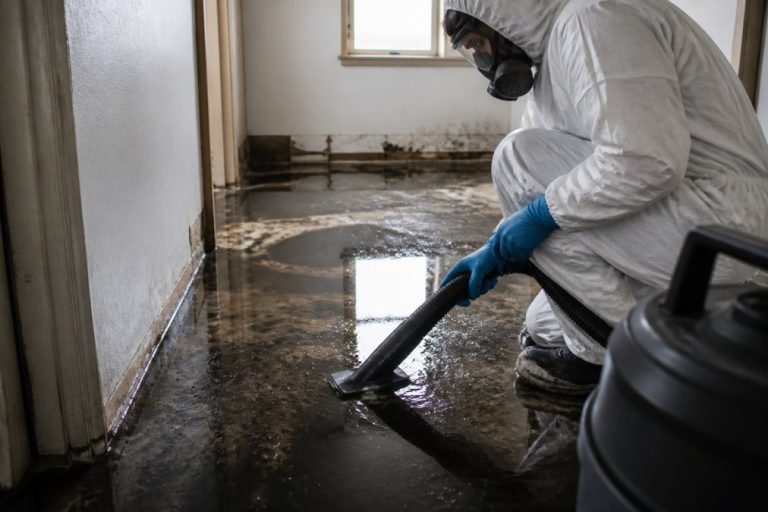
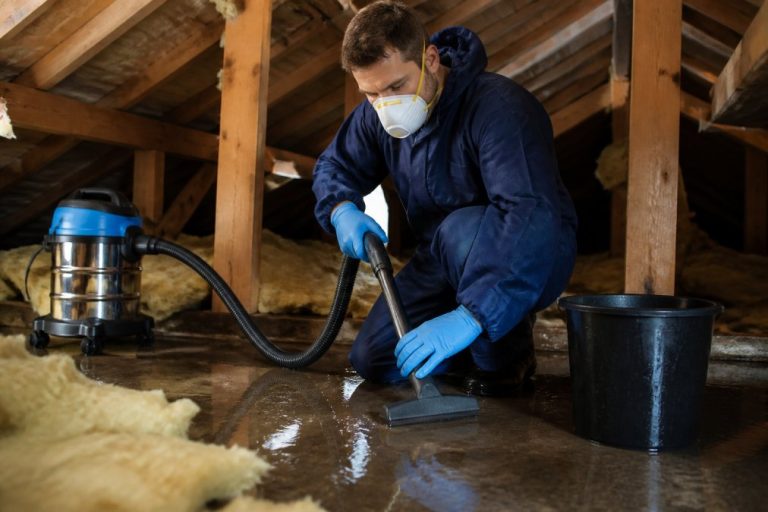
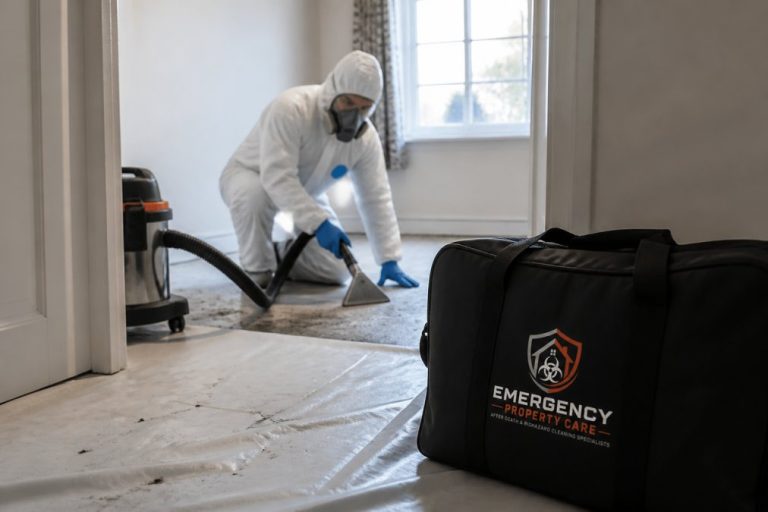
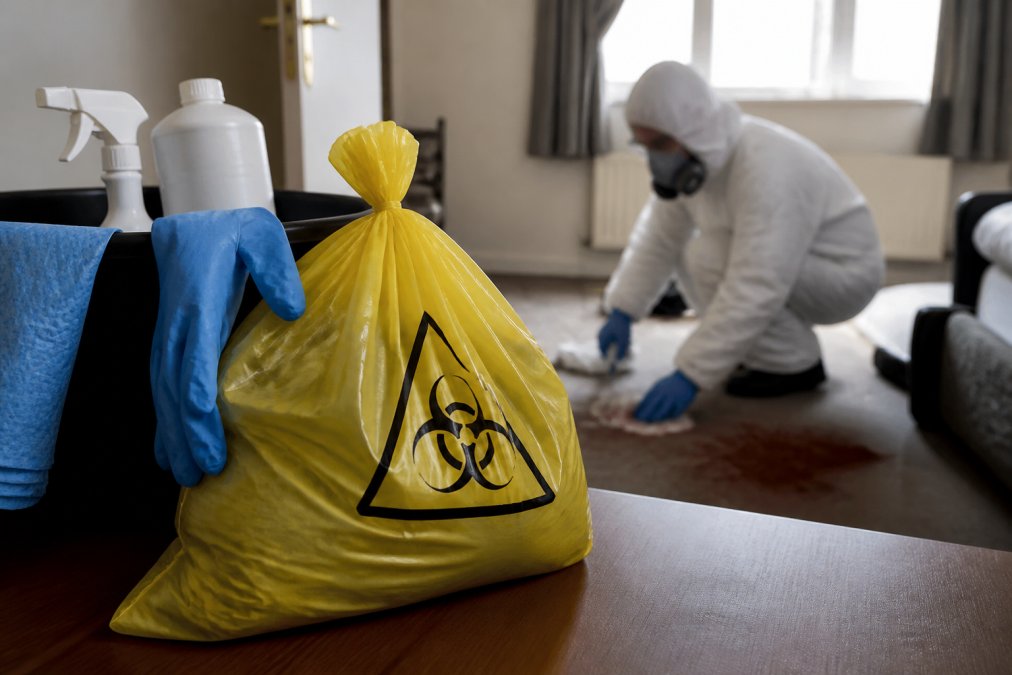
Biohazard incidents can involve blood, bodily fluids, decomposition residue, sharps, sewage or other potentially harmful material. The correct response may require controlled access, removal of affected materials, cleaning, disinfection, odour treatment and a suitable waste route.
TrustedCare provides biohazard cleaning services for homes, rented properties and managed buildings. Each enquiry is assessed according to the incident, affected materials, access and location.
What Biohazard-Cleaning Certification Really Means
There is no single UK-wide government licence called a “biohazard cleaner licence” that automatically proves competence for every situation. Training certificates can show that a technician completed a particular course, but the subject, assessment and practical depth can vary. Business accreditations, insurance and waste registration address different parts of the contractor’s operation.
The more useful question is whether the company can demonstrate that it is suitable for the incident in your property. A contractor experienced in limited surface contamination may not be equipped for decomposition residue beneath flooring, widespread sewage contamination or a scene involving sharps.
Check the named business, the technicians who will attend, the proposed work, insurance scope and waste route. A logo on a website should not replace written evidence relevant to your job.
For a wider overview, read our guide to certified biohazard-remediation services and what to check.
Landlord Responsibilities and Property Safety
A biohazard incident does not create one automatic rule about who must arrange the cleaning, who must pay or which contractor must be used. Responsibility can depend on the cause, tenancy terms, ownership, affected area, insurance and the housing law that applies in the relevant UK nation.
England
Government guidance states that landlords must keep rented property safe and free from health hazards. Local authorities can assess hazards under the Housing Health and Safety Rating System.
Wales
Landlords must ensure homes are fit for human habitation under the Renting Homes framework. The response should reflect the condition and risks within the dwelling.
Scotland
Private rented homes must meet the Repairing Standard and underlying Tolerable Standard. The applicable duties and process differ from England and Wales.
Official starting points include GOV.UK landlord safety responsibilities, the Welsh fitness-for-human-habitation guidance and the Scottish Repairing Standard guidance.
HSE guidance explains that COSHH can apply to workplace exposure to biological agents, including incidental exposure. This is particularly relevant to the employer of anyone doing the work. It does not mean every landlord must personally hold a biohazard-cleaning qualification.
Where the incident follows a death, our after-death cleaning service explains the specialist support available to landlords, families and property managers.
Seven Checks Before Appointing a Biohazard Contractor
1. Relevant incident experience
Ask about work involving the same type of contamination, property and materials. Biohazard cleaning covers a wide range of incidents, and relevant experience matters more than a broad claim to handle every situation.
2. Training for the attending technicians
Request the names of relevant courses or qualifications, the provider and when they were completed or refreshed. Useful topics may include biological hazards, infection control, sharps safety, PPE, chemical use, waste handling and incident-specific remediation.
3. Insurance that covers the proposed activity
Ask for a current public-liability certificate and written confirmation that the policy covers the work being quoted. Where the contractor employs staff, request evidence of employers’ liability insurance where legally required. A certificate showing a policy exists does not by itself prove that trauma, decomposition or other specialist work is included.
4. A written risk assessment and method
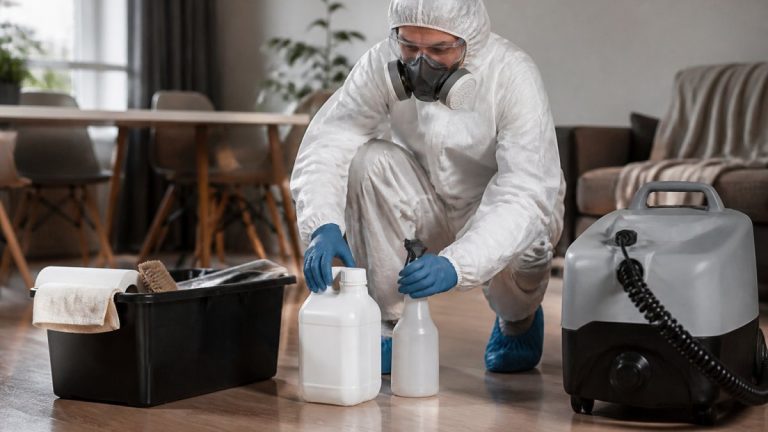
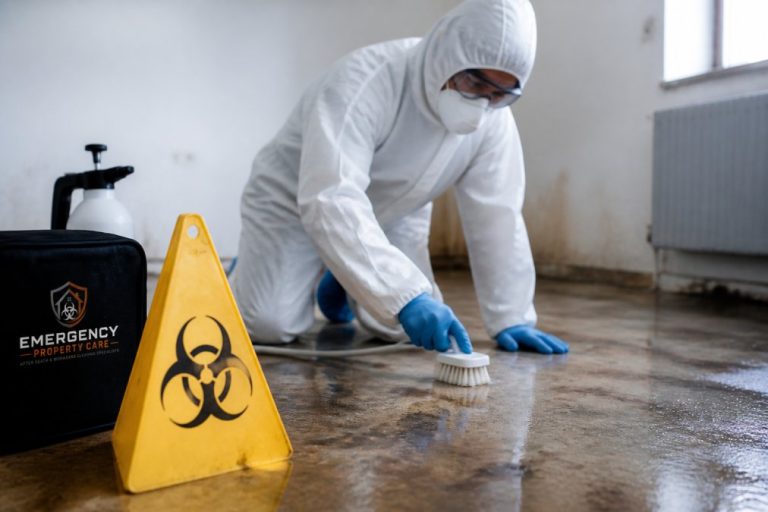
The contractor should explain how access will be controlled, how clean and contaminated areas will be separated, what protective equipment is required and how the team will reduce cross-contamination.
5. Waste registration and disposal route
Ask who will classify, package, transport and receive the waste. Confirm the carrier’s registration with the correct regulator and ask which transfer or consignment documents will be supplied.
6. A clear quotation and scope
The written scope should identify affected areas, materials that may be removed, cleaning and disinfection stages, waste charges, odour work, exclusions and how additional work will be approved.
7. Completion records
Agree what evidence will be provided. This may include photographs, a work summary, waste paperwork, moisture records where relevant and details of any remaining repairs. A completion report should describe what was completed rather than promise that untested parts of a property are “sterile”.
Need Help With a Rental Property?
Contact TrustedCare with the property postcode, incident type and a brief description of the affected area. We can discuss the likely scope and confirm current availability.
Biohazard Cleaning vs Ordinary Deep Cleaning
| Check | Ordinary deep cleaning | Biohazard remediation |
|---|---|---|
| Main purpose | Remove routine dirt and improve general hygiene | Control and remove identified biological contamination |
| Assessment | Usually based on normal cleaning needs | Incident-specific assessment of exposure, materials, sharps, chemicals and waste |
| Area control | Normally limited | May require restricted access and separation of clean and contaminated areas |
| Materials | Most surfaces and contents are retained | Some porous or penetrated materials may require removal |
| Waste | Mostly ordinary cleaning waste | Waste is assessed and routed according to its classification |
| Records | Invoice or cleaning checklist | Defined scope, work record and relevant waste documentation |
Waste Registration and Documentation
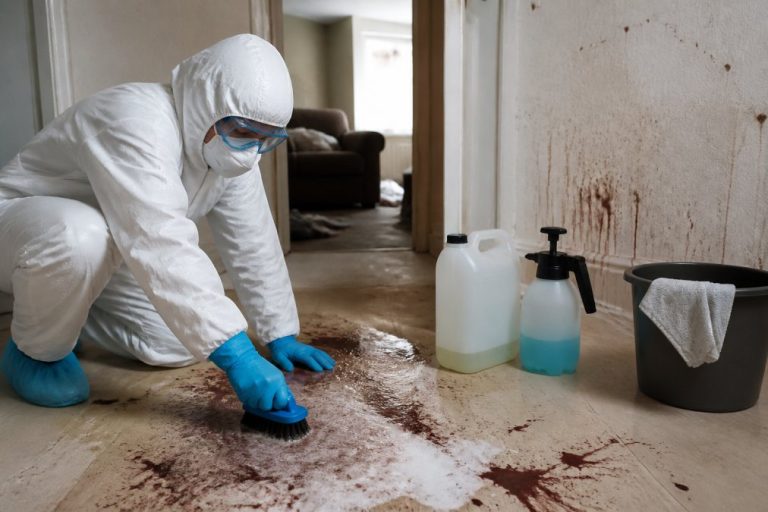
Not everything removed from a biohazard scene has the same classification. A job can produce ordinary waste, offensive waste, infectious waste, sharps or chemical waste. Packaging, paperwork and destination depend on the waste actually produced.
Ask for the contractor’s registration number and check it with the regulator for the business location:
- England: the Environment Agency public register.
- Wales: Natural Resources Wales guidance.
- Scotland: SEPA transporting-waste guidance and its public register.
Hazardous-waste movements in England and Wales require the correct consignment paperwork. Non-hazardous controlled waste normally requires waste-transfer information. Scotland has its own regulatory terminology and procedures, so the contractor should identify the correct national route.
The business name on the register should match the contractor named on the quotation. Ask where the waste will go and which document you will receive after collection.
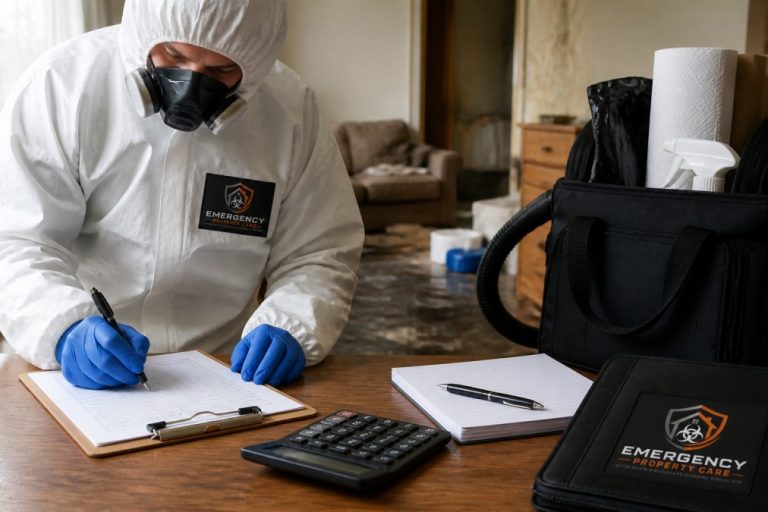
Insurance and Record Keeping
Whether landlord insurance covers biohazard cleaning depends on the insured event, wording, exclusions, excess and approval requirements. Contact the insurer or broker promptly and ask what evidence is required before permanent remedial work starts. Emergency steps needed to prevent further harm should still be documented where it is safe to do so.
Do not rely on a contractor’s statement that the work “should be covered”. Only the insurer can confirm cover under the policy. Our guide to emergency biohazard-cleaning costs explains the main factors that can affect a quotation.
Useful documents to retain
- The initial incident record and photographs taken without entering an unsafe area.
- Insurer, landlord or managing-agent instructions.
- The contractor’s quotation and agreed scope.
- Relevant insurance and training evidence.
- Risk assessment and method statement where supplied.
- Waste-transfer or consignment documentation.
- Completion report, photographs and details of outstanding repairs.
Retention periods vary according to the document and reason for keeping it. Ask the insurer, accountant or legal adviser about the appropriate period instead of applying one arbitrary figure to every record.
Questions to Ask Before Accepting a Quotation
- What contamination and affected materials does the quotation cover?
- Which relevant training do the attending technicians hold?
- Does your insurance cover this exact type of work?
- How will you prevent contamination spreading beyond the work area?
- Which materials may need removal, and how will additional work be approved?
- Who will transport the waste, and where will it be taken?
- What waste paperwork and completion records will I receive?
- Are odour treatment, contents handling and reinstatement included or excluded?
- What must be agreed with the insurer before work begins?
- What attendance window can you confirm for this postcode?
HSE guidance on blood and body-fluid decontamination explains why physical cleaning, suitable protective measures and correct disinfectant use matter. Where contamination is extensive, concealed, involves sharps or affects absorbent materials, specialist assessment may be appropriate.
Frequently Asked Questions
Are landlords legally required to use a certified biohazard cleaner?
There is no single certificate that automatically determines suitability for every incident. Landlords should consider the property-safety duties applying in their UK nation and check the contractor’s relevant competence, insurance, working method and waste arrangements. Seek legal advice where responsibility or access is disputed.
How do I verify a contractor’s waste registration?
Ask for the registration number and check the appropriate public register: the Environment Agency in England, Natural Resources Wales in Wales or SEPA in Scotland. Confirm that the registered business matches the company on the quotation.
Does public-liability insurance prove biohazard work is covered?
No. A certificate shows that a policy exists, but specialist activities may be restricted or excluded. Ask for confirmation that the cover applies to the exact work being quoted.
Can a landlord clean a biohazard incident personally?
That depends on the substance, amount, surfaces, presence of sharps and ability to control exposure. Do not enter an area with significant contamination, unknown sharps, decomposition residue or sewage simply to inspect it. Restrict access and obtain specialist advice.
What should a completion report include?
It should identify the agreed work area, main actions completed, materials removed, waste documentation supplied and any limitations or remaining repairs. It should describe the completed work accurately rather than claim that untested areas are sterile.
Will landlord insurance pay for biohazard cleaning?
Possibly, but cover is policy-specific. The cause, exclusions, excess and approval conditions all matter. Notify the insurer or broker promptly, preserve evidence and ask what documentation is required before authorising non-emergency work.
Request a Biohazard-Cleaning Assessment
Contact TrustedCare with the property postcode, incident type and a brief description of the affected area. Do not send distressing photographs unless requested.
Confidential enquiries. Coverage across England, Scotland and Wales. Current availability is confirmed when you contact TrustedCare.

TrustedCare Editorial Team publishes UK guidance on specialist cleaning and biohazard remediation, including after-death cleaning, flood restoration and contamination control. Content is written for homeowners, landlords and housing providers seeking clear, practical information.