Emergency Restoration Services for Businesses: 2026 Guide
Table of Contents
- What Emergency Restoration Services for Businesses Actually Cover
- Restoration Company Response Times: What to Expect
- How to File a Commercial Property Insurance Claim After a Disaster
- Best Practices for Business Continuity After a Disaster
- Post-Restoration Indoor Air Quality Testing
- How to Choose the Right Emergency Restoration Services for Your Business
- Conclusion
Last Updated: August 13, 2026
What Emergency Restoration Services for Businesses Actually Cover
Emergency restoration services for businesses encompass specialist interventions required to stabilise, decontaminate, and restore a commercial property after fire, flood, sewage incidents, biohazard events, or structural water damage. The scope is considerably broader than most business owners realise until they face a flooded office at midnight.
At TrustedCare, we respond to exactly these situations around the clock, 365 days a year, across England, Scotland, and Wales. The core principle is straightforward: the faster a qualified team arrives on site, the less secondary damage occurs, and the lower the eventual insurance claim.
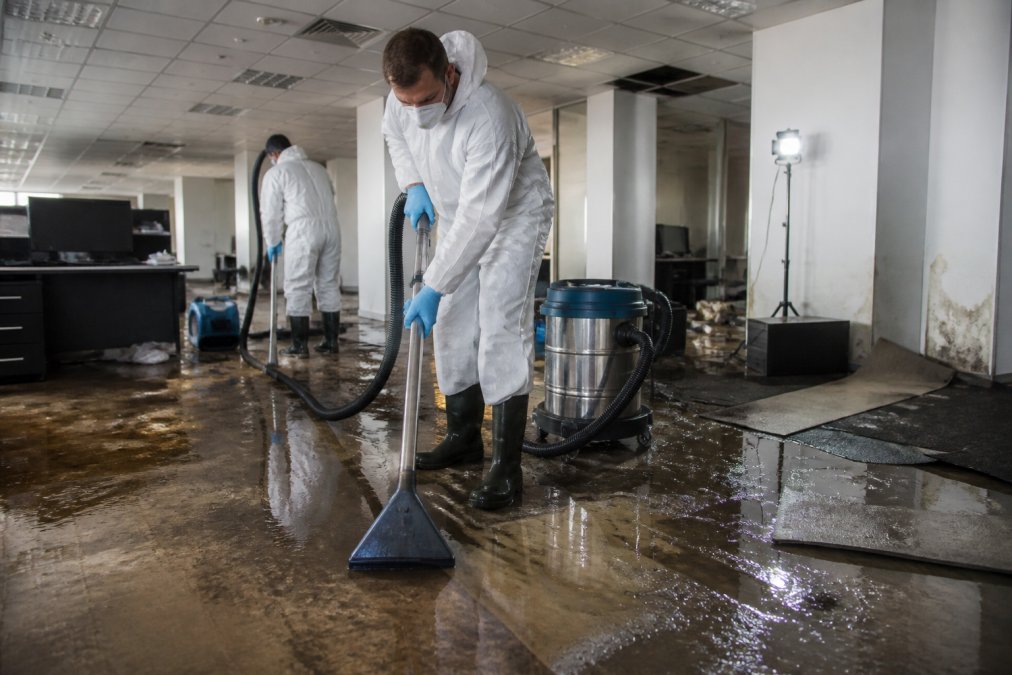
Emergency restoration services cover far more than clearing visible damage. A professional response typically includes damage assessment, hazard mitigation, structural drying, decontamination, contents recovery, and documented handover supporting your insurance claim.
Fire and Smoke Damage Restoration
Fire damage restoration removes corrosive soot, carbon deposits, and smoke residue from structural surfaces, fixtures, and contents, then treats affected areas to neutralise persistent odour and prevent deterioration. Speed matters enormously: soot is acidic and begins etching surfaces within hours of a fire being extinguished.
A qualified restoration team conducts damage assessment, establishes site safety, extracts standing water from firefighting efforts, removes unsalvageable material, and applies specialist cleaning agents and odour neutralisation treatments. Structural elements that appear intact may carry smoke contamination deep into cavities, which is why thermal imaging and moisture mapping are standard tools in professional fire damage restoration.
Work carried out to British Damage Management Association standards ensures technicians follow a consistent, auditable methodology that insurers recognise and accept.
Flood, Water Damage, and Escape of Water Cleanup
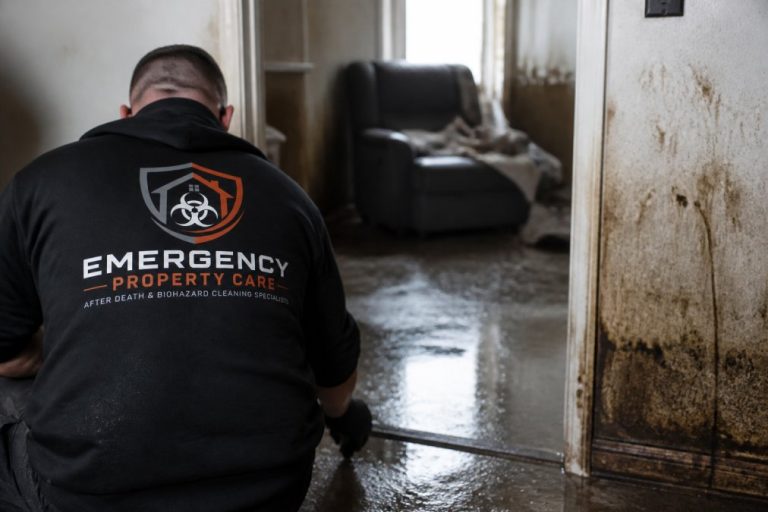
Escape of water claims are among the most common and damaging events a commercial property faces. A burst pipe, failed appliance, or roof failure can deposit thousands of litres of water into a building within hours. Prolonged moisture exposure compromises structural integrity, destroys stock, and creates conditions for mould growth within 24 to 48 hours.
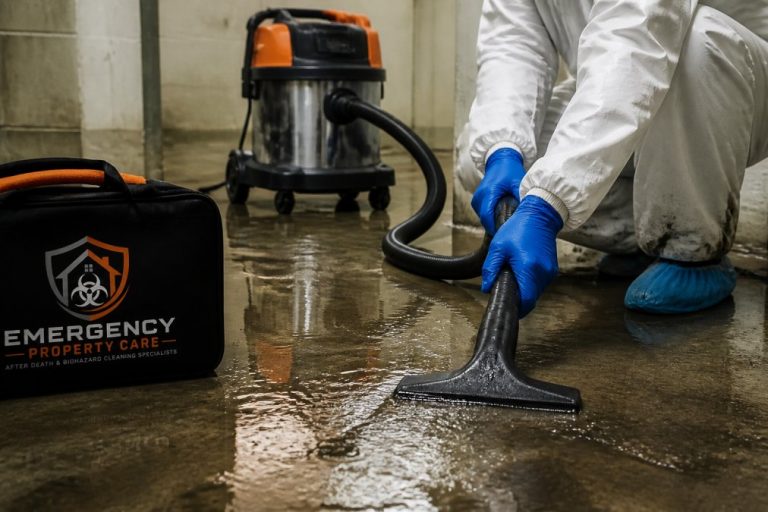
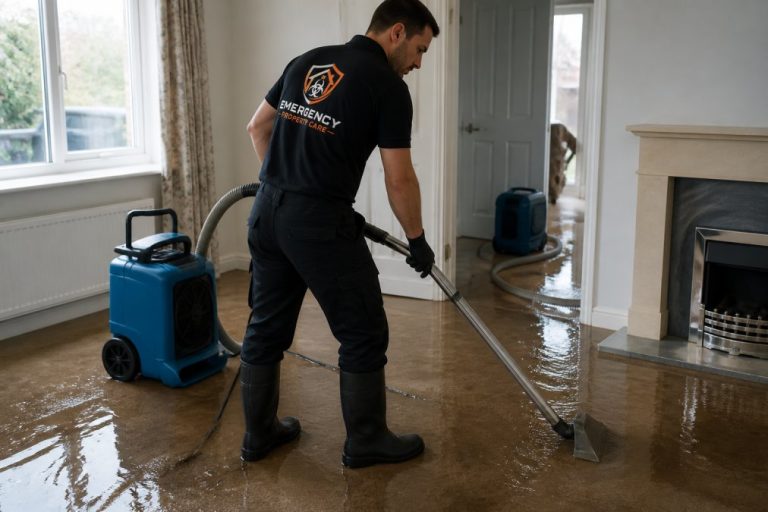
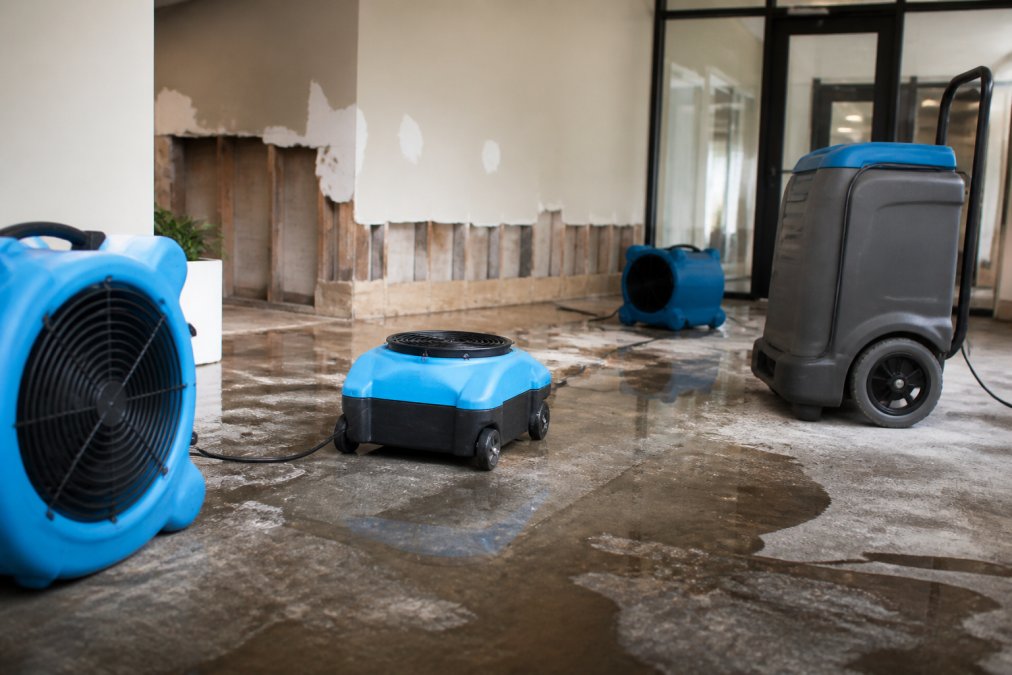
Professional flood damage cleanup involves water extraction using industrial-grade equipment, followed by structural drying through targeted dehumidification and air movement. Moisture mapping confirms when materials have returned to acceptable levels, which is critical for insurance documentation.
TrustedCare’s flood damage cleaning and drying service addresses all stages of this process, from initial water extraction through to final drying verification, giving property owners and loss adjusters a clear, documented record of remediation.
Sewage Cleanup, Biohazard Decontamination, and Mould Remediation
Sewage backup and biohazard incidents carry significant health risks. Untreated sewage contains pathogens that create serious occupational health hazards, and under the Health and Safety at Work etc. Act 1974 guidance from the Health and Safety Executive, employers have a duty to ensure the workplace is safe before staff return.
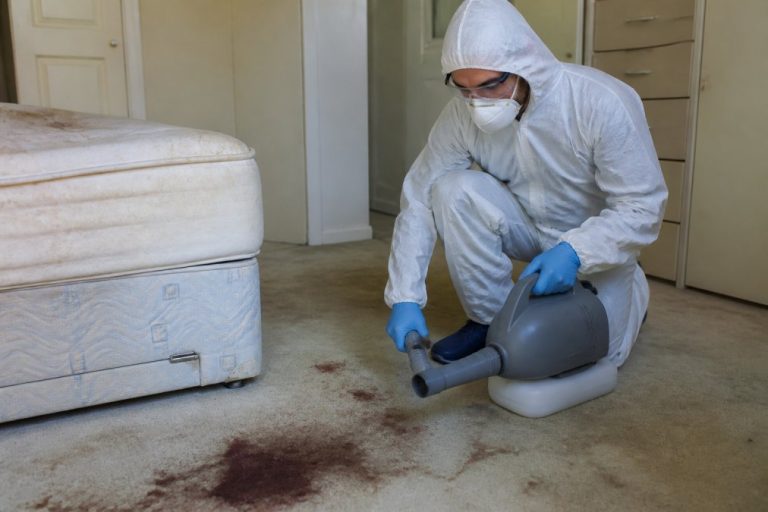
Professional sewage cleanup involves full containment, safe removal of contaminated material, antimicrobial treatment, and environmental testing to confirm the site is safe. Mould remediation follows a similar structured approach: root cause investigation using moisture meters and thermal imaging, safe containment to prevent cross-contamination, removal and treatment of affected surfaces, and preventative measures to reduce recurrence.
Contents Recovery, Salvage, and Commercial Property Decontamination
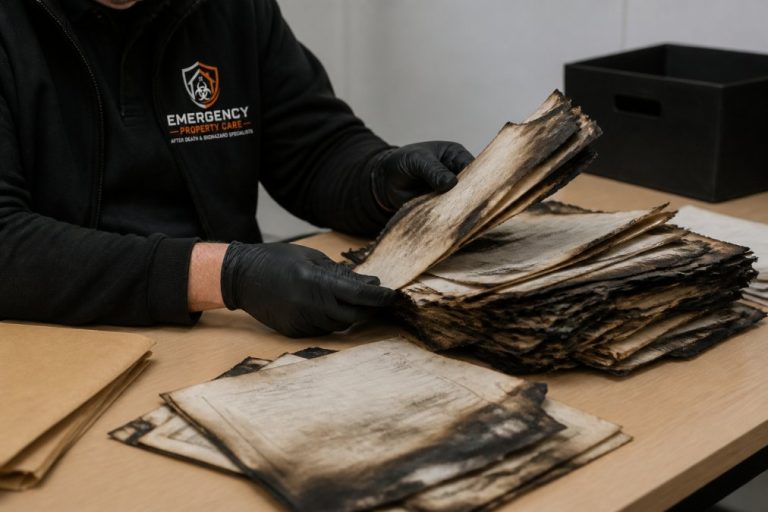
Many business owners assume damaged items are simply written off. A competent restoration team will triage contents immediately, separating salvageable from non-salvageable items and prioritising business-critical assets such as IT equipment, stock, documents, and specialist machinery.
Commercial property decontamination addresses residual chemical contamination, biological hazards, and environmental pollutants that would otherwise render a space unsafe or non-compliant. For businesses in regulated sectors, documented decontamination is a prerequisite for reopening.
Restoration Company Response Times: What to Expect
Restoration company response times vary significantly depending on the provider’s geographic coverage, staffing model, and time of day. Many providers advertise 24/7 availability but operate through a call-answering service overnight, with actual mobilisation delayed until morning.
A genuinely rapid response means a qualified technician is mobilised immediately. For commercial properties, the difference between a two-hour response and an eight-hour response can translate to dramatically greater structural damage, higher remediation costs, and longer business interruption.
| Response Scenario | Typical Outcome | Business Impact |
|---|---|---|
| Under 2 hours | Damage contained, secondary spread limited | Lower claim value, faster reopening |
| 2-4 hours | Some secondary spread, structural drying required | Moderate claim, days of disruption |
| 4-8 hours | Significant secondary damage, potential mould risk | Higher claim, week-plus disruption |
| Over 8 hours | Structural compromise possible, mould likely | Major claim, extended closure |
Before you need emergency restoration services, identify a provider and save their direct emergency line. Calling at 2am to search for a credible restoration company is not the moment to be reading reviews.
Ask any restoration provider whether their 24/7 number connects directly to a qualified technician or to a call-handling service. The answer tells you everything about their actual response capability.
How to File a Commercial Property Insurance Claim After a Disaster
Filing a commercial property insurance claim after a disaster is a process with clear steps, and the quality of your documentation at the outset determines how smoothly it resolves. Many claims are delayed or disputed not because the damage is questionable, but because initial evidence is incomplete.
Contact your insurer as soon as the immediate emergency is stabilised. Most commercial policies require notification within a defined period, and delay can complicate your claim. Your insurer will typically appoint a loss adjuster to assess the damage on their behalf.
Insurance Claim Documentation Best Practices
The most common mistake businesses make is beginning cleanup before documenting the damage thoroughly. A loss adjuster needs to see the extent of the incident, not just the aftermath of partial cleanup.
Follow this sequence:
- Photograph everything before touching it. Capture wide shots of each affected area, then close-ups of specific damage points with timestamps.
- Create a written damage log. Record every item, surface, and structural element affected, with estimated values where possible.
- Preserve damaged items. Do not discard anything until the loss adjuster has visited or explicitly confirmed you may do so.
- Request a written scope of works from your restoration provider. This document details every intervention carried out, equipment used, and property condition at each stage.
- Keep all receipts and invoices. Emergency boarding, alternative premises costs, and restoration invoices all form part of your claim.
- Obtain a post-restoration report. A signed completion report from your restoration team confirms the property has been returned to a safe and compliant state.
A professional restoration company should work directly with your loss adjuster, providing the technical documentation they need to process the claim efficiently.
Never begin disposal of damaged contents before your loss adjuster has confirmed in writing that they have completed their assessment. Premature disposal is one of the most common reasons commercial claims are disputed or reduced.
Best Practices for Business Continuity After a Disaster
Business continuity after a disaster depends on how well a business has prepared before the incident occurs. Businesses that recover fastest are almost always those that treated continuity planning as an operational priority.
According to guidance from the Business Continuity Institute, organisations with a tested business continuity plan in place recover significantly faster and with lower financial impact than those responding without one.
The immediate priority after any incident is staff safety, followed by securing the premises against further damage or unauthorised access. After that, the focus shifts to maintaining critical business functions while the property is restored.
Practical steps in the first 48 hours include:
- Activating your emergency communication plan to notify staff, clients, and suppliers
- Identifying which functions can operate remotely or from an alternative site
- Contacting your IT provider to assess data backup and system recovery status
- Notifying your insurer and appointing a restoration company
- Establishing a single point of contact for all restoration-related communications
Integrating Emergency Restoration into Your Business Continuity Plan
Emergency restoration services should be a named component of your business continuity plan. Specifically, your BCP should identify:
- A preferred emergency restoration provider with a direct contact number
- The categories of damage they cover and their geographic reach
- Your insurer’s emergency claims line and the policy reference number
- The location of critical documents, including lease agreements, insurance schedules, and asset registers
- A pre-agreed communication template for notifying clients of service disruption
Businesses that have pre-agreed terms with a restoration provider before an incident occurs consistently experience shorter disruption periods.
Post-Restoration Indoor Air Quality Testing
Post-restoration indoor air quality testing measures airborne contaminants, particulates, and biological agents within a restored commercial space to confirm it is safe for occupancy. This step is frequently skipped by businesses eager to reopen, and it is one of the more consequential omissions in the restoration process.
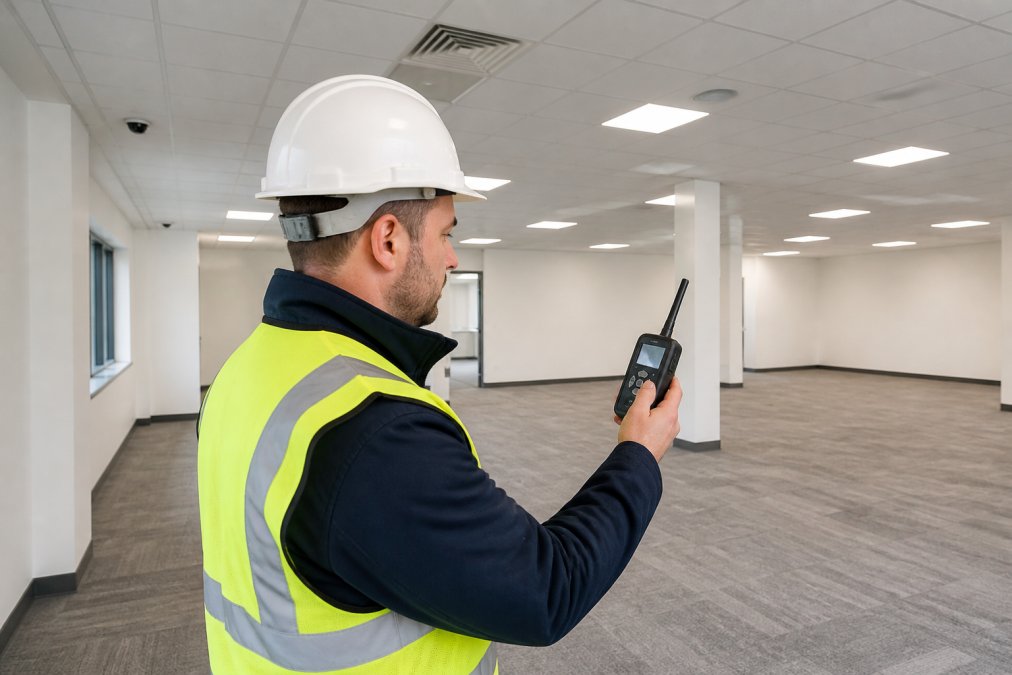
After fire damage, combustion byproducts including volatile organic compounds and fine particulates can persist in the air and within HVAC systems long after visible soot has been removed. After flood or sewage incidents, elevated mould spore counts may not be detectable by sight but can cause significant respiratory issues for occupants.
Indoor air quality testing uses calibrated instruments to measure particulate matter, carbon monoxide, volatile organic compounds, and biological contaminants against established benchmarks. The Chartered Institution of Building Services Engineers guidance on indoor air quality provides recognised reference values that restoration specialists and building managers use to assess whether a space meets acceptable standards.
A formal IAQ report confirms the space is safe for staff to return and provides documented evidence for your insurer and regulator. For businesses in healthcare, food production, or education, IAQ clearance may be a statutory requirement before reopening.
Post-restoration air quality testing is not optional for businesses in regulated sectors. Even for those where it is not mandated, a documented IAQ clearance report protects you from future liability if occupants report health issues after returning to the premises.
How to Choose the Right Emergency Restoration Services for Your Business
Choosing the right emergency restoration services provider should be made before you need one. Evaluating providers under pressure, at 3am, with water rising through a server room floor, is not a process that produces good outcomes.
The criteria that matter most for commercial clients are:
Genuine 24/7 availability. Confirm that the provider’s emergency line connects directly to a mobilisation team, not a message-taking service. Ask specifically whether they respond on bank holidays and weekends.
Nationwide coverage. If your business operates across multiple sites, a provider with nationwide coverage across England, Scotland, and Wales eliminates the risk of discovering your preferred contractor does not serve your affected location.
Specialist expertise across multiple incident types. A provider that handles only water damage is not the right partner for a business that might face fire, sewage, or biohazard incidents. Breadth of specialist capability matters.
Full insurance and compliance. Your restoration provider should be fully insured and able to demonstrate compliance with relevant health and safety legislation. For biohazard and sewage work, this is non-negotiable.
Insurance claim support. The ability to work directly with loss adjusters, produce documented scopes of works, and provide post-restoration reports significantly reduces the administrative burden on your team during a stressful period.
Track record with commercial clients. Commercial restoration differs from residential restoration. Commercial sites involve greater complexity, regulatory obligations, and business interruption considerations. Ask specifically about the provider’s experience with commercial properties.
TrustedCare meets all of these criteria: fully insured technicians, 24/7 emergency response every day of the year, nationwide coverage, and specialist expertise across fire, flood, biohazard, sewage, and trauma incidents. The team also provides direct support for insurance claims and loss adjusters.
| Selection Criteria | Why It Matters | What to Ask the Provider |
|---|---|---|
| 24/7 genuine response | Secondary damage accumulates by the hour | "Does your emergency line mobilise a technician or take a message?" |
| Nationwide coverage | Multi-site businesses need consistent service | "Do you cover Scotland and Wales as well as England?" |
| Multi-hazard capability | Incidents are rarely single-category | "Can you handle sewage and biohazard as well as fire and flood?" |
| Full insurance | Protects you from liability | "Can you provide your insurance certificates before work begins?" |
| Loss adjuster support | Speeds up claim resolution | "Will you liaise directly with our insurer?" |
| IAQ testing capability | Required in regulated sectors | "Do you provide post-restoration air quality reports?" |
The provider relationship matters as much as technical capability. A team that communicates clearly, documents thoroughly, and understands the insurance process will save you time, money, and stress far beyond what the restoration work itself costs.
Frequently Asked Questions
What is included in commercial emergency restoration services?
Commercial emergency restoration services typically cover fire and smoke damage restoration, flood and water damage cleanup, structural drying and dehumidification, sewage cleanup and sanitisation, mould remediation, biohazard decontamination, and contents recovery. Reputable providers also assist with damage assessment, site safety, and insurance claim documentation. The exact scope depends on the type of incident and the size of the affected commercial property.
How quickly can restoration companies respond to business emergencies?
Response times vary between providers, but the best emergency restoration services for businesses operate 24/7, 365 days a year, and aim to have technicians on site within a few hours of your call. Faster response directly limits secondary damage: water spreads within minutes, and smoke residue begins corroding surfaces within hours. Always confirm actual response time commitments before signing with any provider, including whether that speed applies on weekends and bank holidays.
Do restoration companies work directly with commercial insurance providers?
Many specialist restoration companies work alongside loss adjusters and insurers, providing detailed damage assessments, photographic evidence, and written reports that support your claim. TrustedCare supports clients through the insurance process, helping to reduce the administrative burden at an already stressful time. Confirm with your chosen provider whether they liaise directly with your insurer or whether you will need to manage that communication yourself.
What are the legal requirements for commercial property restoration after a fire?
Under the Regulatory Reform (Fire Safety) Order 2005, responsible persons for commercial premises must ensure the building is safe before re-occupation following a fire. This includes a fresh fire risk assessment, structural sign-off, and confirmation that all hazardous materials such as asbestos have been safely managed under the Control of Asbestos Regulations 2012. A professional restoration company will carry out a thorough damage assessment and advise on compliance before the premises are handed back.
How do I choose a reputable disaster recovery service for my business?
Look for providers with fully insured technicians, 24/7 availability including bank holidays, and nationwide coverage. Check whether they have experience with your specific incident type, whether they support insurance claims, and whether they carry out post-restoration checks such as indoor air quality testing. Avoid providers who cannot give clear information about response times or qualifications. Membership of recognised bodies such as the British Damage Management Association (BDMA) is a useful indicator of professional standards.
Disasters do not wait for business hours, and the gap between a managed recovery and a prolonged crisis often comes down to the speed and quality of the first response. TrustedCare provides 24/7 emergency restoration services for businesses across England, Scotland, and Wales, with fully insured technicians, specialist expertise across all major incident types, and direct support for insurance claims and loss adjusters. Get Help Now by contacting TrustedCare the moment an incident occurs.
This article was written using GrandRanker

TrustedCare Editorial Team publishes UK guidance on specialist cleaning and biohazard remediation, including after-death cleaning, flood restoration and contamination control. Content is written for homeowners, landlords and housing providers seeking clear, practical information.