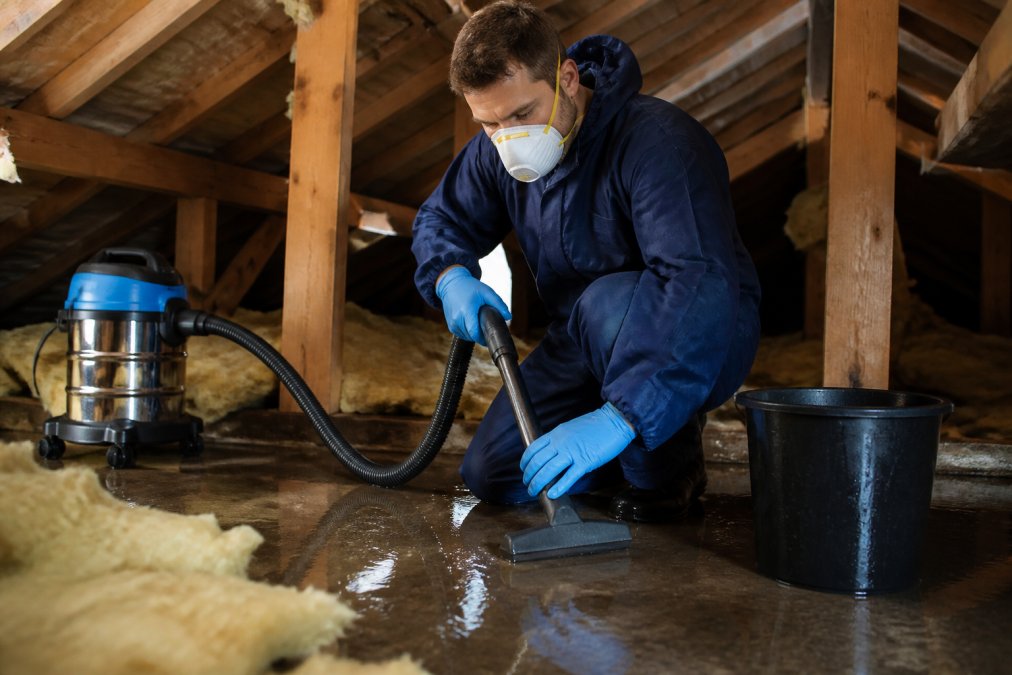
How to Clean Up Burst Water Pipe Damage in a Loft
How to Clean Up Burst Water Pipe Damage in a Loft
Immediate safety steps, water-damage assessment, wet-insulation decisions and professional structural drying after a loft pipe leak.
Flood cleaning and structural-drying assistance across England, Scotland and Wales
Stop the water supply if it is safe, keep away from wet electrical equipment and sagging ceilings, contact a plumber to repair the leak, notify the insurer and arrange water-damage assessment. Do not enter an unsafe loft or walk on plasterboard. Extraction removes visible water; monitored structural drying removes moisture retained in timber, ceilings and other materials.
First Steps After a Pipe Bursts in the Loft
Water from a loft can spread through insulation, ceiling plasterboard, light fittings and wall cavities before the leak is visible downstairs. The first priority is personal safety and stopping further water, not entering the loft immediately.
- Keep people away. Close off rooms beneath bulging, dripping or cracked ceilings.
- Turn off the water. Use the internal stopcock only when it can be reached safely. Do not force a seized valve.
- Contact a plumber. The failed pipe or fitting must be isolated and repaired before drying can be planned properly.
- Treat electricity as a hazard. Do not touch wet switches, fittings or the consumer unit. Contact an electrician or the electricity network operator where appropriate.
- Notify the insurer. Report the escape of water and ask what evidence or approval is required.
- Arrange assessment. Extensive wet insulation, ceiling damage or water near electrics needs professional attention.
Stay out if water is near electrical fittings, the ceiling below is sagging, joists or boards appear unstable, the access ladder is unsafe or you cannot see a secure walking route. Wet plasterboard is not a walking surface.
Why Water Damage in a Loft Is Different
A loft is usually a restricted structural space rather than a normal room. Safe access may be limited to boarded routes or the ceiling joists. Wet insulation adds weight, hides the walking surface and can obscure wiring, pipes and damaged plasterboard.
Electrical risk
Water may reach lighting circuits, junction boxes, cables and fittings in the ceiling below.
Ceiling failure
Saturated plasterboard can soften, bow and release without much warning.
Hidden moisture
Insulation and boarding can conceal wet timber, wall plates and ceiling materials.
Older properties may contain materials requiring specialist identification before disturbance. If any board, lagging, textured coating or insulation could contain asbestos, stop and obtain appropriate advice. The Health and Safety Executive’s asbestos guidance explains where asbestos may be present and how it should be managed.
Assessing the Water Damage
Once the source has been stopped and safe access confirmed, the affected area should be mapped. Assessment is not limited to the visible leak point because water may have travelled along joists, pipework, wiring routes and plasterboard joints.
- location and cause of the failed pipe or fitting;
- rooms and ceiling areas beneath the loft;
- wet or compressed insulation;
- swollen chipboard or damaged loft boards;
- staining, softness or deflection in timber;
- bulging, cracked or delaminated plasterboard;
- water near cables, fittings or electrical equipment;
- stored contents and cardboard boxes;
- wall plates, eaves and concealed voids; and
- evidence of older moisture or mould.
Record the failed pipe, wet materials, staining and affected rooms from safe positions. Keep the photographs, plumber’s report, restoration scope, drying readings and receipts together for the insurance claim.
Need Water Extraction or Structural Drying?
Tell TrustedCare the postcode, leak source, affected rooms, visible ceiling damage and whether the water supply has been isolated.
Water Extraction and Structural Drying
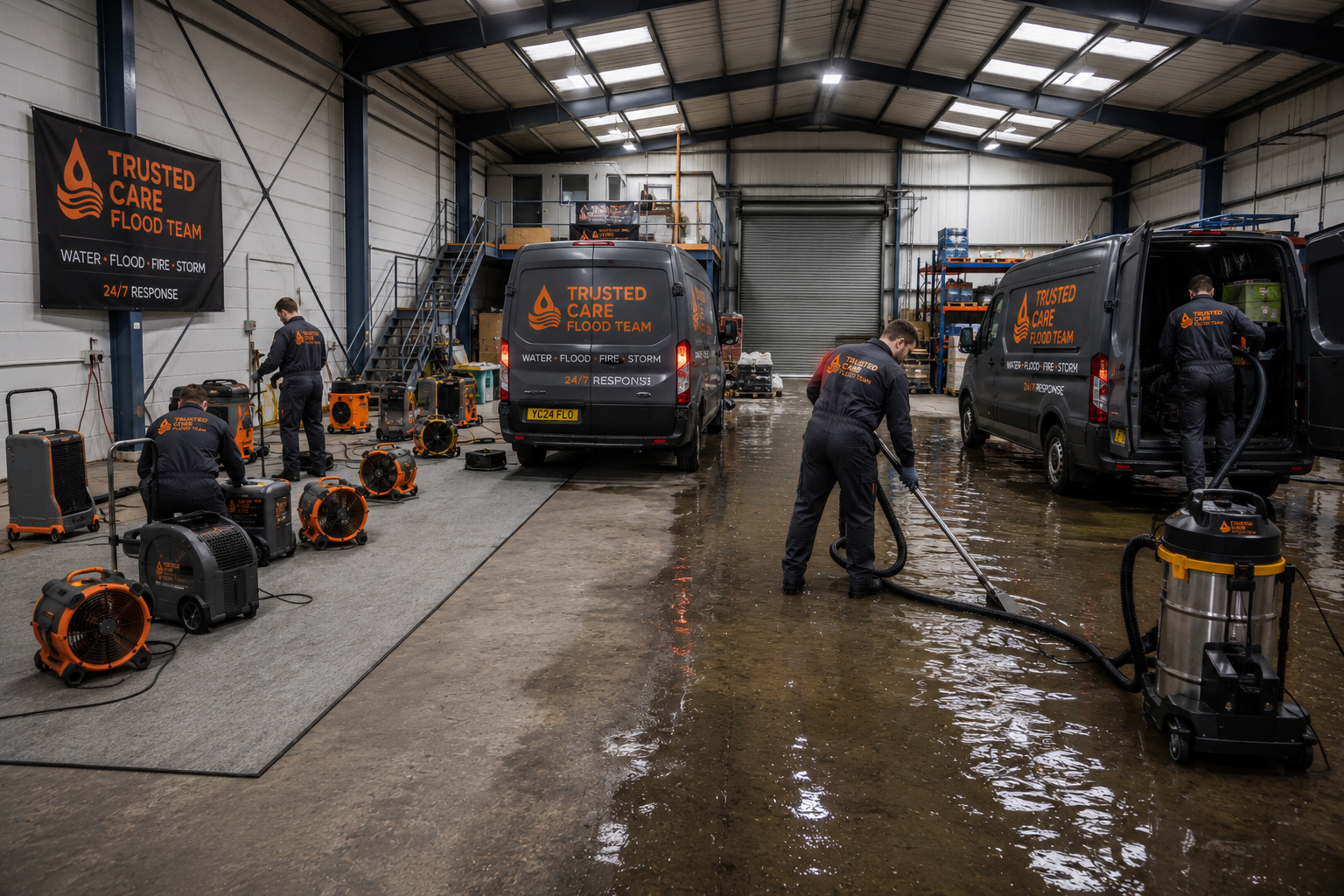
Extraction and drying are separate stages. Extraction removes standing water or recoverable surface moisture. Structural drying removes moisture retained within timber, plasterboard, flooring and other building materials.
Professional extraction
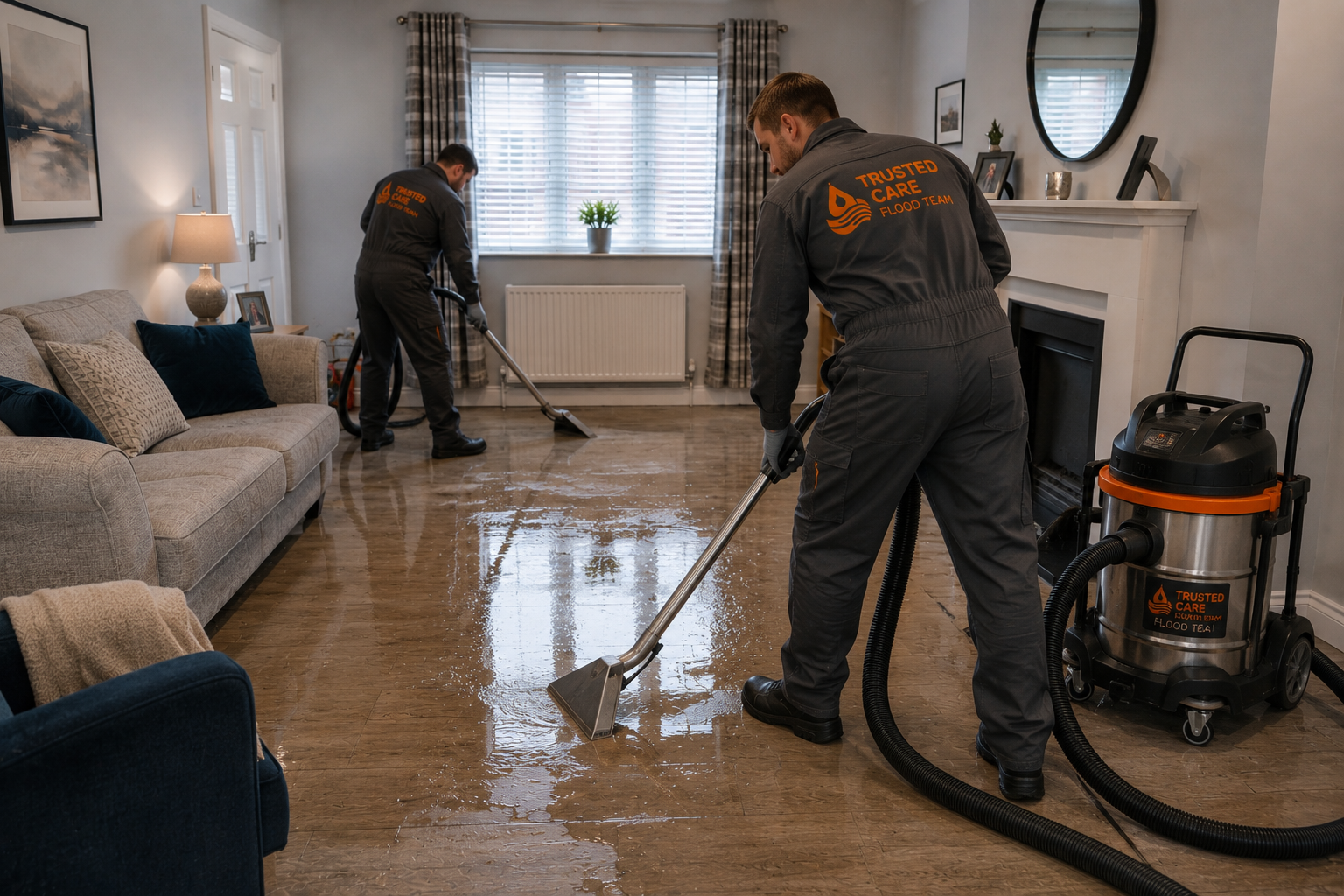
The appropriate method depends on the amount of water, access and structural condition. A specialist may use compact extraction equipment, pumps or controlled removal of saturated material. Equipment must be compatible with the loft access and electrical conditions.
Do not carry open containers of water down an unstable loft ladder or place heavy extraction equipment on unsupported plasterboard. Large volumes, unstable ceilings and restricted access require a planned method.
Drying equipment
A drying plan may use compact air movers, refrigerant or desiccant dehumidifiers, ducting and monitored ventilation. Desiccant equipment can be useful in cooler conditions, but the correct equipment depends on temperature, materials and the drying target.
Air movement should not be introduced blindly. Wet insulation and unsafe materials may need removal first, and any contamination or asbestos concern must be resolved before materials are disturbed.
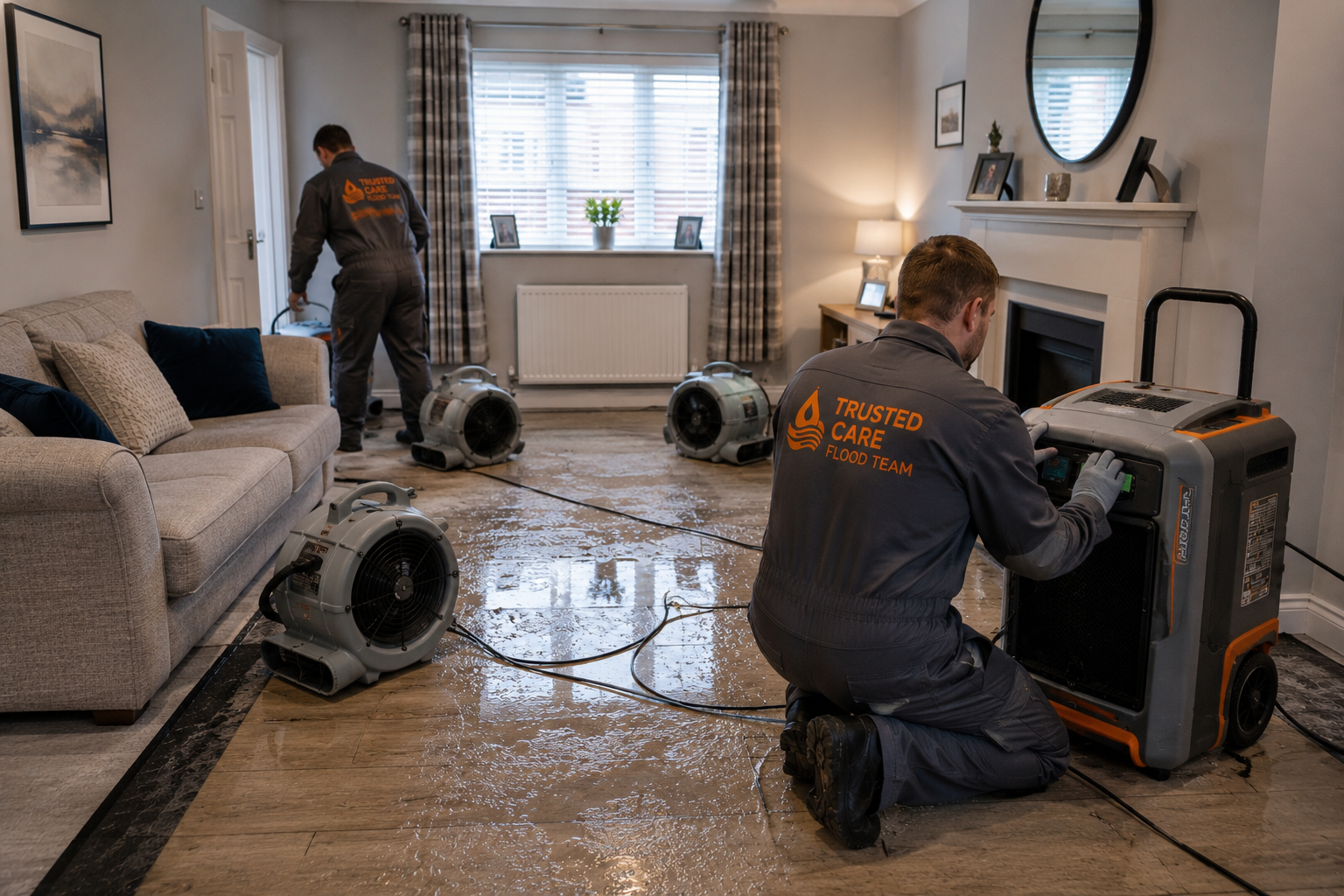
Drying time cannot be fixed from the room size alone. It depends on the water volume, delay before extraction, insulation type, timber and board saturation, temperature, ventilation and whether concealed areas can be reached. See how long property drying can take and what affects emergency flood-restoration response.
Wet Insulation, Timber and Plasterboard
The decision to retain or remove a material should be based on its condition, how wet it is, how long it remained wet and whether it can be accessed and dried reliably.
| Material | Possible action | Important consideration |
|---|---|---|
| Mineral wool or fibreglass insulation | Assess for controlled removal and replacement | Saturation, contamination, compression and access affect whether it can be retained. |
| Rigid insulation | Assess condition and manufacturer guidance | Water can remain at joints or between the insulation and surrounding construction. |
| Ceiling plasterboard | Remove unsafe or badly damaged sections | Bulging, softness, delamination and fixing failure require caution. |
| Ceiling joists and roof timber | Often dried in place if structurally sound | Drying must reach concealed faces and be verified with suitable readings. |
| Chipboard loft flooring | Assess swelling, edge damage and strength | Boards that have swollen or lost integrity may require replacement. |
| Stored contents | Separate, document and assess | Insurer approval may be needed before disposal. |
Do not automatically remove all insulation or plasterboard. Unnecessary strip-out adds cost and can disturb electrical services or suspect materials. Equally, concealing saturated material beneath new insulation or boarding can prolong damp and delay recovery.
How to Confirm the Loft Is Dry
A loft is not dry simply because surfaces look or feel dry. A professional drying record should show where readings were taken, how they changed and the criteria used to decide that equipment could be removed.
- Establish reference readings. Compare affected materials with suitable unaffected materials of the same type where possible.
- Mark monitoring points. Recheck the same joists, boards, wall plates and ceiling areas.
- Record the environment. Track temperature and relative humidity alongside material readings.
- Investigate concealed areas. Thermal imaging can support investigation but should not replace direct moisture measurement.
- Review the trend. Readings should demonstrate continued drying rather than a single isolated result.
- Confirm completion. Remove equipment only when the drying target and wider property conditions have been considered.
There is no universal “zero” target for timber or plasterboard. Materials, meter type, temperature and unaffected reference areas all influence interpretation. The record should explain why the final condition is acceptable.
Mould After a Loft Leak
Mould can develop when materials remain damp and airflow is limited. The risk rises when wet insulation stays against timber or plasterboard, drying is delayed or moisture remains concealed.
Professional mould assessment may be appropriate when growth is widespread, returns after cleaning, affects porous materials, appears in concealed areas or coincides with health concerns. The moisture source must be repaired and drying confirmed; surface treatment alone will not prevent recurrence if the loft remains wet.
Do not sand, brush or vacuum suspected mould with ordinary domestic equipment because this can distribute spores and contaminated dust. If the affected material could contain asbestos, do not disturb it.
Working With the Insurer
Many home policies include some cover for sudden escape of water, but decisions depend on the policy wording, cause, exclusions, excess and insurer approval. Damage from poor maintenance or a longstanding leak may be treated differently from a sudden pipe failure.
Keep:
- the date and time the leak was discovered;
- photographs and videos taken before removal;
- the plumber’s diagnosis and invoice;
- the restoration assessment and written scope;
- an inventory of affected contents;
- moisture readings and equipment logs;
- waste or removal records where relevant; and
- itemised invoices and written approvals.
Ask before disposing of damaged contents or authorising extensive strip-out unless immediate action is needed for safety or to prevent further damage. Record why urgent work was necessary and what was removed.
Frequently Asked Questions
What is the first thing to do when a pipe bursts in the loft?
Keep people away from affected rooms and turn off the water using the internal stopcock if it is safe. Do not enter the loft or touch electrical equipment where water, ceiling damage or unstable access creates a risk. Contact a plumber and notify the insurer.
Can I remove the water myself?
Only consider minor surface water after the electricity, structure and access have been confirmed safe. Large volumes, saturated insulation, damaged plasterboard, restricted access or water near electrical services require professional assessment.
Does all wet loft insulation need replacing?
Not automatically, but saturated, contaminated, compressed or inaccessible insulation may not be practical to dry and retain. The insulation type, exposure, condition and surrounding construction should be assessed.
How long does loft drying take?
There is no fixed duration. Water volume, affected materials, temperature, access, insulation and the delay before extraction all matter. Completion should be based on monitored moisture conditions rather than a preset number of days.
Does clean water from a burst pipe require decontamination?
Not usually in the same way as sewage, but water can pick up dust, debris, rodent contamination or other material as it travels. The cleaning requirements depend on where the water passed and how long it remained.
When can new insulation be installed?
Replacement insulation should normally be installed after the leak is repaired, unsafe material is removed, the structure reaches an acceptable moisture condition and any electrical or building repairs are complete.
Arrange Loft Water-Damage Assessment
Contact TrustedCare for water extraction, flood cleaning, structural drying and moisture monitoring for homes, rental properties and managed buildings.

TrustedCare Editorial Team publishes UK guidance on specialist cleaning and biohazard remediation, including after-death cleaning, flood restoration and contamination control. Content is written for homeowners, landlords and housing providers seeking clear, practical information.