Sewage Decontamination Services for Local Authorities
Local Authority & Public-Sector Support
Sewage Decontamination Services for Local Authorities
Specialist assistance for sewage-contaminated housing, communal areas, offices and public buildings, with the scope, access arrangements and required documentation agreed for each incident.
Assistance across England, Scotland and Wales. Attendance, procurement requirements and the precise scope are confirmed when you enquire.
A sewage incident in public housing or a public building requires more than a general clean. The immediate priorities are controlling access, stopping further wastewater entry, defining the contaminated area and arranging a suitable cleanup and drying plan.
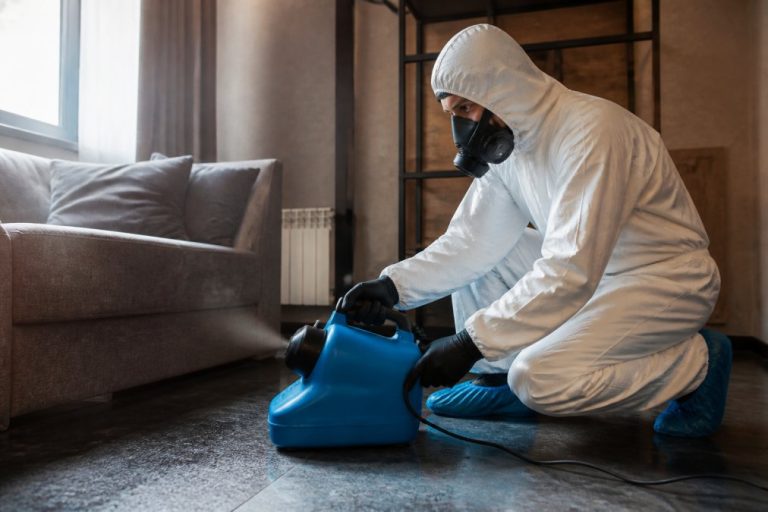
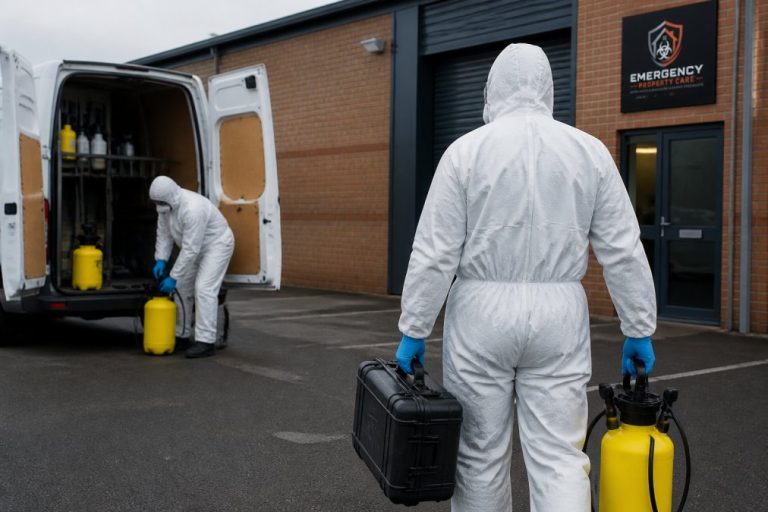
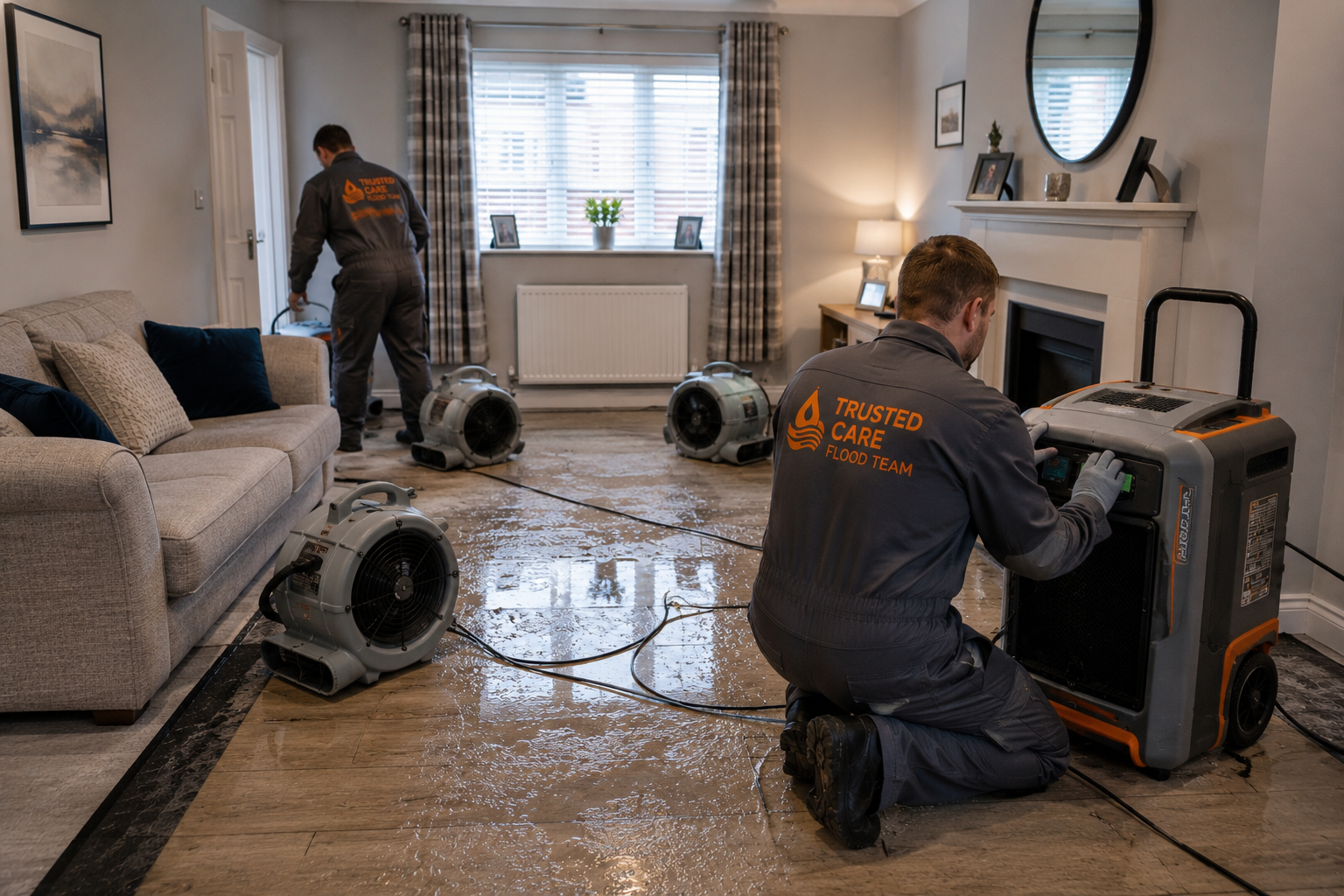
TrustedCare supports local authorities, housing teams, facilities managers and public-sector organisations with sewage extraction, contamination cleanup, affected-material removal and structural drying. We discuss the operational and reporting requirements before work begins so the quotation reflects the site rather than relying on a vague “deep clean” description.
Keep occupants, staff and visitors away from sewage-contaminated areas. Do not enter standing water where electrical equipment, sockets or damaged wiring may be involved. The drainage fault should be isolated or controlled before remediation proceeds.
What Sewage Decontamination Services Can Include
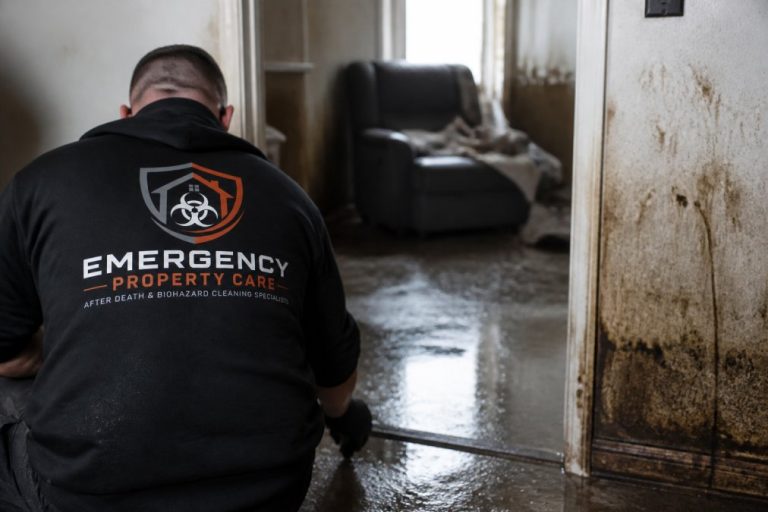
The correct scope depends on the source, volume, affected materials, occupancy, access and time before discovery. One incident may require a contained hard-surface clean; another may need extraction, controlled strip-out and monitored structural drying.
Emergency assessment
Review of the affected areas, likely contamination routes, immediate access controls and information needed to define the work.
Wastewater extraction
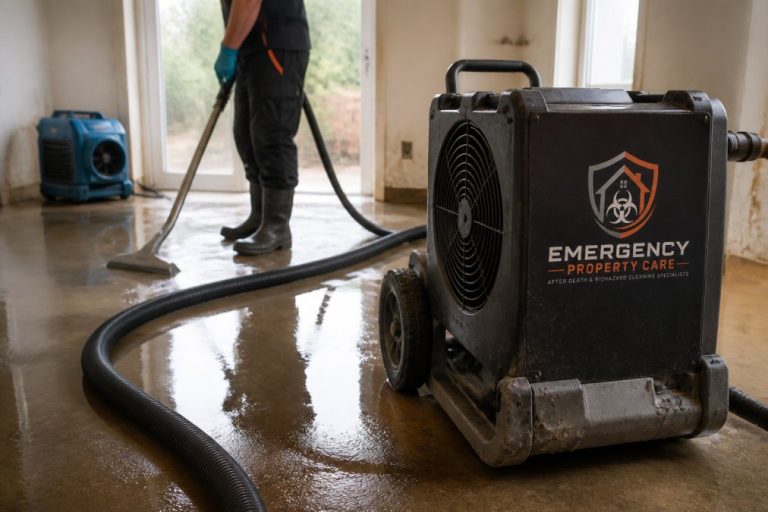
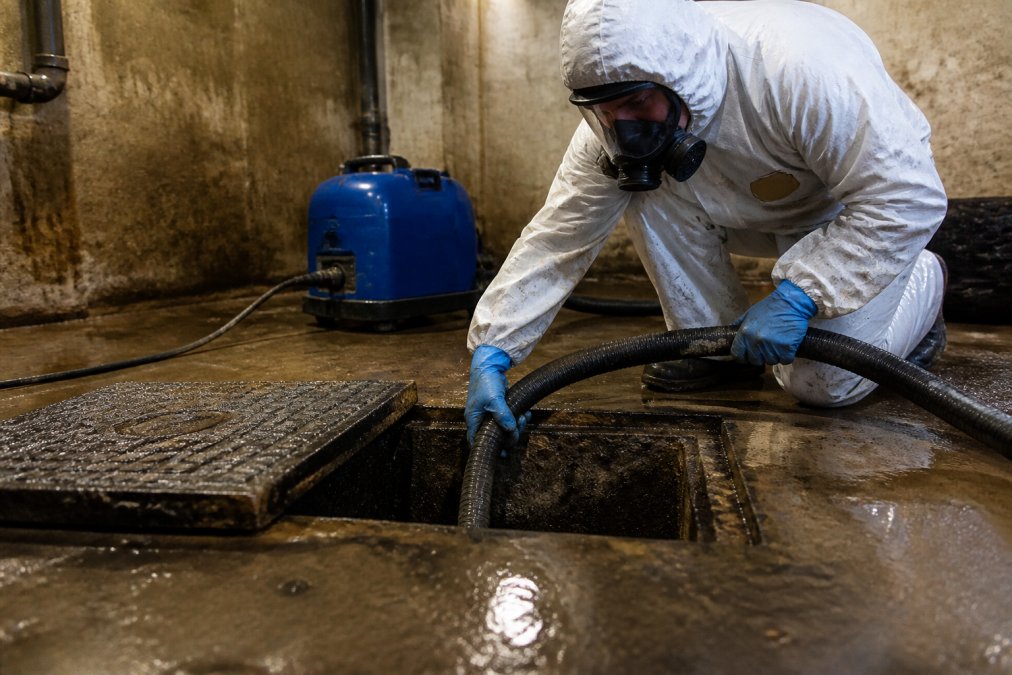
Removal of standing wastewater using equipment and working methods selected for the conditions on site.
Controlled removal
Removal of carpets, underlay, plasterboard, insulation or other porous materials where they cannot be reliably restored.
Cleaning and treatment
Physical removal of contamination followed by an appropriate surface-treatment process for the remaining materials.
Structural drying
Dehumidification, managed airflow and moisture monitoring where floors, walls or building materials remain wet.
Site records
Agreed photographs, scope records, moisture information and waste paperwork to support handover, audit or an insurance claim.
Drain clearance and sewage decontamination are separate services. A drainage contractor may identify and clear the blockage without cleaning the contaminated rooms. Equally, a remediation contractor cannot permanently resolve a continuing drainage fault. The quotation should state which organisation is responsible for each stage.
First Response to a Sewage Incident
- Protect people. Restrict access and move occupants away from the affected area without asking them to cross contamination.
- Consider electricity and other hazards. Do not touch electrical equipment or enter water where an electrical risk may exist. Use the appropriate competent person or emergency service where required.
- Control the source. Stop use of affected toilets, sinks or drainage and arrange for the blockage, pipe failure or sewer problem to be investigated.
- Record the incident safely. Note the discovery time, affected rooms, known source and people who may have entered the area. Photographs can help if they can be taken without exposure.
- Notify the correct internal contacts. This may include housing, estates, health and safety, insurance, procurement and communications teams.
- Obtain a defined remediation scope. Confirm whether the requirement includes drainage work, extraction, material removal, decontamination, drying, waste and reinstatement.
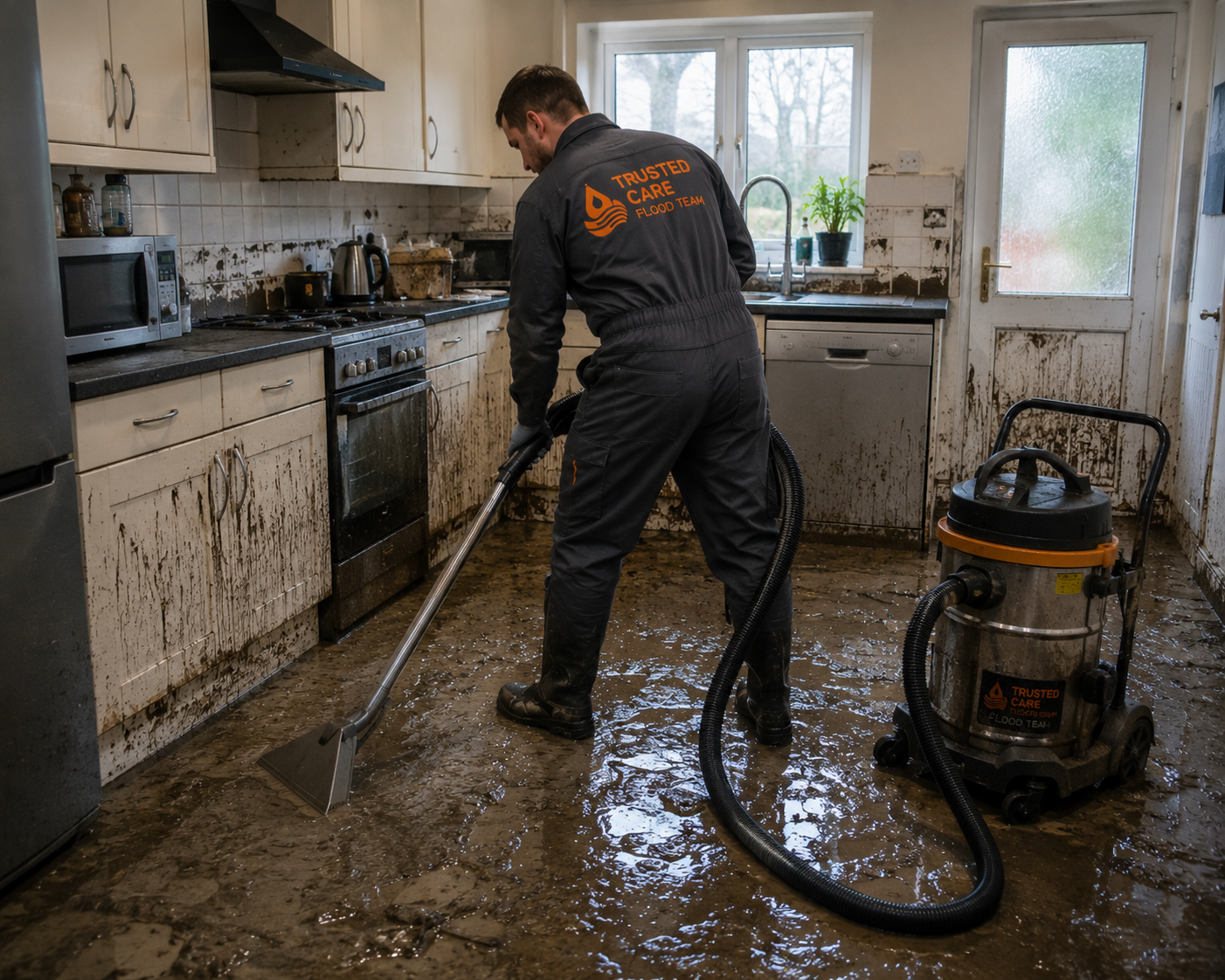
Provide the full site address, building type, rooms affected, likely source, approximate depth or spread, occupancy, electrical concerns, access restrictions and the person authorised to approve emergency work. Send photographs only where they have been obtained safely.
Risk Assessment and Site Controls
A site-specific assessment should consider biological contamination as well as physical hazards such as electricity, slips, confined access, damaged materials and manual handling. It should also identify who could be exposed, including residents, staff, visitors, contractors and vulnerable occupants.
The Health and Safety Executive’s COSHH guidance explains the duty to assess and control exposure to substances hazardous to health. COSHH can be relevant to biological agents associated with sewage and to cleaning or treatment products used during remediation. The controls selected must follow the assessment, product information and actual conditions on site.
Points the site assessment may need to cover
- the source and likely category of the wastewater;
- the visible and suspected concealed spread;
- the construction and absorbency of affected materials;
- electrical, structural, slip and access hazards;
- whether the area can be isolated from occupied parts of the building;
- the PPE, hygiene and welfare arrangements required;
- the method for moving equipment and waste without contaminating clean areas;
- ventilation and any risk created by uncontrolled air movement;
- the waste classification and intended disposal route; and
- the criteria for completing cleaning and drying.
Not every sewage incident is reportable under RIDDOR. Whether an injury, diagnosed occupational disease or dangerous occurrence must be reported depends on the facts and should be assessed by the responsible duty holder using current HSE RIDDOR guidance.
The Sewage Decontamination and Drying Process
1. Confirm the source is controlled
The drainage or plumbing problem must be stopped, isolated or managed. If wastewater is still entering, the cleanup scope may need to focus first on containment and damage limitation.
2. Survey and define the affected area
The assessment records visible contamination and considers adjoining rooms, service ducts, floor voids, wall bases and other concealed routes. Occupied and clean areas should remain separated from the work zone.
3. Extract standing wastewater
Bulk liquid is removed using suitable equipment. Extraction reduces the immediate volume but does not by itself clean or decontaminate the surfaces below.
4. Remove materials that cannot be retained
Absorbent materials may hold contamination beneath the visible surface. Decisions about carpets, underlay, plasterboard, chipboard, insulation and furnishings are made according to their condition, exposure and the agreed project scope.
5. Clean before applying surface treatment
Visible contamination and organic matter must be physically removed. Surface treatment is then selected and applied in accordance with the method statement and product instructions; it is not a substitute for cleaning.
6. Dry the building materials
Where moisture has entered the structure, drying equipment may be required after the contamination has been addressed. Equipment selection, placement and monitoring should reflect the building, affected materials and moisture readings.
7. Inspect, record and hand over
The completed work is checked against the agreed scope. Outstanding repairs, reinstatement or inaccessible areas should be identified clearly rather than being presented as completed remediation.
Discuss a Live Incident or Planned Requirement
Tell us the site location, building use, affected areas and procurement contact. We can discuss the likely service scope, information needed for a quotation and next steps.
Procurement and Quotation Requirements
A local authority’s procurement route depends on the contract value, urgency, existing arrangements, applicable legal regime and its own constitution or standing orders. A live incident does not automatically remove procurement obligations, and a direct award is not automatically available simply because work is urgent.
Procurement teams should decide the lawful route. Current central guidance explains when a direct award may be used under the Procurement Act. Separate or additional rules can apply in Wales, Scotland and to particular authorities or contracts, so the organisation’s own procurement and legal advice should govern the decision.
Information to include in the service brief
| Requirement | What to define | Why it matters |
|---|---|---|
| Site and access | Address, building use, occupied areas, keys, permits, parking and out-of-hours contact | Prevents delays and unsafe access assumptions |
| Affected area | Rooms, communal spaces, floors, walls, contents and suspected concealed spread | Establishes the physical scope |
| Drainage responsibility | Whether fault finding, unblocking, jetting or pipe repair is included or separately instructed | Separates source control from cleanup |
| Remediation | Extraction, removal, cleaning, surface treatment, odour work and containment | Avoids an undefined “deep clean” |
| Drying | Equipment, electricity, monitoring visits, reporting and completion criteria | Clarifies time and ongoing cost |
| Waste | Classification, containment, carrier, receiving facility and required paperwork | Supports duty-of-care records |
| Evidence | Photographs, site records, moisture readings, waste documents and handover information | Supports audit, insurance and contract management |
| Exclusions | Reinstatement, decorating, replacement flooring, plumbing repairs and unaffected contents | Prevents assumptions after award |
| Price and changes | VAT, call-out, labour, equipment, visits and how additional work must be authorised | Controls variations and total cost |
A lower quotation may exclude material removal, waste, drying, monitoring or reinstatement. Ask every bidder to price against the same written requirement and explain how hidden contamination or additional work will be reported and approved.
Documents to request before instruction
- the proposed scope and exclusions;
- relevant risk assessment and method statement arrangements;
- evidence of appropriate insurance for the instructed work;
- details of training or competence relevant to the task;
- the proposed waste carrier and disposal route;
- the equipment and monitoring approach where drying is included;
- the escalation and variation-authorisation process; and
- the records that will be supplied at handover.
Do not assume that a trade-body membership or general cleaning certificate proves competence for sewage remediation. Evaluate the proposed method, people, equipment, waste arrangements and evidence for the actual contract.
Waste Handling and Environmental Responsibilities
Sewage-contaminated carpet, underlay, plasterboard, insulation, furnishings and other removed materials need to be assessed and handled through an appropriate waste route. The correct classification and paperwork depend on the waste, jurisdiction and destination; not every load uses the same form.
For work in England and Wales, the government’s Waste Duty of Care Code of Practice explains the checks and records expected when waste is transferred. Hazardous waste movements may require consignment documentation rather than an ordinary waste transfer note. Scotland has its own regulator and procedures.
A clear waste record may include
- a description and classification of the material removed;
- the quantity or estimated volume;
- the collection date and site of origin;
- the carrier’s identity and registration details;
- the receiving facility and relevant authorisation;
- the appropriate transfer or consignment documentation; and
- the person who authorised or signed the movement.
If sewage or contaminated water may have entered a watercourse or surface-water drain, the responsible organisation should use the relevant environmental regulator’s incident-reporting route. In England, sewage pollution can be reported through the government’s environmental incident service. Different contact routes apply in Wales and Scotland.
Paperwork for solid contaminated material leaving in a vehicle does not, by itself, record or resolve a discharge to a drain, surface water system or watercourse. Treat environmental notification as a separate decision.
Evidence and Handover Records
Agree the required evidence before work starts. A generic completion email may be insufficient for housing, audit, insurance or facilities teams, but it is equally unhelpful to request tests or certificates that are not appropriate to the method and scope.
Depending on the instruction, the handover pack may include
- the final agreed scope and any approved variations;
- before, during and after photographs;
- a record of areas and materials treated or removed;
- product or method information relevant to the work;
- moisture readings and drying progress records where drying was included;
- waste transfer or consignment documentation where applicable;
- details of inaccessible, excluded or outstanding areas;
- recommendations for repairs or reinstatement; and
- the final invoice matched to the authorised scope.
If your organisation requires a particular form of completion record or sanitisation statement, specify the wording and evidence expected at quotation stage. No document should claim that uninspected areas are clean, dry or safe.
Planned-Response Arrangements
Pre-planning can reduce decision time when sewage affects an occupied block or public building. The most useful arrangement is one that defines authority to act, site access, service boundaries and reporting before the emergency occurs.
Named contacts
Establish daytime and out-of-hours contacts for housing, estates, health and safety, procurement and contractors.
Priority sites
Identify vulnerable-occupant buildings, repeated drainage locations, basements and sites with complex access.
Defined authority
Record who can approve emergency mitigation, additional works, temporary access controls and resident communication.
Standard information
Use a consistent incident form covering location, source, occupancy, photographs, access, utilities and affected materials.
Agreed evidence
Set the expected photographs, reports, waste documents, moisture information and invoice references in advance.
Post-incident review
Record recurring causes, response delays, access problems, scope changes and preventative actions.
For related planning information, see TrustedCare’s emergency decontamination guide for public housing, commercial sewage-cleanup guide and flood cleaning and structural-drying service.
Source control, sewage extraction, contamination removal, surface treatment, waste handling, structural drying and reinstatement are distinct parts of a project. A reliable quotation states which parts are included, which are excluded and who is responsible for each one.
Frequently Asked Questions
What types of local-authority sites can require sewage decontamination?
Incidents can affect council housing, communal entrances, corridors, offices, public conveniences, community facilities, storage areas, plant rooms and other managed buildings. The response depends on the building use, occupants, materials and extent of contamination.
Does a drainage contractor also clean the contaminated property?
Not automatically. Drainage work may locate and clear a blockage or repair pipework, while the internal remediation can require wastewater extraction, affected-material removal, cleaning, surface treatment and drying. Confirm the boundary between the two services.
Can sewage-contaminated carpet or plasterboard be retained?
Absorbent materials can hold contamination beneath the visible surface. Whether a material can be retained depends on its type, condition, exposure, accessibility and the agreed remediation method. Carpet, underlay, plasterboard and insulation often require removal when significantly affected.
What information is needed for an initial quotation?
Provide the site address, building use, rooms or communal areas affected, likely source, visible spread, affected materials, occupancy, access restrictions, electrical concerns, available photographs and the name of the person authorised to approve work.
Can the building remain occupied during the work?
That decision depends on the extent and location of contamination, the ability to isolate the work area, access routes, ventilation, vulnerable occupants and other site risks. The responsible organisation should make the occupancy decision using the site assessment and appropriate professional advice.
Is structural drying included in sewage cleanup?
It may be included, but it should be stated explicitly. Removing wastewater and cleaning visible surfaces does not confirm that floors, walls or cavities are dry. Drying can require equipment, electricity, repeat moisture readings and additional visits.
What paperwork should be agreed before work starts?
Agree the quotation, scope, exclusions, variation process, access requirements, site-control arrangements, waste records and expected handover evidence. The exact documentation should match the project and the authority’s contract requirements.
Can TrustedCare support a single incident or a planned requirement?
Contact TrustedCare with the site location, building type, affected area and procurement contact. We can discuss the incident or planned requirement and confirm whether the location, timing and requested scope can be supported.
England, Scotland & Wales
Request a Sewage-Decontamination Assessment
Contact TrustedCare about a live incident, quotation request or planned-response requirement. Provide the postcode and what is known about the affected building so we can discuss the next step.
You can also send an enquiry through the TrustedCare contact page.

TrustedCare Editorial Team publishes UK guidance on specialist cleaning and biohazard remediation, including after-death cleaning, flood restoration and contamination control. Content is written for homeowners, landlords and housing providers seeking clear, practical information.