Emergency Flood Restoration Response Time: What to Expect
Quick answer: make contact as soon as it is safe to do so, but do not assume that every contractor can guarantee a fixed arrival time. Location, weather, road access, demand, contamination and equipment availability all affect mobilisation.
A prompt response can reduce the time water remains in contact with flooring, walls, furnishings and other building materials. However, emergency attendance, water extraction, cleaning and structural drying are separate stages with different timescales.
The first priority is safety. Do not enter a property affected by electrical, gas, structural or fast-moving-water hazards simply to begin cleaning more quickly.
How Quickly Should a Flood-Restoration Team Respond?
An emergency restoration provider should gather the essential information promptly, assess the urgency and explain what attendance may be possible. A responsible company should not promise a precise arrival time until it has checked location, travel conditions, available staff and equipment.
Initial telephone assessment should establish:
- The property address and postcode.
- The source of the water, if known.
- Whether standing water remains.
- Whether sewage or external floodwater is involved.
- The number of rooms and floors affected.
- Whether electrical or structural hazards are suspected.
- Whether the water source has been stopped.
- When the flooding was discovered.
- Whether the insurer has been contacted.
- How the team can access the property.
Attendance may be possible within hours in some circumstances. During widespread storms, regional flooding, dangerous road conditions or periods of exceptional demand, response can take longer.
TrustedCare provides a 24/7 contact service. Attendance and mobilisation will be confirmed according to the location, circumstances and available capacity.
Why a Prompt Flood Response Matters
Water can move beyond the visibly wet area through joints, cavities, insulation and absorbent building materials. The longer materials remain wet, the more difficult drying and restoration may become.
Possible consequences of delay include:
- Water spreading beneath floor finishes.
- Swelling or distortion of timber-based materials.
- Damage to plasterboard, insulation and decorations.
- Corrosion of metal components.
- Contamination being transferred into unaffected areas.
- Persistent damp and odour.
- Conditions becoming suitable for mould growth.
- A larger area requiring cleaning or removal.
These problems do not follow an exact universal clock. The rate of deterioration depends on the water source, temperature, ventilation, construction and materials affected.
Safety comes before speed: do not enter if there is standing water near electrical equipment, a smell of gas, visible structural movement, a sagging ceiling or another immediate hazard.
What Happens During the First Response?
The first visit is normally used to assess the incident, confirm safety requirements and determine the immediate mitigation work.
Depending on the circumstances, the contractor may:
- Confirm access and hazards: identifying electrical, structural, contamination and other risks.
- Investigate the water source: establishing whether water is still entering the building.
- Inspect the affected areas: looking beyond visible standing water.
- Take moisture readings: checking walls, floors and other materials where appropriate.
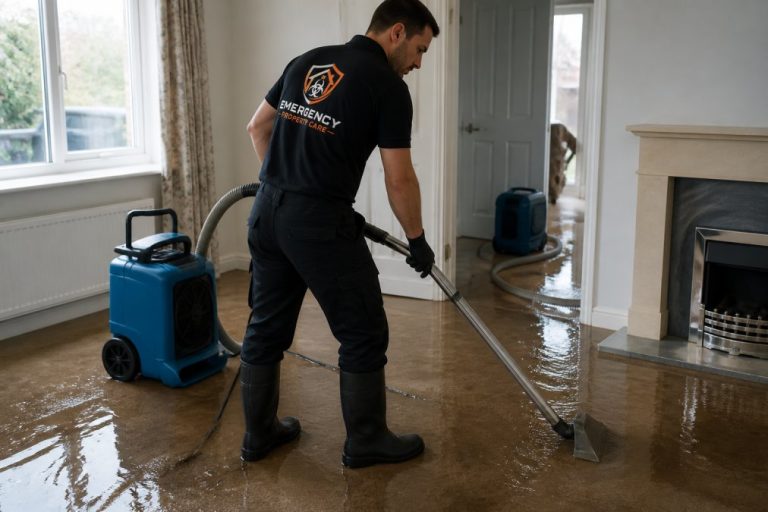
- Plan extraction: selecting suitable equipment and a lawful discharge or disposal route.
- Separate affected areas: reducing unnecessary movement between contaminated and clean areas.
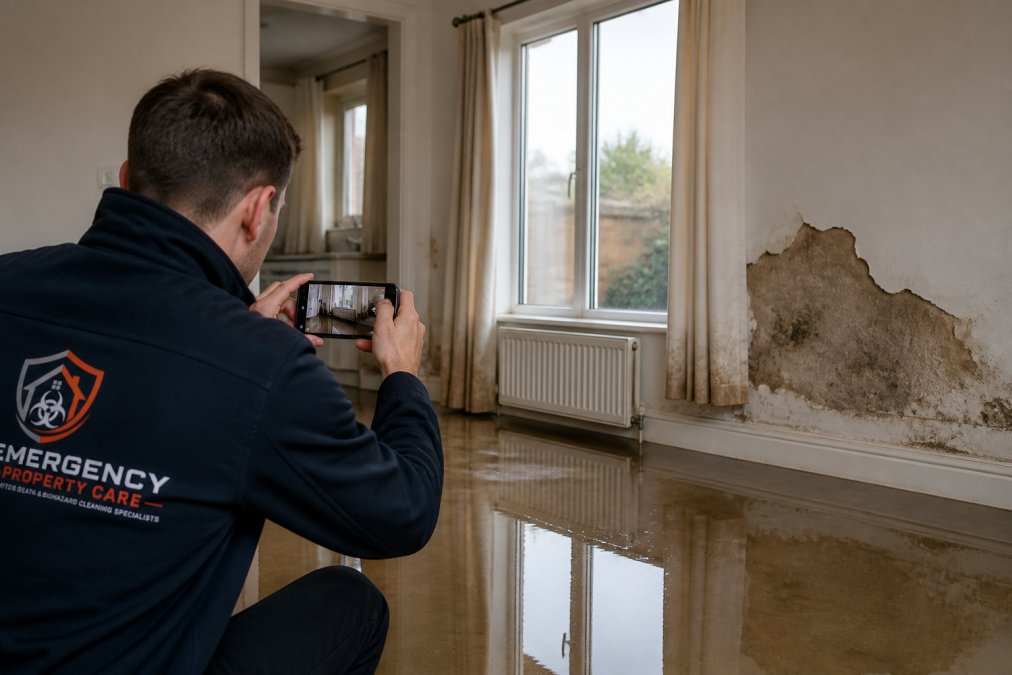
- Record the condition: taking photographs and preparing an initial scope.
- Begin agreed mitigation: where it is safe, authorised and practical to do so.
What Affects Emergency Flood-Restoration Response Time?
Location and Travel Conditions
Distance from the available team, traffic, road closures and weather can all affect arrival. Rural locations are not automatically subject to a particular delay, and urban properties are not guaranteed a faster response.
Widespread Flooding
Demand can rise sharply when a storm or river flood affects many properties simultaneously. Contractors, equipment suppliers, electricians and waste services may all experience pressure at the same time.
Property Access
Locked premises, unsafe entrances, restricted parking, flats without lift access and incomplete address information may slow attendance or equipment setup.
Water Source and Contamination
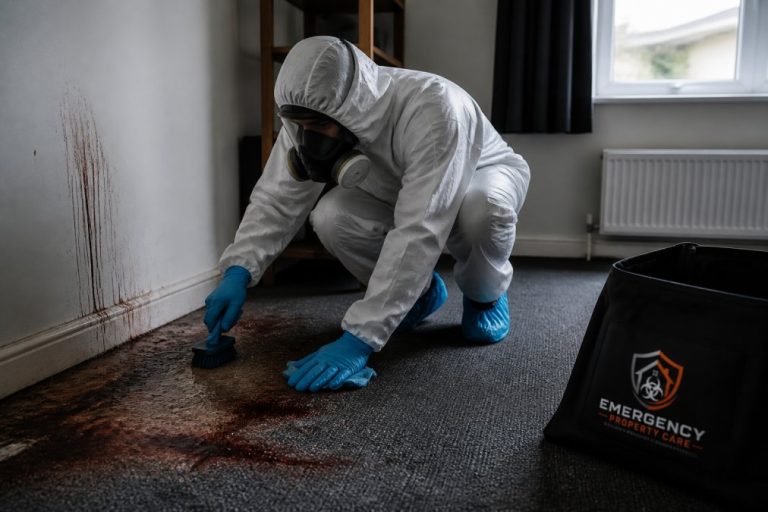
Sewage and external floodwater may require additional protective equipment, containment, cleaning and waste controls. The team may need more information before selecting the correct equipment.
Equipment and Staffing
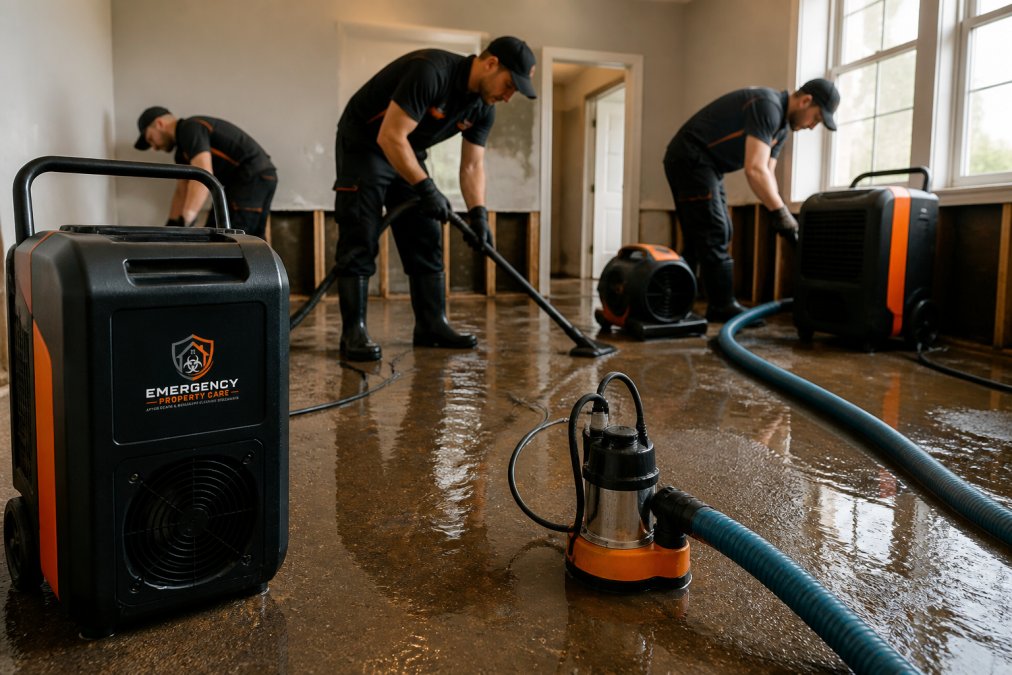
The provider needs sufficient extraction, cleaning and drying equipment for the size of the loss. A fast arrival without appropriate capacity does not necessarily produce faster recovery.
Insurance Instructions
Some insurers want to approve the contractor or scope before extensive work begins. Emergency steps may still be necessary to protect people and prevent avoidable damage, but photographs and written records should be kept.
Need an Emergency Flood Assessment?
Tell TrustedCare where the property is, what caused the flooding and whether standing or contaminated water remains.
How Long Does Water Extraction Take?
Water extraction and structural drying are not the same. Extraction removes standing or recoverable water. Drying then reduces moisture remaining within the building materials.
A limited escape of water may be extracted during one attendance. A large property, deep water, restricted access or continuing water ingress can require longer or repeated work.
Extraction time depends on:
- The volume and depth of water.
- Whether water continues to enter the property.
- The number of affected rooms or floors.
- Pump and extraction-equipment capacity.
- Electrical and structural safety.
- Where extracted water can be discharged or transferred.
- Whether mud, silt, sewage or debris must also be removed.
The contractor should not describe the property as dry simply because visible water has been removed.
How Long Does a Flooded Property Take to Dry?
Some limited water-damage incidents may dry within several days. Properties with saturated floors, walls, insulation or multiple affected rooms may require several weeks. A reliable completion date cannot be calculated from room count alone.
Drying time is influenced by:
- The construction of the floors and walls.
- The materials affected.
- Water depth and duration.
- Temperature and humidity.
- Whether insulation or cavities are wet.
- The amount of material removed.
- Air movement and dehumidification capacity.
- Whether areas are accessible to the drying system.
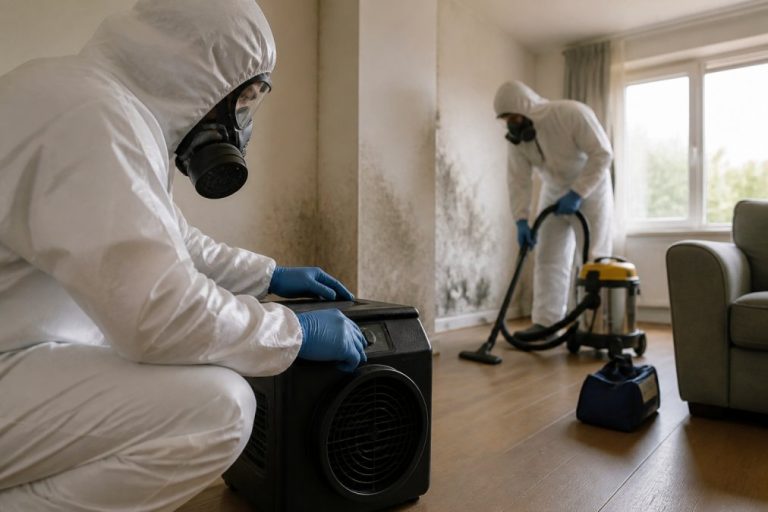
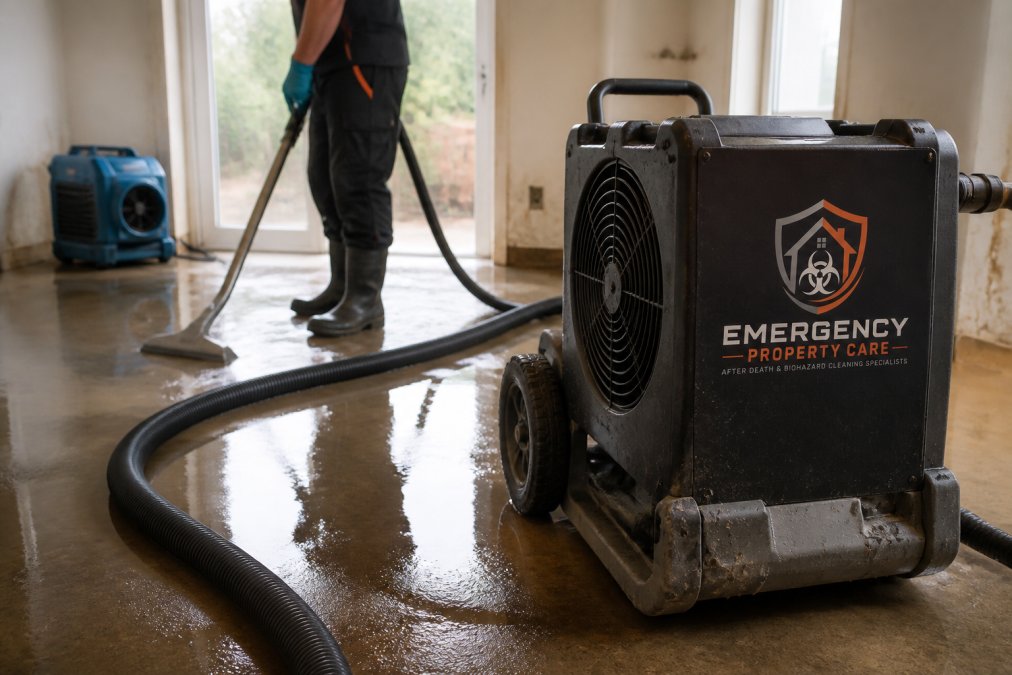
A professional drying programme may involve dehumidifiers, air movers and regular moisture monitoring. Equipment should be positioned and adjusted according to readings rather than placed randomly.
Completion targets should reflect the material and unaffected reference areas. A single universal moisture percentage is not appropriate for every construction material.
Read our guides to drying after flood damage and preparing a property for flood restoration.
Do not redecorate too early: a surface can feel dry while moisture remains beneath it or deeper within the material. Reinstatement should be based on suitable assessment and moisture records.
What to Do While Waiting for Professional Help
Only take action when it is safe. Do not enter a hazardous property to rescue possessions or take photographs.
Recommended Actions
- Call 999 if anyone is in immediate danger.
- Follow instructions from emergency services and utility providers.
- Stop an internal water source only if this can be done safely.
- Contact the insurer or broker promptly.
- Take photographs and video from safe areas.
- Record when the flooding was discovered.
- Keep people and pets away from affected areas.
- Prepare address, access and water-source information.
- Move completely dry items only if there is a safe route.
- Keep records of emergency expenditure and communications.
Actions to Avoid
- Do not touch electrical equipment while standing in water.
- Do not use an ordinary household vacuum to extract water.
- Do not enter external floodwater or sewage unnecessarily.
- Do not remove carpets or wall materials before recording the damage and checking insurer requirements.
- Do not move dripping contaminated items through clean rooms.
- Do not use fuel-powered equipment inside the property.
- Do not start uncontrolled pumping without knowing where the water can be discharged.
Domestic ventilation or equipment may help with a very small, clean-water incident once electrical safety has been confirmed. However, household fans and dehumidifiers may not be sufficient where water has entered structural materials or several rooms.
Insurance Documentation During Emergency Response
Contact the insurer as soon as reasonably possible. Ask whether it will appoint a loss adjuster or contractor and what emergency work can begin before formal approval.
Useful records may include:
- Photographs and video taken before work starts.
- The date and time the flooding was discovered.
- The suspected water source.
- An initial inspection or scope of work.
- Moisture readings and drying records.
- Details of equipment installed and collected.
- A record of materials removed.
- Waste-transfer documentation where applicable.
- Itemised quotations and invoices.
- Completion records and remaining recommendations.
Do not assume that a particular certificate or industry standard is required by every insurer. Ask what evidence your own insurer needs and make sure this is included within the contractor’s scope.
Our flood-damage insurance claims guide explains the process in more detail.
Mould and Other Secondary Damage
Damp conditions can support mould growth, but there is no exact universal time at which mould will appear in every flooded building. Temperature, humidity, materials, ventilation and existing contamination all affect the risk.
Prompt extraction and controlled drying can reduce that risk. Where mould is already present, the response should address both the growth and the moisture source supporting it.
Possible warning signs include:
- A persistent damp or musty smell.
- Visible spotting or discolouration.
- Condensation continuing after surface water has gone.
- Soft, swollen or distorted materials.
- High moisture readings during monitoring.
Simply applying a surface spray will not resolve mould caused by hidden or continuing moisture.
Frequently Asked Questions
How quickly should I call a flood-restoration company?
Contact a suitable provider as soon as the immediate safety situation is under control. Early contact allows the incident to be assessed and mobilisation options discussed, even if physical attendance cannot begin immediately.
Can a flood-restoration company guarantee a two-hour response?
A company should only give a firm attendance estimate after checking your location, road conditions, staff, equipment and current demand. Widespread flooding can affect normal response times.
How long does water extraction take?
A limited incident may be extracted during one visit. Large volumes, continuing water ingress, several affected floors, debris or restricted access can extend the work. Extraction should not be confused with the longer structural-drying stage.
How long does a house take to dry after flooding?
Drying can take from several days to several weeks depending on the construction, materials, water depth and extent of saturation. Moisture readings are more reliable than a fixed timetable.
Should I remove carpets while waiting?
Photograph the carpets and ask the insurer what evidence it requires. Do not handle sewage-contaminated or heavily saturated carpet without suitable protection and a safe disposal plan.
When can drying equipment be installed?
Equipment should only be installed once electrical and structural safety has been considered, standing water has been addressed and any necessary cleaning or contaminated-material removal has been planned.
Speak to TrustedCare
For help with emergency water extraction, flood cleaning or structural drying, contact TrustedCare with the property location and details of the incident.

TrustedCare Editorial Team publishes UK guidance on specialist cleaning and biohazard remediation, including after-death cleaning, flood restoration and contamination control. Content is written for homeowners, landlords and housing providers seeking clear, practical information.