How Long to Dry Out a House After a Flood? 2026 Guide
Extraction • Cleaning • Drying • Monitoring
How Long Does a House Take to Dry After a Flood?
There is no reliable fixed number of days. A property is ready for repair when the affected materials have reached an appropriate measured drying target—not simply when the surfaces feel dry.
How Long Does Flood Drying Take?
The honest answer is that it depends on the property, the water source and the materials affected. A limited escape of clean supply water may dry much sooner than extensive external flooding that has entered masonry, insulation, floor voids or several rooms.
Drying and complete property restoration are also different. The drying stage may finish before building repairs, decorating and reinstatement. Following major flooding, the whole recovery process can take months.
Walls, floors and skirting boards can feel dry while moisture remains inside screeds, joists, insulation, cavities and subfloors. Drying should be supported by recorded measurements.
Contents
What Affects the Flood-Drying Time?
Drying time is influenced by several connected factors:
Water source
Clean supply water, appliance discharge, sewage and external floodwater require different cleaning and drying decisions.
Water volume
The depth, spread and length of exposure affect how far moisture enters the building.
Building materials
Plasterboard, insulation, timber, masonry, screed and floor voids retain and release moisture differently.
Hidden moisture
Water may travel beneath floors, behind units and through wall or ceiling cavities.
Environmental conditions
Temperature, relative humidity and ventilation influence evaporation and equipment performance.
Materials removed
Removing unsalvageable or contaminated materials can expose wet areas and change the drying plan.
| Situation | Likely effect | What may be needed |
|---|---|---|
| Limited clean-water escape | Usually the least complex when attended promptly. | Extraction, airflow, dehumidification and monitoring. |
| Several rooms affected | More material and hidden areas may need attention. | Zoned equipment and readings across several locations. |
| Sewage or external flooding | Cleaning, contamination control and removal may come before drying. | Specialist cleaning, appropriate disposal and drying. |
| Masonry, screed or cavities | Moisture may remain after exposed surfaces appear dry. | Longer monitoring and possibly specialist drying methods. |
Safe First Steps After Flooding
GOV.UK guidance says to check that it is safe to return and not turn water, gas or electricity back on until the utility company or an appropriately qualified engineer has checked it.
- Keep people and pets away from standing or contaminated water.
- Do not enter if electricity may be present. Do not rely on standing in water to reach the consumer unit.
- Contact the insurer promptly and obtain a claim reference.
- Photograph the water line and damaged areas when it is safe.
- Ask before disposing of insured items unless retaining them creates a health hazard.
- Identify the water source where possible without exposing yourself to danger.
- Arrange professional assistance where sewage, external water, structural movement or extensive saturation is involved.
Electrical warning
Damp conditions increase electrical risk. Keep away from unsafe installations and arrange inspection by a competent person before electrical equipment or circuits are used.
The Professional Flood-Drying Process
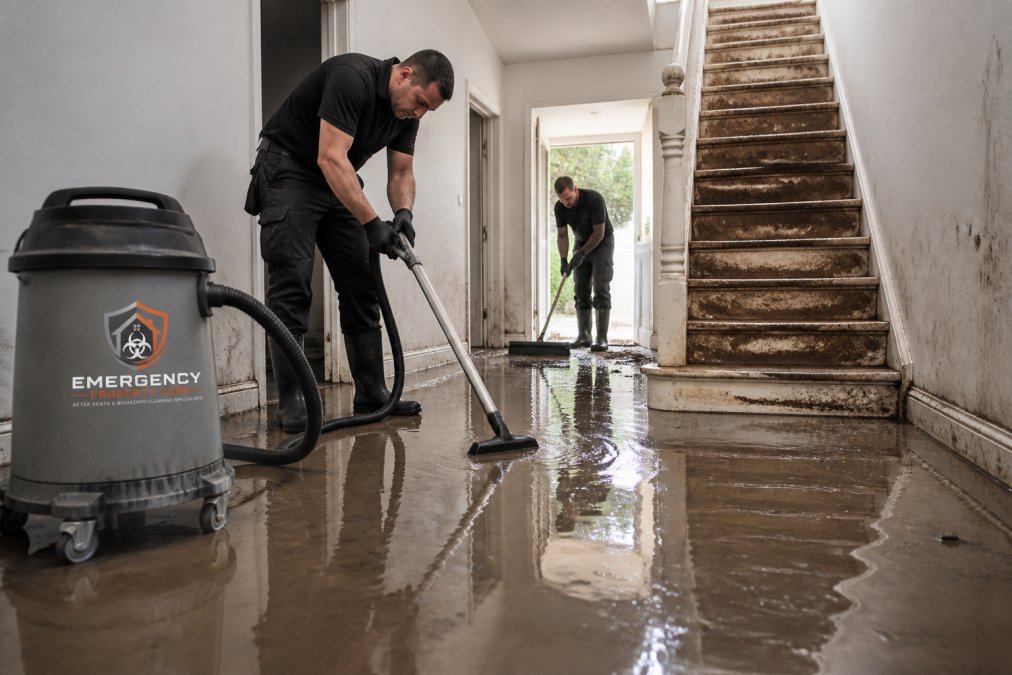
Professional drying is a managed process rather than simply placing a dehumidifier in the room.
1Initial assessment
The water source, extent of damage, contamination risk and safety concerns are identified.
2Damage documentation
Photographs, affected areas and initial readings are recorded before substantial removal or drying.
3Water extraction
Standing water is removed where it can be done safely. Efficient extraction reduces the amount that must evaporate.
4Cleaning and material decisions
Contaminated or unsalvageable materials are identified. Cleaning and removal may be required before airflow is introduced.
5Equipment installation
The drying equipment and layout are selected according to the materials, temperature, humidity and drying objective.
6Monitoring and adjustment
Conditions and material readings are reviewed. Equipment positions or settings may be changed as drying progresses.
7Drying completion
Final readings are compared with the agreed drying target or suitable unaffected reference areas before equipment is removed.
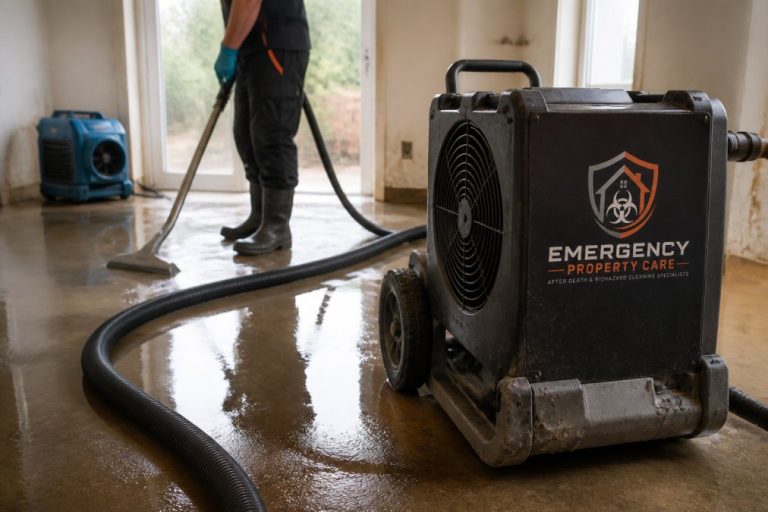
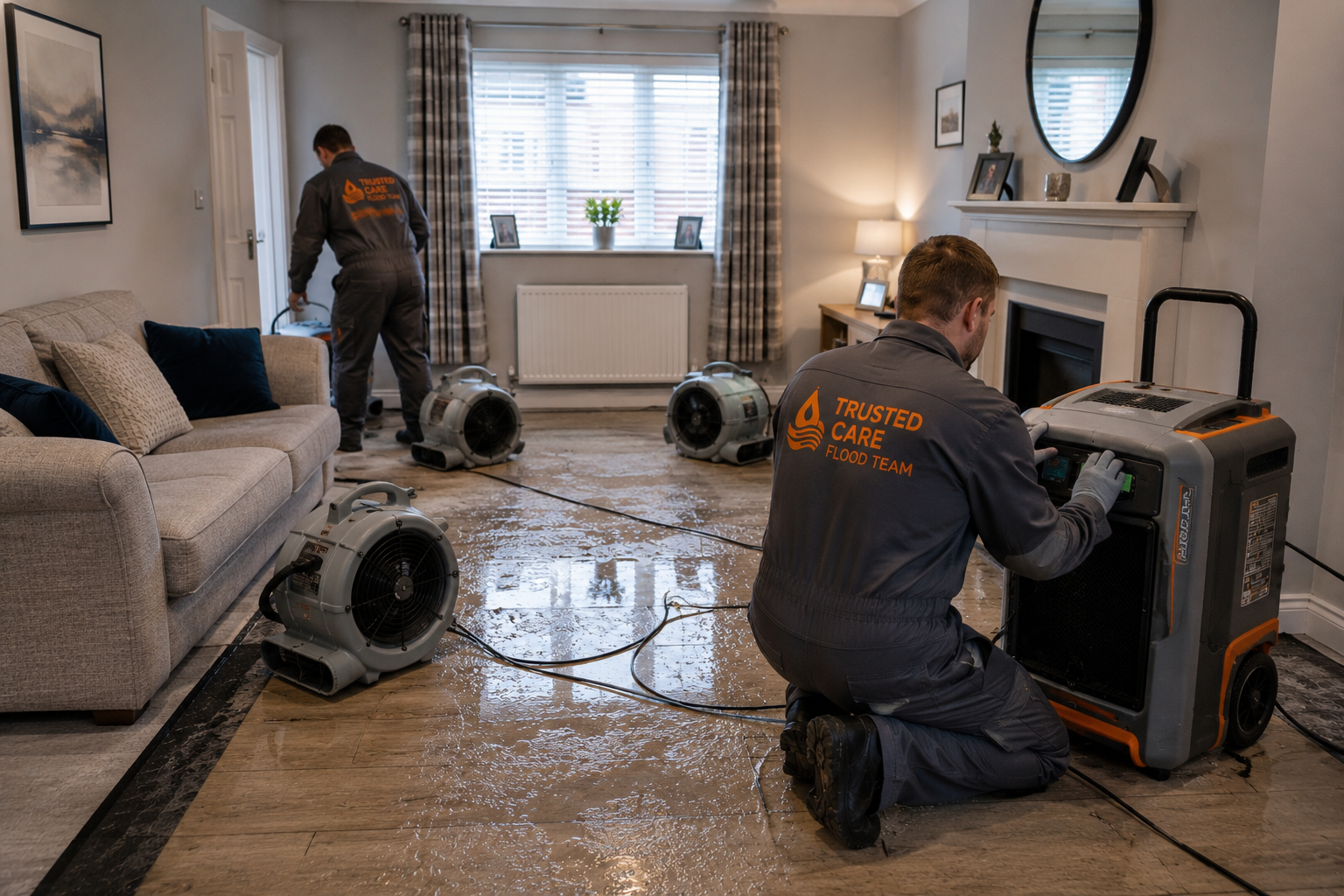
Professional Flood-Drying Equipment
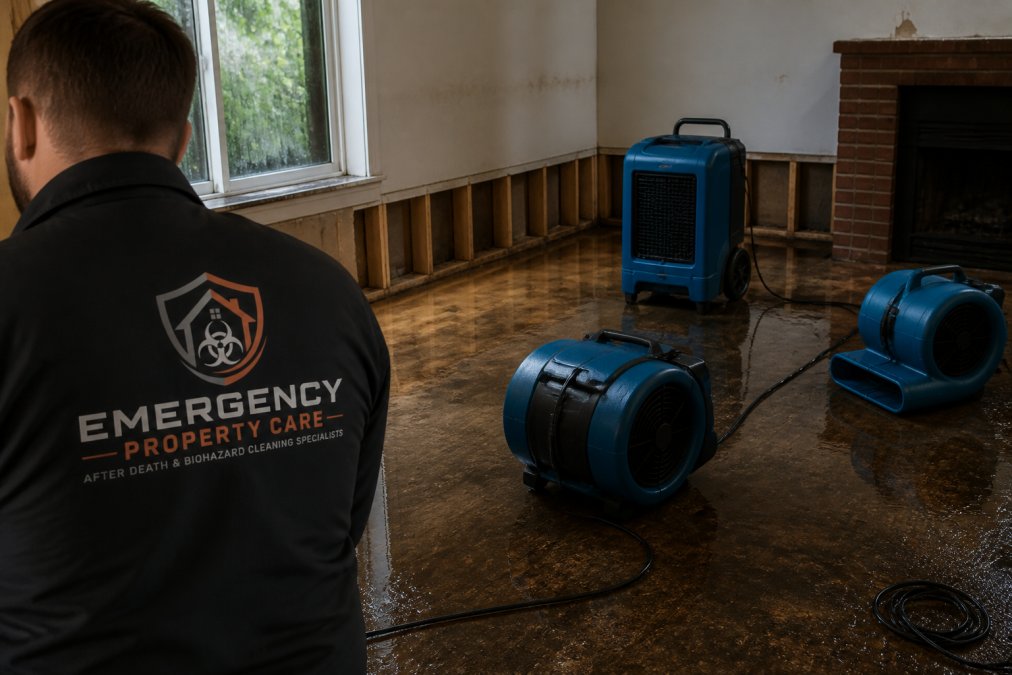
Several types of equipment may work together. More equipment is not automatically better; it must be correctly selected, positioned, powered and monitored.
Extraction equipment
Removes standing water and water held within suitable flooring or surfaces.
Dehumidifiers
Remove moisture from the air. Refrigerant and desiccant systems suit different operating conditions.
Air movers
Encourage evaporation across selected surfaces after contamination risks have been controlled.
Monitoring instruments
Measure environmental conditions and provide comparative readings from affected materials.
Specialist drying systems
May be used for floor voids, cavities, insulation layers or other concealed construction.
Air filtration
HEPA-filtered equipment may be appropriate where the assessment identifies airborne dust or particulate concerns.
How Moisture Levels Are Monitored
Monitoring prevents decisions being based solely on smell, appearance or a single surface reading.
A monitoring record may include:
- Initial readings from affected materials.
- Temperature and relative-humidity measurements.
- Locations where readings were taken.
- Comparisons with suitable unaffected materials or another agreed reference.
- Progress readings showing whether moisture levels are falling.
- Changes made to equipment or the drying plan.
- Final readings supporting drying completion.
Thermal imaging can help identify temperature differences that warrant further investigation, but it does not directly measure moisture. Suspected areas should be checked using appropriate instruments and inspection methods.
Electricity Costs During Drying
Professional drying equipment can operate for extended periods, so electricity consumption should be discussed before installation.
Simple electricity calculation
Equipment power in kilowatts × operating hours × electricity price per kWh = estimated cost.
Add the estimated consumption of each machine. Actual consumption may differ where equipment cycles on and off or uses different operating settings.
Ask the contractor to record the equipment type, quantity, rated power and installation period. If an insurance claim is involved, ask the insurer whether additional electricity costs are covered and what evidence it requires.
Do not switch off or reposition equipment without discussing it with the drying contractor. Doing so can interrupt the drying plan or leave areas untreated.
Reducing the Risk of Mould After Flooding
Mould risk increases while building materials remain damp. There is no single deadline that applies to every property, material and environmental condition.
Risk reduction includes:
- Stopping the water source where it is safe.
- Extracting standing water.
- Removing contaminated or unsalvageable materials where necessary.
- Using a suitable ventilation or dehumidification strategy.
- Monitoring humidity and material moisture.
- Avoiding premature decorating or installation of new flooring.
- Investigating continuing musty odours or visible mould.
Opening windows is not always compatible with a dehumidification plan. The correct approach depends on outdoor conditions, equipment and the drying strategy. Follow the contractor’s instructions rather than combining methods without assessment.
When Is It Safe to Move Back After a Flood?
Dry walls alone do not establish that an entire property is ready for occupation. Reoccupation may depend on:
- Structural safety and safe access.
- Inspection of affected electrical, gas and water services.
- Removal and cleaning of sewage or other contamination.
- Completion of the agreed drying target.
- Absence of unresolved mould or odour sources.
- Availability of safe washing, cooking and sanitation facilities.
- Any requirements imposed by the insurer, landlord or responsible authority.
The Association of British Insurers notes that major flood restoration may involve loss adjusters, surveyors, specialist cleaning and drying companies, builders and decorators.
How TrustedCare Can Help
TrustedCare provides flood-damage cleaning and controlled drying support across England, Scotland and Wales for homes, rental properties, commercial premises and managed accommodation.
Depending on the incident and agreed scope, support may include:
- Assessment of accessible affected areas.
- Photographs and initial moisture readings.
- Water extraction where appropriate.
- Removal of agreed unsalvageable materials.
- Cleaning and sanitisation where contamination is present.
- Installation of suitable drying equipment.
- Progress monitoring and equipment adjustment.
- Final moisture readings and agreed completion records.
- A Certificate of Sanitisation where applicable to contaminated-water cleaning.
- Communication with the insurer or loss adjuster when authorised.
Attendance and drying time depend on the location, water source, extent of damage and current availability. Provide the postcode and incident details so TrustedCare can discuss the likely next steps.
Frequently Asked Questions
How long does a flooded house take to dry?
There is no dependable standard number of days. Limited clean-water damage may dry relatively quickly, while saturated masonry, floor voids, insulation or several rooms can take considerably longer. Recorded readings should determine completion.
Can I use a domestic dehumidifier?
A domestic unit may help with a very limited clean-water incident, but it does not replace extraction, contamination assessment or moisture monitoring. Seek professional advice for extensive or contaminated flooding.
Should windows be open while using dehumidifiers?
Not automatically. The correct ventilation strategy depends on outdoor conditions and the drying system. Follow the equipment provider or drying contractor’s instructions.
How do I know whether the property is dry?
Completion should be supported by readings from the affected materials and suitable comparison points or another agreed drying target. Surfaces feeling dry is not sufficient evidence.
Can airflow spread sewage contamination?
Air movement should not be introduced blindly into a contaminated area. Sewage and other contamination must be assessed and controlled before equipment is positioned.
Will insurance cover drying electricity costs?
This depends on the policy and insurer. Keep equipment and electricity records and ask the insurer what evidence it requires.
Will TrustedCare provide drying records?
The documentation depends on the commissioned service. Confirm requirements before work begins. Moisture readings and agreed completion records may be provided as part of a managed drying service.
Need Help Drying a Flooded Property?
Tell TrustedCare the postcode, water source, affected rooms, approximate water depth and whether the insurer has been notified.

TrustedCare Editorial Team publishes UK guidance on specialist cleaning and biohazard remediation, including after-death cleaning, flood restoration and contamination control. Content is written for homeowners, landlords and housing providers seeking clear, practical information.