Certified Biohazard Remediation Services UK: What to Check
Blood • Bodily Fluids • Sewage • Contamination
Specialist Biohazard Cleaning and Decontamination
Professional biohazard cleaning uses a risk-led process to control exposure, remove contaminated material, clean affected areas and arrange appropriate waste disposal.
When Is Professional Biohazard Cleaning Needed?
Biohazard remediation is the controlled removal, cleaning and decontamination of material affected by blood, bodily fluids, human or animal waste, sewage and other potentially harmful biological contamination.
Professional assistance should be considered when the contamination cannot be handled safely through ordinary domestic cleaning. This may include:
- After-death and decomposition contamination.
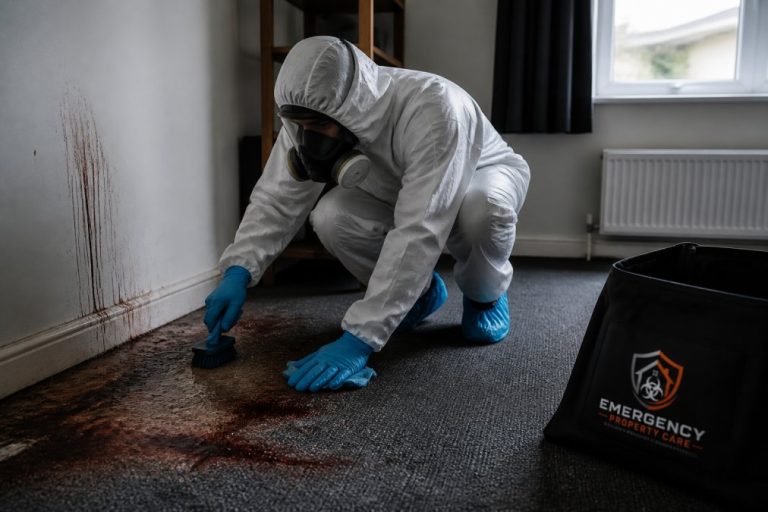
- Blood or bodily fluids following an accident or traumatic incident.
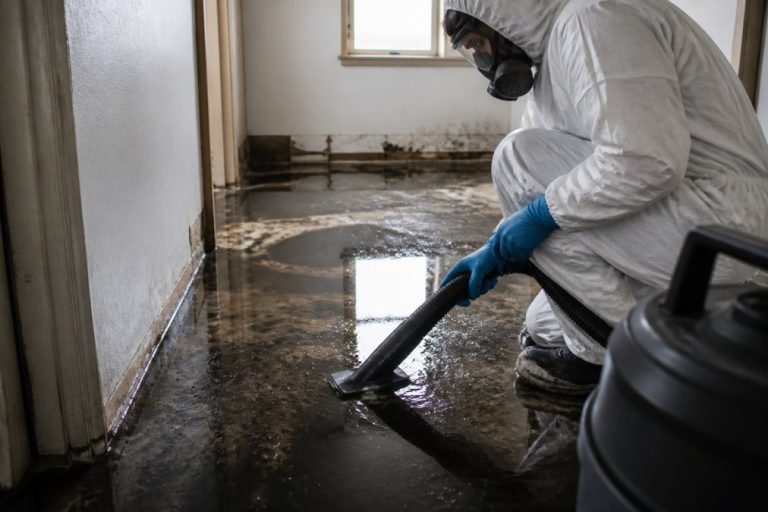
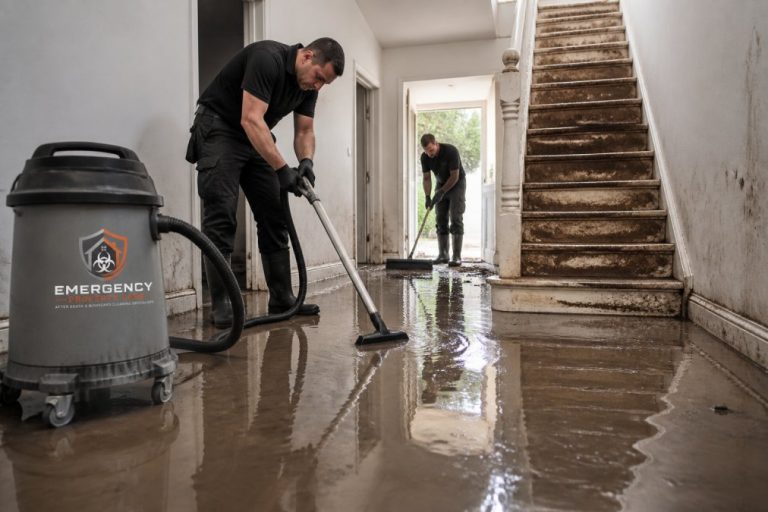
- Sewage entering a home, workplace or communal area.
- Discarded needles, sharps or drug-related waste.
- Faeces, urine or other contamination within a hoarded property.
- Contaminated porous materials such as carpets, mattresses and plasterboard.
- Situations where contamination has spread beyond the immediately visible area.
Keep people and pets away. Do not touch sharps, bodily fluids or sewage without appropriate controls. If there is an immediate danger, contact the emergency services or the relevant utility provider.
Contents
What Does “Certified Biohazard Remediation” Mean in the UK?
The phrase certified biohazard remediation services UK is commonly used when searching for a professional provider. However, “certified” does not identify one universal government-issued qualification covering every type of biohazard cleaning.
A company using the term should be able to explain which training, qualifications or third-party certifications its technicians hold and how these relate to the work being undertaken.
Evidence of competence may include:
- Training relevant to blood, bodily fluids and biological contamination.
- COSHH awareness and task-specific risk assessment.
- Correct selection, use and disposal of personal protective equipment.
- Sharps-awareness and exposure-incident procedures.
- Training in cleaning, disinfection and cross-contamination control.
- Appropriate waste-carrier registration and disposal arrangements.
- Insurance covering the services being provided.
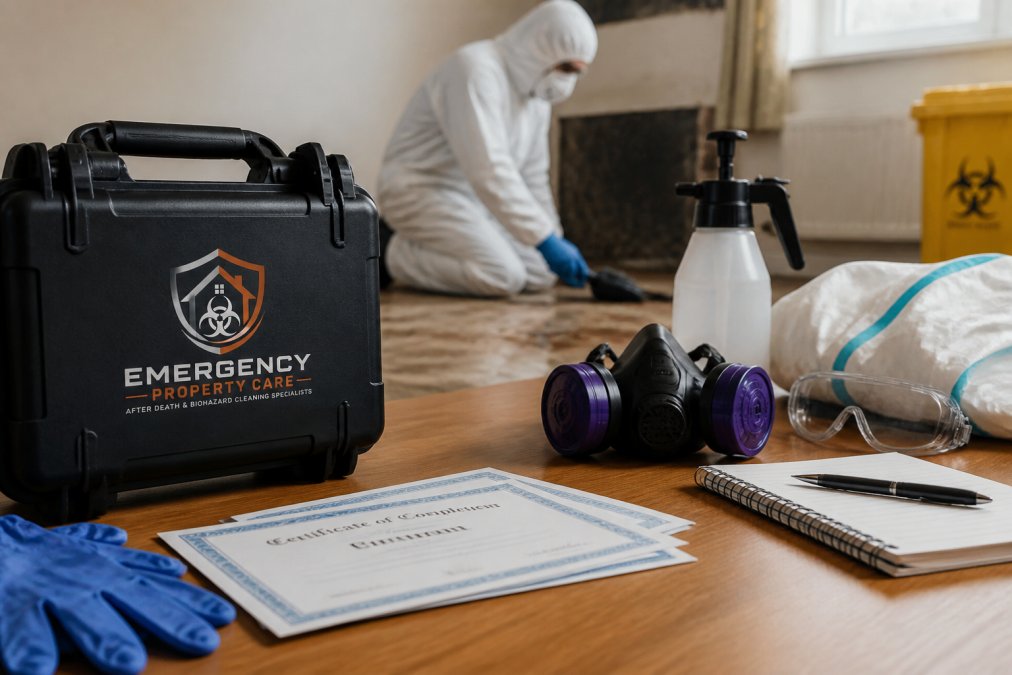
Ask to see the actual documents rather than relying on a website badge or the word “certified.” Our separate biohazard cleaning qualifications guide explains what to check.
Specialist Biohazard Remediation Versus Standard Cleaning
Standard cleaning is usually intended to remove ordinary dirt and maintain appearance. Biohazard remediation begins by considering exposure routes, affected materials, waste classification and the controls required to complete the work safely.
Standard cleaning
- Routine household or workplace soiling.
- No known biological contamination.
- Normal cleaning products and equipment.
- General waste arrangements.
Biohazard remediation
- A task-specific risk assessment.
- Controls to prevent exposure and cross-contamination.
- Removal of materials that cannot be suitably cleaned.
- Appropriate packaging, transport and disposal of waste.
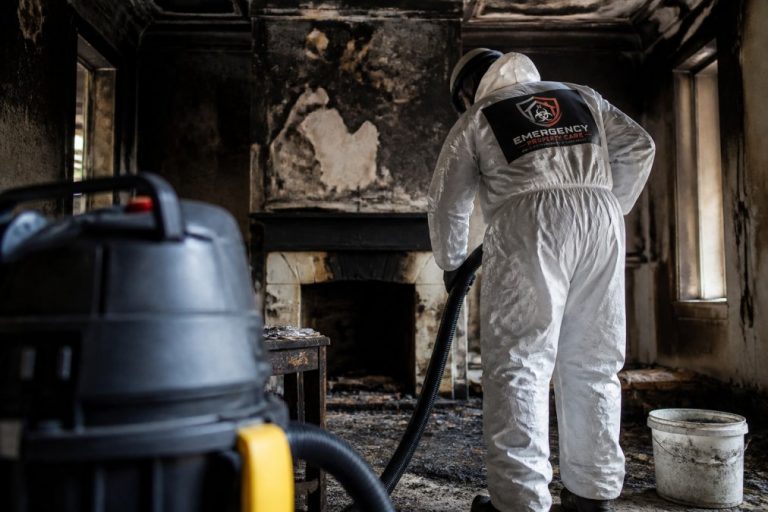
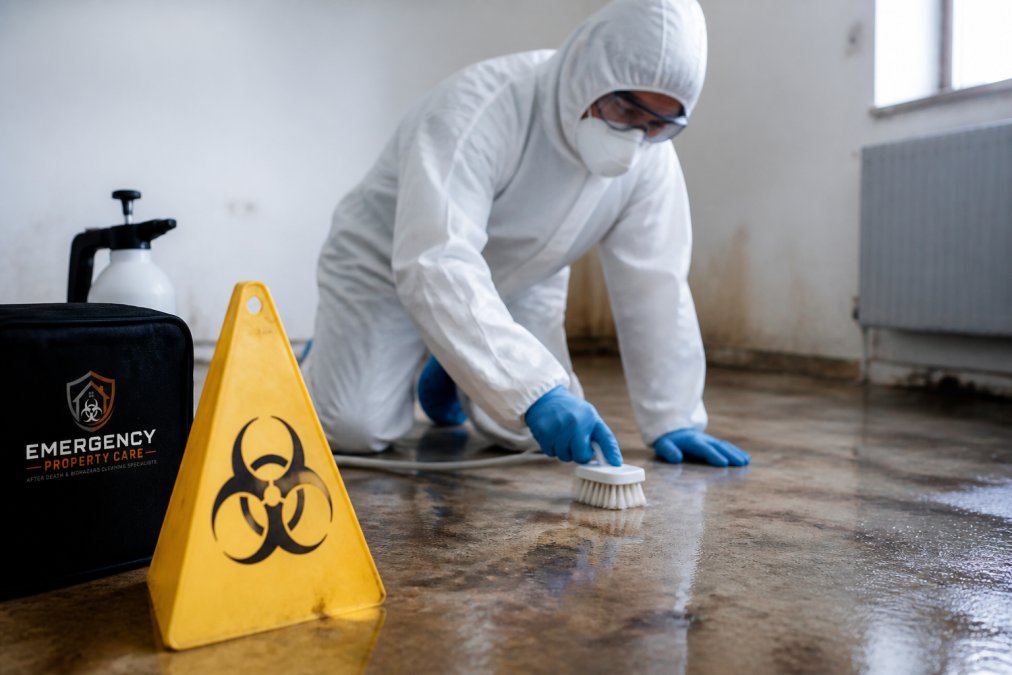
The protective equipment required depends on the assessment. Not every job requires the same coveralls, respiratory protection or machinery. Equipment should be selected because it controls an identified risk, not simply for appearance.
Cleaning and disinfection are separate stages. Physical contamination should be removed before an appropriate disinfectant is used according to its instructions, including the required concentration and contact time.
A note about ATP testing
ATP testing may be used as one cleanliness-checking tool, but it does not prove that every pathogen has been eliminated or that a property is sterile. It should not replace risk assessment, correct cleaning procedures or appropriate documentation.
The Biohazard Remediation Process
The exact procedure depends on the incident, property and materials involved. A structured project may include the following stages:
1Initial information
The customer explains what happened, the property type, affected areas and any known hazards.
2Site and risk assessment
The accessible areas and likely exposure routes are assessed so appropriate controls and equipment can be selected.
3Controlled working area
Access is restricted and working arrangements are established to reduce unnecessary movement between affected and unaffected areas.
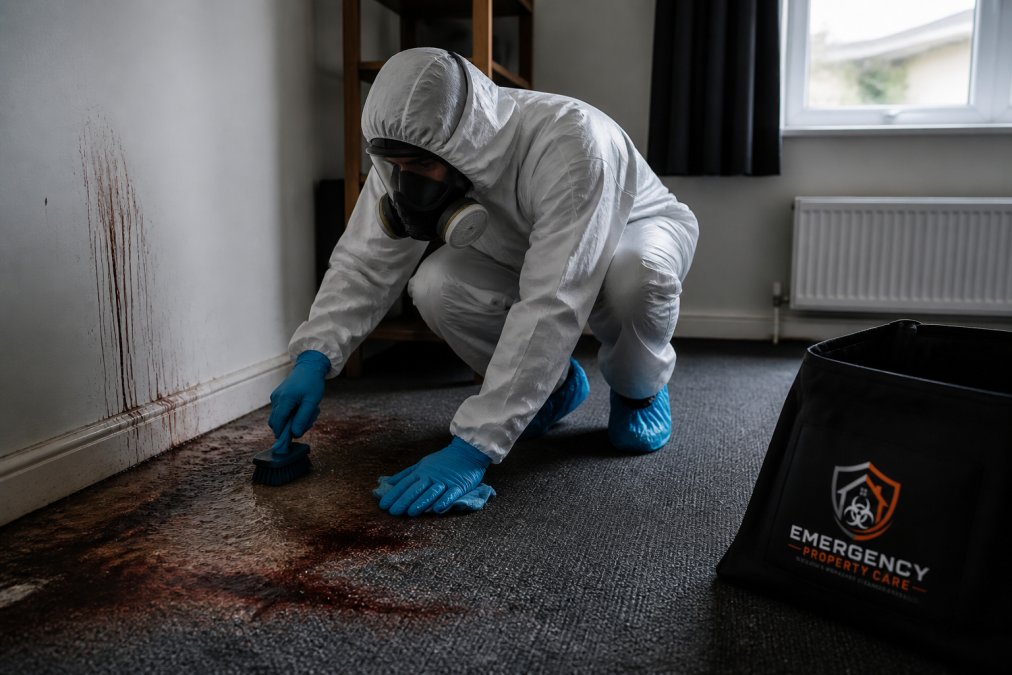
4Removal of contamination
Visible contamination is removed. Unsalvageable porous materials may need to be lifted, cut out or disposed of.
5Cleaning and disinfection
Affected surfaces are cleaned and an appropriate disinfectant is applied where required by the agreed method.
6Odour-source treatment
Where odour is present, the source is identified and treated. Fragrance alone is not a substitute for contamination removal.
7Inspection and records
The completed work is reviewed and the agreed service documentation is supplied.
Biohazard Waste Disposal Requirements
Not every item removed from a biohazard job is automatically classified in the same way. Waste must be assessed according to what it contains and the risk it presents.
Depending on the job, waste may require specialist packaging, labelling, transport and treatment. Sharps must be placed in suitable sharps containers rather than ordinary sacks.
The correct regulator depends on where the waste is collected. Waste carriers and transporters are regulated through the Environment Agency in England, Natural Resources Wales in Wales and SEPA in Scotland.
GOV.UK waste guidance explains that businesses must store waste securely, use appropriate documentation and check that the person transporting it is registered.
Where waste is removed, ask who will transport it, where it will go and which transfer or consignment documents will be provided. The exact paperwork depends on the waste classification and location.
How to Choose a Biohazard Cleaning Company
Choose a provider based on evidence relevant to the job, rather than a badge or an unsupported promise that the property will be “100% sterile.”
Competence
Ask which training technicians hold and how it relates to the contamination present.
Waste arrangements
Confirm who transports removed material and request the relevant registration and documentation.
Written scope
The quotation should explain the included areas, exclusions, proposed work and payment terms.
Before appointing a company, check:
- Company identity, address and contact details.
- Relevant training and experience.
- Insurance appropriate to the work.
- Risk-assessment and contamination-control procedures.
- Waste transport and disposal arrangements.
- A clear written quotation and scope.
- A realistic arrival window based on your location.
- The documentation supplied after completion.
What Does Biohazard Remediation Cost?
There is no dependable fixed price covering every biohazard incident. Publishing broad price ranges without inspecting the circumstances can be misleading.
The quotation may be affected by:
- The contamination type and affected area.
- The amount of material requiring removal.
- The number of technicians and time required.
- Access restrictions and working conditions.
- PPE, cleaning products and specialist equipment.
- Waste packaging, transport and treatment charges.
- Odour treatment or controlled drying requirements.
Photographs and incident details may allow an initial estimate. A quotation may need to be confirmed or adjusted after the affected area has been assessed.
See our guide to biohazard cleaning costs for a fuller explanation of the pricing factors.
Responsibilities of Property Owners and Managers
Responsibilities vary according to whether the property is a private home, workplace, rented property or managed building. Employers, landlords and managing agents may have additional duties towards employees, contractors, tenants and visitors.
Reasonable precautions may include restricting access, informing contractors about known hazards, avoiding disturbance of the contamination and checking that removed waste follows an appropriate disposal route.
If the incident is connected with an insurance claim, notify the insurer promptly and ask what evidence or authority it requires before work begins. Coverage depends on the cause of the incident and the individual policy; biohazard cleaning is not automatically covered in every case.
Read our guide explaining how restoration companies may support insurance claims.
How TrustedCare Can Help
TrustedCare provides specialist cleaning services across England, Scotland and Wales for homes, rental properties, commercial premises and managed accommodation.
Depending on the agreed service, support may include:
- Initial assessment of accessible affected areas.
- A written quotation or proposed scope.
- Removal of contaminated and unsalvageable material.
- Cleaning, disinfection and odour-source treatment.
- Waste documentation where applicable.
- Photographs and agreed completion records.
- A Certificate of Sanitisation where applicable to the agreed sanitisation or decontamination work.
What a Certificate of Sanitisation means
The certificate records that the specified sanitisation or decontamination service was completed within the agreed areas and scope. It should not be interpreted as a guarantee that every part of a building is sterile or free from every microorganism.
Frequently Asked Questions
Is there one official UK biohazard-cleaning certificate?
There is not one universal certificate covering every form of biohazard cleaning. Ask which specific qualifications and training the provider holds and how they relate to your incident.
Can ordinary cleaners deal with blood or bodily fluids?
Only if they have been properly trained, assessed and equipped for the risks involved. Routine cleaning arrangements may not provide suitable exposure controls or waste handling.
Does ATP testing prove an area is free from pathogens?
No. ATP testing can provide information about residual organic material, but it does not prove the complete absence of every pathogen.
Will insurance cover biohazard remediation?
It may, depending on the cause, policy wording, exclusions and authorised costs. Contact the insurer before substantial work begins wherever circumstances allow.
How quickly can TrustedCare attend?
Attendance depends on the location, incident and current availability. Provide the postcode and incident details so TrustedCare can give you a realistic arrival window.
Will I receive a Certificate of Sanitisation?
A Certificate of Sanitisation can be supplied where it is applicable to the sanitisation or decontamination service agreed. Confirm the required documentation before instructing the work.
Need Specialist Biohazard Cleaning?
Tell TrustedCare the property postcode, what happened, which areas are affected and whether any sharps, sewage, blood or bodily fluids are present.

TrustedCare Editorial Team publishes UK guidance on specialist cleaning and biohazard remediation, including after-death cleaning, flood restoration and contamination control. Content is written for homeowners, landlords and housing providers seeking clear, practical information.