Commercial Biohazard Cleanup Response Time: What to Expect
Table of Contents
- Why Commercial Biohazard Response Time Matters
- What Does Biohazard Cleanup Response Time Mean?
- What Affects the Arrival Time?
- What to Do Immediately After an Incident
- What Happens When the Cleaning Team Arrives?
- UK Workplace and Waste Requirements
- Certificate of Sanitisation
- Specialist Trauma and After Death Cleaning
- Insurance, Documentation and Business Downtime
- How to Prepare Your Business
- Frequently Asked Questions
Why Commercial Biohazard Response Time Matters
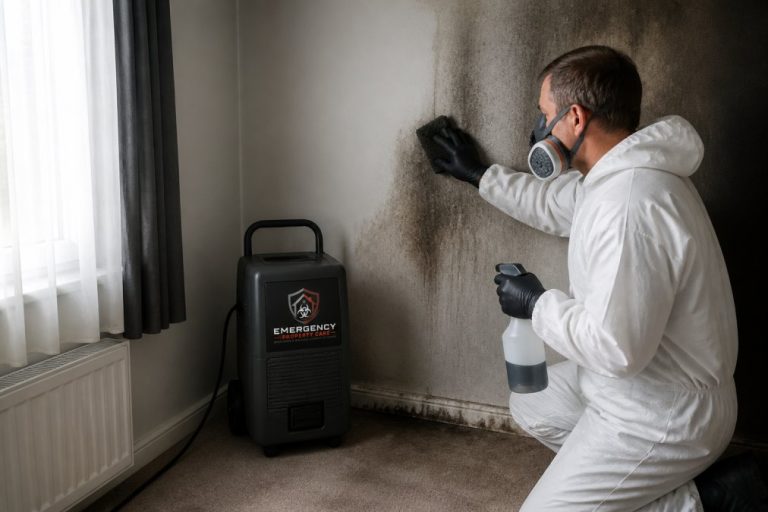
When a biological contamination incident occurs at commercial premises, the priority is to protect people, restrict access and obtain appropriate professional advice. A fast but properly planned response can help prevent people entering the affected area, limit contamination being transferred elsewhere and reduce disruption to the business.
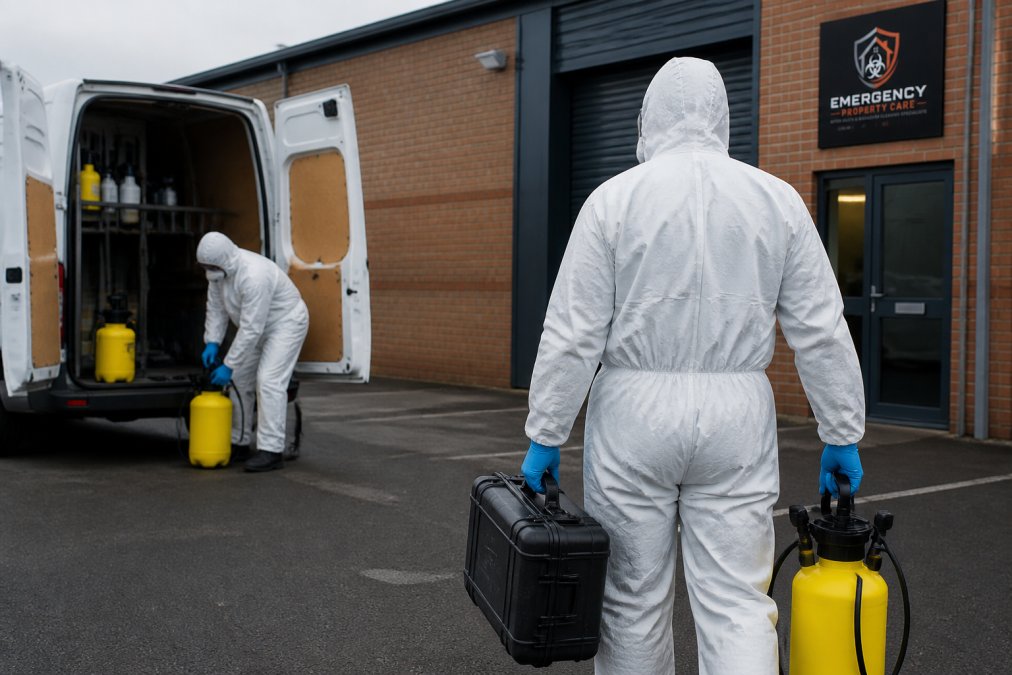
The commercial biohazard cleanup response time is the period between contacting a specialist provider and a suitably equipped team reaching the premises. It should not be confused with the total time required to complete the work. Cleaning time will depend on the type of contamination, the affected materials, the size of the area and whether anything must be removed.
TrustedCare assesses each incident individually. An accurate arrival estimate can normally only be provided after the location, access arrangements and known details of the contamination have been discussed.
What Does Biohazard Cleanup Response Time Mean?
Response time usually begins when the cleaning provider has received enough information to assess the request and arrange attendance. The initial telephone conversation is therefore important. The caller should be prepared to provide:
- The full address and postcode of the premises
- The nature of the incident, if known
- The approximate size and location of the affected area
- Whether police, ambulance or another authority is involved
- Whether the area has been isolated
- Any known risks, including sharps, chemicals or damaged structures
- Site access, parking, security and key-holder information
- A reliable telephone number for the person on site
Commercial premises vary considerably. An office, warehouse, hotel, restaurant, shop and supported-living facility may each require different access arrangements and control measures. For this reason, responsible providers should avoid making a universal arrival promise before checking the details.
Contact TrustedCare with the postcode, incident details and site-access information. We can assess the situation and explain the next appropriate step.
Contact TrustedCare →
What Affects the Arrival Time?
Several practical factors influence how quickly a workplace biohazard cleanup team can attend.
Location and technician availability
The distance between the available team and the premises is a major factor. Urban traffic, rural travel, road closures, weather and other live conditions may affect the estimated arrival time.
The type and extent of contamination
A small, contained incident may require different equipment and staffing from a large scene involving bodily fluids, decomposition, sewage, sharps or several affected rooms. The provider needs enough information to send suitable personnel and equipment.
Access to the property
Security gates, loading restrictions, limited parking, induction requirements and escorted access can delay entry even after the team reaches the site. Supplying these details during the first call helps the attending technicians prepare.
Other agencies at the scene
Cleaning must not begin until the relevant authority has released the affected area. This can apply following a crime, workplace accident, unattended death or other incident involving the police, coroner or emergency services.
Additional hazards
Fire damage, unsafe electrics, structural instability, asbestos, chemicals and contaminated water may require additional assessments or contractors before some cleaning activities can safely start.
What to Do Immediately After an Incident
While waiting for professional advice or attendance, the person responsible for the premises should concentrate on access control rather than attempting specialist cleaning.
- Deal with immediate danger. Contact the emergency services where there is an urgent threat to life, serious injury, fire, violence or another active emergency.
- Restrict access. Keep staff, customers, contractors and visitors away from the affected area.
- Do not touch or move contaminated items. Moving furniture or materials can spread contamination and may interfere with an investigation.
- Do not vacuum, sweep or pressure-wash the area. These actions may spread contaminated material.
- Keep a simple incident record. Note when the contamination was discovered, who restricted access and which organisations were contacted.
- Preserve relevant evidence. Do not alter a scene that is still under police, coroner or insurer control.
- Follow professional instructions. Provide accurate information and advise the cleaning company if the situation changes.
What Happens When the Cleaning Team Arrives?
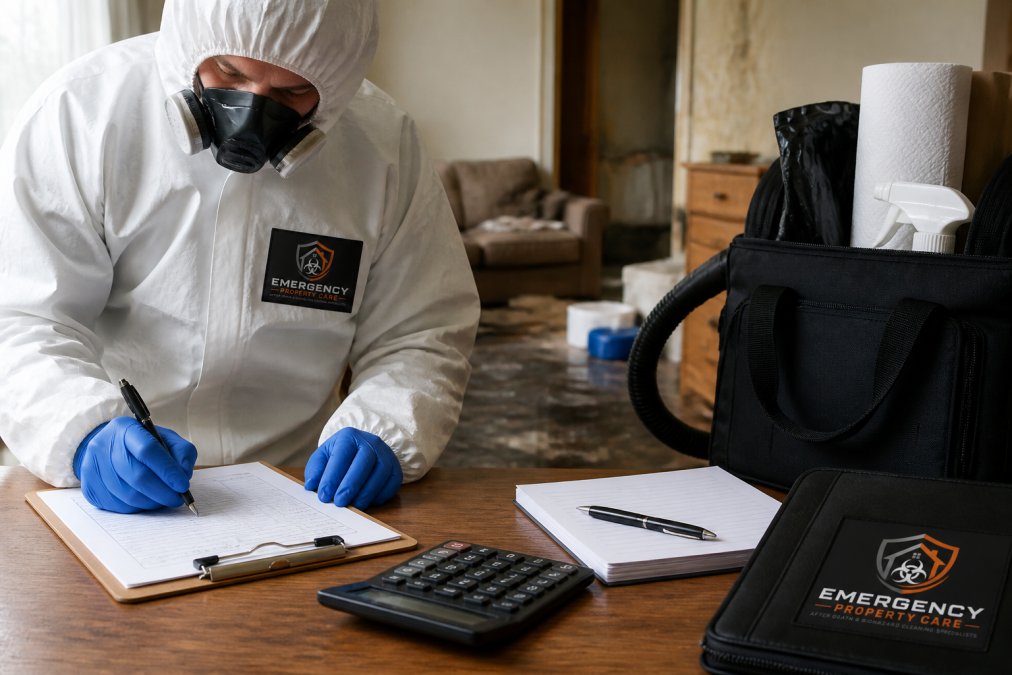
The exact procedure depends on the incident and the findings of the on-site assessment. A typical commercial response may include the following stages.
1. Initial assessment
The technicians assess the visible contamination, affected materials, access routes and any additional hazards. The assessment helps determine the required control measures, protective equipment and cleaning process.
2. Establishing a controlled area
The affected zone may be isolated to help prevent unauthorised entry and cross-contamination. The arrangements used will depend on the property and the nature of the incident.
3. Removal of contaminated materials
Some porous materials cannot always be effectively cleaned and may need to be removed. Any removal should be limited to what is reasonably required by the condition of the affected material.
4. Cleaning and disinfection
Visible contamination must be dealt with before appropriate disinfection. Products and procedures should be selected for the surfaces, contamination and conditions present rather than using a single treatment for every incident.
5. Waste handling
Contaminated waste must be classified, packaged, stored and transferred appropriately. The documentation supplied will depend on the waste produced and the disposal route used.
6. Deodorisation where required
Odour treatment may be needed after the source material has been removed and the affected area cleaned. Deodorisation is not a replacement for source removal and cleaning.
7. Final inspection and handover
The team checks the completed work against the agreed scope and explains any remaining limitations, recommendations or reinstatement work.
UK Workplace and Waste Requirements
Employers must assess and control risks that could expose workers to substances hazardous to health. This can include biological agents and contaminated bodily fluids. The appropriate response depends on the risk assessment, the people who may be exposed and the control measures available.
The Health and Safety Executive provides guidance on Control of Substances Hazardous to Health and on the decontamination of blood and body-fluid spillages.
Not every minor workplace spillage automatically requires an outside contractor. However, employees should not be asked to undertake work beyond their training, risk assessment, equipment or agreed responsibilities. Specialist assistance is particularly important where the contamination is extensive, has entered porous materials, involves decomposition, includes sharps or presents additional hazards.
Commercial waste must be handled responsibly and transferred to an authorised person. The UK Government explains the general responsibilities applying to business and commercial waste.
A cleaning company should not describe a property as sterile or entirely risk-free unless this is supported by an appropriate and clearly defined testing standard. The documentation should state what was actually inspected and completed.
Certificate of Sanitisation
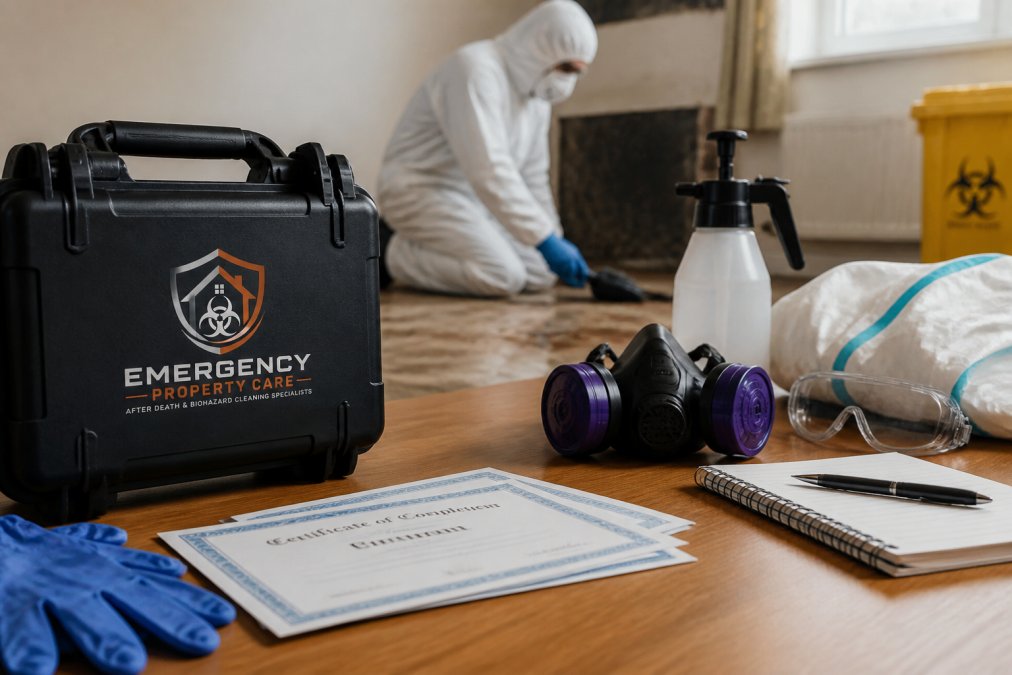
Where appropriate to the completed work, TrustedCare can provide a Certificate of Sanitisation. This records the property or area treated, the agreed scope of work and the date the work was completed.
The certificate can form part of the incident file supplied to the business, facilities manager, landlord, housing provider or insurer. It may be accompanied by photographs, waste documentation or a written completion record where these form part of the agreed service.
A Certificate of Sanitisation relates only to the areas and work identified on the document. It should not be interpreted as a guarantee that an entire building is sterile, permanently free from contamination or suitable for every possible use.
Businesses seeking documentation should discuss their requirements before work begins. This allows the attending team to confirm what records can reasonably be supplied.
For more information, see our guide to biohazard cleaning certification and documentation.
Specialist Trauma and After Death Cleaning
Some commercial biohazard incidents result from a serious accident, crime, suicide or unattended death. These situations require technical cleaning knowledge as well as discretion and sensitivity towards the people affected.
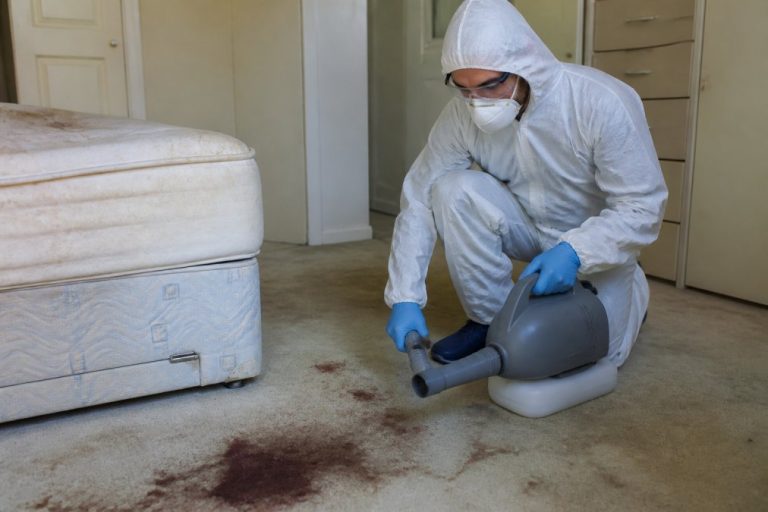
The police, coroner or other responsible authority may need to release the area before cleaning can begin. Once access is authorised, specialist trauma cleaning may involve removing bodily fluids, treating affected surfaces, removing materials that cannot be restored and addressing associated odours.
TrustedCare also provides specialist after death cleaning services for domestic and commercial properties across the UK.
Insurance, Documentation and Business Downtime
A biohazard incident can cause costs beyond the cleaning itself. Restricted access, damaged stock, staff relocation, repairs and temporary closure can all affect the business.
Notify the insurer or broker promptly if a claim may be made. Ask what evidence is required and whether approval is needed before permanent items are removed. However, people should not be exposed to a known hazard while waiting for an insurance decision.
Useful records may include:
- The time and date the incident was discovered
- Names of the people notified
- Photographs taken safely and without entering the restricted area
- The cleaning quotation and agreed scope
- Invoices and completion records
- Waste-transfer or consignment documentation where applicable
- The Certificate of Sanitisation where supplied
- Records of damaged stock or business interruption
Read our separate guide to the biohazard cleanup insurance-claim process for more information.
How to Prepare Your Business
Preparation can shorten avoidable delays and help managers respond consistently. A basic biohazard incident response plan for a UK business should identify:
- Who has authority to restrict access and contact specialist help
- How staff should report a suspected contamination incident
- Where barriers and warning signs are kept
- Who holds keys, alarm codes and out-of-hours access information
- Which insurer, broker, landlord or managing agent must be informed
- How vulnerable people will be protected or relocated
- How the incident and decisions will be documented
- Which managers can authorise urgent expenditure
The plan should be proportionate to the workplace and reviewed whenever the premises, staffing or relevant risks change.
Contact TrustedCare and provide the postcode, incident details and access information for an individual assessment.
Get Help Now
Frequently Asked Questions
How quickly can a commercial biohazard cleaning team arrive?
Arrival time depends on the location, team availability, traffic, access arrangements and equipment required. TrustedCare will assess the information provided and give the best available indication for that particular incident rather than quoting one universal response time.
Should employees clean a workplace biohazard?
That depends on the risk assessment, the extent of contamination and whether the employees have suitable training, equipment and procedures. Staff should not be expected to handle extensive or high-risk contamination without appropriate controls. Obtain specialist advice when the situation exceeds the business’s safe internal arrangements.
How long does commercial biohazard cleaning take?
The total cleaning time cannot be determined from the arrival time alone. It depends on the affected area, contamination type, materials involved, waste removal, drying or deodorisation requirements and any restrictions imposed by other agencies.
Will we receive a Certificate of Sanitisation?
Where appropriate and included within the agreed service, TrustedCare can supply a Certificate of Sanitisation describing the area and work covered. Discuss documentation requirements before work begins so the scope can be recorded accurately.
Can the business remain open during biohazard cleaning?
This depends on the location and extent of the contamination, the building layout and whether the affected area can be safely isolated. The responsible person should follow the site-specific risk assessment and advice provided by the relevant professionals.
Does insurance cover commercial biohazard cleaning?
Coverage depends on the policy, the cause of the incident, applicable exclusions and the evidence required by the insurer. Notify the insurer or broker promptly and retain all relevant photographs, quotations, invoices and completion documentation.

TrustedCare Editorial Team publishes UK guidance on specialist cleaning and biohazard remediation, including after-death cleaning, flood restoration and contamination control. Content is written for homeowners, landlords and housing providers seeking clear, practical information.