How to Document Fire Damage for an Insurance Claim
Knowing how to document fire damage can make an insurance claim easier to assess and reduce avoidable questions about what was damaged. The aim is to create a clear record of the property, damaged belongings, emergency costs and every important conversation connected with the claim.
Safety must come first. Do not enter a fire-damaged property simply to take photographs. Wait until the fire and rescue service or another responsible authority confirms that you may enter, and arrange a professional assessment if there are concerns about the structure, gas supply or electrical system.
Your insurance policy and insurer’s instructions take priority. Contact the insurer promptly, ask what evidence it requires and confirm what emergency cleaning or safety work can begin before its inspection.
Contents
- Before Entering a Fire-Damaged Property
- Contact Your Insurer
- How to Photograph Fire Damage
- Record a Video Walkthrough
- Create a Fire-Damage Contents Inventory
- Collect Supporting Evidence
- Requesting Fire and Rescue Service Records
- Documenting Fire-Damage Cleaning
- Common Documentation Mistakes
- If Your Fire-Damage Claim Is Disputed
- Frequently Asked Questions
Before Entering a Fire-Damaged Property
Fire can weaken ceilings, floors, walls and roof structures. Other hazards may include exposed electrical wiring, broken glass, standing water, unstable materials and harmful smoke or soot residues.
Do not assume that a building is safe because the fire has been extinguished. Follow the instructions given by the fire and rescue service. Where necessary, arrange checks by an appropriately qualified structural professional, electrician or Gas Safe registered engineer.
If you are permitted to enter, minimise contact with damaged surfaces and keep children and pets away. Do not disturb the suspected area where the fire started if the incident is still being investigated.
You do not need to place yourself at risk to obtain evidence. An insurer, loss adjuster, surveyor or specialist contractor may be able to document areas that are unsafe for you to access.
Need specialist fire and soot cleaning?
TrustedCare can assess the cleaning requirements once the property is available for safe access.
View our fire-damage cleaning service →
Contact Your Insurer
Notify your insurer as soon as reasonably possible and follow the claim instructions in your policy. There is no universal 24-hour deadline that applies to every policy, but unnecessary delays may make the claim more difficult to manage.
Ask the insurer:
- For your claim reference number and claims-handler details
- Whether a loss adjuster will visit the property
- What photographs, forms and supporting documents are required
- Whether damaged belongings should be retained for inspection
- Whether emergency cleaning, drying or security work can begin
- How temporary accommodation and emergency expenses should be recorded
- Whether quotations require approval before work is authorised
Buildings and contents cover are separate, and the amount payable depends on the policy wording, excesses, limits and cause of the incident. TrustedCare cannot determine whether a particular loss will be covered or guarantee that an insurer will approve an invoice.
For a wider explanation of the process, read our guide to fire-damage insurance claims in the UK.
How to Photograph Fire Damage
When safe access has been confirmed, photograph the property before cleaning, moving or disposing of damaged items whenever reasonably possible.
Begin with the outside
Take photographs of each accessible side of the building. Include the roof, windows, doors, external walls, outbuildings and any visible damage caused by fire, smoke or emergency access.
Photograph every affected room
Start each room with wide photographs showing its overall condition. Then take medium-distance and close-up images of individual areas and belongings.
Include:
- Burnt or heat-damaged materials
- Smoke staining and visible soot deposits
- Damage to ceilings, walls, floors, doors and windows
- Water damage resulting from firefighting
- Damaged furniture, appliances and personal belongings
- Contents inside accessible cupboards and drawers
- Damage to garages, lofts and outbuildings where safe to access
- Temporary work carried out to secure the property
Do not photograph only the most visibly burnt area. Smoke, soot and firefighting water may affect rooms and contents away from the source of the fire.
Make the photographs easy to identify
A useful photograph should show what the item is, where it was located and the type of damage present. Include several angles where one photograph does not show the full condition.
Avoid applying filters or editing the original images. Keep the original files because they may contain useful information about when each photograph was taken.
Record a Video Walkthrough
A video can show the relationship between different rooms and damaged areas more clearly than individual photographs. Begin outside, identify the property and move through each safely accessible area in a logical order.
Speak clearly while recording and identify:
- The room or area being filmed
- Visible fire, smoke, soot or water damage
- Belongings that have been damaged
- Areas that cannot be accessed safely
- Any temporary protection already installed
Move slowly and avoid rapid camera movements. A video supports the photographs but should not replace detailed still images and a written inventory.
Create a Fire-Damage Contents Inventory
Create a room-by-room list of damaged or destroyed belongings. Do not rely on memory alone; use your photographs and video to work systematically through each area.
| Information | Example |
|---|---|
| Room | Living room |
| Item | Three-seat fabric sofa |
| Brand or model | Record if known |
| Approximate purchase date | Month and year, or best estimate |
| Original cost | Use the receipt or payment record where available |
| Condition before the fire | Age, condition and previous damage |
| Fire-related damage | Burnt, heat-damaged, wet, smoke-affected or soot-contaminated |
| Photograph reference | LivingRoom-Sofa-01 |
Avoid deciding for yourself that every smoke-affected item must be replaced. Record its condition accurately and obtain suitable cleaning, repair or replacement advice where necessary. The insurer will assess the claim in accordance with the policy.
Collect Supporting Evidence
Receipts are useful, but they are not the only possible evidence of ownership or value. Depending on what the insurer accepts, supporting records may include:
- Purchase receipts and invoices
- Bank or credit-card statements
- Order-confirmation emails
- Product registrations and warranties
- Serial numbers and model details
- Photographs taken before the fire
- Valuations for jewellery, artwork or antiques
- Previous property inventories
- Cleaning, repair and replacement quotations
For household items purchased over many years, exact information may not be available. Mark estimates clearly instead of presenting them as confirmed facts.
Record additional expenses
Keep receipts for reasonable expenses connected with the incident, including temporary accommodation, essential replacement items, travel, property security and emergency work. Whether an expense is reimbursed depends on your cover and the insurer’s approval.
Keep a communication log
Record the date, time, name and organisation involved in important telephone calls. Save emails, letters, quotations and claim documents in one place. Confirm significant telephone decisions in writing where possible.
Create folders for property photographs, damaged contents, receipts, insurer correspondence, professional reports and contractor quotations. Keep an additional backup rather than storing the only copy on your phone.
Requesting Fire and Rescue Service Records
Ask your insurer whether it requires confirmation that the fire and rescue service attended or a more detailed incident report. The availability, contents, eligibility rules, price and processing time vary between fire and rescue services.
A basic attendance confirmation may only provide the date, time, location and general nature of the incident. A detailed report may contain additional operational or incident information, but it should not be assumed to determine liability or provide a structural-safety certificate.
Contact the fire and rescue service that attended for its particular procedure. The London Fire Brigade’s incident-report guidance, for example, distinguishes between a basic Confirmation of Attendance and chargeable detailed reports. Other UK services may operate differently.
Documenting Fire-Damage Cleaning
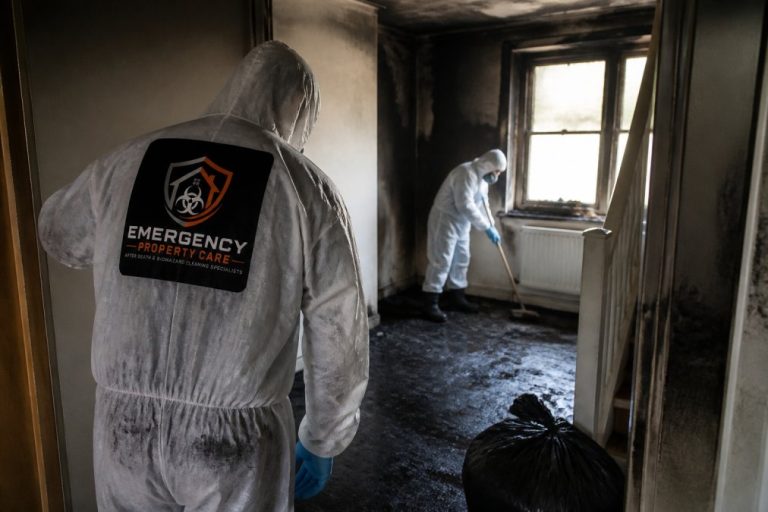
Before cleaning begins, agree on a written scope identifying the rooms, surfaces and contents included. The documentation should distinguish between specialist cleaning and work that requires other contractors.
TrustedCare provides specialist fire, smoke and soot cleaning. We do not undertake structural surveys, electrical repairs, plumbing or property reconstruction.
Depending on the agreed service, useful cleaning records may include:
- Before-and-after photographs
- The areas included in the cleaning scope
- A description of the work completed
- Items removed or referred for specialist assessment
- Waste documentation where applicable
- Outstanding damage or recommended follow-up work
- A quotation, invoice or completion report
These records may support an insurance claim, but they do not guarantee that the insurer will approve or reimburse the work.
Arrange a fire-cleaning assessment
Send TrustedCare the property location, photographs and any instructions provided by your insurer.
Contact TrustedCare →
Common Documentation Mistakes
Avoid these common problems:
- Entering the property before safe access has been confirmed
- Photographing only the room where the fire started
- Forgetting smoke, soot and firefighting-water damage
- Taking close-ups without wider photographs showing the location
- Cleaning surfaces before recording their original condition
- Disposing of belongings before asking the insurer what to retain
- Failing to retain receipts for emergency expenses
- Using vague descriptions such as “miscellaneous clothes”
- Keeping the only copy of the evidence on one device
- Authorising non-emergency work without checking the claim procedure
Necessary action should not be delayed where there is an immediate safety, security or further-damage risk. When urgent work is required, photograph the situation first if it is safe, retain invoices and ask the contractor to record what was done and why.
If Your Fire-Damage Claim Is Disputed
Ask the insurer to explain its decision in writing and identify the policy wording on which it relies. Check whether information is missing and use the insurer’s formal complaints procedure if you believe the claim has been handled incorrectly.
If the complaint remains unresolved, the Financial Ombudsman Service may be able to consider eligible home-insurance complaints after the insurer has had the opportunity to respond.
For a large or complicated loss, you may decide to obtain independent advice from a loss assessor, surveyor or solicitor. Check the provider’s fees, authority, contract terms and regulatory status before appointing it.
Frequently Asked Questions
What photographs should I take after a fire?
Take exterior photographs, wide views of each safely accessible room and close-ups of individual damage. Include fire, heat, smoke, soot and firefighting-water damage, as well as damaged belongings and temporary security work.
Should I clean before the loss adjuster arrives?
Contact the insurer and follow its instructions. Avoid unnecessary cleaning or disposal before evidence has been collected, but do not delay work required to control an immediate safety or further-damage risk. Document urgent work carefully.
What if I do not have receipts for damaged belongings?
Ask the insurer which alternative evidence it will accept. This might include bank statements, order emails, warranties, serial numbers, valuations or photographs showing the items before the fire.
Can I throw burnt belongings away?
Ask the insurer before disposing of damaged items. Where something must be removed for safety or hygiene reasons, photograph it thoroughly, add it to the inventory and retain the removal or disposal records.
Can TrustedCare prepare my insurance claim?
TrustedCare is not an insurer or loss assessor. We can provide quotations and records relating to the specialist cleaning work we assess or complete, but the policyholder remains responsible for submitting the claim and agreeing cover with the insurer.
A clear fire-damage record should combine photographs, video, a room-by-room contents inventory, receipts, professional reports and a log of important communications. Record facts accurately, follow your insurer’s instructions and never put yourself at risk simply to obtain evidence.
Need specialist help cleaning smoke, soot or fire residues from a property?

TrustedCare Editorial Team publishes UK guidance on specialist cleaning and biohazard remediation, including after-death cleaning, flood restoration and contamination control. Content is written for homeowners, landlords and housing providers seeking clear, practical information.