Resident Communication During Chemical Spills
Resident Communication During a Chemical Spill
How to give clear, safe updates without guessing whether residents should evacuate, remain indoors or ventilate the building.
During a chemical spill, residents need one verified instruction, a clear boundary around the affected area and a reliable time for the next update. The person communicating should not guess whether people should evacuate, stay inside, open windows or switch equipment off. Those actions depend on the substance and the advice of the emergency services or other competent responder.
What the First Resident Message Must Do
The first message should tell residents what action to take now, which area to avoid and where the instruction came from. It does not need a full explanation of the cause. Accuracy matters more than detail.
Give one action
Use the exact instruction confirmed by the emergency services or the person leading the incident response.
Name the boundary
Identify the affected floor, entrance, corridor, room or external area without encouraging people to approach it.
Set the next update
Give a realistic time or say that the next message will follow when emergency responders provide further advice.
Avoid naming the substance until it has been identified. Do not promise that an area is safe, speculate about exposure or repeat information from unofficial resident group chats.
Communication and Safety During the First Few Minutes
- Raise the alarm. Use the building’s emergency procedure and call 999 where the incident presents an immediate danger.
- Keep people away. Restrict access from a safe position. Do not enter the spill area merely to put up a sign or obtain a photograph.
- Identify information safely. If the substance name, container label or safety data sheet is already available without approaching the spill, pass that information to responders.
- Use confirmed instructions. Tell residents to evacuate, remain indoors, close openings or take another action only when that instruction comes from the emergency plan or a competent responder.
- Record messages. Keep the wording and time of each update so that the building has a clear incident record.
The Health and Safety Executive’s COSHH guidance explains the need for employers to assess and control exposure to substances hazardous to health. The safety data sheet can provide substance-specific information, but it should be interpreted by a competent person.
Who Should Be Notified?
The notification route depends on the substance, scale and location of the spill. A building plan should identify the responsible person, managing agent, emergency contacts and escalation route in advance.
| Contact | When | Information to provide |
|---|---|---|
| Emergency services | Immediate danger, injury, serious symptoms, fire or explosion risk, significant release or unknown substance. | Address, exact location, known substance, visible hazards, symptoms, number of people affected and safe access point. |
| Residents at risk | As soon as a verified protective instruction is available. | Action to take, area to avoid, who issued the instruction and when the next update will follow. |
| Responsible person or managing agent | Immediately under the building’s emergency procedure. | Known facts, actions already taken, emergency-service status and residents who may need communication support. |
| Specialist contractor | Once the substance and required service are understood and acute danger is controlled. | Substance information, safety data sheet if available, affected materials, access restrictions and responder instructions. |
| Insurer or property owner | Promptly after urgent safety actions have been taken. | Incident record, photographs taken from a safe place, known damage and work proposed. |
Some workplace incidents may also have reporting duties. The responsible organisation should obtain competent health-and-safety advice rather than telling residents that an incident is reportable before that has been established.
Building an Emergency Communication Plan
A useful plan is short enough to use under pressure. It should name who sends messages, who approves safety instructions, who acts as deputy and how residents receive urgent and follow-up information.
- current emergency and management contact numbers
- building name, full address and access instructions
- a resident contact system with clear responsibility for updates
- pre-written templates containing blanks rather than fixed safety instructions
- alternative arrangements for power, mobile or internet failure
- a process for residents who need information in another format or language
- a secure incident log for calls, decisions and messages
- a review after exercises and real incidents
Test the contact system periodically and update telephone numbers when tenancies change. A tabletop exercise can reveal missing contacts, unclear authority and messages that are too long to understand quickly.
Communicating With Residents Who Have Accessibility Needs
Do not rely on a single method. An audible announcement may not reach somebody who is deaf or hard of hearing, while a written notice may not help somebody with a visual impairment. Use appropriate combinations of text, telephone, intercom, visual alert or direct welfare check from a safe location.
Keep emergency wording brief and literal. Avoid unexplained terms such as “shelter in place”. State the action directly. Where translations are required, prepare the building’s common-language templates in advance and have safety-critical wording checked.
Any record of disability, communication needs or contact details must be handled appropriately and made available only to those who require it for the emergency plan. Review the arrangements with residents rather than assuming what support they need.
Need Specialist Property Cleaning After an Incident?
Once the acute hazard has been identified and the site has been released for cleaning, tell TrustedCare what happened, what materials are affected and what the emergency services or responsible person has advised.
Chemical-Spill Notification Templates
These templates provide structure only. Replace the bracketed text with verified facts and the exact protective instruction supplied for the incident. Never use a stored instruction automatically.
Initial urgent alert
Safety alert for [building name]: an incident has been reported in [precise area]. Follow this instruction: [verified action]. Do not enter [restricted area]. [Emergency services/responder] has been contacted. Next update: [time or condition].
Incident update
Update for residents at [time]: [responder] is dealing with the incident in [area]. Continue to [verified action]. Access to [area] remains closed. We will update you again at [time] or when new instructions are issued.
Restricted-area notice
Do not enter: [area] is closed following an incident. Do not touch or move barriers. Follow messages from [named building contact]. Emergency enquiries: [number].
Reopening message
Update for residents: [area] may be used again from [time/date], following confirmation from [responsible responder or competent person]. [Any remaining restrictions]. Contact [name/number] if you have questions about access.
Keeping Residents Informed During the Incident
Give updates when instructions change, the affected boundary changes, access arrangements change or a promised update time arrives. If there is no new information, say that the existing instruction remains in force and state when the next update will follow.
- Lead with the action residents must take.
- Separate confirmed facts from information still being checked.
- Use the same wording across SMS, email, noticeboards and staff briefings.
- Avoid speculation about cause, blame, liability, symptoms or insurance cover.
- Correct inaccurate information promptly and explain which instruction replaces it.
- Provide a route for urgent accessibility or welfare concerns.
A fixed update interval is helpful only when it can be maintained. Do not promise an update every 15 or 30 minutes if the building does not have somebody available to send it.
Communication After the Immediate Danger Has Passed
Residents should receive a clear update explaining which areas remain closed, who is assessing the property and when access arrangements will be reviewed. Do not announce that an area is safe simply because the spill is no longer visible or an odour has reduced.
Where testing or monitoring was required, explain who performed it and what decision was made from the results. Do not imply that air-quality sampling is necessary after every spill. The appropriate checks depend on the substance, the response plan and competent advice.
Keep a factual incident record that may include:
- the time and location of the report
- the substance identified, where confirmed
- emergency-service or competent-person instructions
- copies of resident messages and their issue times
- areas closed and reopened
- contractors attending and the work within their scope
- records supplied to the owner or insurer
Share personal or medical information only where there is a lawful and necessary reason. Residents can be told what action to take without identifying another occupant.
Where TrustedCare May Assist
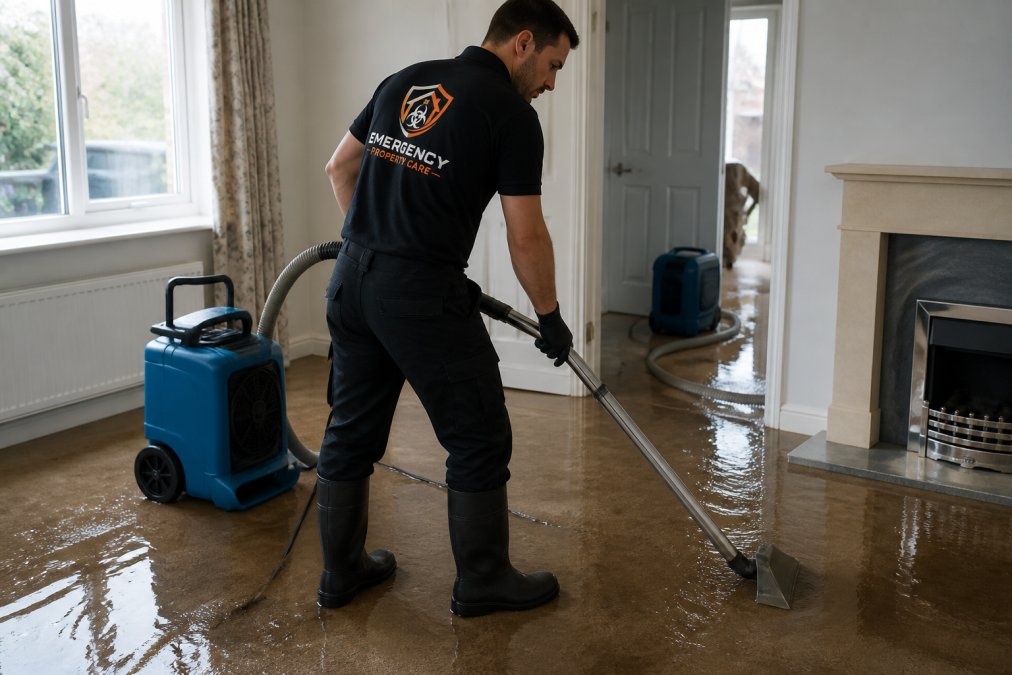
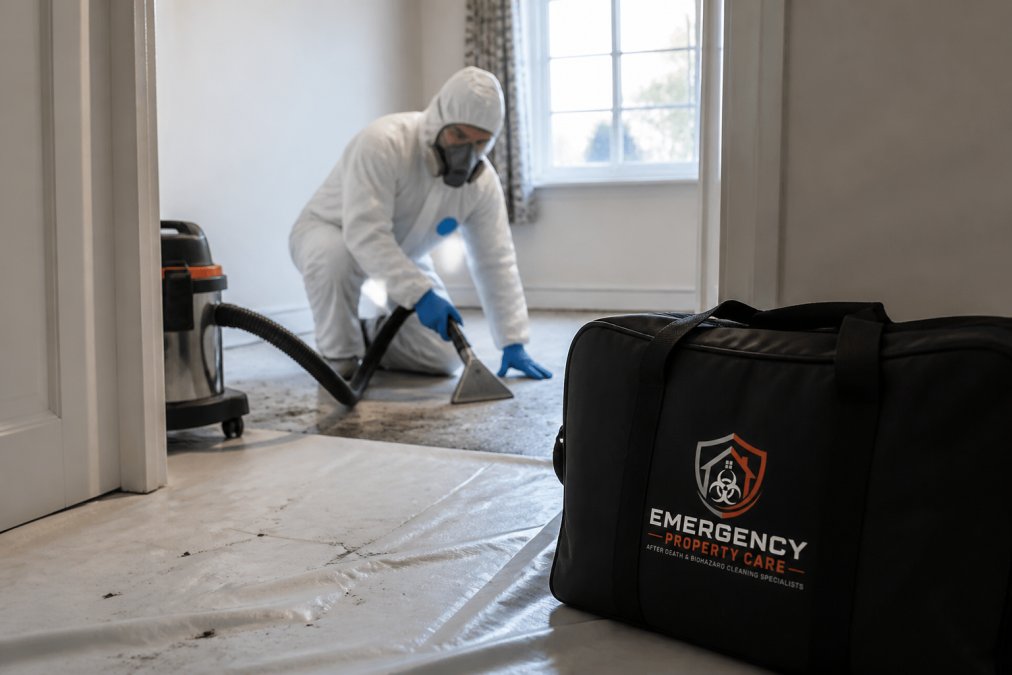
TrustedCare provides specialist property cleaning, decontamination, flood cleaning and structural drying across England, Scotland and Wales. Whether we can assist after a spill depends on the identified substance, affected materials, site conditions and the cleaning scope.
For an active or unknown hazardous-chemical release, contact the emergency services or an appropriate hazardous-material specialist first. Once the site is safe for cleaning, TrustedCare can discuss related water, contamination or property-cleaning requirements and explain whether they fall within our service.
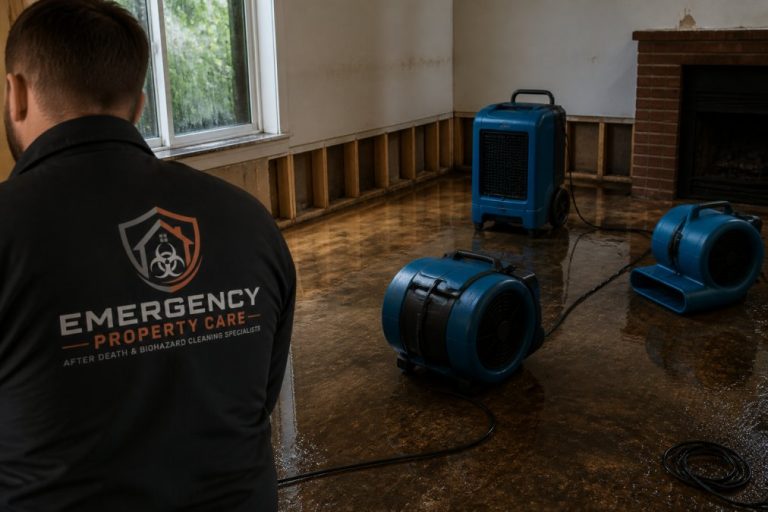
Relevant TrustedCare information includes flood damage cleaning and structural drying, biohazard cleaning guidance and after-death cleaning services.
Frequently Asked Questions
Should residents evacuate during a chemical spill?
It depends on the substance, its location and the instructions issued for the incident. Evacuation can increase exposure in some circumstances. Follow the building alarm, emergency plan and emergency-service directions rather than guessing.
Should windows be opened after a chemical spill?
Do not open windows automatically. Ventilation may help with some substances but spread vapour or introduce an ignition risk with others. Use the safety data and instructions from a competent responder.
What should the first resident message include?
State the immediate action, the area to avoid, who is managing the incident and when the next update will follow. Use verified facts and do not speculate about the substance or health effects.
How often should residents receive updates?
Update them when instructions or access arrangements change and at any time already promised. If nothing has changed, confirm that the current instruction remains in force and state when more information is expected.
Can TrustedCare clean every chemical spill?
No. Suitability depends on the substance, site conditions and required response. Active or unknown hazardous releases need the emergency services or an appropriate hazardous-material specialist. Contact TrustedCare once the hazard is identified to discuss any related property-cleaning work.
When can residents return to the affected area?
Only when the person or organisation responsible for the incident confirms that access may resume. The required checks depend on the chemical, exposure route, cleanup method and advice given by responders.
Speak to TrustedCare
If the emergency phase is complete and you need specialist property cleaning, send the postcode, identified substance, affected areas and any instructions already issued by the emergency services or property manager.

TrustedCare Editorial Team publishes UK guidance on specialist cleaning and biohazard remediation, including after-death cleaning, flood restoration and contamination control. Content is written for homeowners, landlords and housing providers seeking clear, practical information.