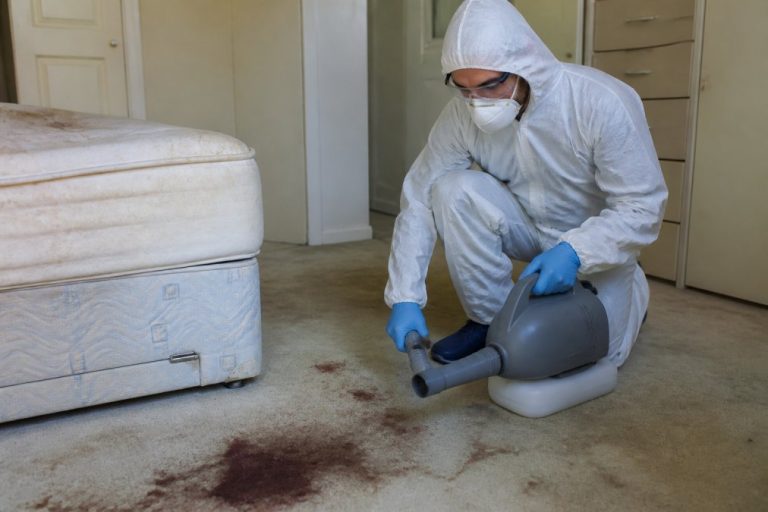
Decontamination Equipment Requirements for Social Housing
Decontamination Equipment Requirements for Social Housing
A practical guide to selecting equipment, controlling staff exposure, managing waste and deciding when a contaminated property needs specialist support.
- Fully Insured
- Housing Providers Supported
- Incident-Specific Scope
- Nationwide Coverage
The short answer
There is no single statutory equipment list for every social-housing contamination incident. The equipment must follow a suitable assessment of the contaminant, exposure route, affected materials, building condition, occupants and work method.
A routine void clean does not need a full biohazard setup. Equally, gloves and a domestic cleaning kit are not enough for decomposition, widespread bodily fluids, significant sewage, sharps, unknown chemicals or contamination inside porous building materials.
The safe system matters as much as the equipment: competent staff, clear access control, product instructions, suitable PPE, correct waste arrangements and a defined handover standard.
Start with the incident—not an equipment shopping list
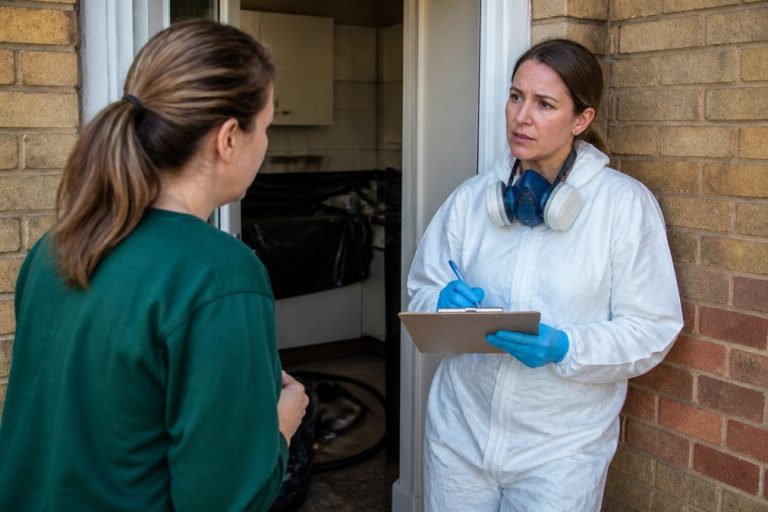
“Decontamination” can describe very different work. A small spill on an intact non-porous surface, mould caused by a building defect, sewage across a ground-floor flat and decomposition contamination require different controls. Buying the most protective-looking kit does not make an unsuitable method safe.
Routine cleaning
General dirt and low-risk hygiene work with no suspected biological, chemical, sharps or contaminated-water hazard.
Controlled in-house task
A defined minor incident that trained staff can manage under an approved procedure with the correct equipment and waste route.
Specialist incident
Widespread, unknown, hidden or high-consequence contamination exceeding the competence, equipment or authorisation of the in-house team.
The assessment should identify what happened, what could expose staff or residents, whether the source is controlled, which materials are affected and what other trades are needed. Electrical, structural, gas, drainage, pest-control, asbestos and safeguarding issues do not become cleaning tasks simply because they are discovered during a decontamination visit.
Core decontamination equipment categories
1. Access control and site management
- Barriers, signs and a means of controlling keys or entry
- Floor and route protection selected for the conditions
- A clean area for unused equipment and a separate dirty or doffing area where required
- Communication equipment and an incident contact list
- Lighting suitable for inspecting corners, voids and damaged rooms
Full sealed containment and negative pressure are specialist controls, not default requirements. They should be used only where the risk and work method justify them.
2. Cleaning and disinfection equipment
- Dedicated or disposable cloths, pads, brushes and mop systems
- Detergent or cleaning product suitable for removing the soil present
- A disinfectant selected for the relevant surfaces and identified risk
- Accurate dilution or dosing equipment where a concentrate is used
- Clearly labelled containers and ready access to current product instructions and safety data
Cleaning and disinfection are related but not identical. Visible soil and organic matter can reduce disinfectant performance, so the method should state what is cleaned first and how the manufacturer’s concentration and contact time will be achieved. Never mix products unless the manufacturer explicitly permits it.
3. PPE and personal hygiene
- Gloves appropriate to the chemical and physical hazards
- Protective clothing or disposable coveralls where clothing or skin could be contaminated
- Eye or face protection where splashing is foreseeable
- Protective footwear or overshoes suited to the slip, puncture and contamination risks
- Handwashing or suitable hygiene facilities and a safe procedure for removing PPE
PPE is the final barrier, not the whole control plan. Selection should consider breakthrough time, splash, abrasion, puncture, mobility, heat stress, compatibility and disposal or decontamination after use.
4. Respiratory protective equipment
RPE is not automatically required for every biological clean, and FFP3 is not a universal legal minimum. The assessment must identify whether an inhalation hazard remains after other controls, then select RPE with adequate protection for the substance, concentration, task and wearer.
Tight-fitting masks require face-fit testing for the specific make and model, user checks each time they are worn, and a clean-shaven sealing area. Where facial hair, long wear time or the task makes tight-fitting RPE unsuitable, an appropriate loose-fitting or powered alternative may need to be considered.
5. Waste and sharps equipment
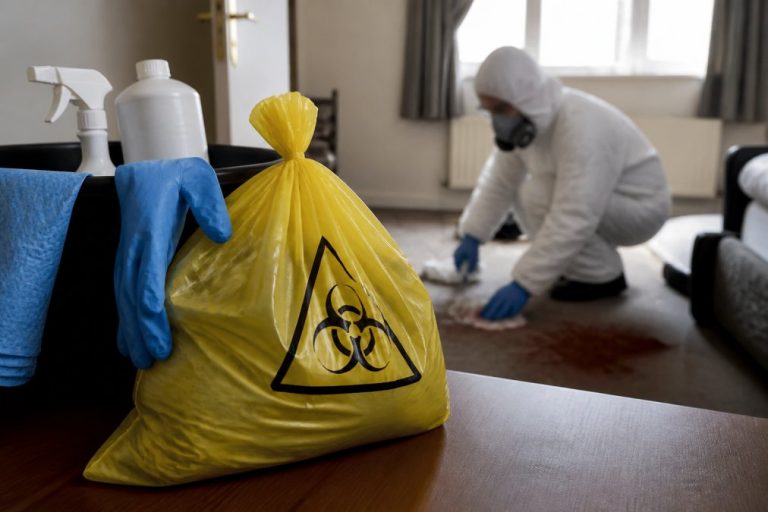
- Waste bags, rigid containers or secondary containment matched to the waste classification
- Approved sharps containers where needles or sharp items may be present
- Labels, closures and safe temporary storage
- Tools that allow sharps or contaminated items to be handled without direct contact where appropriate
- Access to an authorised carrier and receiving facility for the relevant waste stream
Not every item removed from a property is clinical or hazardous waste. It must be described and classified correctly so the packaging, paperwork and destination match the actual waste.
6. Water extraction and drying equipment
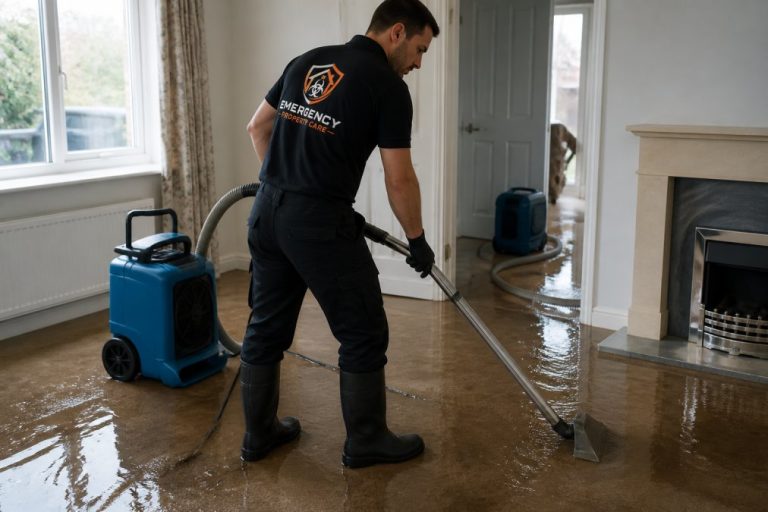
For sewage or contaminated-water incidents, the equipment may include suitable extraction equipment, moisture meters, thermal imaging used by a competent operator, dehumidifiers and air movement. Air movers should not be introduced in a way that spreads contamination before cleaning and source control.
Moisture readings support a drying record, but a single reading does not prove that an entire property is dry. Targets should reflect the construction and unaffected comparison materials where appropriate.
7. Air management and odour control
HEPA-filtered air-cleaning equipment may support some projects involving particles or controlled work areas. Carbon or other odour-control stages may be useful in defined circumstances. These are not substitutes for removing contaminated material and treating the source.
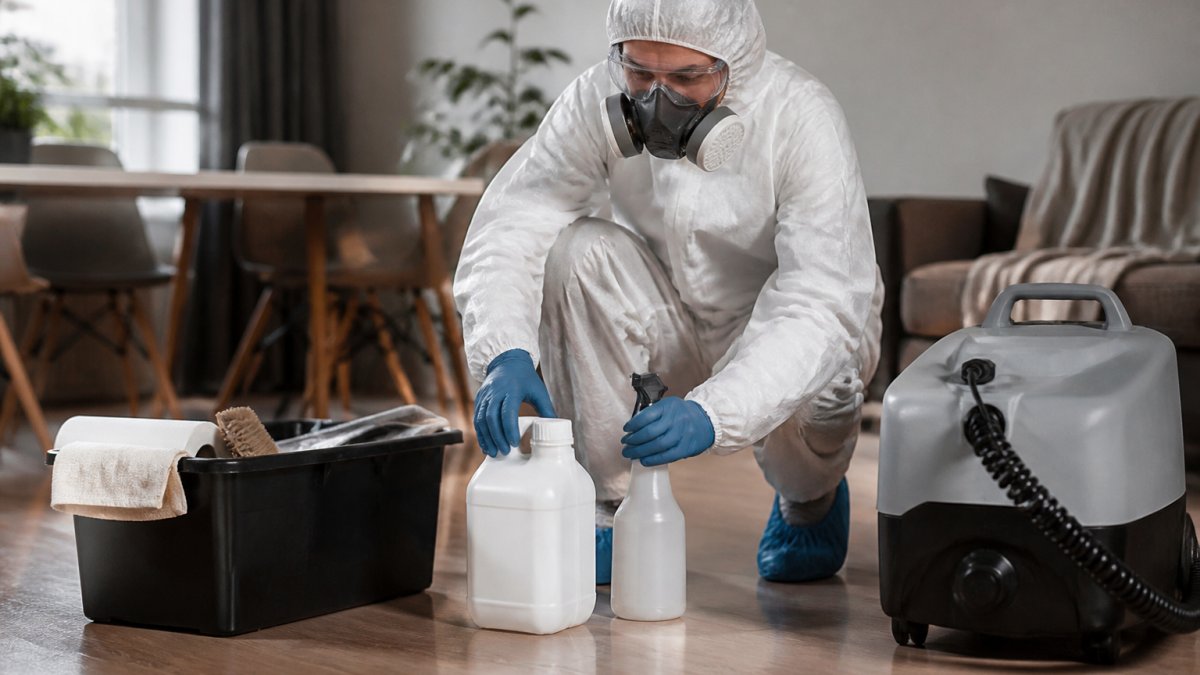
The correct equipment set is incident-specific and must be supported by trained use, maintenance and a written method.
COSHH, biological agents, PPE and RPE
For employers in Great Britain, the Control of Substances Hazardous to Health framework can apply to cleaning chemicals and to incidental workplace exposure to biological agents. A product safety data sheet is useful information, but it is not the employer’s completed COSHH assessment.
A practical assessment should cover
- The hazardous substance or biological exposure that could arise
- Who may be exposed, including employees, contractors, residents and visitors
- The route, level and duration of possible exposure
- How release and spread will be prevented or minimised
- The equipment, safe system, hygiene measures and PPE required
- Storage, spill response, waste and emergency arrangements
- Training, supervision and any justified health-surveillance requirements
- How effectiveness will be checked and when the assessment is reviewed
The objective is to prevent exposure or adequately control it. Equipment should not be chosen by simply assigning a generic “low, medium or high” label. The same item of PPE may protect against one chemical but be unsuitable for another, and the same mask may perform differently on different wearers.
| Control question | Evidence to keep | Common mistake |
|---|---|---|
| Can exposure be avoided? | Job design, restricted access and decision to use specialists | Sending staff in before the incident is defined |
| Is the product suitable? | Current instructions, safety data and surface compatibility | Choosing by marketing claim or fragrance |
| Is RPE required and adequate? | Selection basis, fit-test record and maintenance where relevant | Issuing one disposable mask model to everyone |
| Can staff use the equipment safely? | Training, practical instruction and supervision records | Treating a signed sheet as proof of competence |
| Is equipment still serviceable? | Inspection, cleaning, servicing, filter and calibration records | Keeping damaged or expired equipment in the response kit |
Housing duties differ across Britain
Social landlords must manage housing conditions and protect employees and others affected by their work, but there is no single “UK biohazard cleaning regulation” that supplies one equipment list. Housing law, regulatory standards and response timeframes differ between England, Wales and Scotland.
England
The HHSRS is used to assess housing hazards. Social landlords should also consider the Regulator of Social Housing standards and the phased requirements of Awaab’s Law where applicable.
Wales
Rented homes must be fit for human habitation under the Renting Homes framework. Welsh housing and environmental guidance should be used rather than assuming English provisions apply.
Scotland
Social landlords must consider the Scottish Housing Quality Standard and wider housing duties, while private rented homes follow the Repairing Standard.
Outsourcing cleaning does not remove the need to define the problem, select a competent contractor, coordinate access and repairs, protect residents and check the agreed work. It also does not make the cleaning contractor responsible for structural, electrical, gas, drainage or statutory housing decisions outside its scope.
For contractor checks, read our guide to biohazard-cleaning training, insurance and documentation.
When should a housing provider use a specialist?
The threshold is reached when the incident exceeds the organisation’s written procedure, competence, equipment, supervision, insurance or waste arrangements. It is safer to escalate on evidence than to rely on a universal list of trigger words.
| Incident feature | Why it may need escalation | Other parties that may be required |
|---|---|---|
| Unattended death or decomposition | Hidden fluid migration, odour source, affected porous materials and sensitive contents | Police or coroner process, estate representative, insurer, building trades |
| Extensive blood or bodily fluids | Exposure and sharps risk, porous materials, privacy and controlled waste | Police where relevant, insurer, safeguarding lead |
| Sewage across flooring or several rooms | Contamination, concealed moisture, electrical risk and structural drying | Drainage contractor, electrician, insurer, drying specialist |
| Discarded needles or drug-related waste | Puncture injury, unknown residues and secure collection | Police or local procedure where substances or active risk remain |
| Heavy rodent contamination | Droppings, urine, nesting debris, insulation and awkward void access | Pest controller, electrician or roofer where damage is present |
| Unknown chemical or strong reaction | Unidentified inhalation, fire or incompatibility risk | Fire and rescue service, environmental health or specialist hazardous-material advice |
| Several occupied homes or shared routes | Resident exposure, complex access, communication and cross-contamination risk | Housing management, safeguarding, resident liaison and relevant building specialists |
For sewage incidents, see TrustedCare’s guidance on when professional sewage cleaning is necessary and our service information for local-authority sewage decontamination. Housing providers dealing with severe property conditions may also need hoarding biohazard cleaning or rodent contamination cleaning.
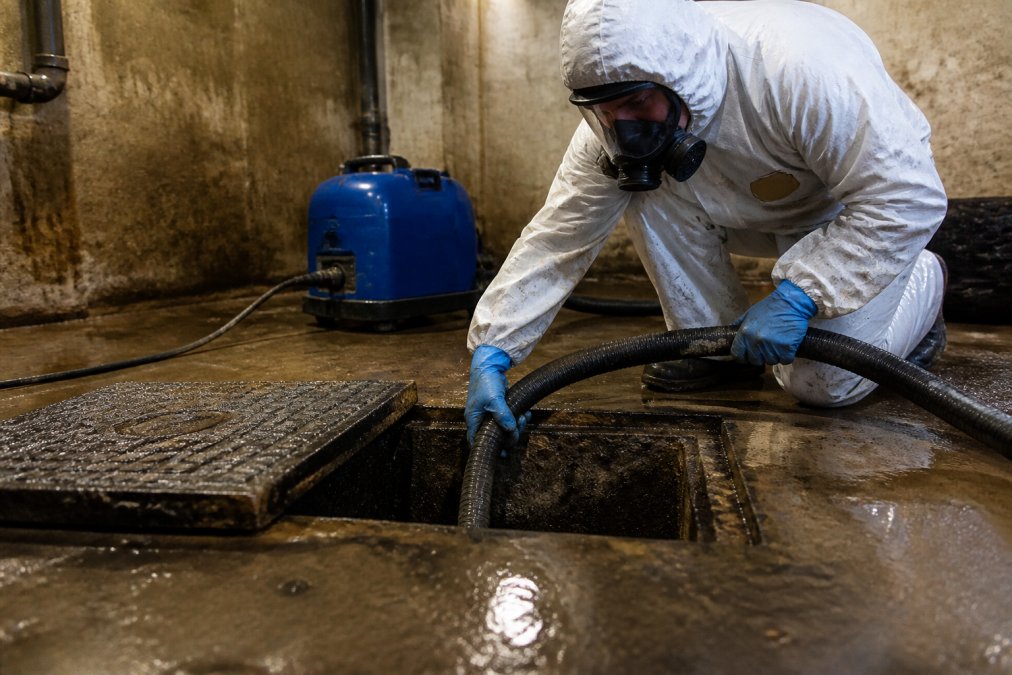
The quotation should separate cleaning, removal, drying, waste and repair responsibilities rather than describing everything as one deep clean.
Storage, inspection and readiness
A response kit is useful only if staff can find it, understand it and trust its condition. Storage should protect equipment from contamination, damage, temperature extremes and unauthorised access. Clean and used equipment must not be mixed.
Build a risk-based equipment register
- Item, make, model and intended use
- Location and person responsible
- Inspection, service, calibration or fit-test requirement
- Expiry date, filter change or replacement trigger
- Cleaning or decontamination method
- Fault, quarantine and disposal procedure
A fixed quarterly audit is not automatically right for every item. Check frequency should follow the manufacturer, risk, usage, legal requirement and local procedure. Equipment used after an incident should be inspected before being returned to service.
Training should match real tasks
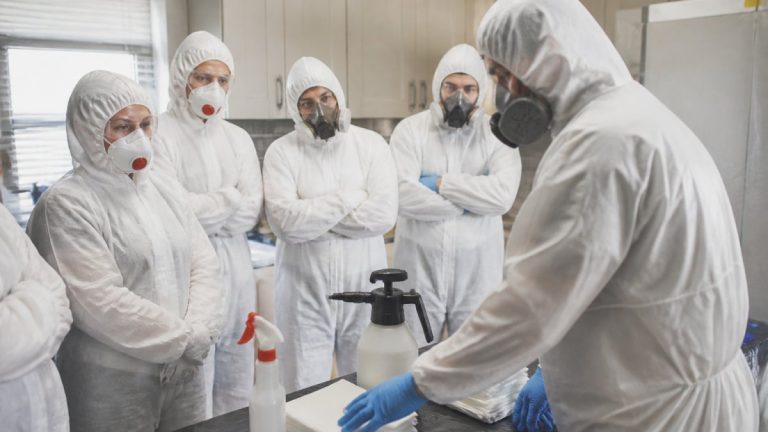
Staff should understand the point at which they must stop and escalate. Practical instruction may need to cover access control, donning and removing PPE, spill response, sharps avoidance, product dilution, contact time, waste segregation, equipment cleaning and exposure reporting.
A training certificate does not by itself prove that a person can safely perform every contaminated-property task. Competence should include knowledge, practical ability, supervision and experience appropriate to the work.
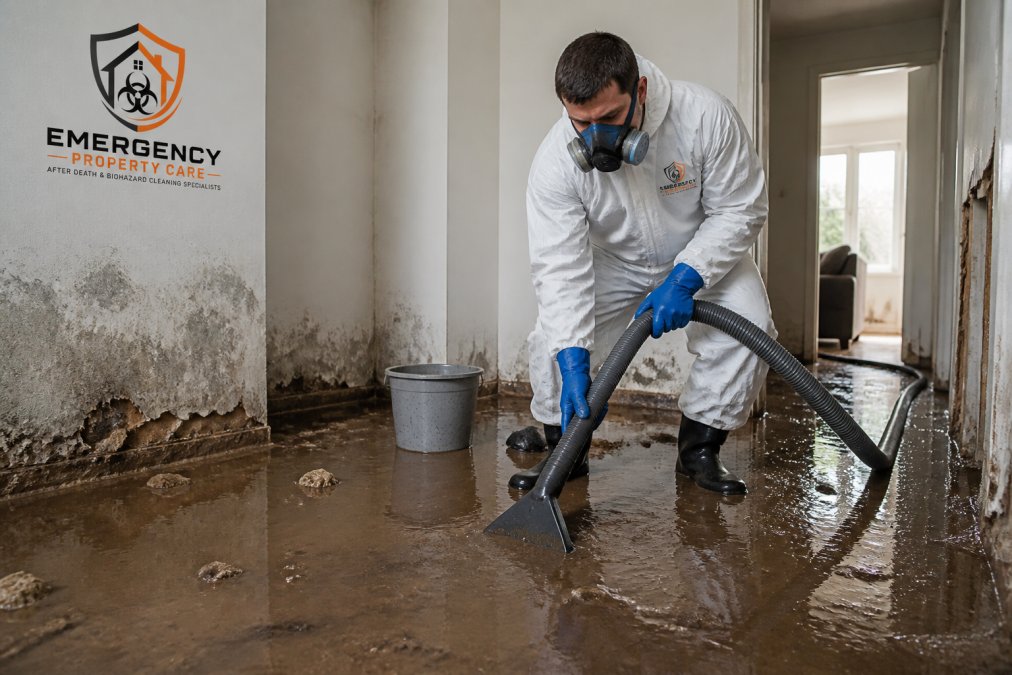
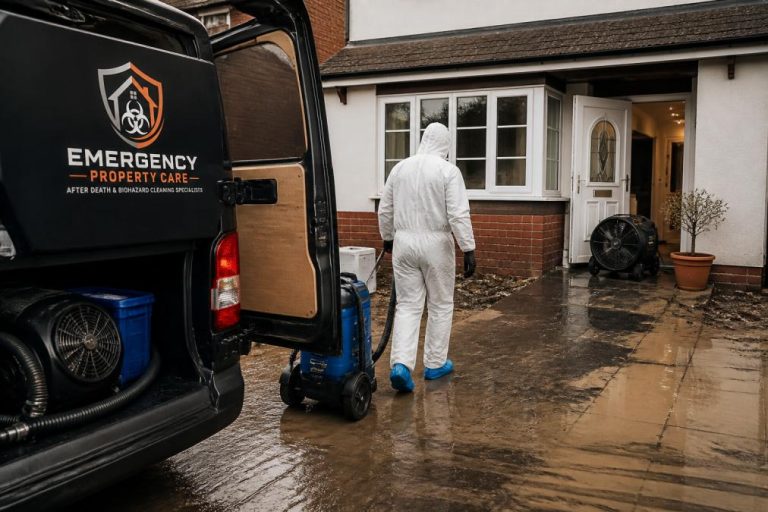
Extraction and drying equipment should be introduced in a sequence that does not spread contamination into clean areas.
Verification, records and reoccupation
Verification should be defined before work begins. It is not always a laboratory test, and one generic “sanitisation certificate” does not prove that every possible hazard has been removed.
Useful completion evidence can include
- The incident description, affected areas and agreed scope
- Before, progress and completion photographs where lawful and appropriate
- Products, methods and significant limitations
- Materials removed and the relevant waste documentation
- Moisture information where water entered the building fabric
- Repairs, drying, pest control or safety checks still outstanding
- The responsible people who reviewed and accepted each stage
ATP testing has limits
ATP swabs can indicate the presence of biological residue on a sampled surface. They do not identify a pathogen, prove that an entire room is pathogen-free or replace an appropriate scope and cleaning method. If a specific organism is genuinely suspected, competent sampling advice and a suitable laboratory method may be required.
Reoccupation is a coordinated decision
A cleaner can report completion of the cleaning scope, but may not be qualified to certify the whole home as structurally, electrically, chemically or legally fit for occupation. The housing provider should confirm that:
- The contaminant source and any active leak, drainage fault or pest problem have been controlled.
- The agreed cleaning, removal and waste stages are complete and documented.
- Required structural, electrical, gas, asbestos or chemical assessments are complete.
- Affected construction is acceptably dry before reinstatement where water was involved.
- Essential facilities, access, escape routes and ventilation are suitable for the intended occupant.
- Outstanding repairs and restrictions are recorded, owned and communicated.
- The housing manager has considered the applicable national housing duties and the individual resident’s needs.
Resident communication and privacy
Residents need timely, plain-language information about access, restricted areas, temporary arrangements and the next update. They usually do not need sensitive details about a death, medical condition, crime or another tenant. Share only what is necessary for safety and property management.
For a wider incident-response structure, see our guide to property decontamination and emergency response.
Frequently asked questions
Is there a mandatory decontamination equipment list for social housing?
No single list covers every incident. Equipment should be selected from a suitable assessment of the contaminant, exposure routes, task, property, residents and work method, alongside applicable health-and-safety and housing duties.
Is an FFP3 mask always required for biohazard cleaning?
No. RPE must be selected for the identified inhalation risk and remaining exposure after other controls. Where a tight-fitting mask is used, the wearer needs fit testing for that make and model and must be able to achieve an effective seal.
Does every void property need decontamination?
No. Every void should be assessed and cleaned to the required standard, but specialist decontamination is justified by an identified contamination risk—not simply by a change of tenancy.
Can housing staff clean a small bodily-fluid spill?
Potentially, if the incident fits an approved procedure and the staff are trained, equipped, supervised and authorised to manage it. Widespread, porous, hidden or uncertain contamination should be escalated.
Does ATP testing prove a property is safe?
No. ATP is an indicator of biological residue on the sampled surface. It does not identify pathogens or certify the whole property. Results must be interpreted within the agreed cleaning and verification plan.
What records should a housing provider retain?
Depending on the incident: assessment, scope, method, COSHH information, staff competence, equipment checks, photographs, variations, waste records, moisture readings, completion report and resident communications.
When should a specialist contractor be called?
When the incident exceeds the organisation’s procedure, competence, equipment, supervision, insurance or waste arrangements, or where contamination is widespread, hidden, unknown or high consequence.
Request social-housing decontamination support
Contact TrustedCare with the postcode, property type, occupancy, incident details, access restrictions and any procurement or reporting requirements. We can discuss the likely cleaning scope and next practical step.
For an immediate threat to life, active fire, suspected CBRN release or dangerous structure, contact the emergency services first.

TrustedCare Editorial Team publishes UK guidance on specialist cleaning and biohazard remediation, including after-death cleaning, flood restoration and contamination control. Content is written for homeowners, landlords and housing providers seeking clear, practical information.