Residential Flood Damage Cleanup Guide
Immediate safety warning: do not enter a flooded property if electricity, gas, structural movement, a sagging ceiling, fast-moving water or another serious hazard is suspected. Call 999 if anyone is in immediate danger.
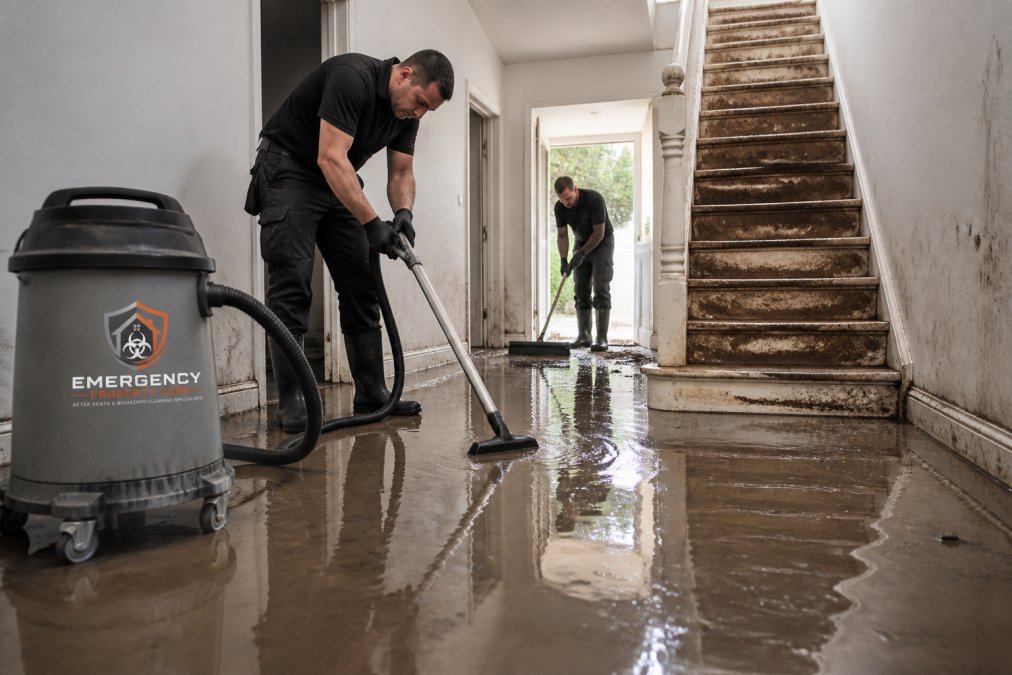
Residential flood-damage cleanup involves more than removing visible water. Moisture can enter flooring, walls, insulation and concealed cavities. External floodwater and sewage may also leave contamination requiring specialist cleaning and controlled waste removal.
The correct response depends on the water source, affected materials, property construction and duration of exposure. This guide explains what homeowners and landlords can safely do and when professional assessment is needed.
First Actions After Residential Flooding
People and personal safety come before the building. GOV.UK guidance recommends checking with the emergency services before returning to a property following serious flooding.
Do not enter if:
- Emergency services have not released the area.
- Water is moving quickly or is too deep to cross safely.
- Electricity may still be live near the water.
- You can smell gas.
- A ceiling is sagging or materials are falling.
- Walls, floors or foundations appear unstable.
- The property contains an unknown chemical or other hazard.
Official information is available in the GOV.UK guidance on what to do after a flood.
Electricity and Gas
Never touch a consumer unit, switch, socket or electrical appliance while standing in water. Do not assume the electrical supply is safe simply because the power appears to be off.
Arrange for the relevant utility provider, electrician or Gas Safe registered engineer to advise or inspect where necessary. Do not reconnect supplies or use affected appliances until they have been assessed.
Contact With Floodwater
External floodwater may contain sewage, chemicals, oil, sharp objects and waste from drains, roads or surrounding land. Keep children, pets and vulnerable occupants away from affected areas.
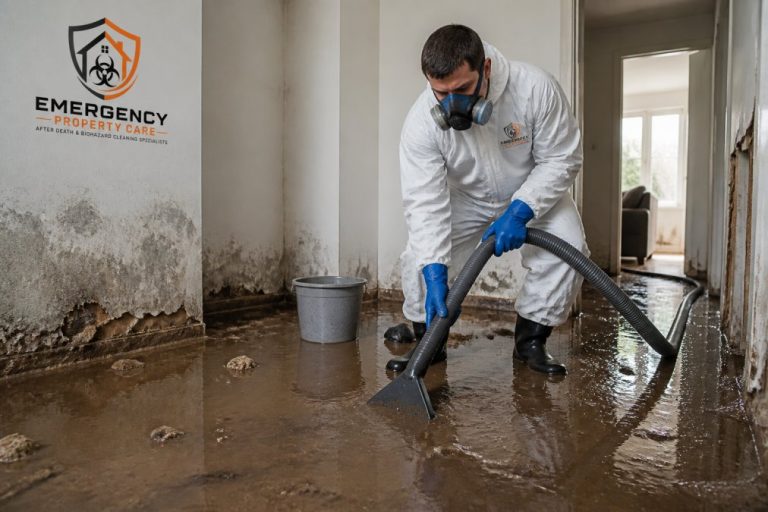
If safe access has been confirmed and limited contact cannot be avoided, appropriate protection may include waterproof gloves, rubber boots, protective clothing and eye protection. The exact protective equipment should reflect the contamination and task.
Cover cuts with waterproof dressings and wash exposed skin thoroughly with soap and clean water.
Identify the Source of the Water
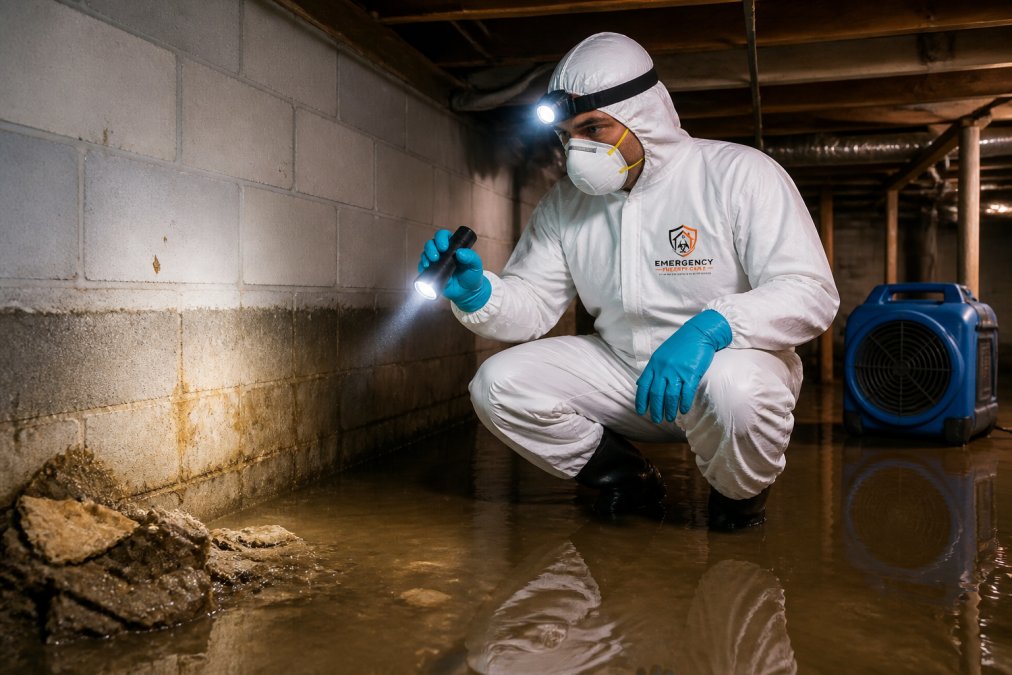
The water source affects both the safety controls and the cleaning process.
| Water source | Possible concerns | Likely response |
|---|---|---|
| Internal clean-water escape | Electrical hazards, concealed moisture and material damage | Stop the source safely, extract water and assess drying |
| Appliance or sanitary overflow | Detergent, organic material or microbial contamination | Assess the exact source before cleaning and retention decisions |
| Sewage | Biological contamination and contaminated porous materials | Specialist assessment, removal, cleaning and waste controls |
| External floodwater | Possible sewage, chemicals, fuel, silt, debris and sharp objects | Treat cautiously until the hazards have been assessed |
Water that began as clean can become contaminated after contacting dirty surfaces or remaining within the property. Do not rely solely on its appearance or smell.
Document the Damage and Contact the Insurer
Contact the insurer or broker as soon as reasonably possible. Ask whether it will appoint a loss adjuster or contractor and what evidence is required before items are moved or removed.
From a safe location, record:
- Wide photographs of each affected room.
- Close photographs of damaged materials and belongings.
- Visible water-level marks.
- The suspected water source.
- The date and time the incident was discovered.
- Serial numbers for affected appliances.
- A room-by-room list of damaged contents.
- Any emergency steps already taken.
Keep emails, claim numbers, quotations, invoices and notes of telephone calls. Photograph items before disposal and ask what evidence the insurer requires.
Urgent safety measures should not be delayed where that would expose people to danger or allow serious damage to continue. Record why emergency action was necessary.
Read our flood-damage insurance claims guide for more information.
Need Help With Residential Flood Damage?
Tell TrustedCare the property location, source of the water and rooms affected. We can discuss the appropriate extraction, cleaning and drying response.
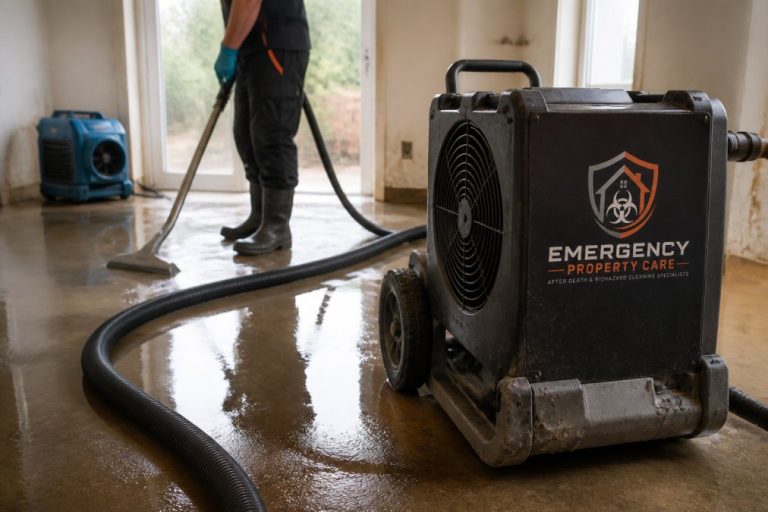
Removing Standing Water Safely
Do not begin pumping until electrical and structural safety have been considered and you know where the extracted water can lawfully be discharged.
Important considerations include:
- Whether the water contains sewage or other contamination.
- Whether external water remains high around the property.
- Whether rapid pumping could affect the structure.
- Whether mud, silt or debris could damage the pump.
- Whether discharge into a drain, sewer or watercourse is permitted.
- Whether water must be collected and transferred as waste.
Never use an ordinary dry household vacuum to collect water. Do not use fuel-powered pumps or heaters inside the property because of the risk of carbon monoxide.
A small, clean-water escape may sometimes be managed with suitable equipment after safety has been confirmed. Larger volumes, contaminated water and water affecting several rooms normally require professional assessment.
Do not start uncontrolled pumping: removing water without understanding the structure, external water level or discharge route can create further problems.
Assessing Flood-Affected Materials
Not every wet item must automatically be discarded, and not every material can be safely restored. Decisions should consider the water source, material, duration of exposure and depth of contamination.
Porous Materials
Carpet, underlay, insulation, plasterboard, mattresses and upholstered furniture absorb water below the visible surface. Retention may be difficult following sewage or external flooding, but an assessment should be made before automatically removing everything.
Hard Surfaces
Tile, some sealed flooring, metal, plastic and other non-porous surfaces may be capable of cleaning and decontamination if they remain physically sound.
Timber and Structural Materials
Wet timber is not automatically rotten or beyond recovery. Its condition, moisture content, contamination and structural role should be assessed. Do not lift floors or cut into walls without understanding the construction and possible hidden hazards.
Electrical Items
Do not energise appliances, sockets or other electrical equipment affected by water. A suitably qualified person should decide whether an item can be inspected, repaired or must be replaced.
Cleaning and Decontaminating Flooded Surfaces
Cleaning and disinfection are separate steps. Dirt, mud, silt and organic material may prevent a disinfectant from working effectively, so surfaces normally need to be physically cleaned first.
The cleaning method should reflect:
- The source of the water.
- The surface material.
- The type of contamination.
- The manufacturer’s product instructions.
- The required concentration and contact time.
- Ventilation and occupant-safety requirements.
There is no single bleach mixture suitable for every flooded property or material. Bleach can damage surfaces, produce irritating fumes and create dangerous gases if mixed with ammonia, acids or other cleaning products.
Use only a product suitable for the intended surface and contamination, following its label and safety instructions. Never mix cleaning products.
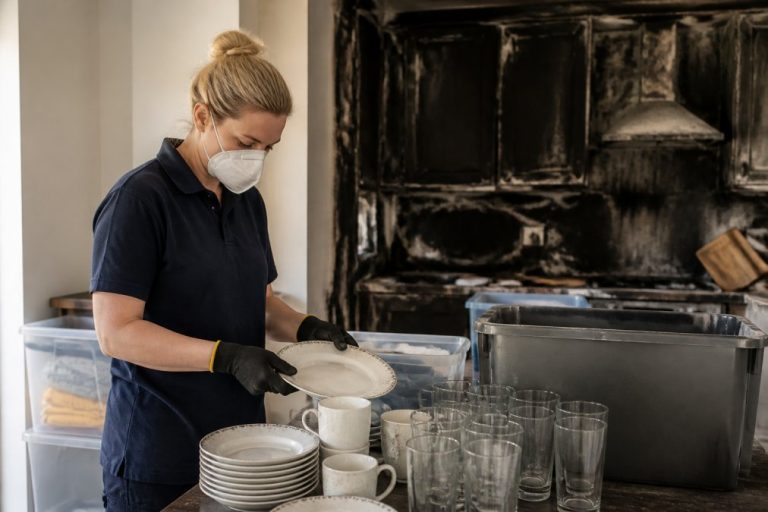
Food, medicines and cosmetics that have contacted floodwater may need to be discarded. Follow advice from the insurer, local authority and relevant health guidance.
How to Dry a House After Flooding
Removing standing water does not mean that the property is dry. Moisture may remain beneath flooring, inside plasterboard, within insulation and behind skirting boards.
A professional drying programme may include:
- Moisture assessment and mapping.
- Removal of materials that prevent effective drying.
- Installation of dehumidifiers and air movers.
- Control of temperature and air movement.
- Regular moisture readings.
- Equipment adjustment as drying progresses.
- Final assessment against suitable drying targets.
Do not drill holes in walls or floors without professional assessment. Hidden electrical cables, pipes, asbestos-containing materials or structural components may be present.
Drying may take from several days to several weeks depending on the construction, materials, water depth, weather and length of exposure. A fixed universal timescale is unreliable.
Read more about drying after flood damage and emergency flood-restoration response times.
Surface appearance is not enough: walls and floors can appear dry while moisture remains deeper inside or beneath them. Avoid redecorating until the drying condition has been properly assessed.
Mould After Residential Flooding
Damp conditions can support mould growth, but no exact timeline applies to every property. Temperature, humidity, ventilation, materials and existing contamination all affect development.
Possible warning signs include:
- A persistent damp or musty smell.
- Visible spotting or discolouration.
- Repeated condensation.
- Soft or swollen building materials.
- High or slow-falling moisture readings.
Spraying a visible patch does not correct moisture hidden inside walls or below floors. The moisture source must be resolved, affected materials assessed and the area dried.
Seek professional advice when mould is extensive, repeatedly returns, may be concealed within the building or affects a household containing vulnerable occupants.
When to Call a Professional Flood-Restoration Company
Professional assessment should be considered where:
- Sewage or external floodwater entered the property.
- Standing water requires mechanical extraction.
- Several rooms or floors are affected.
- Water entered walls, insulation or floor cavities.
- Electrical or structural damage is suspected.
- Contaminated materials require controlled removal.
- Persistent odour, damp or mould is present.
- Specialist drying and monitoring equipment is required.
- The insurer requests technical reports or drying records.
- Vulnerable occupants may be exposed.
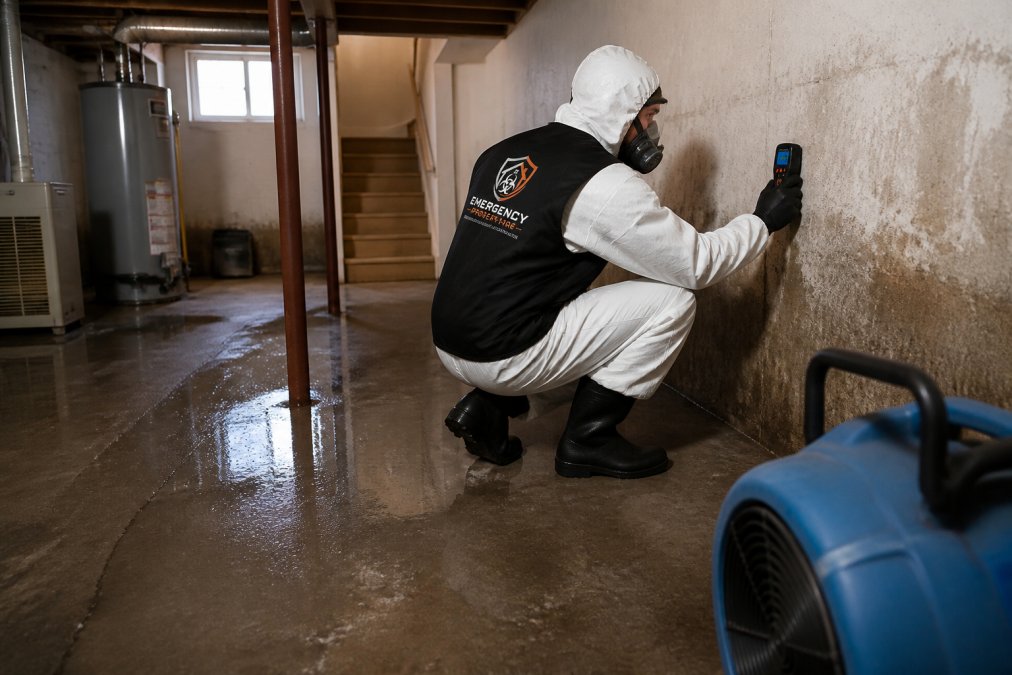
Ask the contractor what is included in the proposed work. A suitable scope may cover extraction, removal, cleaning, decontamination, structural drying, monitoring, waste handling and completion records.
Confirm separately whether building repairs and reinstatement are included.
TrustedCare provides flood-damage cleaning and structural-drying services across England, Scotland and Wales. Attendance and the required response will be confirmed according to the location and circumstances.
Frequently Asked Questions
What should I do first after my home floods?
Keep people away from danger and do not enter until it is safe. Contact the emergency services where necessary, notify the insurer and photograph the damage from safe areas before items are moved.
Can I switch off the electricity after a flood?
Do not touch the consumer unit or electrical controls while standing in water or where access is unsafe. Follow advice from the electricity network, emergency services or a qualified electrician.
Can I pump floodwater out myself?
Only consider pumping after safety, structural conditions and the discharge route have been assessed. Sewage, external floodwater and large volumes may require professional equipment and controlled handling.
Should I use bleach after flooding?
Do not apply a universal bleach mixture to every surface. Products must be suitable for the material and contamination and used according to their labels. Never mix bleach with other cleaning products.
How long does a flooded house take to dry?
Drying can take from several days to several weeks. Construction, materials, water depth and concealed moisture all affect the programme. Moisture readings are more reliable than a fixed timetable.
Must all wet carpet and furniture be discarded?
Not automatically. The decision depends on the water source, contamination, material and duration of exposure. Sewage-contaminated porous items are less likely to be safely recoverable, but items should be assessed and documented before disposal.
When is professional flood cleaning necessary?
Seek professional assistance for contaminated water, widespread flooding, structural saturation, suspected electrical damage, specialist waste, persistent damp or situations requiring documented structural drying.
Need Residential Flood-Damage Help?
Contact TrustedCare with the property location, source of the water and rooms affected to discuss extraction, cleaning and structural drying.

TrustedCare Editorial Team publishes UK guidance on specialist cleaning and biohazard remediation, including after-death cleaning, flood restoration and contamination control. Content is written for homeowners, landlords and housing providers seeking clear, practical information.