Professional Smoke Odor Removal Methods
Table of Contents
- Understanding Smoke Odor and Why Standard Cleaning Fails
- Immediate Steps for Professional Smoke Odor Removal
- Ozone Generator Safety Standards and Molecular Neutralisation
- Thermal Fogging for Smoke Damage: How It Works
- Surface Cleaning, Encapsulation and Air Purification
- Fire Damage Restoration Services: When to Call Professionals
- Post-Remediation Verification and Long-Term Prevention
- Frequently Asked Questions
Understanding Smoke Odor and Why Standard Cleaning Fails
Smoke odor removal requires more than surface cleaning. When fire occurs, smoke particles penetrate deep into porous materials, walls, carpets, insulation, and wood framing. Standard cleaning addresses only visible contamination; the real problem lies beneath.
Smoke contains volatile organic compounds (VOCs) and particulate matter that bond to surfaces at a molecular level. A mop and bucket cannot reach these embedded odor molecules, which is why homeowners often report that smoke smell returns weeks or months after a fire, even after professional-looking cleaning.
At TrustedCare, we understand that properties treated with basic cleaning can see odor recurrence, while those treated with proper professional smoke odor removal methods show lasting results. Standard cleaning fails because it treats smoke damage as a surface problem when it’s actually a chemical one. Odor molecules are absorbed into materials, not sitting on top of them.
Attempting DIY smoke odor removal with only basic cleaning supplies often makes the problem worse. Moisture from wet cleaning can reactivate dormant odor molecules trapped in materials, causing the smell to intensify. Professional assessment is critical before any remediation begins.
Immediate Steps for Professional Smoke Odor Removal
The first 48 hours after fire damage are critical. Immediate action prevents odor molecules from bonding more deeply to materials and reduces overall remediation time.
Step 1: Assess and Ventilate
Open all windows and doors to create cross-ventilation. Use fans to push smoke-laden air out, not deeper into the property. Leave windows open for at least 24 hours if weather permits.
Step 2: Remove Contaminated Materials
Soft furnishings, curtains, cushions, upholstered furniture, absorb smoke deeply and often cannot be salvaged. Remove these items to a separate space or dispose of them according to local regulations. Hard surfaces like wooden furniture may be recoverable depending on smoke intensity.
Step 3: Seal Off Affected Areas
If only one room is affected, close doors and seal gaps with plastic sheeting and tape to contain odor and prevent particles from spreading to unaffected areas.
Step 4: Document for Insurance
Photograph all damage before removing anything. Insurance loss adjusters need visual evidence of contamination extent. TrustedCare works directly with insurance providers, which simplifies the claims process.
Don’t wash walls or ceilings immediately after fire damage. Water can reactivate odor molecules trapped in materials, making the smell temporarily worse. Wait for professional assessment before any wet cleaning begins.
Step 5: Source Professional Assessment
Contact a specialist in professional smoke odor removal methods within 48 hours. Early assessment determines whether materials can be salvaged or must be replaced.
Ozone Generator Safety Standards and Molecular Neutralisation
Ozone generators are among the most effective tools for smoke odor removal, but they carry serious health risks if misused.
How Ozone Neutralises Odor
Ozone (O₃) is a highly reactive form of oxygen. When ozone molecules contact odor-causing compounds, they break down the chemical bonds holding those molecules together. This is molecular neutralisation, not masking. For smoke damage, ozone penetrates drywall, timber, carpets, and insulation, neutralising embedded VOCs and nicotine residue.
Safety Standards and Respiratory Risk
Ozone is toxic to human lungs. According to UK Health and Safety Executive guidance on ozone exposure, prolonged exposure causes respiratory irritation, reduced lung function, and in severe cases, permanent airway damage. There is no safe level of ozone exposure for extended periods. Ozone generators must operate in unoccupied, sealed spaces only. The property must be fully evacuated, including pets, with windows and doors sealed and HVAC systems shut down.
Professional-Grade Equipment Standards
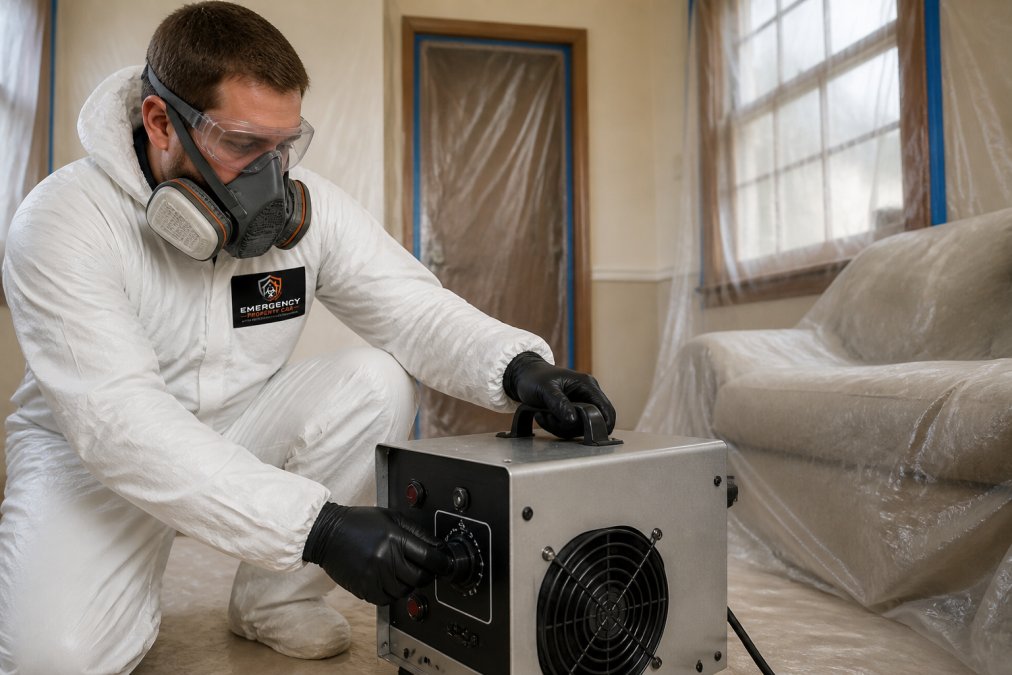
Professional ozone generators produce a higher output than retail units, which can mean shorter treatment times, but requires:
- Sealed treatment rooms with no air leakage
- Occupancy sensors that shut down the generator if a door opens
- Exhaust filtration to prevent ozone release into outdoor air
- Personal protective equipment for technicians
Post-Treatment Ventilation
After ozone treatment, the property must be ventilated thoroughly before re-entry. A sealed room treated with professional ozone equipment requires several hours of full ventilation (all windows and doors open, fans running) before the space is safe to occupy.
Never operate an ozone generator in an occupied space or in a property with pets. Ozone is a respiratory toxin. Even brief exposure at high concentrations can cause permanent lung damage. If you have respiratory conditions (asthma, COPD, chronic bronchitis), ozone treatment carries elevated risk.
Thermal Fogging for Smoke Damage: How It Works
Thermal fogging is a complementary method to ozone treatment, often used together for comprehensive smoke odor removal.
Mechanism of Thermal Fogging
A thermal fogger heats a liquid chemical neutraliser to approximately 90-100°C, converting it into a fine mist. This heated mist penetrates materials more effectively than cold spray because heat increases molecular movement. The chemical in the mist bonds with odor-causing molecules, neutralising them or sealing them in place.
When Thermal Fogging Works Best
Thermal fogging excels in specific scenarios: enclosed spaces (attics, basements, crawl spaces) where ventilation is limited, residual odor after ozone treatment, properties with extensive fabric or soft furnishings that can’t be removed, and commercial properties where extended downtime is impractical.
Application Process
The technician seals the treatment area and activates the thermal fogger. The mist disperses for a period depending on room size. The property is then sealed for several hours to allow the chemical to work before ventilation.
Limitations and Risks
Thermal fogging is less effective than ozone at destroying deeply embedded VOCs and works better as a secondary treatment. The chemical mist can condense on surfaces, creating temporary staining. For properties with water damage or high humidity, moisture interferes with chemical bonding, making air purification or encapsulation methods preferable. In cases where smoke damage occurs alongside water intrusion, such as after Flood Damage Cleaning and Drying, professional assessment is essential to determine the most effective treatment sequence.
Surface Cleaning, Encapsulation and Air Purification
Once deep odor sources are addressed through ozone or thermal fogging, surface remediation and air quality management complete the professional smoke odor removal process.
Deep Surface Cleaning
Walls, ceilings, and hard surfaces require specialised cleaning after smoke exposure. Professional cleaning uses tri-sodium phosphate (TSP) or alkaline cleaners that break down smoke film, pressure washing for exterior surfaces, and specialist solvents for nicotine residue. Ceilings are cleaned first (debris falls downward), then walls, then floors, preventing re-contamination.
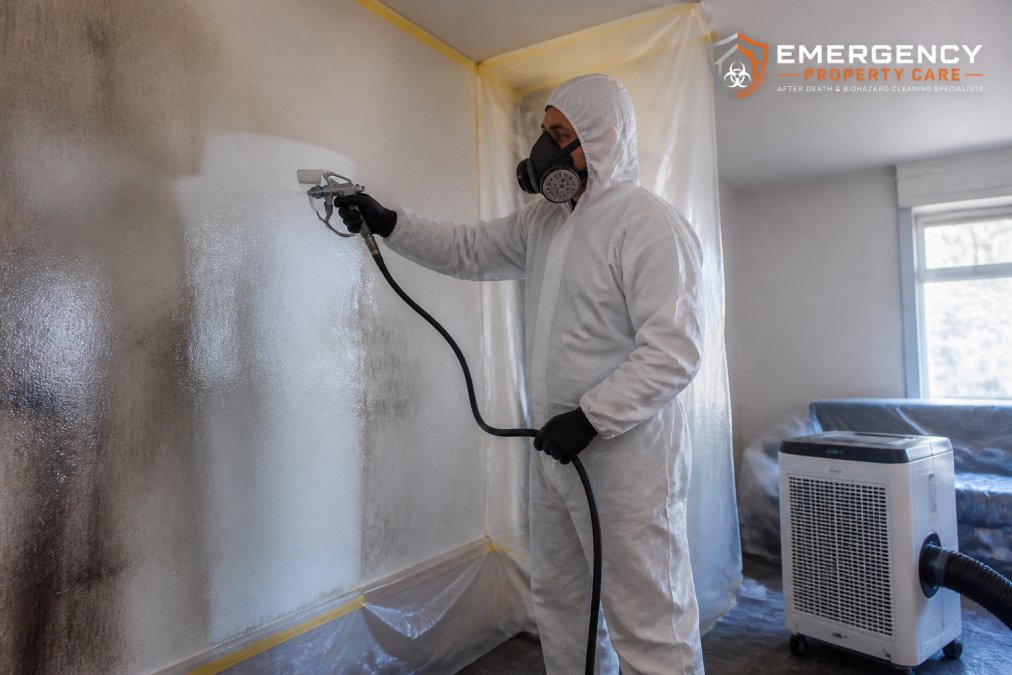
Encapsulation: Sealing in Remaining Odor
Encapsulation seals remaining odor molecules in place, preventing them from re-emerging. Encapsulation primers are applied to walls, ceilings, and woodwork, creating a barrier between the damaged material and room air. Once sealed, residual odor molecules cannot escape. The property is then repainted with standard paint. Without encapsulation, odor often returns within weeks or months, especially in humid conditions.
Air Purification and HEPA Filtration
Professional-grade air scrubbers move a significant volume of air through HEPA and charcoal filtration, running continuously for several days after remediation. Consumer air purifiers are typically insufficient for post-fire remediation and serve only for ongoing maintenance after professional treatment.
The most common reason professional smoke odor removal methods fail is incomplete surface sealing. Without encapsulation, odor recurs. Always ensure encapsulation is part of your remediation plan.
Fire Damage Restoration Services: When to Call Professionals
Signs You Need Professional Help
- Smoke damage extends across multiple rooms or floors
- Odor persists after initial cleaning attempts
- Soft furnishings are heavily contaminated
- Structural materials show visible smoke staining
- Nicotine residue is present
- You have respiratory conditions or live with young children or elderly residents
- Insurance claim requires professional documentation
What Professional Services Include
Comprehensive fire damage restoration typically covers initial assessment and documentation, removal of contaminated materials, deep cleaning of salvageable surfaces, ozone or thermal fogging treatment, encapsulation and repainting, air purification, and coordination with insurance providers.
TrustedCare provides Fire Damage Cleaning as part of broader professional smoke odor removal methods. Our team conducts thorough property assessment, identifies salvageable versus replacement materials, and manages the entire remediation process while working directly with insurance companies.
Cost-Benefit Analysis: DIY vs. Professional
DIY remediation might seem cost-effective initially, but incomplete treatment often requires re-remediation, which can cost more than professional work done once. Professional remediation can offer guarantees; if odor returns within a specified period, additional treatment may be provided. Professional remediation also ensures compliance with health and safety standards.
Post-Remediation Verification and Long-Term Prevention
Completion of active remediation doesn’t mean the job is finished.
Odor Testing and Verification
Professional remediation should conclude with odor verification involving olfactory assessment by trained personnel, humidity and temperature measurement, and visual inspection for missed contamination. Verification should occur after final treatment. If odor is still present, additional treatment is needed.
Long-Term Prevention
After successful remediation, maintain indoor humidity below 50%, ensure HVAC systems are cleaned with filters replaced, use continuous air purification in the first month post-remediation, avoid introducing water into treated areas, and monitor for odor recurrence over the first 3-6 months. Most successfully treated properties remain odor-free indefinitely.
Insurance and Documentation
Keep all remediation documentation, including before-and-after photos and treatment reports. This protects your property value and supports future insurance claims.
Professional smoke odor removal methods address what standard cleaning cannot reach, the deep molecular contamination embedded in materials after fire damage. The process requires assessment, specialised equipment, and multiple complementary techniques: ozone treatment for molecular neutralisation, thermal fogging for enclosed spaces, encapsulation for sub-surface sealing, and air purification for final odor elimination.
Attempting this work yourself carries health risks, incomplete remediation risks, and liability risks. TrustedCare provides end-to-end fire damage restoration across England, Scotland, and Wales, with professional assessment, treatment, and verification that ensures lasting results. If your property has experienced fire damage and smoke odor persists, professional remediation is the most reliable path to complete restoration. Contact TrustedCare for a full assessment and remediation plan tailored to your property’s specific needs.
Frequently Asked Questions
How do professionals get rid of smoke smell permanently?
Professional smoke odor removal methods address the root cause rather than masking the problem. Specialists use a combination of techniques: ozone generators neutralise odor molecules at a molecular level, thermal fogging penetrates porous surfaces where smoke particles embed, HEPA filtration removes particulate matter from air, and encapsulation seals odor sources within walls and ceilings. The approach depends on damage severity and material type. Most properties require multiple methods applied sequentially for lasting results.
What is the difference between masking smoke odours and neutralising them?
Masking uses fragrances or air fresheners to cover the smell temporarily, but the underlying odor molecules remain. Neutralisation uses chemical oxidation and molecular breakdown to eliminate odor at its source. Professional methods like ozone treatment and thermal fogging chemically transform volatile organic compounds so they no longer smell. Encapsulation and priming seal odor sources permanently. True remediation requires neutralisation, not masking, for long-term effectiveness.
Are professional smoke removal methods safe for residential environments?
Professional-grade methods are safe when applied correctly by trained technicians following safety standards. Ozone generators, for example, must be used in unoccupied spaces and require proper ventilation afterward. Thermal fogging uses approved chemical deodorisation agents. HEPA filtration and air scrubbers improve indoor air quality without hazard. However, DIY ozone use carries respiratory risks and can damage materials. Professional operators understand exposure limits, equipment calibration, and post-treatment air exchange requirements to protect occupants.
How long does professional smoke odour removal take?
Timeline depends on damage extent and property size. Minor smoke odor may require 1-3 days of treatment. Moderate damage typically needs several days across multiple methods applied sequentially: initial ventilation and surface cleaning, ozone or thermal fogging treatment, encapsulation, and verification. Severe cases affecting sub-surface areas may take longer. Professionals assess each property individually and provide realistic timelines. Rushing the process risks incomplete odor removal and material damage.
This article was written using GrandRanker

TrustedCare Editorial Team publishes UK guidance on specialist cleaning and biohazard remediation, including after-death cleaning, flood restoration and contamination control. Content is written for homeowners, landlords and housing providers seeking clear, practical information.