Professional Soot Cleaning Services Reviews: What to Check
Fire, Smoke & Soot Cleaning Guide
Professional Soot Cleaning Services Reviews: What to Check
Learn how to evaluate soot-cleaning reviews, compare quotations and identify a provider capable of safely managing fire and smoke residue.
24/7 emergency response across England, Scotland and Wales
Professional soot cleaning services reviews can help you shortlist a provider, but star ratings alone reveal very little about whether a property was restored correctly. The most useful reviews describe the assessment, communication, cleaning process, documentation and outcome.
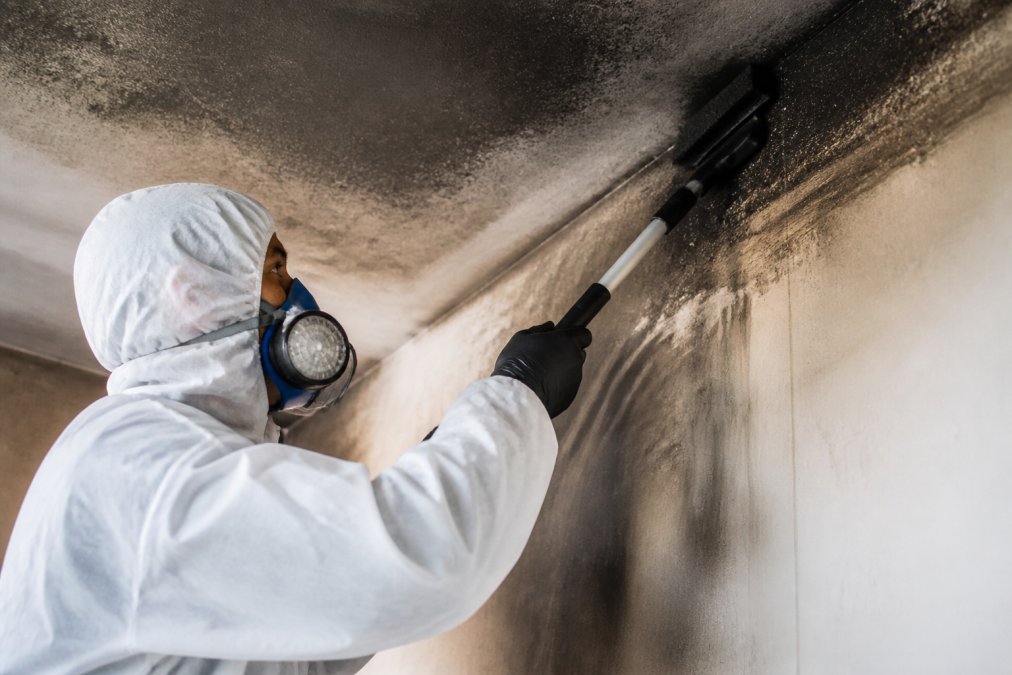
Soot is not ordinary household dust. Fire residue can contain a changing mixture of fine particles, oils and combustion by-products determined by what burned and how the fire developed. Incorrect handling can smear residue, spread particles and permanently mark affected materials.
Do not enter a fire-damaged property until the emergency services or another responsible authority has confirmed that it is safe. TrustedCare provides 24/7 fire, smoke and soot-cleaning assessments.
What Professional Soot Cleaning Reviews Should Tell You
A genuinely useful review provides evidence about the work rather than simply describing the technicians as polite or punctual. Good customer service matters, but it does not confirm that residue was identified, controlled and removed appropriately.
Look for reviews that explain:
- how quickly the provider responded and assessed the property;
- whether the quotation clearly defined the affected rooms and materials;
- how the team prevented residue moving into clean areas;
- whether contents were cleaned, removed or recorded separately;
- how persistent smoke odour was addressed;
- whether photographs and reports were supplied for an insurer;
- how the company dealt with questions, changes or follow-up concerns; and
- whether the completed work matched the agreed scope.
Be cautious when a review makes broad claims such as “the house was completely safe” without explaining what work was performed or how the outcome was assessed. A cleaning contractor should clearly distinguish cleaning from structural, electrical, gas or fire-safety inspections that require other competent professionals.
How to Read Soot-Cleaning Reviews Without Being Misled
Prioritise details over enthusiasm
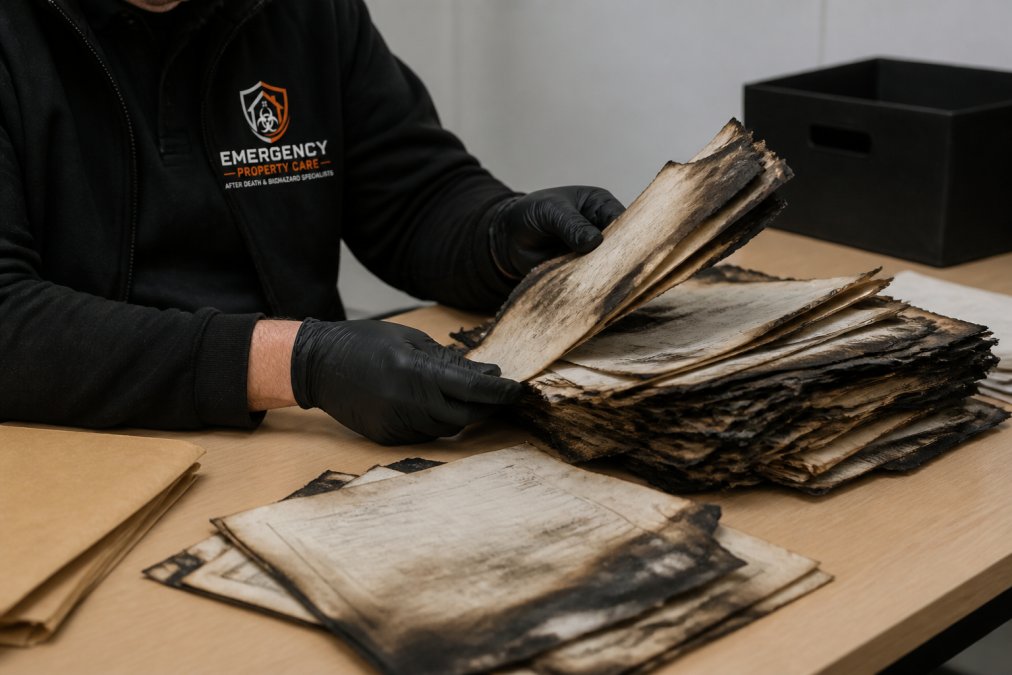
A review describing an initial survey, protected access routes, surface-specific cleaning and a written completion report is more valuable than a short five-star comment. Process details help you determine whether the reviewer received a service comparable with the one you need.
Read recent and lower-rated reviews
Recent reviews are more likely to reflect the provider’s current staff and working practices. Lower-rated reviews can also show how the company responds when a customer raises a concern. A calm, specific and solution-focused response is more reassuring than an aggressive or generic reply.
Compare more than one platform
Check reviews across independent platforms where possible. A sudden group of vague reviews, repeated wording or a large number posted within a very short period should encourage further checking. No review platform can independently prove the technical quality of hidden restoration work.
Match the review to your incident
A review about light fireplace staining is not directly comparable with a property affected by a kitchen fire, widespread smoke migration or burned synthetic materials. Commercial premises, flats and listed buildings can also require different access, documentation and coordination.
Ask whether the review tells you what happened, what the contractor did and what evidence was provided at completion. If it answers none of those questions, treat it as a customer-service comment rather than proof of restoration quality.
Checks to Complete Before Booking a Soot-Cleaning Company
Reviews should form only one part of your decision. Before authorising work, verify the provider’s identity, insurance, proposed method, waste arrangements and written terms.
| Check | What to request | Why it matters |
|---|---|---|
| Business identity | Trading name, address, company details and contact information | Confirms who is entering the contract |
| Insurance | Current certificates and relevant policy limits | Helps establish whether the proposed work is covered |
| Risk controls | Risk assessment and method appropriate to the incident | Shows that hazards have been considered before work begins |
| Training | Relevant fire, smoke, cleaning, equipment and PPE training | Generic cleaning experience may not cover fire residue |
| Waste | How removed materials will be classified, transported and documented | Different waste streams can require different controls |
| Completion evidence | Photos, work records and agreed inspection or verification steps | Provides a record for you and your insurer |
Health and safety arrangements should reflect the actual substances and work involved. The Health and Safety Executive’s COSHH guidance explains employers’ responsibilities for controlling exposure to hazardous substances.
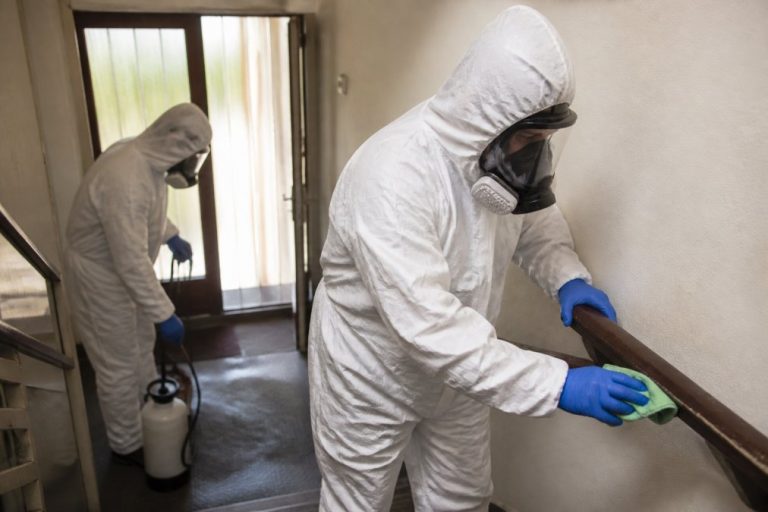
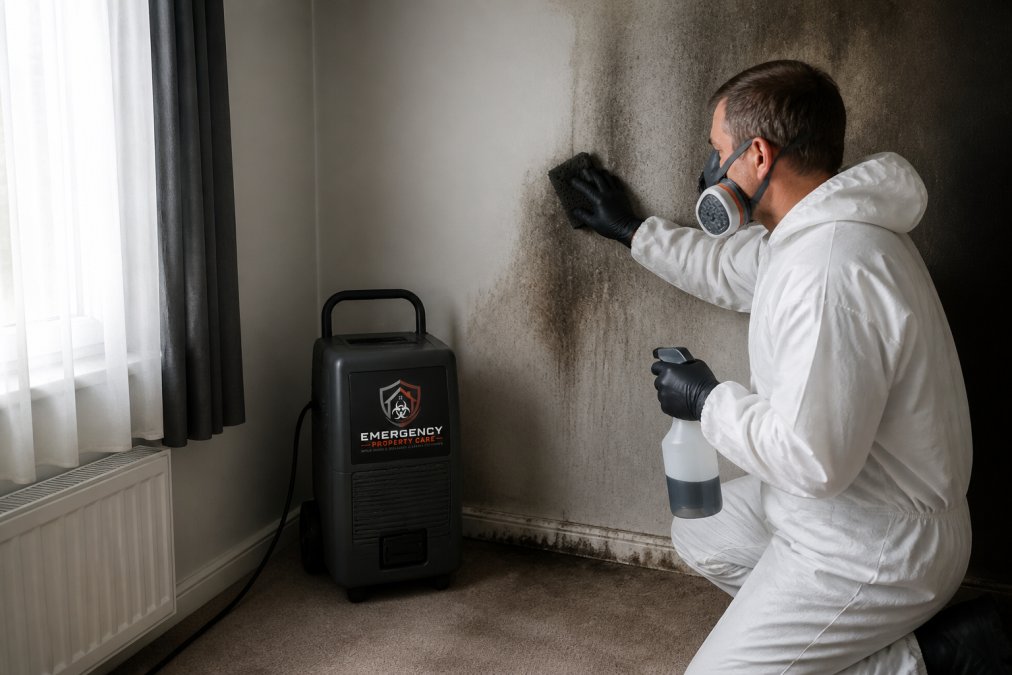
When tight-fitting respiratory protective equipment is required, it must be suitable for the hazard and wearer. HSE provides separate respirator fit-testing guidance. Seeing masks in a photograph does not, by itself, prove that the correct equipment or controls were used.
If a contractor transports controlled waste, ask which registration applies and verify it with the relevant environmental regulator. Requirements and public registers differ across England, Scotland and Wales.
What a Professional Soot-Cleaning Process Should Include
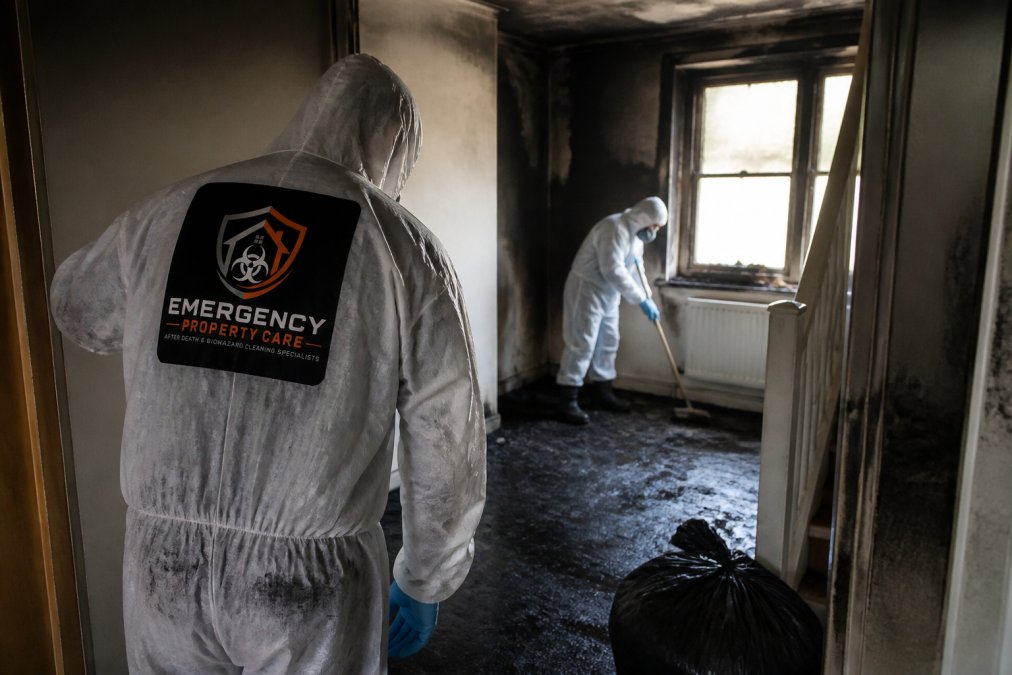
The correct process depends on the source of the fire, the materials burned, the extent of smoke movement and the surfaces affected. A reputable contractor should not promise one universal cleaning method before assessing the property.
- Safety and access confirmation. The contractor establishes whether entry is permitted and identifies hazards that require other competent specialists.
- Damage assessment. Rooms, surfaces, contents and possible smoke pathways are inspected and recorded.
- Work-area control. The team plans access, protects unaffected areas and determines whether containment or air-management equipment is appropriate.
- Dry particulate removal. Loose residue may be removed using suitable controlled methods before wet products are introduced.
- Surface-specific cleaning. Products and techniques are selected according to the residue and material. Painted walls, masonry, timber, metal, textiles and electronics cannot automatically be treated alike.
- Contents assessment. Items are recorded and separated into those suitable for cleaning, specialist evaluation or disposal.
- Smoke-odour treatment. Odour work should follow source and residue removal. Fragrance alone does not correct contamination.
- Inspection and reporting. Completed areas are checked against the agreed scope and the client receives the promised records.
HEPA-filtered equipment or air scrubbers may be appropriate for some projects, but equipment names should not replace a site-specific plan. Similarly, any oxidising or ozone-generating treatment requires careful controls and must never be presented as a substitute for removing contaminated material.
Read TrustedCare’s property restoration after fire damage guide for a broader explanation of cleaning, drying, contents assessment and repair coordination.
Need a Soot or Smoke Damage Assessment?
TrustedCare provides 24/7 fire, smoke and soot-cleaning support for residential and commercial properties.
Soot-Removal Cost Estimates: What Affects the Price?
There is no reliable universal price for soot cleaning. The visible staining in the fire room may represent only part of the work, while two similarly sized properties can have very different residues, contents and access requirements.
Main cost factors
- the number and size of affected rooms;
- the material that burned and the type of residue deposited;
- the distance smoke travelled from the original fire;
- the number of ceilings, walls, floors and fixtures requiring treatment;
- porous materials, textiles and contents requiring separate handling;
- high-level, restricted or complex access;
- odour treatment and repeat attendance where justified;
- water damage caused by firefighting or suppression systems;
- removal, transport and disposal of damaged materials;
- documentation or coordination required by an insurer; and
- whether repairs sit outside the cleaning scope.
How to compare quotations fairly
Compare the scope rather than looking only at the total. Each quotation should identify the rooms, surfaces and contents included, the proposed processes, exclusions, waste charges, VAT position, estimated timescale and completion evidence.
A telephone estimate can help with initial planning, but it should not be mistaken for a confirmed quotation when the provider has not seen the contamination. Ask what could change the price and how variations will be authorised.
For more information, see TrustedCare’s guide to fire damage cleaning costs in the UK.
Soot Residue and Health Considerations
The composition of fire residue varies. Smoke and soot may irritate the eyes, skin and respiratory system, and the risk can be greater for people with existing breathing or cardiovascular conditions, children, older people and pregnant occupants.
A property that looks cleaner is not automatically ready for occupation. Re-entry decisions can also depend on structural stability, electrical and gas safety, ventilation, water damage and substances released by burned building materials or contents.
If you enter an area that has already been declared safe:
- do not disturb visible soot unnecessarily;
- avoid using an ordinary domestic vacuum on contaminated surfaces;
- keep children and pets away from affected rooms;
- do not consume exposed food, drink or medicine without appropriate advice;
- avoid switching potentially affected appliances on; and
- seek medical advice if exposure causes breathing difficulty or other concerning symptoms.
These precautions do not replace instructions from the fire and rescue service, your insurer, environmental health officers or appropriately qualified building and utility professionals.
Insurance Claims and Documentation
Contact your insurer as soon as reasonably possible and follow the instructions in your policy. Unless urgent action is required to prevent further damage or protect people, avoid authorising extensive work before understanding what the insurer requires.
Record the damage before cleaning
- Photograph each affected room from several angles.
- Take close-up photographs of soot staining and damaged contents.
- Record the incident date and when damage was first discovered.
- Prepare a list of affected items without discarding them prematurely.
- Keep receipts for reasonable emergency expenditure.
- Record emergency work undertaken to prevent further loss.
Ask the cleaning company to provide
- a dated assessment and defined scope of work;
- before, during and after photographs;
- a schedule of areas and items treated;
- records of materials removed from the property;
- proper waste paperwork where applicable;
- details of authorised changes to the original quotation; and
- a final invoice matching the completed work.
TrustedCare can work with property owners, landlords, insurers and loss adjusters. Read our step-by-step fire damage documentation guide before cleaning begins.
DIY Soot Cleaning Versus Professional Assessment
A small amount of ordinary fireplace dust on a sound, washable surface is different from residue distributed through a property after a fire. Professional assessment becomes particularly important when:
- more than one room is affected;
- smoke entered concealed spaces or a mechanical ventilation system;
- plastics, chemicals, electrical items or unknown materials burned;
- there is visible charring or possible structural damage;
- firefighting water has affected floors, walls or insulation;
- the property contains vulnerable occupants;
- odour returns after ventilation;
- valuable, sentimental or specialist contents are involved; or
- the work forms part of an insurance claim.
Rubbing soot with water or an unsuitable household cleaner can drive residue into porous finishes or create permanent smears. Decorating over staining before the surface is correctly prepared can also allow marks and odours to return.
Questions to Ask Before You Book
- Have you handled residue from this type and scale of fire before?
- What assessment will you complete before confirming the scope?
- Which rooms, surfaces and contents are included in the quotation?
- What will be cleaned, removed, referred to another specialist or excluded?
- How will unaffected areas be protected?
- What insurance applies to this work?
- How are technicians trained for fire and smoke restoration?
- How will damaged materials and waste be recorded and transported?
- What documentation will I receive for my insurer?
- How will changes to the price or scope be approved?
- What inspection will take place before completion?
- Who should I contact if staining or odour returns?
Reviews help create a shortlist, but the final decision should be based on a site-specific assessment, written scope, suitable risk controls, verified insurance and clear completion documentation.
Frequently Asked Questions
How do I choose a reputable soot-cleaning company?
Use detailed reviews to create a shortlist, then check the provider’s identity, insurance, relevant training, proposed process, waste arrangements and written quotation. Choose a company that will assess the property before confirming a final scope.
Is professional soot removal always necessary after a fire?
The answer depends on the scale, residue and affected materials. Professional assessment is advisable where soot extends beyond a small, clearly defined area, unknown materials burned, vulnerable occupants are involved or the damage forms part of an insurance claim.
Can I clean fire soot from walls myself?
Using water, a household vacuum or the wrong chemical can spread or fix soot into the finish. Do not attempt cleaning until the property is safe and the residue and surface have been assessed. Widespread or oily residue should be handled professionally.
How are soot-removal estimates calculated?
Estimates depend on the number of affected rooms, residue type, surfaces, contents, access, smoke-odour work, water damage, waste and documentation requirements. Compare itemised scopes rather than headline prices.
Does soot cleaning remove smoke odour?
Removing contaminated residue and unsalvageable materials is an essential part of controlling fire odour. Additional treatment may be required depending on where smoke travelled, but fragrance or deodoriser alone is not a complete solution.
Can TrustedCare help with an insurance claim?
TrustedCare supports insurance-related work and can provide a defined quotation, photographs and work records according to the agreed scope. Your insurer remains responsible for confirming policy cover and claim approval.
Nationwide 24/7 Response
Arrange a Fire, Smoke or Soot Assessment
Contact TrustedCare for professional assistance following residential or commercial fire and smoke damage across England, Scotland and Wales.
Residential, commercial and insurance-related enquiries welcome

TrustedCare Editorial Team publishes UK guidance on specialist cleaning and biohazard remediation, including after-death cleaning, flood restoration and contamination control. Content is written for homeowners, landlords and housing providers seeking clear, practical information.