How to Clean Sewage Backup: Safety & Steps
UK Safety and Cleanup Guide
How to Clean a Sewage Backup Safely
A sewage backup can involve biological contamination, electrical hazards and hidden water beneath floors or inside walls. Learn the immediate safety steps and what a professional cleanup and drying process should include.
Sewage-contamination and structural-drying enquiries across England, Scotland and Wales. Attendance depends on location, incident type and current availability.
The first step after a sewage backup is not cleaning—it is making the area safe. Keep people and pets away, avoid contact with the water, consider electrical and structural hazards, and stop the source only when this can be done without entering the affected area.
Small sanitary-fixture incidents and widespread sewage flooding are not the same job. The correct response depends on the source, volume, duration, affected materials, building services and occupants. Where contamination has entered porous or concealed materials, surface disinfection alone will not resolve it.
Do not touch switches, plugs, appliances or the consumer unit while standing in water or a wet area. Keep clear and contact the electricity network, an electrician, landlord or emergency service as appropriate. Gas, structural damage and confined spaces introduce separate risks.
Immediate Steps After a Sewage Backup
- Keep people and animals away. Close access where safe and prevent contaminated water being walked into clean areas.
- Check for immediate danger from outside the area. Consider electricity, gas, unstable floors, damaged ceilings and contaminated water flowing from another property.
- Stop using affected plumbing. Do not flush toilets or run sinks, baths, showers, washing machines or dishwashers connected to the problem.
- Report the drainage problem. Contact the landlord, managing agent, drainage contractor, water company or local authority according to the location and suspected cause.
- Do not create aerosols. Avoid pressure washing, vigorous hosing, brushing, fans directed at wet contamination or ordinary domestic vacuums.
- Protect food and clean items. Discard food or drink that contacted contaminated water and keep clean utensils and belongings away from the area.
- Record the condition safely. Take photographs from a safe position and note the date, affected rooms and likely source for the insurer or landlord.
- Arrange assessment and cleanup. Explain the water depth, rooms affected, floor type, duration and whether electricity or vulnerable occupants are involved.
Once gas, electrical and other hazards have been assessed, controlled ventilation may support drying. Opening doors or starting fans too early can spread odour, droplets or contaminated dust into unaffected areas.
When Professional Help Is Appropriate
Professional assessment is sensible when sewage has entered living or working accommodation, spread beyond a small cleanable area or contacted absorbent materials. It is particularly important where:
Several areas are affected
Water has travelled through multiple rooms, floors, service ducts or communal spaces.
Porous materials are wet
Carpet, underlay, plasterboard, insulation, furniture or untreated wood has absorbed contamination.
The source is continuing
The drain, sewer, appliance or sanitary fitting remains blocked, damaged or overflowing.
Electricity or structure is involved
Water is near wiring, appliances, plant rooms, suspended floors or damaged building materials.
Occupants are vulnerable
Children, older people or anyone with relevant health vulnerabilities could be exposed.
The premises has additional duties
Food businesses, care settings, workplaces, rented homes and shared buildings require coordinated records and controls.
A small amount of wastewater contained within a sound, non-porous fixture may sometimes be managed under local guidance after the blockage is resolved. Do not assume the situation is minor if liquid has crossed joints, reached flooring or remained unnoticed.
Health Risks and Exposure
Sewage can contain microorganisms and other contaminants. The actual risk varies with the source, concentration, duration, route of exposure and health of the person involved. Possible exposure routes include contact with broken skin, splashes to the eyes or mouth, accidental ingestion and droplets created by the work method.
If sewage contacts the skin, wash promptly with soap and clean water. Rinse splashes to the eyes or mouth thoroughly with clean water and seek medical advice where appropriate. Obtain prompt clinical advice after a needlestick, contact with broken skin, significant splash or if symptoms develop. Workplace exposures should also be reported through the employer’s procedure.
The Health and Safety Executive’s guidance on working around sewage and harmful microorganisms explains the importance of hygiene, protected skin and task-appropriate clothing.
PPE and Why It Is Not the Only Control
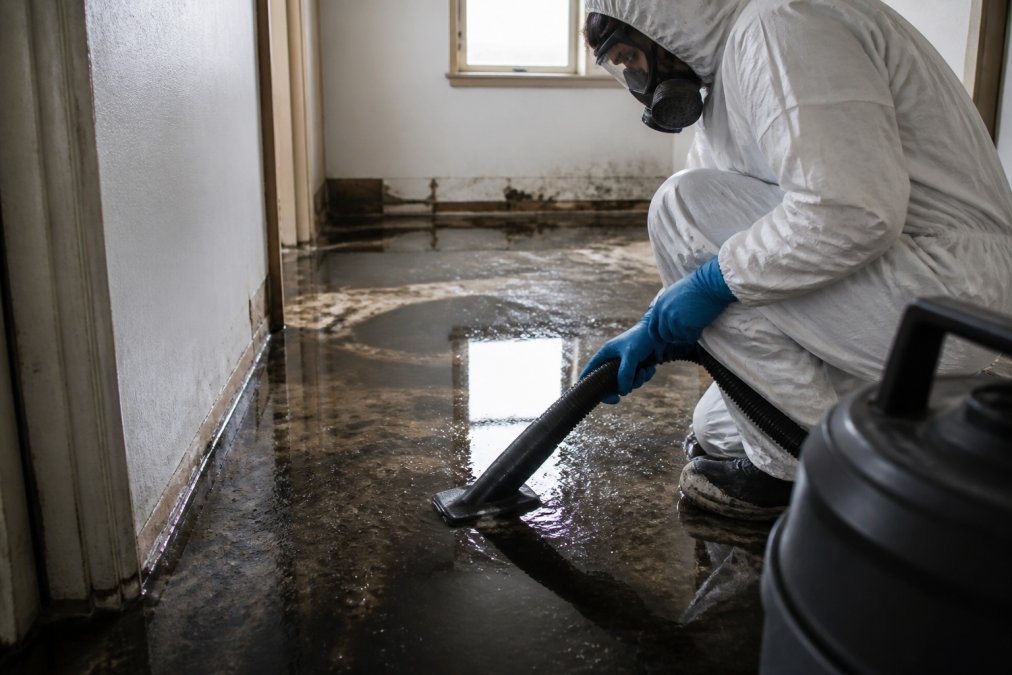
PPE must follow a risk assessment. It protects the wearer only while selected, fitted, worn and removed correctly. It does not make a large or electrically unsafe sewage incident suitable for DIY cleaning.
Depending on the task, professional controls may include:
- waterproof or liquid-resistant gloves suitable for the work;
- waterproof boots and protective clothing;
- eye or face protection where splashing is possible;
- waterproof dressings over cuts and abrasions;
- task-specific respiratory protection where an assessment identifies an inhalation risk;
- hand-washing and decontamination facilities; and
- a planned method for removing PPE without contaminating skin or clean areas.
There is no universal rule that an FFP2 mask is sufficient for every sewage task. Tight-fitting respiratory protective equipment used at work requires suitable selection and face-fit arrangements. The safer approach is to minimise aerosol and splash generation at source.
Need Help With Sewage or Contaminated Water?
Tell TrustedCare the property postcode, affected rooms, water depth, floor type and whether the source has stopped. We can discuss the immediate precautions and likely next step.
The Professional Sewage-Cleaning Process
The sequence changes with the building and incident, but a properly defined scope normally separates source control, extraction, material removal, cleaning, drying and handover.
- Confirm access and immediate hazards. Establish whether the supply, drainage fault, electricity and structure have been made safe.
- Assess the water and affected area. Record the source, duration, depth, rooms, materials, contents and concealed routes.
- Plan containment and movement. Keep clean and contaminated areas separate and define access, equipment and waste routes.
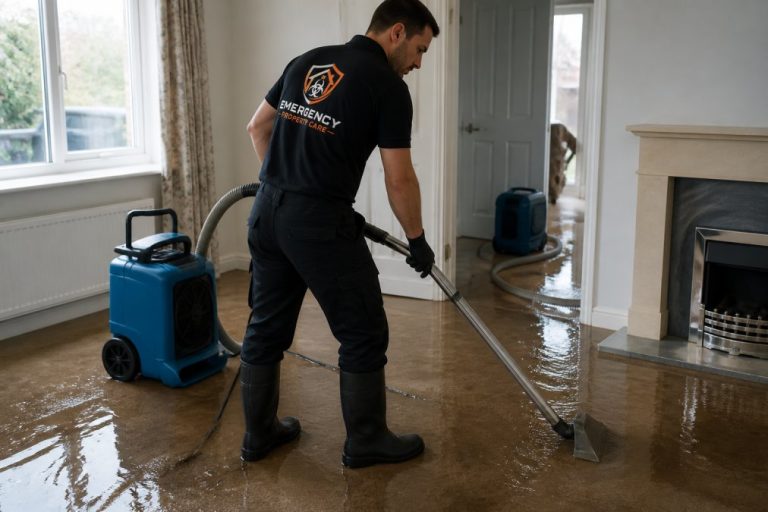
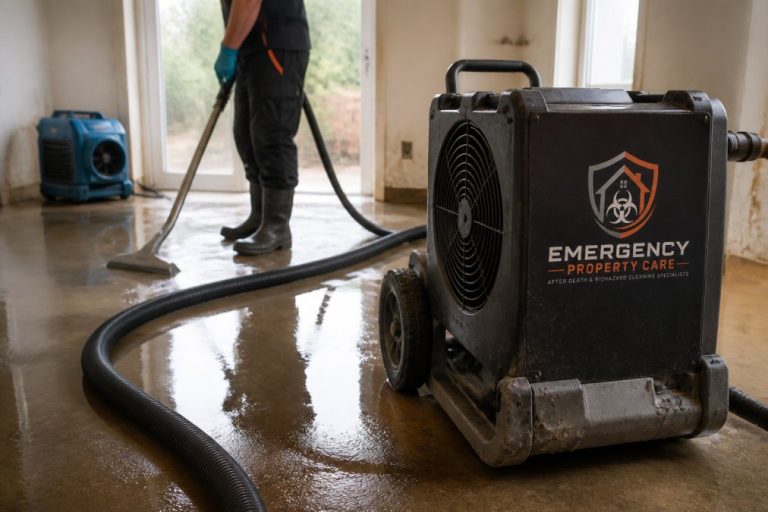
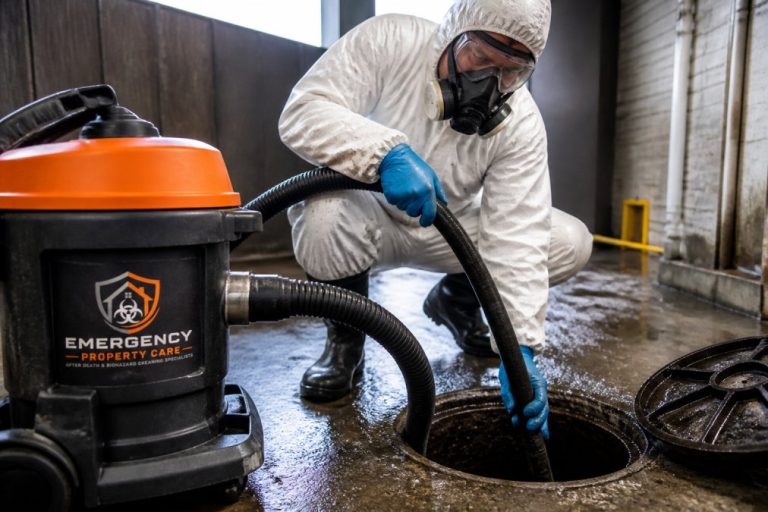
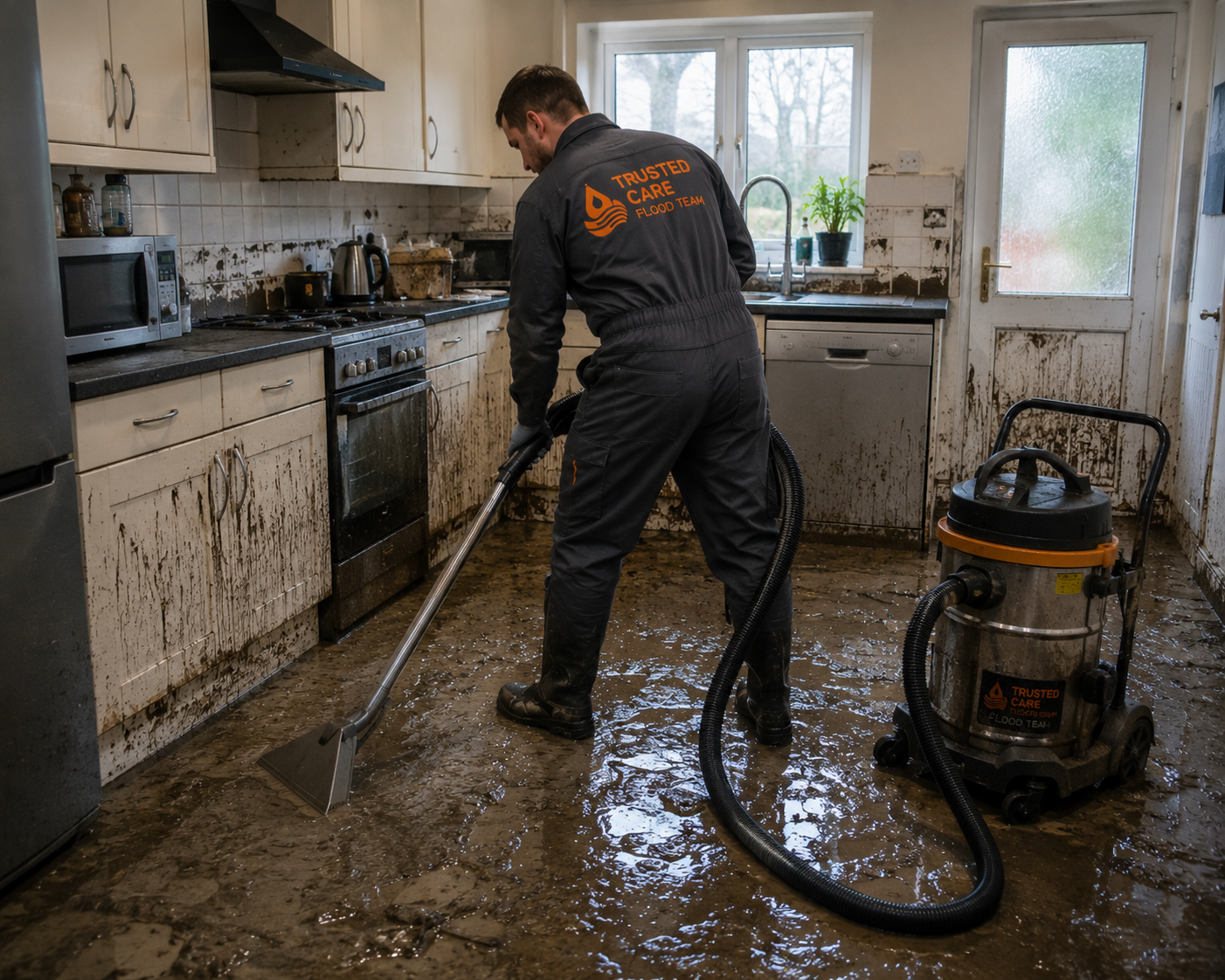
- Remove standing water and solids. Use equipment suitable for contaminated water and a method that limits splashes and aerosols. Domestic vacuums must not be used.
- Remove materials that cannot be reliably restored. Assess carpet, underlay, insulation, plasterboard and other absorbent layers rather than treating only the visible surface.
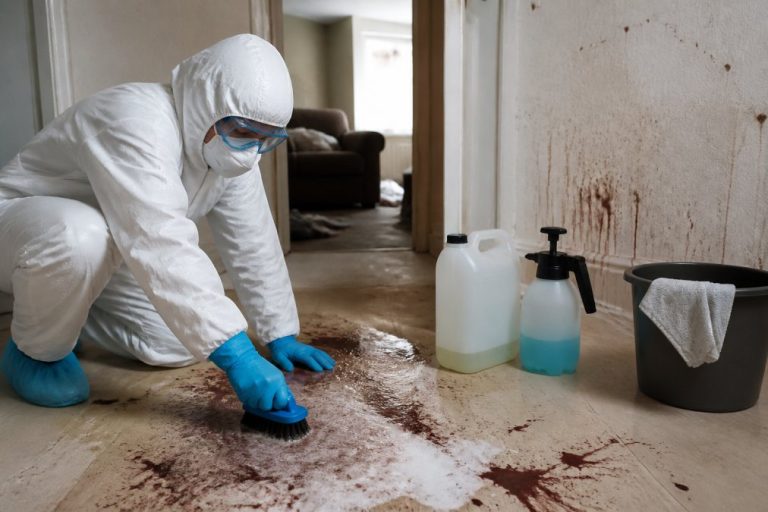
- Clean retained surfaces. Remove soil and organic residue using a material-compatible method before any separate disinfecting stage specified by the assessment.
- Apply a suitable treatment where required. Follow the product’s approved use, dilution, surface compatibility, contact time, ventilation and safety information.
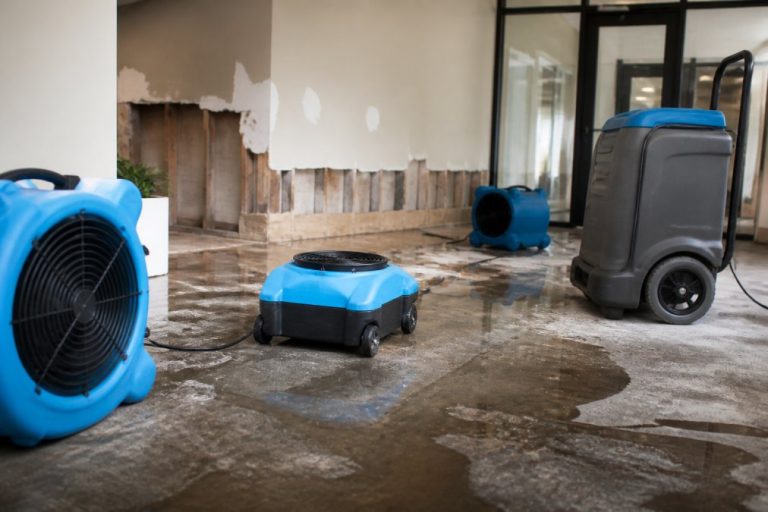
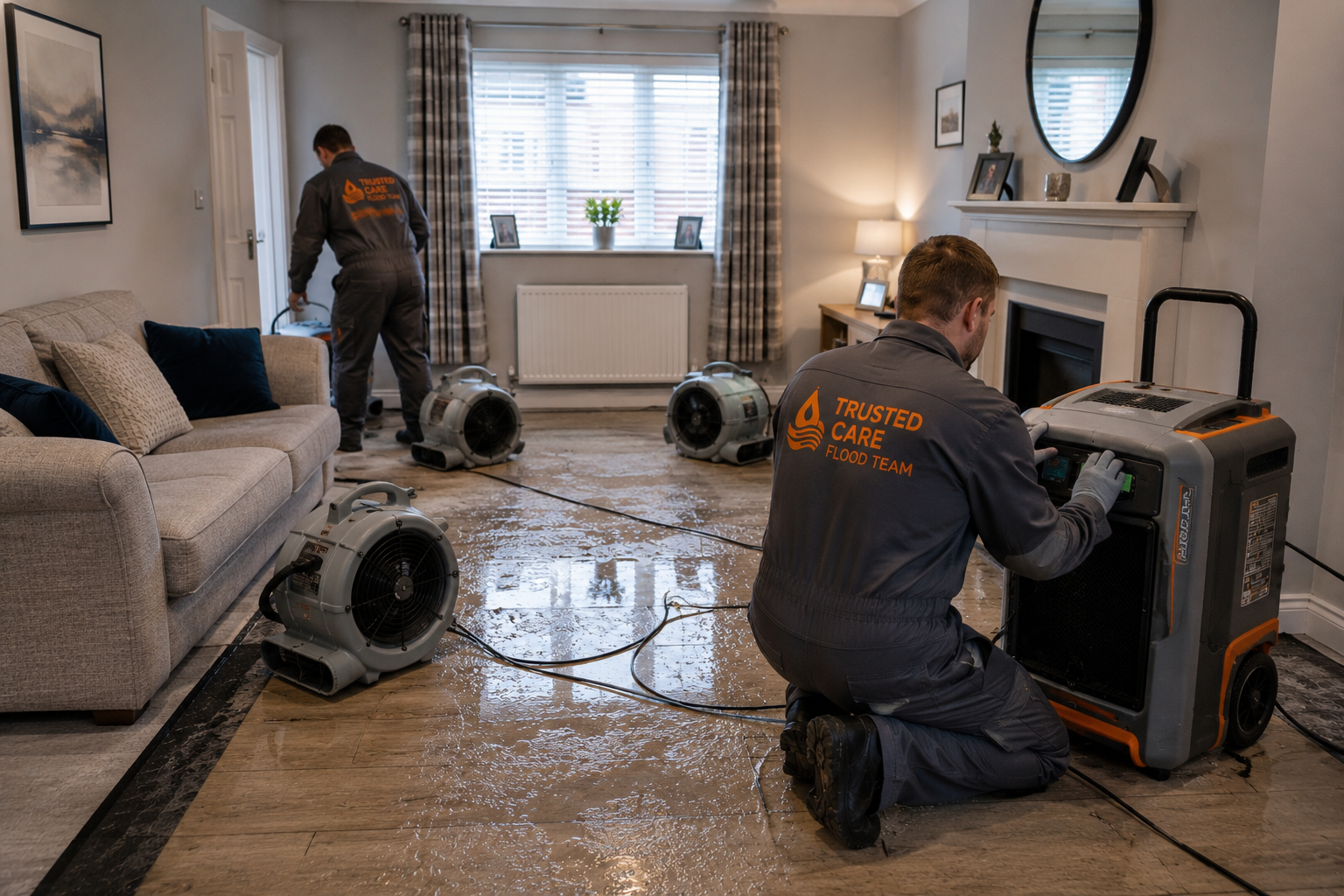
- Dry the structure. Use controlled airflow, dehumidification and material-appropriate moisture monitoring.
- Inspect and document. Record what was removed, cleaned and dried, identify inaccessible areas and explain repairs or monitoring still required.
A fixed “one part bleach to ten parts water” instruction ignores product strength, intended use, surface compatibility and other chemicals present. Never mix cleaning products. Use only a suitable product at the concentration and contact time specified by its manufacturer and the site assessment.
What Can Be Cleaned and What May Need Removal
| Material | Main concern | Typical assessment |
|---|---|---|
| Sound tile, metal and some plastics | Joints, edges and damaged coatings can retain contamination | May be cleanable when every affected surface is accessible and compatible with the method |
| Sealed concrete or masonry | Cracks and porosity vary; residues may remain in damaged areas | Cleaning and drying may be possible after condition and depth are assessed |
| Laminate and engineered flooring | Water can enter seams and affect backing or underlay | May require lifting or removal where contamination travelled below the wear surface |
| Carpet and underlay | Multiple absorbent layers are difficult to clean and verify in place | Contaminated sections commonly require controlled removal |
| Plasterboard and insulation | Absorbent material can hold contaminated water and dry slowly | The affected extent should be established; removal is often required where saturated |
| Upholstery and mattresses | Fluid can enter foam and internal layers that cannot be inspected | Professional assessment should decide whether an item is restorable or should be removed |
| Contents and documents | Material, value and contamination depth vary | Prioritise, photograph and obtain specialist advice before discarding valuable items |
Contaminated material is not automatically classified as hazardous waste merely because it is porous. The waste route depends on the source, material, quantity and applicable local or commercial arrangements. Contractors should explain how removed waste will be classified, packaged and transferred.
Structural Drying and Moisture Monitoring
Cleaning removes contamination; drying deals with the water that remains within the building. Skirting, plaster, screed, timber, insulation and floor voids can stay wet after the visible surface appears dry.
A drying plan may include:
- initial and follow-up readings taken with suitable instruments;
- comparison with unaffected material or a suitable dry standard;
- dehumidifiers and air movement selected for the space and materials;
- controlled ventilation where outdoor and indoor conditions support it;
- access to concealed wet layers where necessary;
- condensate and equipment-management arrangements; and
- a record of progress and any material that remains inaccessible.
There is no single number of days or universal moisture percentage that proves every property is dry. Construction, water depth, temperature, ventilation, material thickness and how quickly work began all affect the programme. TrustedCare’s flood cleaning and structural-drying service covers both contamination and moisture-management enquiries.
Finding and Correcting the Cause
Cleanup should not begin with the assumption that the blockage is inside the property. Responsibility and repair routes depend on the location and ownership of the affected pipework.
Possible causes include:
- a blocked internal waste pipe or private drain;
- fat, oil, wipes, sanitary products or other unsuitable material in the system;
- tree-root intrusion, displaced joints or a collapsed drain;
- a damaged or failed pumping installation;
- surface water incorrectly entering foul drainage;
- a problem within a shared drain or public sewer; or
- rainfall overwhelming part of the drainage system.
A drainage contractor may use rodding, jetting or CCTV inspection after immediate hazards are controlled. Backwater valves, sump pumps and drainage alterations are not universal solutions; they should be designed and installed by a competent person for the actual system and flood route.
Insurance, Landlords and Records
Notify the insurer as soon as reasonably possible where buildings or contents cover may apply. Sewage damage is not automatically covered: the outcome depends on the event, policy wording, exclusions, maintenance history and approval requirements.
Keep:
- photographs and videos obtained without entering an unsafe area;
- the date, time and suspected cause;
- a list of affected rooms and contents;
- drainage, plumbing and water-company reports;
- moisture readings and drying records where provided;
- quotations, authorisations, invoices and receipts;
- waste and material-removal records where applicable; and
- written confirmation of exclusions and reinstatement requirements.
Tenants should report the incident promptly to the landlord or managing agent and preserve a written record. Responsibility for repair, cleanup and payment depends on the cause, ownership, tenancy and insurance position; do not assume it always falls to one party.
Questions to Ask Before Accepting a Quotation
- Has the source stopped, and who is arranging the drainage repair?
- Which rooms, surfaces, contents and concealed layers are included?
- What water-extraction equipment and contamination controls will be used?
- Which materials are expected to be removed, retained or assessed after opening?
- Which cleaning products and contact times are proposed?
- How will removed materials and wastewater be managed?
- Is structural drying included, and how will progress be measured?
- What documentation will be provided at handover?
- Are drainage repair, reinstatement and decoration included or separate?
- How will additional hidden damage be reported and authorised?
A brief quotation for “extract, disinfect and deodorise” may omit underlay, wall linings, waste, drying, monitoring and reinstatement. Ask for a property-specific scope.
Frequently Asked Questions
Can I clean up a sewage backup myself?
A very small, contained incident on a sound non-porous fixture may sometimes be manageable after the blockage is resolved and local guidance is followed. Professional help is sensible where sewage enters accommodation, affects flooring or porous materials, spreads beyond a small area or involves other hazards.
Should I open the windows immediately?
Not before checking gas, electrical and other hazards. Once these are controlled, suitable ventilation may support drying, but uncontrolled airflow can also move odour or contaminated droplets and dust.
Does a wet vacuum need a HEPA filter for sewage water?
A HEPA filter is for appropriately sized airborne particles; it does not make an ordinary vacuum suitable for sewage extraction. Equipment must be designed for the liquid and contamination, operated using a safe method and decontaminated afterwards.
Can bleach make a sewage-affected room safe?
Not by itself. Bulk contamination and organic soil must be removed, affected porous materials assessed and the structure dried. Any disinfectant must be suitable for its intended use and applied according to its label and safety information. Never mix chemicals.
Do all contaminated carpets and furnishings have to be discarded?
Carpet and underlay affected by sewage commonly require removal because contamination reaches several absorbent layers. Other items should be assessed by material, value, extent and whether every affected part can be treated and verified.
How long does structural drying take?
It varies from property to property. Materials, water depth, temperature, ventilation, access and the equipment used all affect the programme. Progress should be based on readings and material condition rather than a promised number of days.
Will insurance cover sewage-backup cleaning?
Possibly, but it depends on the cause and policy. Notify the insurer promptly and ask about emergency mitigation, approved contractors, evidence, exclusions and whether cleaning, drying and repairs are treated separately.
How quickly can TrustedCare attend?
Attendance depends on the postcode, incident, access, equipment and team availability. Contact TrustedCare with the property location and affected areas for a realistic response window.
Request Sewage-Cleanup and Drying Advice
Tell us the postcode, where the backup occurred, whether the source has stopped, the rooms affected and the floor construction. We will discuss immediate precautions and the likely next step.
Coverage across England, Scotland and Wales. For an immediate threat to life or property, contact the appropriate emergency service first.

TrustedCare Editorial Team publishes UK guidance on specialist cleaning and biohazard remediation, including after-death cleaning, flood restoration and contamination control. Content is written for homeowners, landlords and housing providers seeking clear, practical information.