Residential Sewage Cleanup Response Time: A Complete Guide
Contents
- Why Sewage Cleanup Response Time Matters
- Health Risks From Sewage Contamination
- What Affects Sewage Cleanup Response Times?
- What to Do While Waiting for Help
- The Professional Sewage Cleanup Process
- Landlord Responsibilities
- Sewage Damage and Insurance Claims
- How Long Does Sewage Cleanup Take?
- Frequently Asked Questions
A sewage backup inside a home requires prompt attention, but there is no single arrival time that applies to every property. Location, access, the extent of contamination, current availability and whether the source has been stopped can all affect how quickly specialist help can reach the property.
Acting quickly can help restrict the spread of contaminated water and reduce the amount of moisture absorbed by flooring, walls, insulation and other building materials. However, safety comes first. Occupants should avoid unnecessary contact with sewage-contaminated water and keep children and pets away from affected areas.
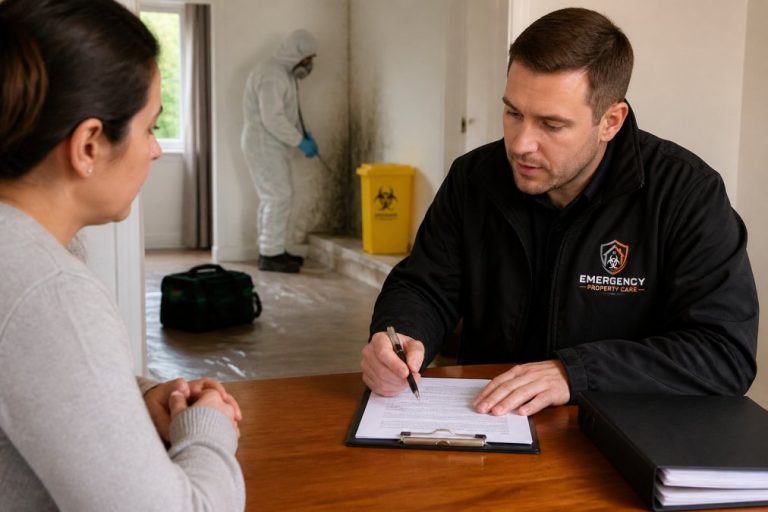
TrustedCare can discuss the incident, establish the type and extent of contamination and confirm the current availability of suitable help. Arrival times and the final scope of work can only be confirmed once the property details are understood.
Why Sewage Cleanup Response Time Matters
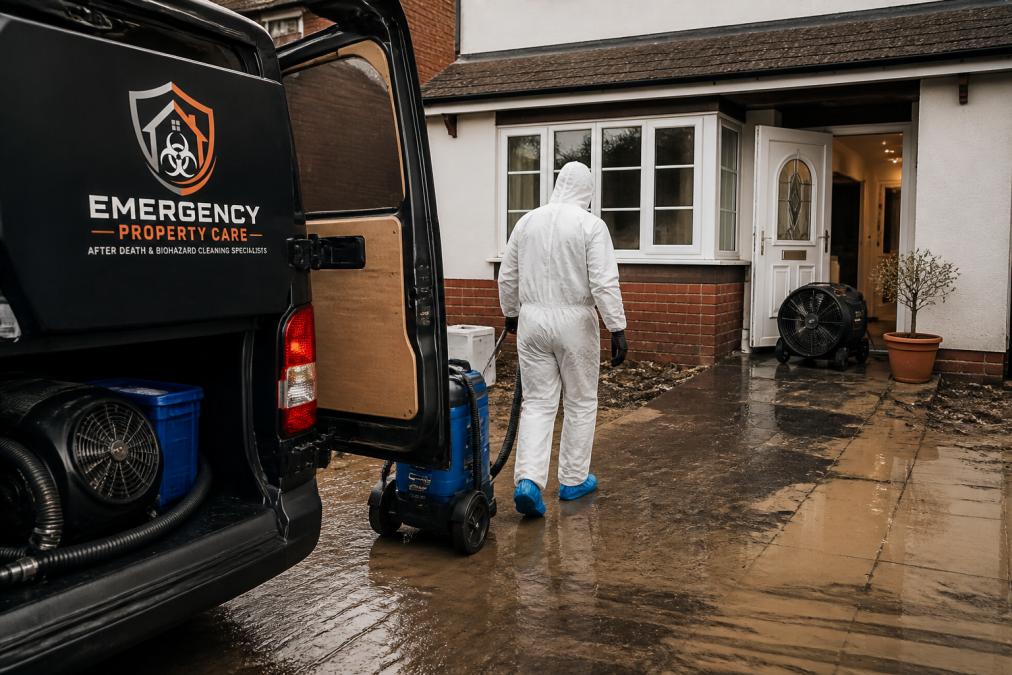
Sewage-contaminated water can travel beyond the area where it first becomes visible. It may move underneath flooring, enter wall cavities or affect adjoining rooms. The longer contaminated water remains in contact with absorbent materials, the more extensive the cleaning, removal and drying work may become.
A prompt response helps professionals:
- Identify and, where possible, stop the source of the problem
- Restrict movement through contaminated areas
- Determine how far the water has travelled
- Remove standing water and affected waste
- Assess which materials can be cleaned and which may require removal
- Begin controlled cleaning, decontamination and drying
- Create an initial record of the incident for the property owner or insurer
Response time should not be confused with completion time. Initial attendance and contamination control may begin quickly, while cleaning and structural drying can require additional visits and monitoring.
Health Risks From Sewage Contamination
Untreated sewage can contain harmful microorganisms and other contaminants. The Health and Safety Executive identifies exposure to raw sewage and work inside sewage-contaminated properties as activities requiring appropriate risk controls.
Contact can occur through contaminated hands, clothing, damaged skin or splashes to the eyes and mouth. People should therefore avoid walking through affected rooms or handling contaminated belongings without an appropriate assessment and suitable protection.
Particular care should be taken where children, older residents or people with existing health conditions are present. Anyone who becomes unwell following contact with sewage should seek medical advice and explain that sewage exposure may have occurred.
Keep people and pets away from affected areas. Do not use pressure washers, ordinary household vacuums or equipment that could spread contaminated droplets or carry contamination into clean rooms.
What Affects Sewage Cleanup Response Times?
Location and property access
Travel distance and access can influence attendance time. Flats, basements, rural properties, restricted parking, narrow entrances and buildings where access must be arranged with a tenant or managing agent can require additional planning.
Extent of the contamination
A localised toilet overflow is different from sewage affecting several rooms or entering through multiple drainage points. Larger incidents may require additional technicians, extraction equipment, containment materials and drying equipment.
Whether the source has been stopped
Cleaning cannot progress effectively while sewage continues to enter the property. Depending on the cause, assistance may also be required from a plumber, drainage contractor, building manager or water company.
Current demand and weather conditions
Heavy rainfall and local flooding can produce multiple incidents within the same area. This may affect the availability of technicians and equipment. A responsible provider should explain current availability rather than promise an arrival time that may not be achievable.
Electrical or structural hazards
Standing water close to electrical systems, unstable ceilings, damaged flooring or other structural concerns may need to be assessed before cleaning begins. Occupants should not enter contaminated water to reach electrical switches or attempt to isolate utilities unless it is safe to do so.
What to Do While Waiting for Help
- Keep everyone away from the affected area. Close internal doors where possible and prevent children and pets from entering.
- Stop using affected plumbing. Avoid flushing toilets, running taps or using appliances connected to the affected drainage system.
- Report the source. Contact the landlord, property manager, plumber, drainage contractor or water company as appropriate.
- Avoid electrical hazards. Do not touch electrical equipment, sockets or switches that are wet or close to standing water.
- Document visible damage safely. Take photographs or video from a clean, safe position without walking through sewage.
- Notify your insurer. Explain what has happened and ask whether the policy contains any requirements concerning contractors or evidence.
- Do not mix cleaning chemicals. Combining products can create dangerous fumes and may damage surfaces.
- Do not move contaminated belongings into clean rooms. This can spread contamination through the property.
Minor surface contamination and extensive sewage ingress do not require the same response. If sewage has reached absorbent flooring, plasterboard, insulation, soft furnishings or several rooms, specialist assessment is strongly advisable.
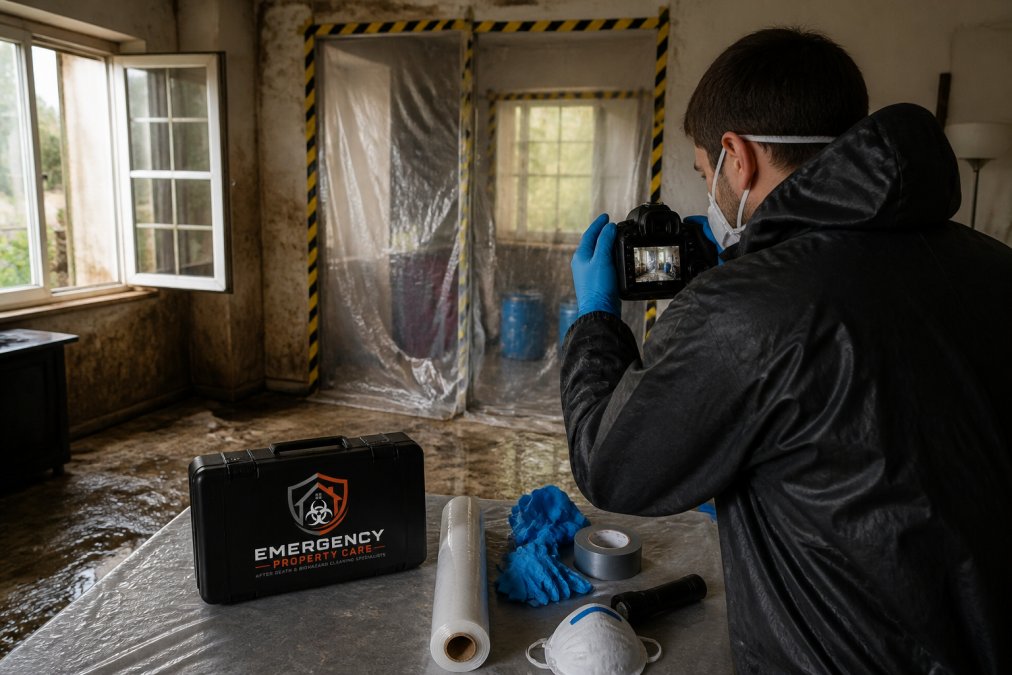
The Professional Sewage Cleanup Process
The exact process depends on the property, source, contamination level and materials affected. A typical residential sewage cleanup may include the following stages.
Initial information and assessment
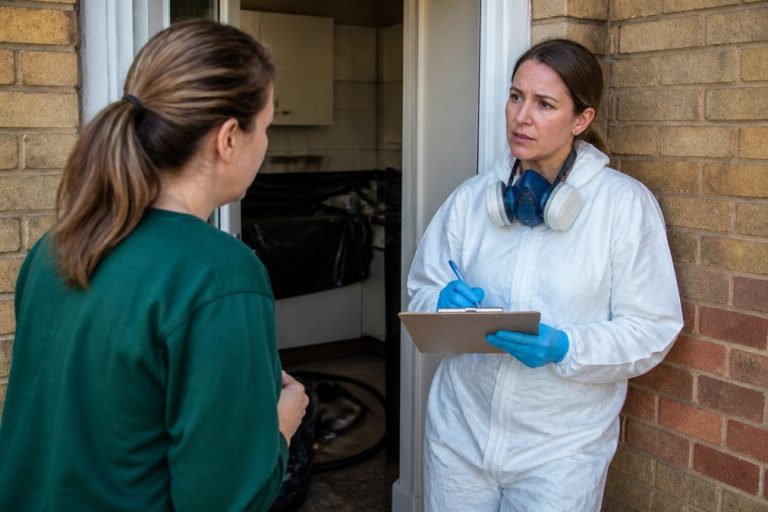
The first discussion should establish where the sewage originated, whether it is still entering the property, which rooms are affected and whether occupants remain inside. Photographs may help with initial planning, but they do not replace an on-site assessment.
Once at the property, the affected areas can be inspected to determine the immediate hazards, extent of visible contamination and likelihood of water entering hidden building materials.
Isolation and contamination control
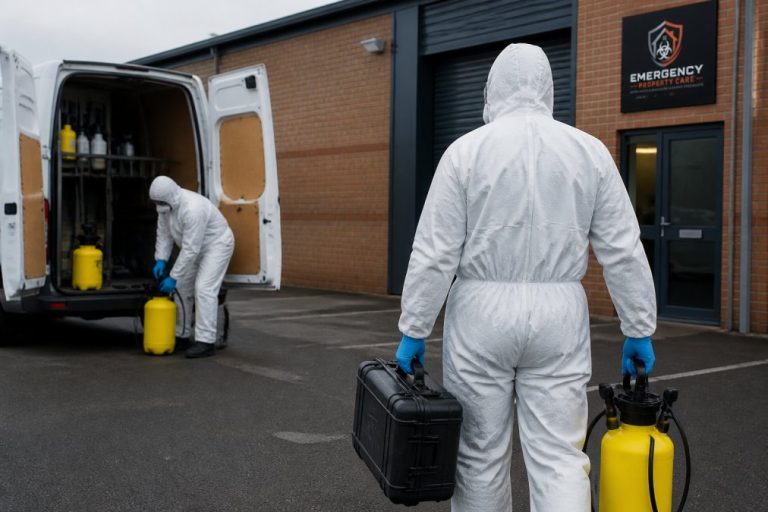
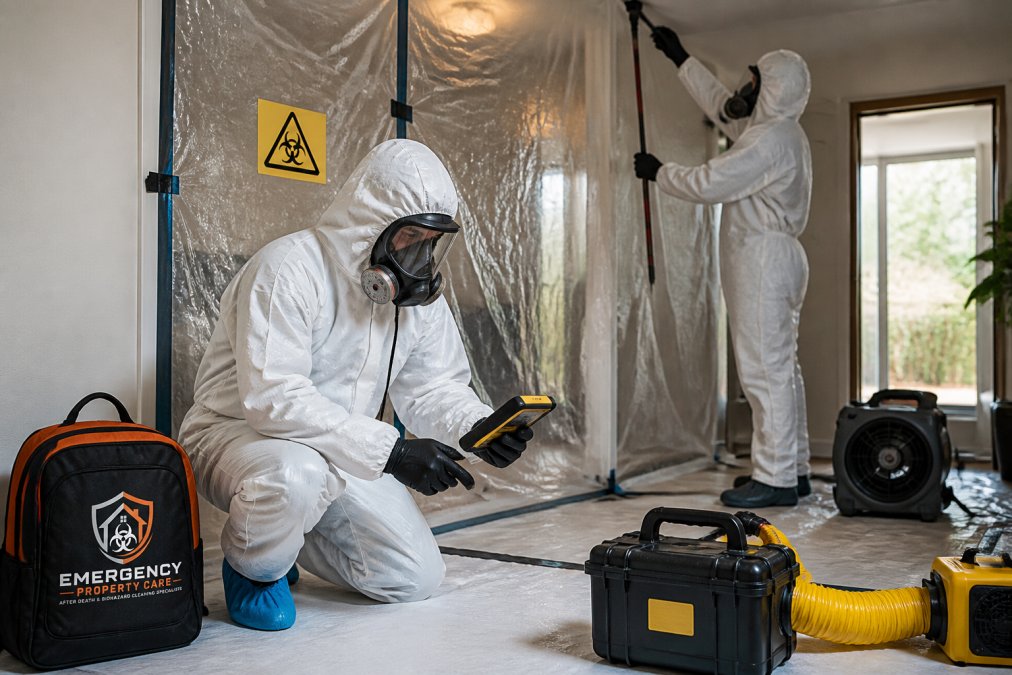
Access to affected areas may be restricted to prevent contaminated footwear, equipment or belongings from being carried into clean rooms. The controls required will depend on the layout and seriousness of the incident.
Removal of standing water and waste
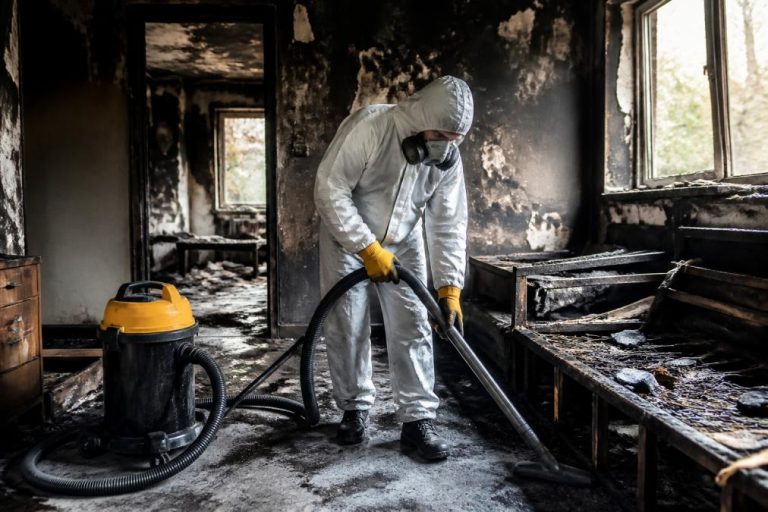
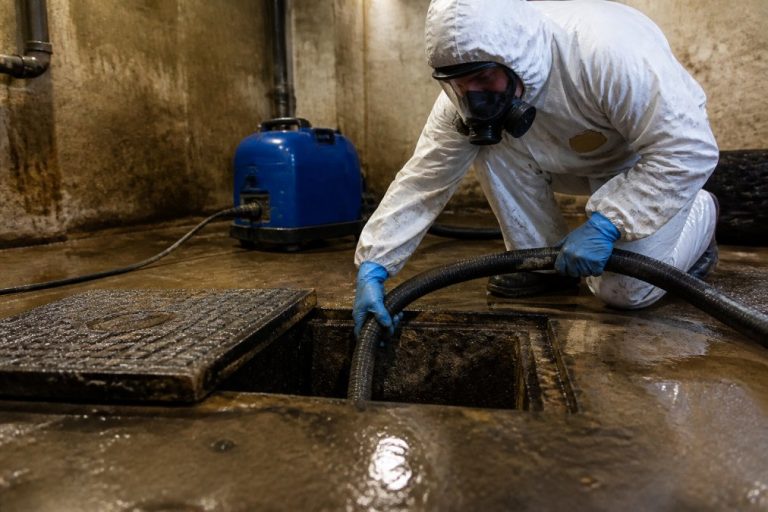
Standing contaminated water and solid waste are removed using suitable equipment and working methods. Waste must be contained, transported and disposed of according to its type and the applicable requirements.
The source of the sewage should also be addressed. This may involve separate plumbing or drainage work before the cleaning process can continue.
Assessment of affected materials
Hard, non-porous surfaces may be capable of being cleaned and treated. Heavily contaminated porous materials can be more difficult to clean reliably and may require removal.
Decisions should be based on the material, the length of exposure, the level of contamination and whether moisture has entered areas that cannot be safely accessed or dried. It is incorrect to assume that every affected item must automatically be discarded, but safety should not be compromised to save unsuitable materials.
Cleaning and decontamination
Visible contamination is removed before appropriate cleaning and disinfecting products are used. Products and methods should be selected for the contamination and surfaces involved and used in accordance with their instructions.
Cleaning may need to be repeated, particularly where joints, edges, fixings or uneven surfaces have been affected. Odour should be investigated at its source rather than covered with fragrance.
Moisture assessment and structural drying
Once contaminated material has been removed and the area has been cleaned, remaining moisture may need to be addressed. Moisture readings help establish which parts of the property require drying and whether hidden moisture remains.
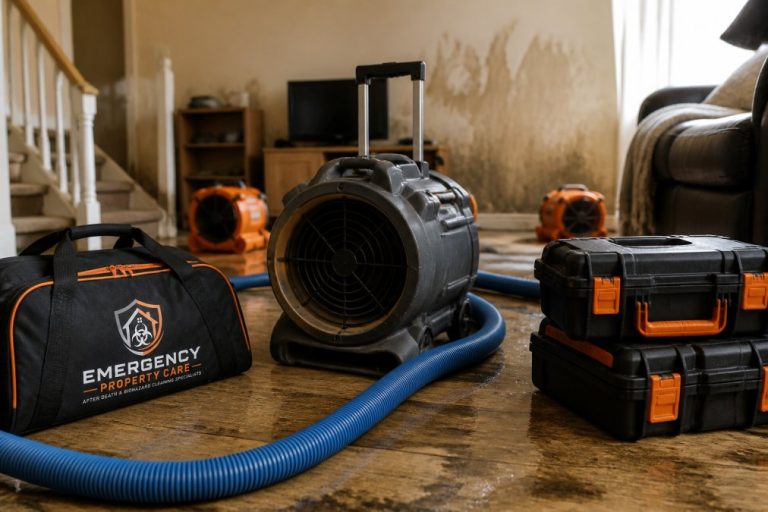
Air movers, dehumidifiers and other drying methods may be used where appropriate. Drying targets depend on the materials and the condition of comparable unaffected areas; there is no single moisture percentage that is suitable for every building.
More information is available through our flood damage cleaning and structural drying service.
Final review and documentation
At the end of the work, the affected area should be reviewed and the customer told about any remaining drying, repair or reinstatement requirements. Where documentation is required for an insurance claim, confirm in advance what records the contractor will provide.
Landlord Responsibilities for Sewage Leaks and Backups
Responsibility can depend on where the problem originated, who controls the affected drainage and whether damage resulted from disrepair, misuse or a problem outside the property.
For private rented homes in England, GOV.UK states that landlords are normally responsible for repairs to sanitary fittings, including pipes and drains. Tenants should report sewage leaks or drainage problems promptly, preferably in writing, and keep a record of the report.
Different housing rules apply across England, Scotland and Wales. Tenants and landlords should check the tenancy agreement and obtain appropriate housing or legal advice if responsibility is disputed.
A sewage incident does not automatically give every private tenant the right to stop paying rent, end the tenancy or demand alternative accommodation. Those matters depend on the tenancy, circumstances and relevant housing law. Urgent repair and safety issues should nevertheless be dealt with promptly.
Sewage Damage and Insurance Claims
Insurance coverage varies between policies and can depend on the cause of the incident. Damage caused by a sudden insured event may be treated differently from damage associated with gradual deterioration, poor maintenance or an excluded drainage problem.
After discovering sewage damage:
- Contact the insurer as soon as reasonably possible
- Record the date and circumstances of the incident
- Take photographs or video from a safe location
- Keep copies of contractor reports, quotations and invoices
- Retain a list of damaged or removed items
- Ask before discarding items unless removal is immediately necessary for safety
- Check whether the insurer wants to appoint a loss adjuster or approved contractor
TrustedCare cannot determine whether a particular loss is covered. The policyholder should obtain confirmation directly from the insurer.
How Long Does Residential Sewage Cleanup Take?
There is no honest universal completion time. A limited incident affecting a small, accessible area may be dealt with more quickly than sewage that has travelled beneath floors, entered wall cavities or contaminated several rooms.
The overall programme may include:
- Stopping or repairing the source
- Assessment and contamination control
- Extraction and waste removal
- Removal of unsuitable materials
- Cleaning and decontamination
- Structural drying and monitoring
- Repairs and reinstatement
Cleaning and drying are separate stages. Visible water may be removed relatively quickly while moisture inside the structure requires further monitoring. The contractor should explain the anticipated stages after the initial assessment rather than provide an unsupported completion date before seeing the property.
Frequently Asked Questions
How quickly can TrustedCare attend a residential sewage incident?
Availability depends on the property’s location, the seriousness of the incident and the technicians and equipment required. Contact TrustedCare with the postcode, affected rooms and approximate extent of contamination so current availability can be checked. An arrival time should not be considered confirmed until the incident details have been reviewed.
Can I remain in my home during sewage cleanup?
That depends on the rooms affected, whether essential facilities remain usable, the ability to isolate the contaminated area and the needs of the occupants. Extensive contamination, contamination close to kitchens or sleeping areas, or risks to vulnerable occupants may make remaining in the property unsuitable. Follow the advice provided after the property has been assessed.
Can I clean a sewage backup myself?
A very small incident confined to a cleanable surface is different from sewage entering absorbent materials or spreading across several areas. Significant sewage contamination should not be treated as ordinary household cleaning. Seek professional advice where porous materials, hidden spaces, electrical risks or extensive contamination are involved.
Does home insurance cover sewage cleanup?
Possibly, but coverage depends on the cause of the incident and the wording, limits and exclusions of the policy. Notify the insurer promptly and ask what evidence and contractor arrangements are required. TrustedCare cannot guarantee that an insurer will accept a claim.
How long does structural drying take?
Drying time depends on the amount of water, materials affected, accessibility and environmental conditions. Moisture readings should be used to monitor progress. A responsible contractor will not promise a fixed drying period without assessing the property and taking appropriate measurements.
Should sewage-contaminated flooring always be removed?
Not automatically. The decision depends on the flooring material, level and duration of contamination, what lies underneath it and whether it can be cleaned and dried safely. Heavily contaminated absorbent flooring and underlay are more likely to require removal than sealed, non-porous surfaces.
Get Help With Residential Sewage Cleanup
If sewage has entered your home, keep people and pets away from the affected area and avoid carrying contaminated items into clean rooms. Contact TrustedCare with the property postcode, source of the problem and details of the rooms affected. We can discuss the next steps and confirm current availability.
Official Safety and Housing Guidance
- GOV.UK: Flooding and health advice for the public
- Health and Safety Executive: Working with sewage
- GOV.UK: Private renting and repair responsibilities

TrustedCare Editorial Team publishes UK guidance on specialist cleaning and biohazard remediation, including after-death cleaning, flood restoration and contamination control. Content is written for homeowners, landlords and housing providers seeking clear, practical information.