Emergency Odor Removal: Rapid Response Guide
Rapid Property Support
Emergency Odour Removal: Rapid-Response Guide
Strong or unusual property odours can signal decomposition, sewage, smoke residue, contaminated water or a hidden moisture problem. Learn what to do first and when specialist assessment is appropriate.
Specialist-cleaning enquiries across England, Scotland and Wales. Attendance depends on the location, incident type and current availability.
Emergency odour removal begins with identifying and controlling the source—not covering the smell with fragrance or applying an air treatment at random. The correct response to decomposition is different from the response to sewage, smoke, dampness, a gas escape or an unknown chemical.
Keep people and pets away from the affected area until the cause is understood. Where contamination has entered porous materials, the work may involve controlled removal, cleaning, drying and only then a suitable odour-treatment stage.
Do not operate electrical switches, smoke, light a flame or remain inside to investigate. Move to a safe place and call the National Gas Emergency Service on 0800 111 999. Carbon monoxide has no smell, so an odour is not a reliable carbon-monoxide warning.
When a Property Odour Is an Emergency
A strong smell is not a diagnosis. Urgency depends on what may be producing it, who could be exposed and whether the source is still active.
Possible gas escape
Leave immediately and call the National Gas Emergency Service from a safe location.
Burning or electrical smell
If there is smoke, heat, sparking or an immediate fire risk, leave and call the fire and rescue service on 999.
Unknown chemical odour
Do not remain inside or experiment with ventilation. Move away and follow emergency-service advice.
Decomposition
Do not disturb the room or affected materials. Confirm that the scene has been released before arranging cleaning.
Sewage or contaminated water
Restrict access and avoid direct contact. Contamination may extend beneath flooring and into absorbent materials.
Persistent smoke, damp or mould odour
Prompt assessment is sensible, particularly where occupants have symptoms or the source is concealed.
Breathing difficulty, collapse, confusion, severe dizziness or another medical emergency requires immediate medical help. Do not re-enter an unsafe building to retrieve items or take photographs.
What to Do Before Help Arrives
- Protect people first. Move occupants and pets away from the affected area. Consider children, older people and anyone with respiratory or other relevant health conditions.
- Do not disturb the source. Avoid lifting flooring, opening contaminated packages or moving furnishings through clean rooms.
- Isolate the area where safe. Close the room door and prevent unnecessary access. Do not create a barrier that obstructs an escape route.
- Follow incident-specific advice. Ventilation may help some ordinary odours but can spread contamination or conflict with gas, fire, chemical or treatment controls. Do not use it as a universal response.
- Avoid DIY chemicals and foggers. Never mix cleaning products. Do not spray bleach, fragrance or another product into an unidentified atmosphere.
- Record the condition safely. If there is no exposure risk, take photographs from a safe position and note when the problem was discovered.
- Notify the right party. Depending on the incident, this may be the emergency services, gas network, landlord, building manager, insurer, water company or specialist contractor.
The correct action depends on the source and building system. Mechanical ventilation can move smoke, vapours or contaminated particles into other rooms. Follow emergency-service or competent specialist advice for the incident.
Common Sources and Warning Signs
| Possible source | Clues | Likely next step |
|---|---|---|
| Decomposition or biological contamination | Persistent organic odour, staining, insects or a known death or trauma incident | Do not disturb the scene; arrange a controlled specialist assessment after release |
| Sewage | Drain backup, contaminated water, affected sanitary fittings or waste residue | Stop the source if authorised, isolate the area and assess all affected layers |
| Flood or escape of water | Musty smell, damp finishes, water marks, swollen flooring or wet insulation | Extract water, clean as required and use a documented drying process before final odour work |
| Fire and smoke | Soot, smoke film, burnt materials or odour returning in warm or humid conditions | Identify affected contents, finishes and cavities before selecting cleaning or sealing |
| Damp and mould | Musty odour, condensation, staining, peeling finishes or repeated visible growth | Find and correct the moisture source before cleaning and repair |
| Animal, pest or waste contamination | Droppings, urine, nesting material, carcass or accumulated refuse | Remove the source safely, assess absorbent materials and address access points |
| Unknown chemical or gas | Sudden solvent, chlorine-like, fuel, gas or other unexplained odour | Leave the area and obtain emergency or specialist advice—do not investigate by smell |
Why Source Control Comes First
Odour can remain in carpet, underlay, plasterboard, insulation, untreated timber, mattresses, furniture foam and accumulated dust. Air treatment may temporarily reduce what can be smelled without resolving the material holding the residue.
A proper scope should answer:
- What is the suspected source, and is it still active?
- Which rooms, contents and building materials are affected?
- Has liquid or residue entered cavities or layers that cannot be cleaned in place?
- What can be retained, and what may require removal?
- Is repair, drainage work, pest control or structural drying required first?
- Which treatment is intended for the remaining odour, and what are its limitations?
For water-related incidents, TrustedCare’s flood-damage cleaning and structural-drying service treats cleaning, drying and odour as linked but separate stages.
Need Urgent Advice About a Property Odour?
Tell TrustedCare what happened, when the smell began, which rooms are affected and whether the property is occupied. We can discuss the safest next step.
Professional Odour-Removal Methods
No single machine or chemical is correct for every odour. The method should follow the source, affected materials, occupancy and product or equipment instructions.
Removal and physical cleaning
Contaminated porous materials may need controlled removal. Retained surfaces are then cleaned using products and methods suitable for the residue and material. This is commonly the core work rather than a preliminary step before “deodorising”.
Drying and moisture control
Where dampness, flooding or cleaning water is involved, drying must be planned and monitored. An odour treatment applied while materials remain wet may fail because microbial activity or material deterioration continues.
Air filtration
HEPA filtration can capture appropriately sized airborne particles but does not remove gases merely because the machine is called an air scrubber. Gas- and vapour-phase contaminants may require a suitable sorbent such as correctly selected activated carbon. Filter choice, airflow and placement matter.
Fogging or misting
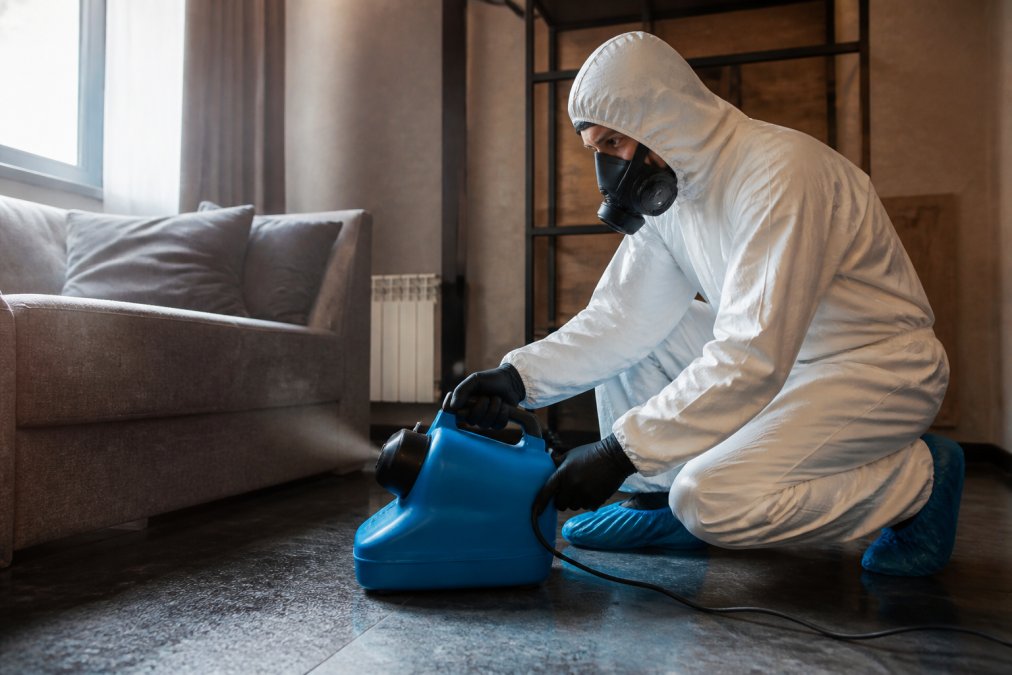
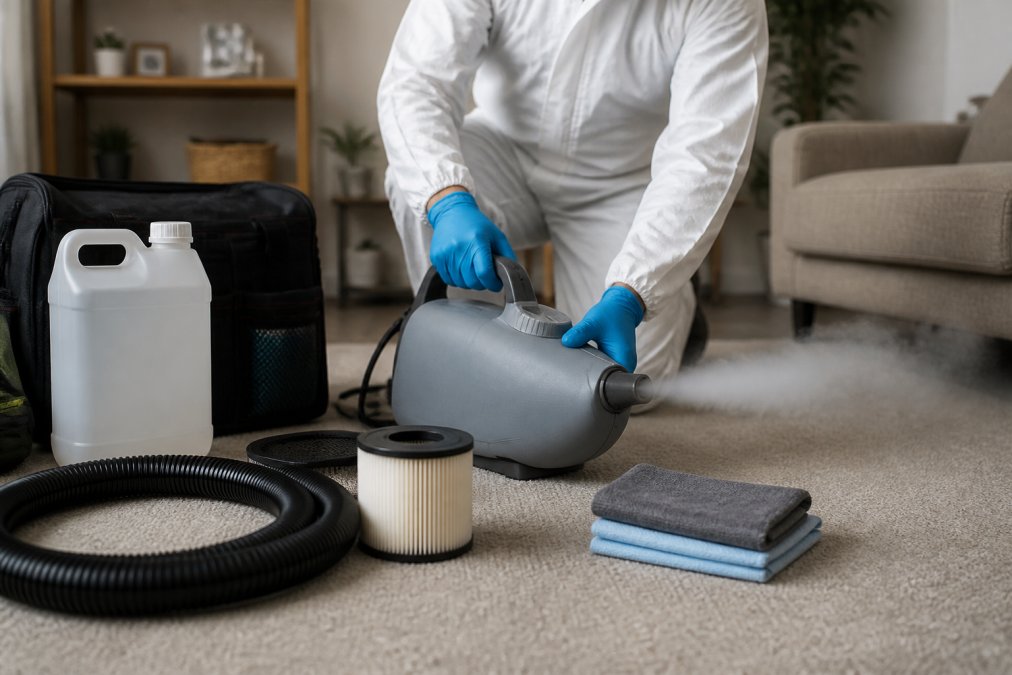
Fogging disperses small droplets and may be specified for a particular product and application. It is not a substitute for physical source removal. HSE guidance notes that fogging can create a particular respiratory risk because it produces smaller droplets than spraying, so access, exposure controls, ventilation and re-entry must be planned.
Ozone
Ozone can damage health when inhaled and may affect some materials. Any proposed use requires a task-specific risk assessment, controlled access, warning arrangements, ventilation and a defined method for deciding when re-entry is permitted. Ozone treatment must not be described as safe merely because a timer has finished.
Equipment marketed as hydroxyl generation
Products and outputs vary. Do not accept a general claim that a unit is automatically safe to operate around people or effective for every odour. Ask for the manufacturer’s information, the intended application and the contractor’s method and risk assessment.
If contaminated underlay, wet plasterboard, smoke residue or biological material remains, the odour may return. The quotation should say what physical cleaning and removal will occur before any air-treatment stage.
What a Specialist Visit May Involve
- Initial triage. Confirm the incident, property location, occupancy, access and immediate safety concerns.
- Site assessment. Identify the likely source, affected materials, extent and any areas that cannot yet be inspected.
- Scope and controls. Define isolation, PPE, equipment, products, waste routes and any need for other trades.
- Source removal. Remove waste, residue and unsalvageable materials using a method that limits spread.
- Cleaning or decontamination. Treat retained surfaces with a material- and contaminant-appropriate process.
- Drying where needed. Monitor affected materials and record limitations rather than relying on appearance alone.
- Targeted odour treatment. Use an appropriate supporting method after source work, with occupancy and re-entry controls.
- Handover. Record completed work, removed materials, treatment instructions, exclusions and any reinstatement or monitoring required.
Decomposition, Sewage, Flood and Smoke Odours
Decomposition
Fluids and residues may pass through bedding, carpet and underlay into the floor. Insects and contaminated contents may extend the scope beyond the visible area. Do not enter or disturb the scene until it has been released. TrustedCare’s after-death cleaning service covers sensitive enquiries involving death, decomposition and affected materials.
Sewage and contaminated floodwater
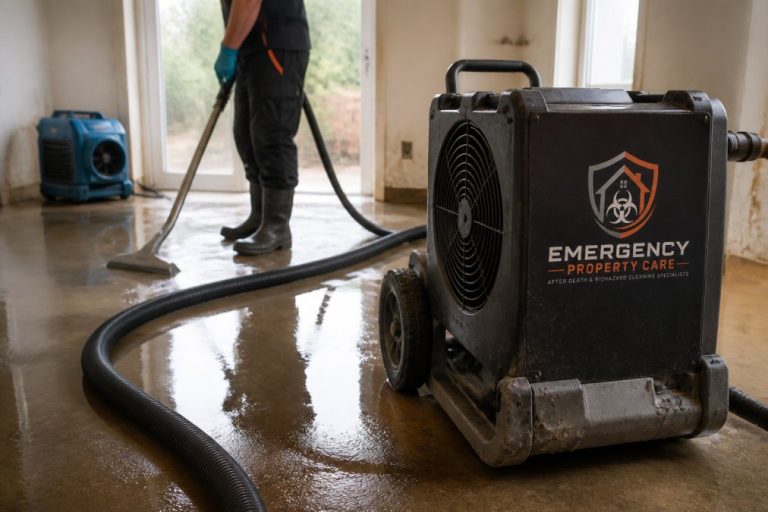
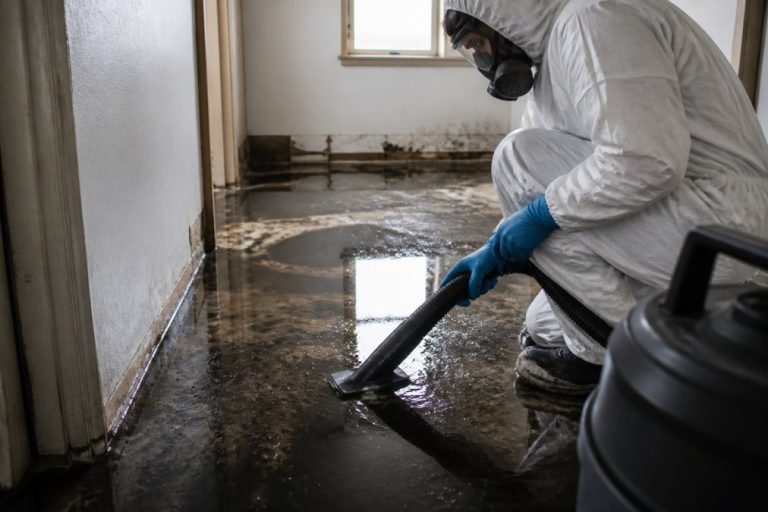
Floodwater may contain sewage, pathogens and pollutants. Cleaning only the visible surface can miss material beneath floors, within wall linings or inside furnishings. Water-source control, extraction, cleaning, material removal and structural drying may all be required.
Smoke and fire residue
Smoke residue can settle on contents, surfaces and within cavities. Treatment depends on what burned, the residues present, the materials affected and the building’s ventilation. Scented sprays or fogging without cleaning can leave the source in place.
Damp and mould-related odours
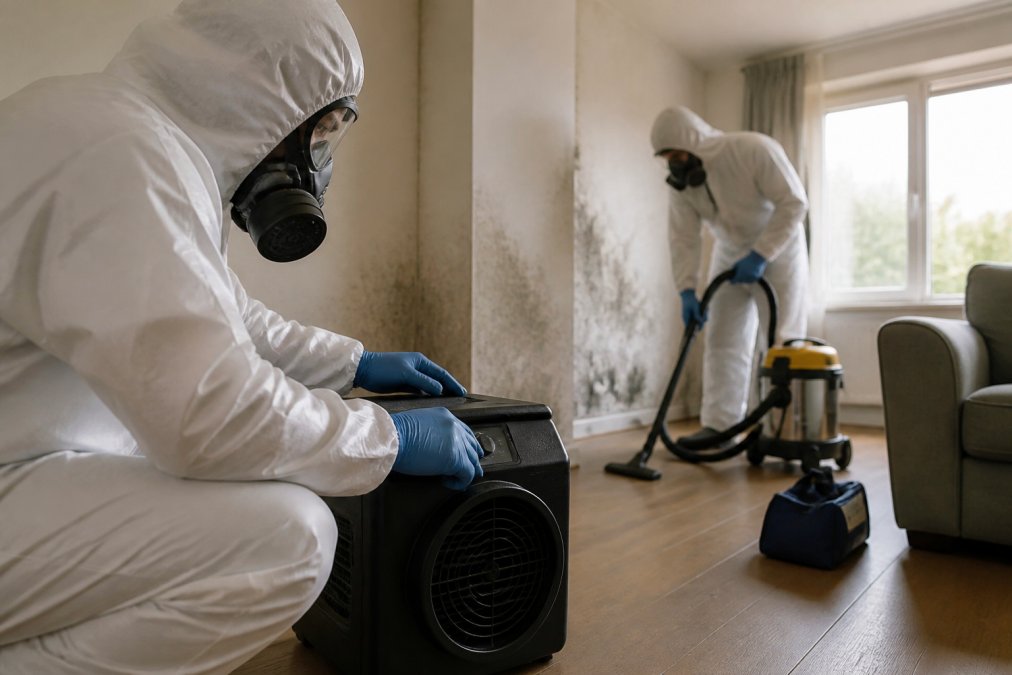
A musty smell may indicate a continuing leak, condensation or concealed growth. The moisture cause must be identified and corrected. Painting over a stain or applying fragrance will not deal with wet or affected building material.
Insurance and Documentation
Property insurance may contribute where the odour results from an insured event, but cover is not automatic. The insurer may distinguish between emergency mitigation, cleaning, removal, drying, odour treatment and reinstatement. Gradual damage, maintenance problems or contamination exclusions may affect the outcome.
If a claim may be possible:
- contact the insurer as soon as reasonably possible;
- ask whether emergency work can begin and whether approval is required;
- take photographs only where it is safe and appropriate;
- keep a dated contact log, estimates, invoices and receipts;
- ask whether damaged items must be retained for inspection; and
- request a written scope distinguishing cleaning, treatment and repairs.
Urgent safety measures should not be delayed where doing so would expose people or allow damage to worsen. The separate guide to professional odour-removal insurance checks explains what to request from a contractor.
Questions to Ask Before Accepting a Quotation
- What evidence supports the proposed odour source?
- Which rooms, contents, surfaces and concealed areas are included?
- What will be removed, cleaned, dried, treated or sealed?
- Which products and equipment will be used, and why are they suitable?
- Must occupants, pets, plants or staff leave the area?
- What determines when access and normal use can resume?
- How will waste and removed materials be handled?
- What photographs, readings or completion records will be provided?
- Are repairs, decoration and replacement materials included or excluded?
- What happens if the odour returns or concealed damage is discovered?
A credible quotation describes the stages and limitations. “One treatment removes every smell” is not a meaningful scope.
Frequently Asked Questions
Can an odour tell me whether a property is dangerous?
No. Some hazardous substances have an odour, others do not, and smell sensitivity varies. Treat sudden, severe or unexplained odours cautiously and use the incident-specific emergency route.
Should I open every window?
Not automatically. Ventilation may help an ordinary stale smell but may spread contamination or conflict with gas, fire, chemical or treatment controls. Leave an unsafe area and follow competent advice.
Will ozone permanently remove an odour?
Not if the source remains. Ozone also creates an inhalation hazard and requires controlled use, ventilation and a defined re-entry method. It should only form part of a suitable site-specific plan.
Can an air scrubber remove every smell?
No. Filters have different functions. HEPA filters target particles, while certain gases and vapours require suitable sorbent media. Neither replaces removal of contaminated or wet material.
Can TrustedCare help after an unattended death?
Yes. TrustedCare handles confidential after-death cleaning enquiries involving decomposition odour, biological contamination and affected furnishings or building materials.
Does insurance usually pay for emergency odour removal?
It depends on the cause and policy. Cover may be more likely where the odour follows a covered sudden event, but exclusions, limits, approval requirements and the distinction between cleaning and reinstatement can affect the claim.
How is completion checked?
Checks should match the agreed scope and may include visual inspection, confirmation of source removal, material-specific moisture readings, treatment records and follow-up advice. A quick smell check is not a complete technical assessment.
How quickly can TrustedCare attend?
Attendance depends on the postcode, type of incident, access, equipment and team availability. Contact TrustedCare with the property location and circumstances for a realistic response window.
Request Emergency Odour-Removal Advice
Tell us the property postcode, what caused the smell, when it began and which rooms or materials are affected. We will discuss the immediate precautions and likely next step.
Coverage across England, Scotland and Wales. For an immediate threat to life or property, contact the appropriate emergency service first.

TrustedCare Editorial Team publishes UK guidance on specialist cleaning and biohazard remediation, including after-death cleaning, flood restoration and contamination control. Content is written for homeowners, landlords and housing providers seeking clear, practical information.