Landlord Guide to Sewage Cleanup: 2026
Table of Contents
- Landlord Responsibility for Sewage Backup: What the Law Requires
- The Homes (Fitness for Human Habitation) Act 2018 and Sewage Incidents
- Health Risks of Raw Sewage Exposure in a Rental Property
- Immediate Steps After a Sewage Backup: A Landlord’s Action Plan
- The Sewage Decontamination Process: What Professional Cleanup Involves
- Landlord Insurance Sewage Cover: What Policies Typically Include
- Preventative Maintenance to Avoid Future Sewage Incidents
- Conclusion
Last Updated: August 14, 2026
A sewage backup in a rental property is one of the most serious emergencies a landlord can face. Raw sewage contains dangerous pathogens, creates an immediate habitability crisis, and exposes property owners to significant legal liability if not handled correctly. Mishandling a sewage incident, whether by delaying action, attempting DIY cleanup, or failing to rehouse tenants, can result in enforcement action from the local authority, civil claims from tenants, and voided insurance cover.
Landlord Responsibility for Sewage Backup: What the Law Requires
Under the Landlord and Tenant Act 1985, landlords have a statutory duty to keep the structure, exterior, and drainage systems of a property in repair. A sewage backup resulting from failure in those systems falls squarely on the landlord to resolve, and courts have consistently found that delays in addressing such disrepair constitute a breach of the landlord’s repairing covenant.
Who Owns the Problem: Drainage Pipes, Sewer Lines, and Shared Systems
Private drainage pipes within the property boundary are the landlord’s responsibility. Public sewer lines beyond the boundary fall under the water and sewerage company’s remit. Shared drains serving multiple properties were transferred to water company ownership under the Water Industry Act 2011, but the landlord remains responsible for the section serving only their property up to the public sewer connection.
Contamination inside the rental property requires immediate remediation regardless of who caused the underlying failure.
Tenant Rights and Habitability Standards
Tenants have a clear right to a safe and habitable property. Sewage contamination makes a property uninhabitable almost by definition. Tenants can report the issue to the local authority’s Environmental Health department, which has powers to issue improvement notices and emergency prohibition orders. Tenants may also withhold rent or pursue a rent reduction through the courts if the property becomes unfit for habitation.
The Homes (Fitness for Human Habitation) Act 2018 and Sewage Incidents
The Homes (Fitness for Human Habitation) Act 2018 gives tenants a direct right of action against landlords in the county court when a property is unfit for human habitation. Sewage contamination is one of the clearest triggers for this legislation. A tenant does not need to wait for the local authority to act; they can bring a claim directly. Successful claims can result in orders for repair, damages, and rent repayment. This makes prompt, documented sewage cleanup a legal necessity.
Health Risks of Raw Sewage Exposure in a Rental Property
Raw sewage is a biohazard containing bacteria, viruses, parasites, and toxic gases. Common pathogens include E. coli, Salmonella, Hepatitis A, and Cryptosporidium, which can cause severe gastrointestinal illness, skin infections, and life-threatening complications in vulnerable individuals.
Contamination spreads rapidly into flooring, subfloor materials, wall cavities, and soft furnishings. Mold growth begins within 24 to 48 hours of moisture exposure, compounding health risks with airborne spores. Air quality deteriorates quickly and can extend to adjacent spaces through ventilation systems.
Never allow tenants or unprotected individuals back into a sewage-contaminated area until professional sanitisation and disinfection have been completed and independently verified. Re-entry before full decontamination can result in serious illness and exposes the landlord to direct liability.
Immediate Steps After a Sewage Backup: A Landlord’s Action Plan
The first hour after discovering a sewage backup determines how well the situation is contained. Here is the correct sequence:
- Stop the source. Contact a drainage contractor immediately if the backup is caused by a blockage.
- Isolate the area. Prevent access to the contaminated zone and seal gaps to limit airborne contamination spread.
- Contact your insurer. Notify your landlord insurance provider as soon as possible; delay can affect your claim.
- Arrange professional cleanup. Contact a specialist sewage decontamination company, not a general cleaner.
- Assess tenant displacement. Determine whether the property is habitable and arrange temporary accommodation if necessary.
- Document everything. Photograph the damage before any cleanup begins; this is essential for insurance claims.
- Notify the local authority if required. In severe cases involving public health risk, notify Environmental Health.
PPE Requirements Before Anyone Enters the Affected Area
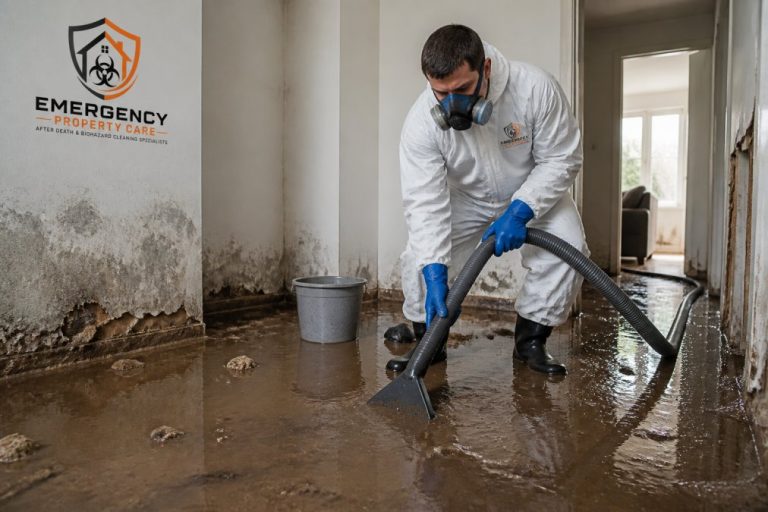
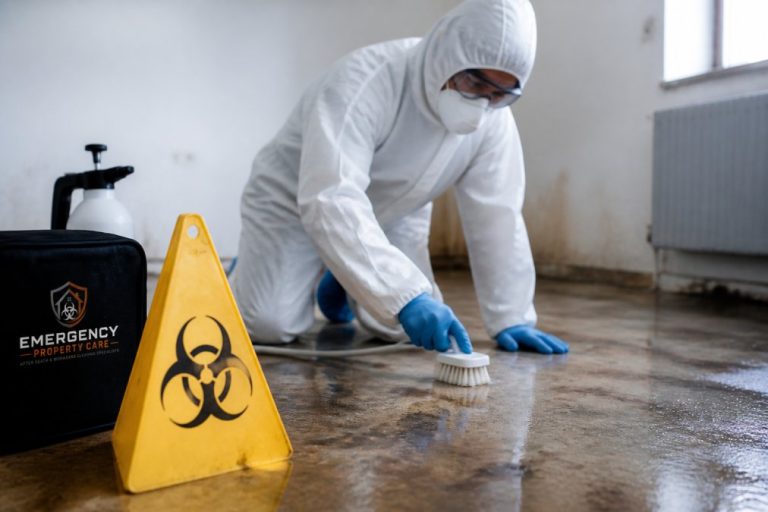
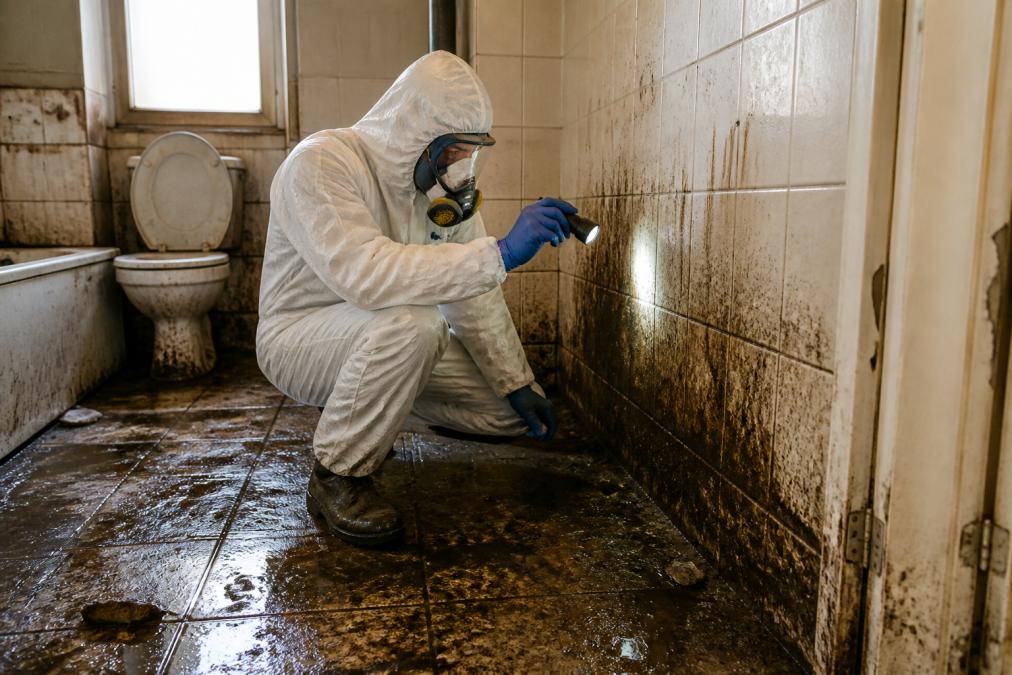
Anyone entering a sewage-contaminated area must wear appropriate personal protective equipment:
- Disposable coverall (Type 5/6 minimum)
- Nitrile gloves (heavy-duty)
- Rubber boots rated for chemical exposure
- FFP3 respirator mask to protect against airborne pathogens and toxic gases
- Safety goggles to protect eyes from splashing
Standard household gloves and face coverings are not adequate. Any contractor who arrives without appropriate PPE should not be permitted to work in the contaminated area.
Photograph the PPE your contractors are wearing before they begin work. This creates a record that the cleanup was conducted to a professional standard, valuable if a tenant later raises a health complaint or legal claim.
Tenant Relocation Protocols
If the sewage backup has rendered the property uninhabitable, the landlord has a practical and legal obligation to address the tenant’s accommodation. Assess habitability honestly and quickly. If contamination affects living areas, the kitchen, or the property’s only bathroom, relocation is necessary.
Landlord buildings insurance policies frequently include alternative accommodation cover for this scenario. Check your policy immediately and keep records of all communications with the tenant about relocation in writing.
The Sewage Decontamination Process: What Professional Cleanup Involves
Professional sewage cleanup is a structured, multi-stage process addressing specific aspects of contamination.
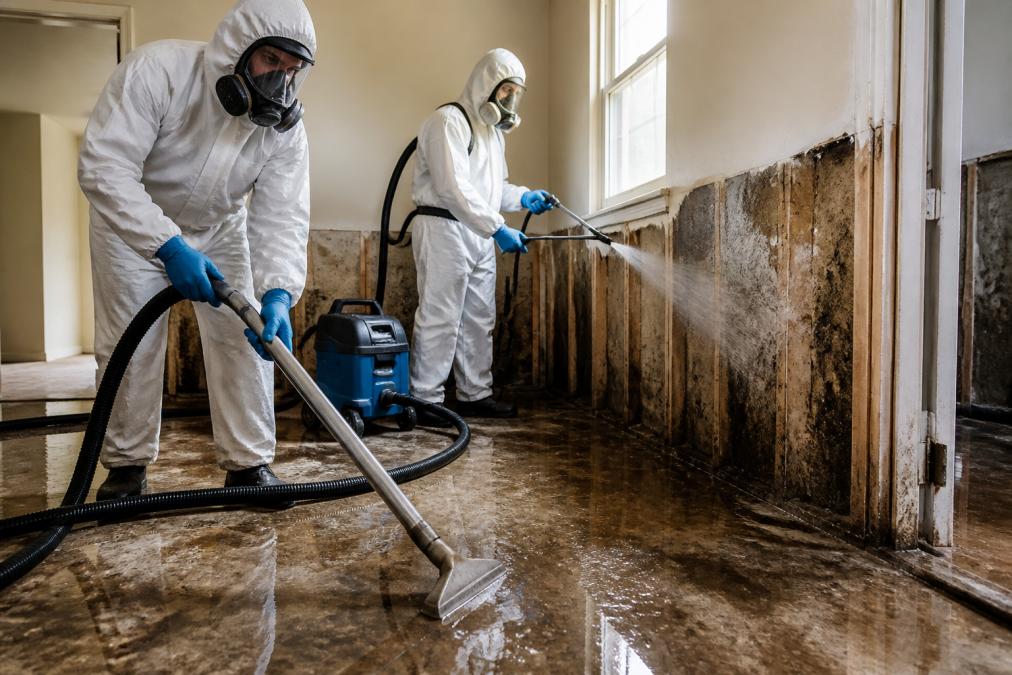
The standard process follows this sequence:
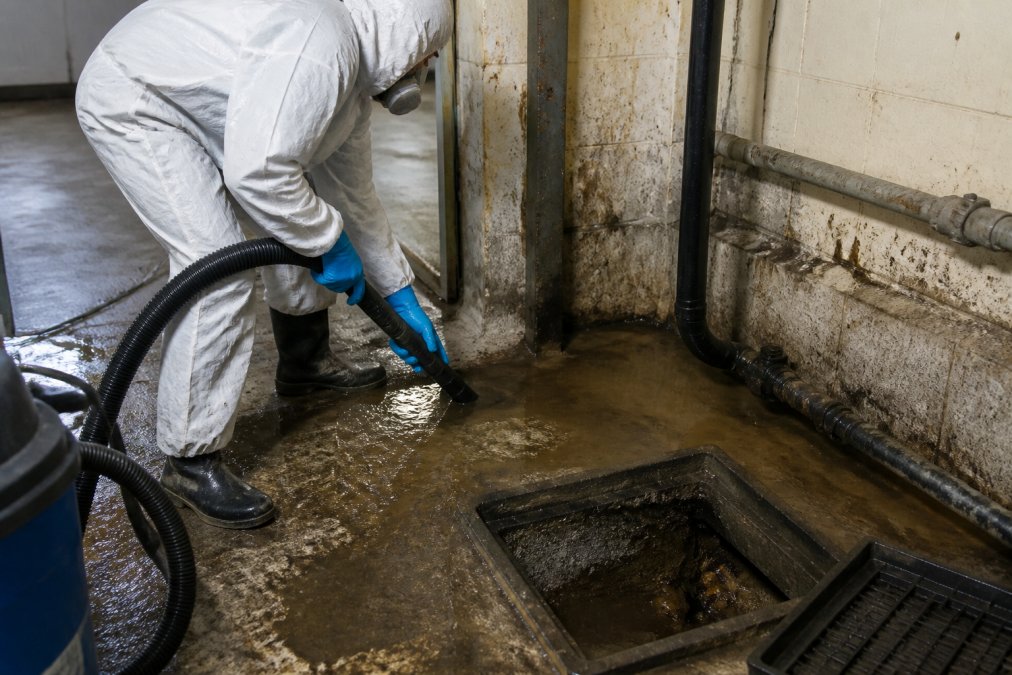
- Waste removal. All solid and liquid sewage waste is extracted and disposed of as controlled waste.
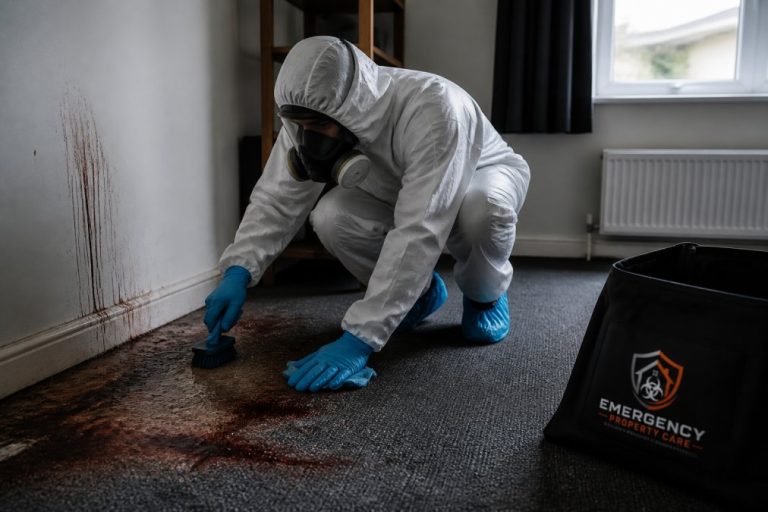
- Contaminated material removal. Flooring, skirting boards, wall coverings, and porous materials that cannot be sanitised are removed as biohazardous waste.
- High-pressure cleaning. Affected surfaces are cleaned using specialist equipment to remove residual contamination.
- Disinfection and sanitisation. Industrial-grade disinfectants are applied to all affected surfaces, including cavities and subfloor spaces.
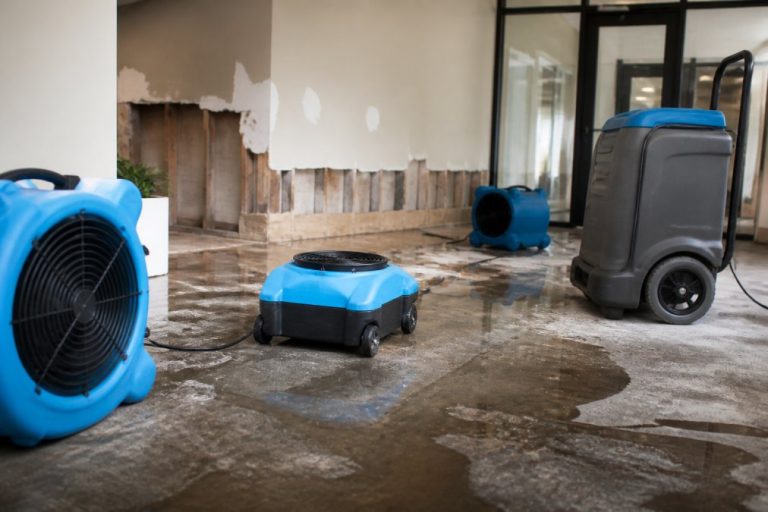
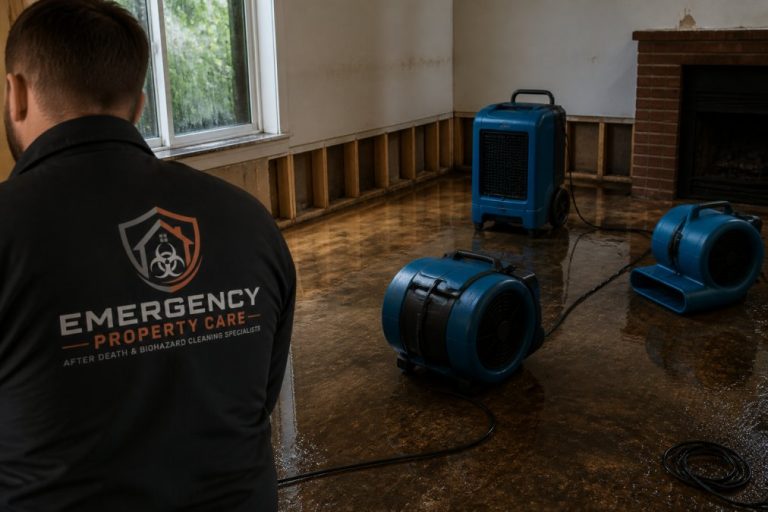
- Drying. Industrial drying equipment removes residual moisture; moisture left in structural materials leads directly to mold growth.
- Odour treatment. Specialist fogging or ozone treatment eliminates residual odour.
- Clearance verification. A reputable contractor confirms the area meets required hygiene standards before signing off.
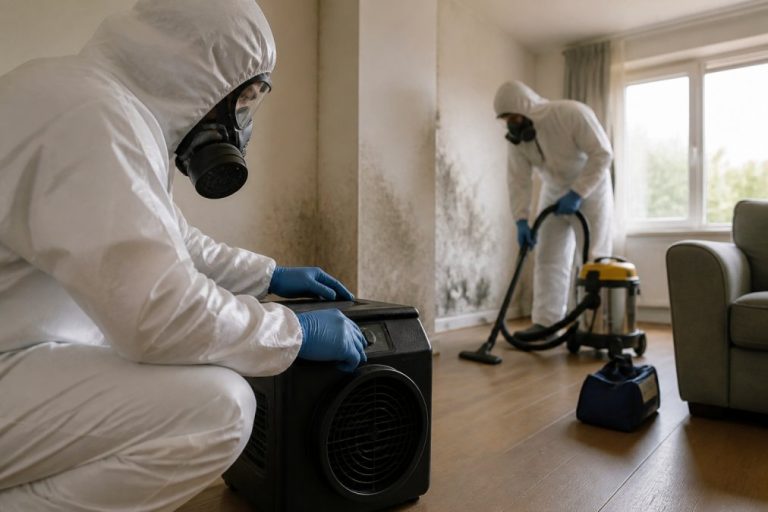
Mold Remediation and Post-Cleanup Air Quality Testing
Mold growth is a near-certain consequence of a sewage backup not addressed within 24 to 48 hours. Mold remediation is therefore a standard component of any thorough sewage cleanup. If the sewage backup has also caused wider water damage to the property, professional Flood Damage Cleaning and Drying services may be necessary to address moisture in structural elements and prevent secondary damage.
Post-cleanup air quality testing provides documented evidence that the property is safe for re-occupation. If a tenant later reports health issues attributed to the sewage incident, an air quality clearance certificate is one of the strongest defences available to a landlord.
Landlord Insurance Sewage Cover: What Policies Typically Include
Landlord insurance sewage cover varies significantly between policies. Most standard landlord buildings insurance policies include cover for sudden and accidental damage caused by a burst or blocked drain, but gradual deterioration or poorly maintained pipework is frequently excluded.
Policies that include trace and access cover contribute to locating and accessing the blockage source. Alternative accommodation cover pays for temporary housing for displaced tenants. Loss of rent cover compensates for rental income lost during uninhabitability.
What most standard policies do not include, unless specifically added, is the full cost of professional biohazard decontamination. Landlords should review their policy wording carefully and consider specialist landlord insurance that explicitly covers sewage remediation costs.
Check whether your landlord insurance policy specifically covers professional decontamination costs following a sewage backup. Standard buildings cover frequently excludes this, and costs can be substantial.
Insurance Claim Documentation Checklist
Thorough documentation is the difference between a settled claim and a disputed one. Begin recording evidence from the moment you discover the backup.
| Item to Document | Format | When to Capture |
|---|---|---|
| Sewage contamination extent | Photographs and video | Before any cleanup begins |
| Affected rooms and surfaces | Written inventory with photos | Before cleanup |
| Drainage contractor’s report | Written report | After initial inspection |
| Communications with tenant | Email or written records | Throughout incident |
| Contractor invoices | Itemised invoices | As incurred |
| Air quality test results | Certified report | After cleanup completion |
| Temporary accommodation costs | Receipts and agreements | As incurred |
| Loss of rent period | Tenancy agreement and correspondence | During uninhabitable period |
Submit your claim promptly with all supporting documentation at the outset. Insurers are less likely to dispute well-evidenced claims.
Preventative Maintenance to Avoid Future Sewage Incidents
Most sewage backups in rental properties are preventable. Common causes include accumulated grease and debris in drainage pipes, tree root ingress, and inappropriate flushing by tenants.
The most effective preventative measure is a CCTV drainage survey, ideally conducted at the start of each tenancy. A survey reveals root ingress, collapsed pipe sections, and significant blockage build-up before they cause a backup.
Provide tenants with clear written guidance on what should not be flushed or put down drains. Items such as wet wipes, sanitary products, and cooking grease are among the most common causes of blocked pipes. Including this guidance in the tenancy agreement creates a record that the landlord has taken reasonable steps.
For properties with older drainage infrastructure or those prone to storm-related backup, a non-return valve fitted to the drainage system provides a mechanical barrier against backflow. Regular inspection of septic systems, where applicable, is equally important.
Managing a sewage incident in a rental property is demanding, and the legal, health, and financial consequences of getting it wrong are serious. After Death Cleaning and specialist biohazard decontamination services are available 24/7 to support landlords across England, Scotland, and Wales. Our fully insured technicians respond rapidly, handle the complete decontamination process including mold remediation, and work directly with insurers to support your claim. Get Help Now and let our team restore your property to a safe, compliant, and habitable state.
Frequently Asked Questions
Are landlords legally responsible for sewage cleanup in the UK?
Yes. Landlords are legally responsible for maintaining drainage pipes and sewer connections serving the property. Under the Landlord and Tenant Act 1985 and the Homes (Fitness for Human Habitation) Act 2018, a property must remain safe and habitable. A sewage backup that renders the property uninhabitable is the landlord's obligation to remediate promptly. Failure to act can expose the landlord to civil claims from tenants and enforcement action by the local authority.
What are the health risks associated with sewage ingress in a rental property?
Raw sewage contains harmful pathogens including bacteria such as E. coli and salmonella, as well as viruses and parasites. Direct contact or inhalation of contaminated air can cause serious gastrointestinal illness, skin infections, and respiratory problems. Prolonged exposure to damp, contaminated materials also accelerates mould growth, which presents its own respiratory risks. Anyone entering a sewage-affected area should wear full PPE until professional decontamination is complete.
Does landlord insurance typically cover sewage backup and decontamination?
Coverage varies significantly between policies. Many standard landlord insurance policies include escape of water or drain blockage cover, but sewage backup and biohazard decontamination costs are not always included as standard. Some policies require an optional add-on for trace and access or legal expenses cover. Always check your policy schedule carefully and notify your insurer immediately after an incident. A professional remediation company can provide the documentation insurers need to process a claim.
Is professional decontamination required for sewage spills, or can a landlord clean it themselves?
For any sewage backup beyond a very minor localised spill, professional decontamination is strongly advisable. Raw sewage is classified as a biohazard. Proper remediation requires specialist equipment, industrial-grade disinfectants, and trained technicians who can safely remove contaminated materials, treat affected surfaces, and test air quality afterwards. DIY attempts frequently miss hidden contamination behind walls or under flooring, leading to persistent odour, structural damage, and mould growth weeks later.
What should a landlord do if tenants need to leave during sewage cleanup?
If the property is uninhabitable during remediation, the landlord has a duty to arrange or fund suitable alternative accommodation for tenants. This obligation arises under the Homes (Fitness for Human Habitation) Act 2018 and general contract law. Landlord insurance policies with loss of rent cover may reimburse temporary accommodation costs. Notify your insurer before arranging alternative housing, keep all receipts, and document the condition of the property with photographs and written records throughout.
How should a landlord document sewage damage for an insurance claim?
Photograph and video every affected area before any cleanup begins. Record the date, time, and apparent cause of the backup. Obtain a written report from a plumber identifying the source, whether a clogged pipe, sewer line failure, or storm-related backup. Keep all contractor invoices, waste disposal records, and remediation reports. A professional cleanup company should provide a detailed written scope of works and a post-remediation certificate, both of which insurers typically require to process a claim.
This article was written using GrandRanker

TrustedCare Editorial Team publishes UK guidance on specialist cleaning and biohazard remediation, including after-death cleaning, flood restoration and contamination control. Content is written for homeowners, landlords and housing providers seeking clear, practical information.