Emergency Decontamination for Public Housing: A Guide
Table of Contents
- What Emergency Decontamination Means for Public Housing
- Types of Hazards That Trigger Emergency Decontamination
- Step-by-Step Incident Management and Mass Decontamination Protocols
- COSHH Regulations for Decontamination in Housing Settings
- Housing-Specific Decontamination Logistics
- Communicating with Residents During a Decontamination Incident
- Specialist Decontamination Services for Social Housing
- Conclusion
Last Updated: August 12, 2026
What Emergency Decontamination Means for Public Housing
Emergency decontamination is the rapid removal or neutralisation of hazardous substances from people, surfaces, and infrastructure to prevent further exposure and protect public health. For public housing, the stakes are particularly high: dense residential buildings, shared corridors, communal plant rooms, and vulnerable tenants create conditions where a single contamination event can escalate quickly into a mass casualty situation.
At TrustedCare, we work directly with local authority housing officers and social housing providers who face exactly this scenario. The challenge they describe consistently is the gap between high-level government policy and the practical, site-specific decisions that need to happen in the first thirty minutes of an incident. This guide bridges that gap.
Public housing stock presents unique decontamination challenges that standard CBRN guidance does not fully address. Multi-storey blocks concentrate exposure pathways through lift shafts, ventilation systems, and stairwells. Residents may be elderly, disabled, or unable to self-evacuate. Communal areas become vectors for secondary contamination.
Emergency decontamination for public housing is not simply a scaled-down version of industrial incident response. It requires protocols built around residential occupancy patterns, vulnerable populations, and shared infrastructure.
As the Health Security Agency guidance on CBRN incidents makes clear, early decontamination significantly reduces the clinical severity of exposure outcomes. Delay is the single biggest risk multiplier in any contamination event.
Types of Hazards That Trigger Emergency Decontamination
Not every hazardous incident looks the same, and the decontamination response must match the specific threat. Housing managers need a working knowledge of the hazard categories that trigger emergency decontamination protocols, because the initial classification determines everything from PPE selection to resident communication.
Chemical and Biological Incidents
Chemical incidents in public housing most commonly arise from illicit drug manufacturing, gas leaks involving toxic compounds, or deliberate release of hazardous substances. Methamphetamine production residue, for example, leaves surfaces contaminated with corrosive and toxic chemicals that require specialist remediation. Biological incidents include suspected anthrax exposure, sewage contamination following infrastructure failure, or infectious disease outbreaks in communal areas.
The critical distinction is between self-presenters and confirmed exposure victims. In a chemical incident, residents who believe they have been exposed may arrive at a decontamination unit before emergency services have established a cordon. Managing self-presenters safely, without allowing them to contaminate clean areas, is one of the most demanding aspects of mass decontamination logistics.
Radiological Hazards and Sewage Contamination
Radiological hazards in public housing are rare but not theoretical. Incidents involving radioactive sources require specialist resources that go well beyond standard decontamination capability. The Office for Nuclear Regulation guidance on radiological emergencies sets out the framework for response, and housing officers should be familiar with local authority escalation procedures.
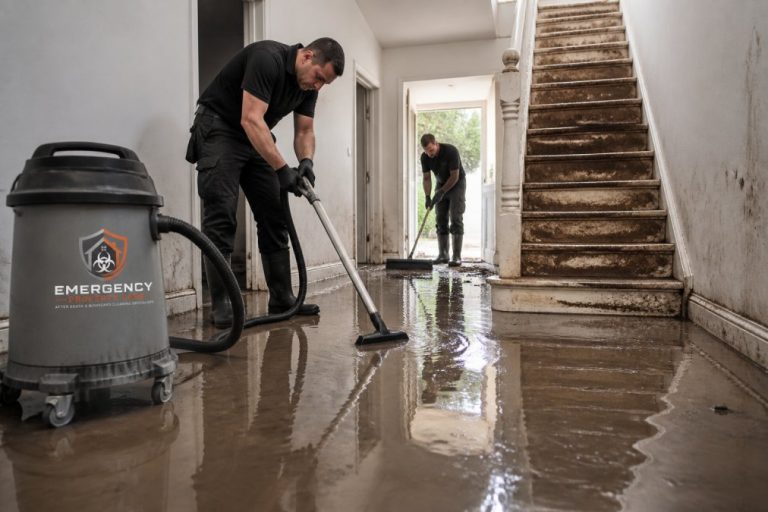
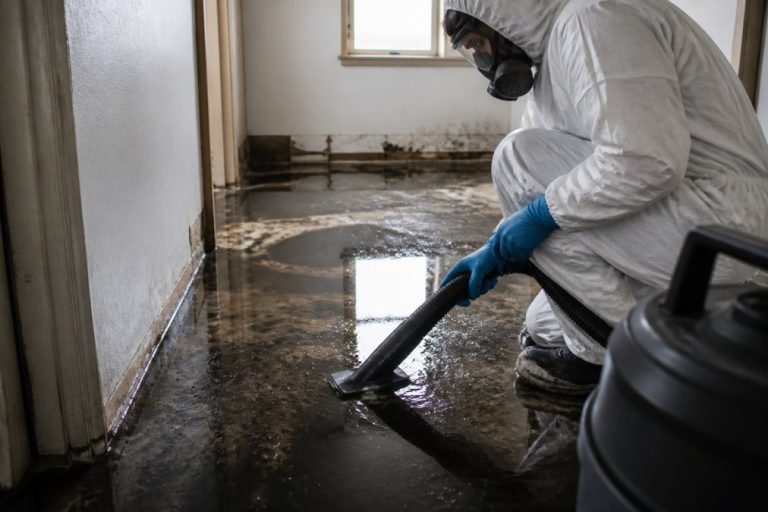
Sewage contamination is far more common and frequently underestimated. A major sewage backup in a residential block exposes residents to biological agents including E. coli, norovirus, and hepatitis A. Full disinfection and environmental cleaning to a verified standard is required before re-entry.
Step-by-Step Incident Management and Mass Decontamination Protocols
Effective incident management follows a structured sequence. Improvising the order of operations under pressure is where housing managers most often make costly mistakes.
Step 1: Confirm and classify the hazard
Establish what you are dealing with. Contact the emergency services and prevent residents or staff from entering the affected area. Hazardous material identification determines the entire response pathway.
Step 2: Establish an exclusion zone and cordon
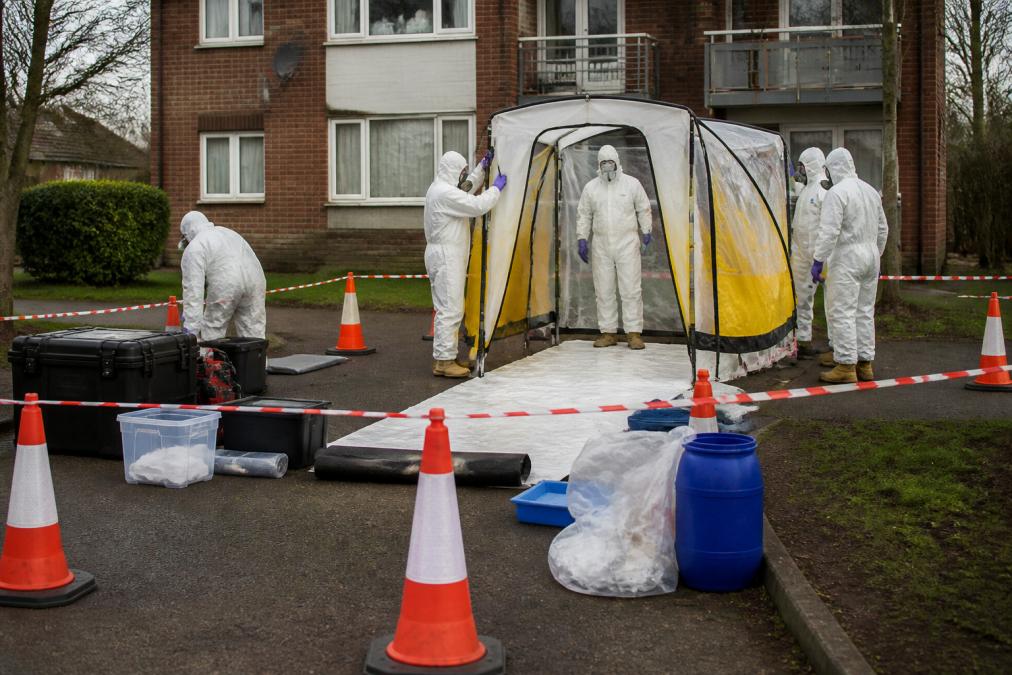
Mark a clear boundary around the contaminated area. In a multi-storey block, this may mean sealing individual floors or entire stairwells. Prevent secondary contamination by stopping movement between the hot zone and clean areas.
Step 3: Deploy a decontamination shelter or unit
A decontamination shelter provides a controlled environment for removing contaminated clothing and washing exposed individuals. Position it upwind of the incident site, at sufficient distance from the exclusion zone.
Step 4: Triage exposed individuals
Triage separates those with confirmed exposure from those who are concerned but unaffected. This distinction matters for resource allocation and prevents decontamination unit congestion.
Step 5: Conduct mass decontamination
For chemical or biological exposure, the primary method is thorough washing with large volumes of water. Disrobing removes approximately 80% of surface contamination before water contact. Specialist agents such as hydrogen peroxide vapour may be used for environmental decontamination after evacuation.
Step 6: Document and report
Record every individual processed through the decontamination unit, the time of processing, and any symptoms reported. This documentation is essential for public health follow-up and investigation.
| Step | Action | Priority |
|---|---|---|
| 1 | Confirm and classify hazard | Immediate |
| 2 | Establish exclusion zone | Immediate |
| 3 | Deploy decontamination shelter | Within 15 minutes |
| 4 | Triage exposed individuals | Ongoing |
| 5 | Mass decontamination of persons | Ongoing |
| 6 | Environmental decontamination | Post-evacuation |
| 7 | Post-decontamination verification | Before re-entry |
Managing Self-Presenters During a CBRN Incident
Self-presenters are residents who arrive at the decontamination unit or hospital without being directed there by emergency services. They may be genuinely exposed or anxious and unaffected. Either way, they must be processed safely.
The biggest mistake is allowing them to bypass the decontamination shelter because they appear uncontaminated. Surface contamination is often invisible. Every self-presenter must be treated as potentially exposed until triage confirms otherwise.
Establish a separate holding area for self-presenters, staffed by personnel in appropriate PPE, where individuals can be assessed before joining the main decontamination flow. This prevents bottlenecks and reduces cross-contamination risk within the decontamination unit.
Never allow self-presenters to enter a hospital or medical facility before decontamination. Secondary contamination of clinical environments creates a cascading public health emergency that is far harder to contain than the original incident.
COSHH Regulations for Decontamination in Housing Settings
COSHH regulations for decontamination work are non-negotiable in a housing context. The Control of Substances Hazardous to Health Regulations 2002 require employers, including housing associations and local authorities, to assess and control exposure to hazardous substances in the workplace. During a decontamination operation, hazardous substances may include the agents causing the incident as well as cleaning chemicals used in response.
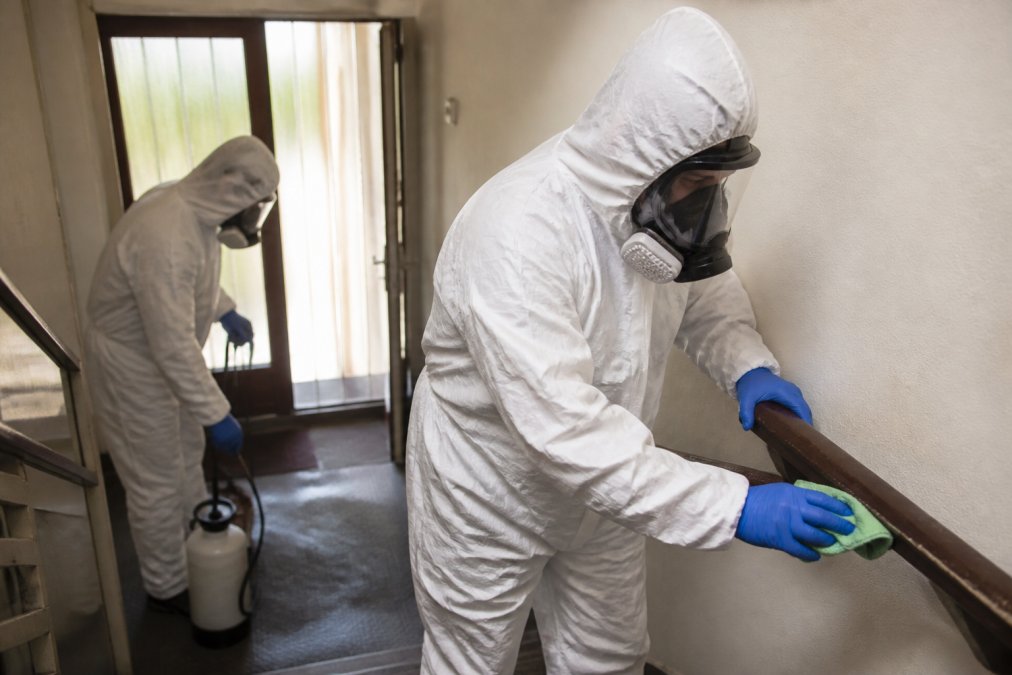
Any contractor or in-house team carrying out decontamination work must have a current COSHH assessment covering the substances they are handling. Protective clothing, respiratory protection, and exposure monitoring must be matched to the specific hazard. Generic PPE is not sufficient for all scenarios.
Housing officers commissioning decontamination work should request evidence of COSHH compliance from any contractor before work begins. This is a legal obligation under Health and Safety Executive COSHH guidance. Failure to verify contractor compliance can expose the housing authority to enforcement action.
Keep a copy of your building’s COSHH assessment and hazardous materials register in a location accessible to emergency responders. First responders need this information to make safe decisions at the scene, and delays in accessing it cost critical time.
At minimum, operatives should have access to impermeable protective clothing, gloves rated for chemical or biological exposure, and respiratory protection appropriate to the contamination level. Full respiratory protection, including self-contained breathing apparatus, is required for entry into confirmed hot zones.
Housing-Specific Decontamination Logistics
Generic CBRN guidance does not translate cleanly to a twelve-storey residential block with a single lift, a basement plant room, and 200 residents who cannot leave quickly.
Site Assessment and Containment
Site assessment for a residential decontamination incident must account for the building’s specific layout and infrastructure. Key questions:
- Where are the ventilation intakes and how does air circulate through the building?
- Which communal areas have been accessed since the contamination event?
- Are there residents who cannot self-evacuate and require assisted decontamination?
- What are the drainage pathways, and could decontamination run-off create secondary contamination?
Containment in a residential block is harder than in an industrial setting because residents move unpredictably. Early communication to residents about which routes to use, and which to avoid, is as important as physical barriers.
Post-Decontamination Verification and Re-entry
Post-decontamination verification is the step that housing managers most often want to skip under pressure to return residents to their homes. This is understandable. It is also dangerous.
Verification involves independent testing to confirm that contamination levels have been reduced to a safe threshold before re-entry is permitted. For biological contamination, this typically involves surface swabbing and laboratory analysis. For chemical contamination, air quality monitoring and surface testing are required. For radiological hazards, specialist radiation survey equipment is used.
The re-entry decision should never be made by the decontamination contractor alone. It should involve the local authority, the relevant public health authority, and where appropriate, the Health Security Agency. Document the verification results and retain them; residents and their legal representatives may request them later.
Communicating with Residents During a Decontamination Incident
Poor communication during a decontamination incident causes panic, non-compliance with evacuation instructions, and self-presenter surges at hospital. Getting the messaging right is as operationally important as the decontamination itself.
Communicate early, clearly, and regularly. Residents who receive no information will fill the gap with rumour. A brief factual message delivered within the first fifteen minutes of an incident is worth more than a comprehensive briefing an hour later.
Template: Initial resident notification
"There is an emergency situation in [building/area]. For your safety, please [stay in your flat / evacuate via [specific route]]. Do not use [lift/stairwell/entrance]. Emergency services are on site. Further information will follow as soon as possible. If you have been directly affected, please [go to the decontamination point at X / call X]. Do not go to hospital unless directed to do so."
Template: Post-incident re-entry notification
"Decontamination of [building/area] is now complete. Independent testing has confirmed that [area] is safe to re-enter. Residents may return from [time] today. If you have any concerns about your health following this incident, please contact your GP or call 111. A further update will be provided at [time]."
These templates should be adapted for the specific incident and translated into the languages spoken in the resident community. Multi-language communication is not a courtesy; in a diverse housing estate, it is a safety requirement.
Pre-draft your resident communication templates before an incident occurs. Attempting to write clear, calm messaging in the middle of an active emergency is extremely difficult. Templates reduce the cognitive load on housing staff at the worst possible moment.
Specialist Decontamination Services for Social Housing
Social housing decontamination is a specialist field, and the gap between a standard cleaning contractor and a qualified decontamination provider is significant. The wrong choice at the point of commissioning can result in inadequate remediation, re-contamination, and legal exposure for the housing authority.
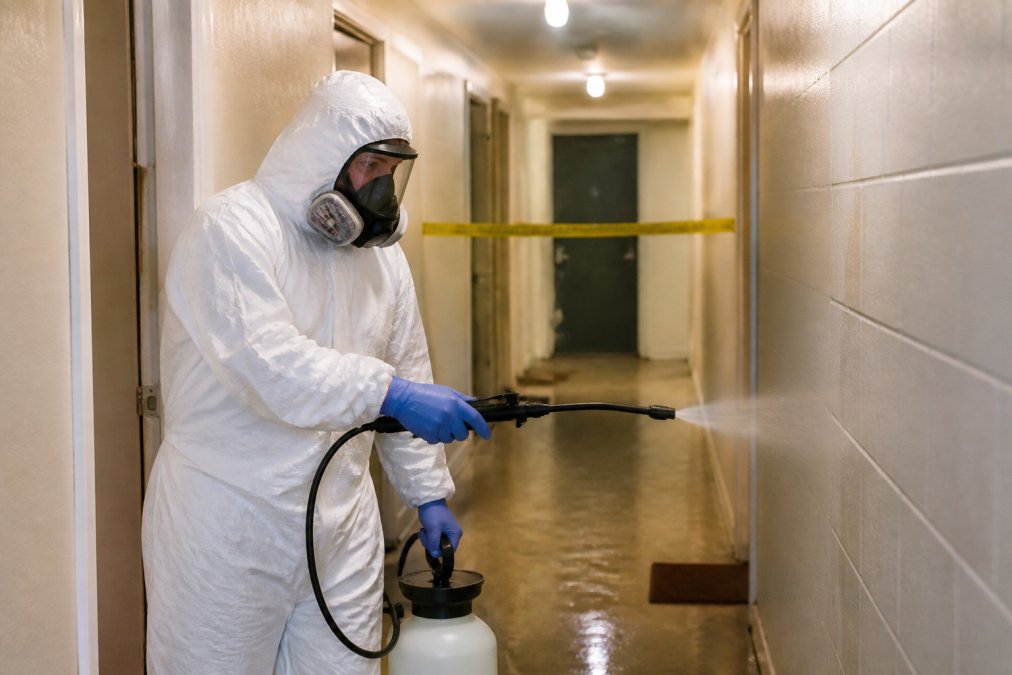
What separates a qualified specialist from a general contractor comes down to four things: the training and certification of the operatives, the equipment available, the ability to conduct post-decontamination verification, and the capacity to respond at any hour. A contamination incident does not wait for business hours.
TrustedCare provides 24/7 emergency decontamination response, 365 days a year, for local authority housing officers and social housing providers across England, Scotland, and Wales. Our fully insured technicians are trained in biohazard, chemical, and sewage decontamination, and our rapid-response approach means we can mobilise quickly when the situation demands it. We work directly with insurance loss adjusters to support claims and reduce the administrative burden on housing staff during an already difficult period.
When evaluating any specialist decontamination provider for social housing work, ask these questions:
- Are operatives trained and certified for the specific hazard type?
- Can the provider conduct independent post-decontamination verification, or do they rely on their own assessment?
- Are they available 24/7, including bank holidays?
- Do they carry adequate insurance for the scale of work involved?
- Can they provide documentation suitable for insurance claims and regulatory reporting?
The Chartered Institute of Housing guidance on housing management recommends that housing associations maintain pre-agreed contracts with specialist contractors for emergency situations, rather than sourcing providers reactively during an incident.
Pre-qualifying a specialist decontamination provider before an incident occurs is one of the highest-value risk management steps a housing officer can take. The cost of due diligence in advance is negligible compared to the cost of commissioning the wrong contractor during an active emergency.
Emergency decontamination incidents in public housing are low-frequency, high-consequence events. The housing managers who handle them well are those who have planned in advance, pre-qualified their contractors, and built resident communication templates before they are needed. TrustedCare supports local authority housing officers and social housing providers with 24/7 emergency response, fully insured technicians, and the specialist expertise to manage biohazard, sewage, and chemical decontamination from initial response through to verified re-entry. If you are managing an active incident or want to put a response plan in place, get in touch with the TrustedCare team now.
Frequently Asked Questions
What are the five stages of decontamination?
The five stages are: removal (stripping contaminated clothing), isolation (containing removed items), decontamination (washing the body or surface to remove the hazardous substance), triage (assessing exposure and injury), and re-entry (confirming the area is safe for return). In a public housing context, each stage must be managed in sequence to prevent cross-contamination between residents, communal areas, and the wider building infrastructure.
Who is responsible for decontamination in social housing settings?
Responsibility sits with the housing authority or registered social landlord as the dutyholder under the Health and Safety at Work etc. Act 1974 and the Control of Substances Hazardous to Health (COSHH) Regulations 2002. In practice, they must arrange specialist decontamination services, coordinate with emergency services, and ensure residents are not re-exposed. Where the incident involves a CBRN hazard, the local fire and rescue service typically leads the emergency response.
What is the most common method used for emergency decontamination?
Wet decontamination using large volumes of water remains the most common method for mass casualty or CBRN incidents because it physically removes contaminants from skin and clothing quickly. For enclosed housing environments such as flats or communal areas, specialist teams may also use hydrogen peroxide vapour (HPV) or other approved disinfection agents to treat surfaces, depending on the biological or chemical agent involved and the exposure pathways identified during site assessment.
How quickly should a specialist decontamination team attend a public housing incident?
Speed is critical. Prolonged exposure increases health risk and allows contaminants to spread through communal areas, ventilation systems, and shared surfaces. A reputable specialist provider should offer 24/7 rapid-response attendance, including weekends and bank holidays. Once on site, the team should begin containment and triage immediately. Contact your provider as soon as an incident is confirmed rather than waiting for full hazard identification, as early mitigation limits the scale of remediation required.
This article was written using GrandRanker

TrustedCare Editorial Team publishes UK guidance on specialist cleaning and biohazard remediation, including after-death cleaning, flood restoration and contamination control. Content is written for homeowners, landlords and housing providers seeking clear, practical information.