Biohazard Cleaners vs Local Cleaners: UK Guide
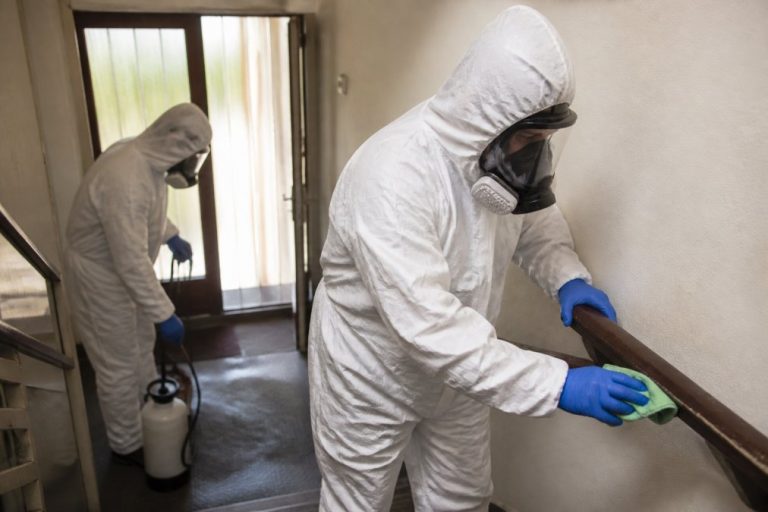
Quick answer: choose according to capability, not whether a business is national or local. Some local companies are competent biohazard specialists. The important checks are relevant training, suitable insurance, written risk procedures and lawful handling of contaminated waste.
There is a major difference between routine deep cleaning and specialist biohazard remediation. However, that difference should not be reduced to “large specialist company versus local cleaner.” A local contractor may have suitable expertise, while a business using specialist language may still lack the required procedures.
This guide explains what to compare, which incidents normally require specialist intervention and what evidence you should request before allowing work to begin.
Biohazard Cleaning vs Ordinary Deep Cleaning
General cleaning focuses on visible dirt, dust, grease and routine hygiene. Biohazard cleaning deals with substances or materials that may present an infection, injury or contamination risk.
A specialist response may require:
- A documented assessment of the hazards and affected area.
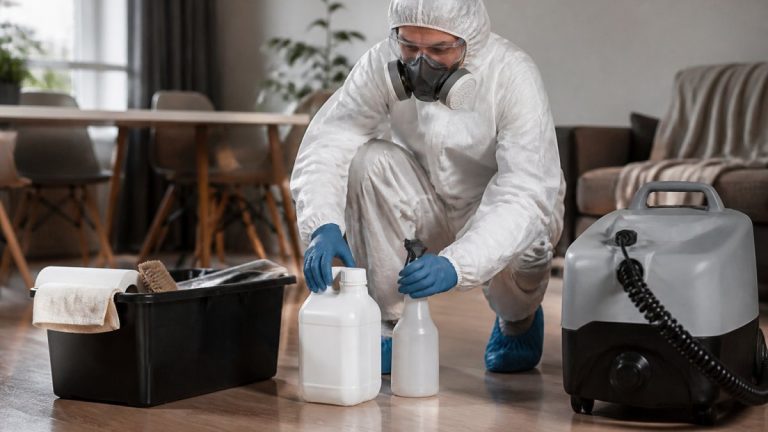
- Selection of suitable protective equipment.
- Containment to reduce cross-contamination.
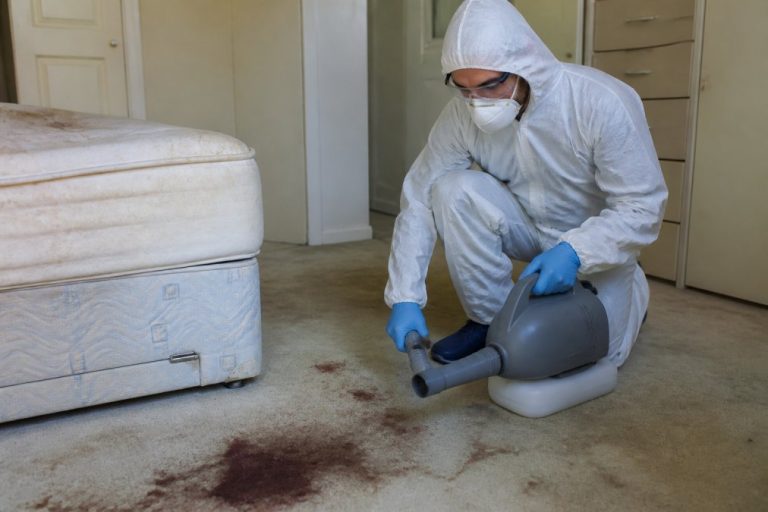
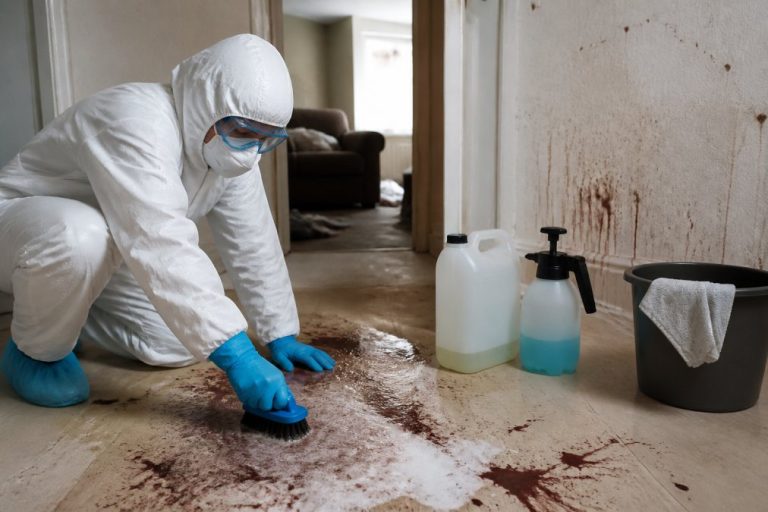
- Safe handling of blood, bodily fluids, sewage or sharps.
- Removal of materials that cannot be reliably restored.
- Cleaning and disinfection appropriate to the incident.
- Correct packaging and transfer of contaminated waste.
- Documentation explaining the work completed.
Not every dirty or unpleasant property is a biohazard. Heavy dust, ordinary household rubbish and general neglect may be suitable for a competent deep-cleaning or clearance company. The decision should be based on the hazards present.
When Might a Specialist Biohazard Cleaner Be Needed?
Specialist assessment is normally sensible where the property contains:
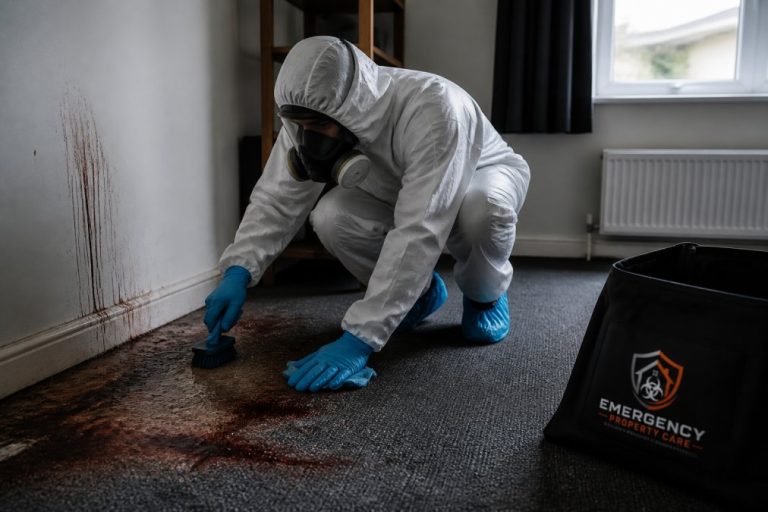
- Blood or bodily fluids.
- Decomposition following an unattended death.
- Trauma-related biological contamination.
- Sewage or heavily contaminated floodwater.
- Discarded needles or other sharps.
- Human or animal waste affecting porous materials.
- Hoarding conditions involving vermin, faeces or decomposing waste.
- Unknown substances that could present a health risk.
After police or emergency services have released a property, the responsibility for arranging cleaning usually falls to the owner, occupier, landlord, insurer or another responsible party. The emergency services do not normally provide property remediation.
See our guides to unattended-death cleaning and hoarding biohazard cleaning.
Biohazard Cleaners vs General Local Cleaners
| What to compare | Specialist biohazard provider | General cleaning provider |
|---|---|---|
| Routine dirt and general hygiene | Can usually handle it, but may cost more than necessary | Normally appropriate |
| Blood and bodily fluids | Expected to have incident-specific procedures | Only suitable if it can demonstrate the required competence |
| Decomposition contamination | Normally appropriate | Usually outside routine cleaning work |
| Containment procedures | Should be available where the assessment requires them | May not form part of normal services |
| Contaminated waste | Should have an appropriate documented disposal route | Must confirm whether it is authorised and equipped to handle it |
| Material removal | May remove affected flooring, furnishings or other materials | Often limited to surface cleaning |
| Job documentation | A written scope and completion record should be available | Level of documentation varies |
| Cost | Higher where specialist labour, equipment and waste are needed | Usually lower for routine non-hazardous cleaning |
Key point: “local” and “specialist” are not opposites. A business can be both. Ask what the contractor is equipped and insured to do rather than deciding from its location or company size.
Can a Local Cleaning Company Handle Biohazard Work?
Potentially, yes—but only if it has the competence, procedures, equipment, insurance and waste arrangements required for the particular incident.
It would be inaccurate to say that every general cleaning company is prohibited from handling contaminated material. Some cleaning businesses offer both general and specialist services. Others correctly limit their work and refer biohazard incidents to another contractor.
Ask the company to explain:
- What relevant work its operatives have been trained to perform.
- How it assesses exposure and contamination risks.
- Which protective equipment will be used and why.
- How clean and contaminated areas will be separated.
- Whether affected porous materials can be removed.
- How waste will be classified, packaged and transferred.
- Whether its insurance covers the proposed work.
If the company cannot answer these questions clearly, it should not undertake the work.
Dealing With Biological Contamination?
TrustedCare provides confidential help with after-death cleaning, bodily-fluid contamination, sewage and other specialist cleaning situations.
Contaminated-Waste Responsibilities
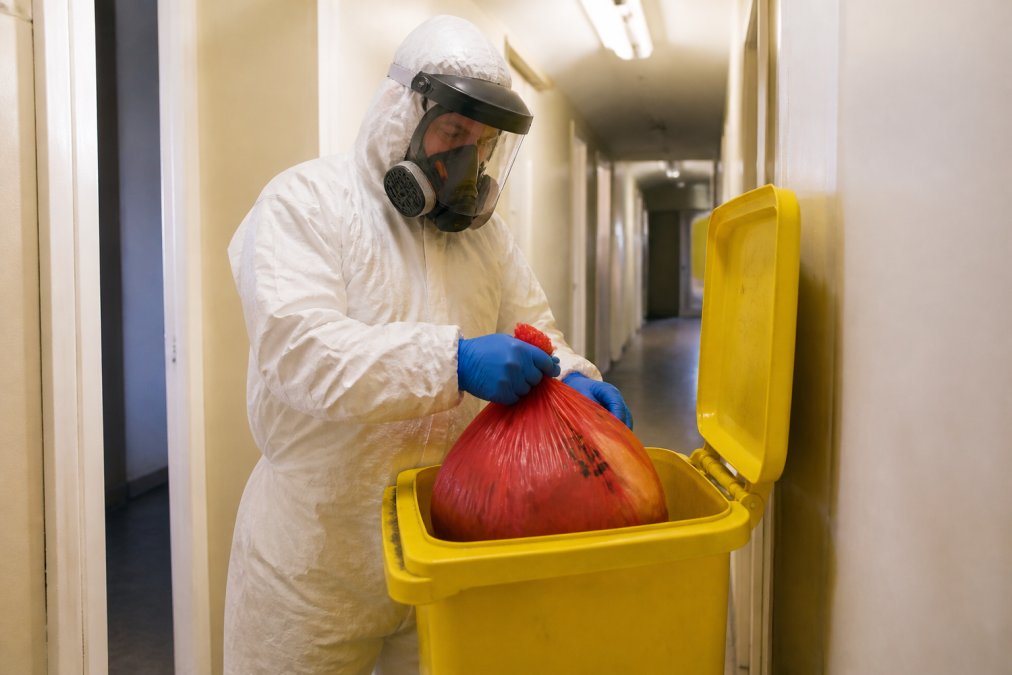
Waste must be assessed according to what it contains and the risk it presents. Different requirements may apply to infectious waste, sharps, chemicals and ordinary non-hazardous rubbish.
A contractor taking controlled waste away from a property should use a lawful transfer and disposal route. Registration and documentation requirements depend on the contractor’s role, location and the type of waste.
Before work begins, ask:
- Who will remove the waste from the property?
- Is that business appropriately registered for the waste it carries?
- Where will the waste be taken?
- What transfer or consignment documentation will be supplied?
- Are disposal charges included in the quotation?
Official information is available from the government’s guidance on hazardous-waste disposal and waste-carrier registration in England. Requirements differ across the UK, so contractors must follow the rules applying where the work and waste transfer take place.
Do not assume that hiring a contractor removes every responsibility from the waste producer or property operator. Retain the quotation, invoice and waste documentation supplied.
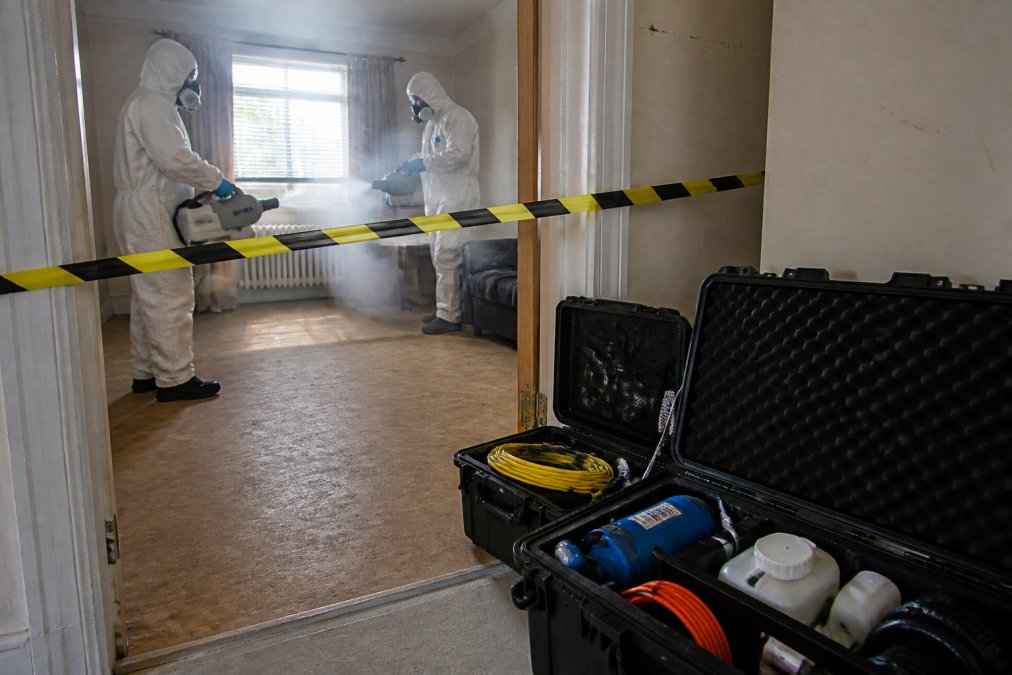
What Does the Biohazard-Cleaning Process Involve?
The exact procedure should be based on the incident rather than a standard checklist applied to every job.
| Stage | Typical work | Purpose |
|---|---|---|
| 1. Assessment | Identify hazards, affected materials and access requirements | Define a suitable scope and precautions |
| 2. Area control | Restrict access and establish clean and contaminated working areas | Reduce avoidable spread |
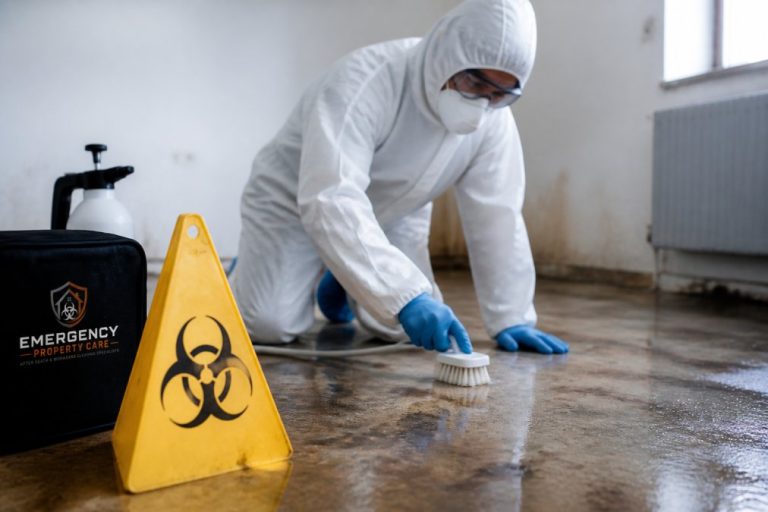
| 3. Source removal | Remove contamination and materials that cannot be restored | Address the primary source |
| 4. Cleaning | Clean retained surfaces to remove remaining soil | Prepare surfaces for any required disinfection |
| 5. Disinfection | Apply a suitable product using its stated contact time | Reduce relevant microorganisms on retained surfaces |
| 6. Odour treatment | Treat remaining odour after physical sources have been addressed | Avoid merely covering the smell |
| 7. Waste transfer | Package and transfer waste through an appropriate route | Meet waste-handling requirements |
| 8. Completion | Inspect the area and provide agreed documentation | Record what was completed and any limitations |
Does ATP Testing Prove a Property Is Safe?
No single rapid test can prove that every biological hazard has been removed from every part of a property.
ATP testing measures biological energy associated with organic residue on the surface tested. It can support cleaning verification by comparing readings before and after work. However, it does not identify a specific pathogen and a low reading is not the same as a guarantee that every harmful organism is absent.
Testing must also be interpreted correctly. A reading from one accessible surface says nothing about contamination hidden beneath flooring or inside another material.
A contractor may use visual inspection, moisture readings, ATP monitoring or specialist laboratory testing depending on the incident. Ask what any proposed test measures, what it does not measure and how its result will affect the decision to complete the work.
Avoid absolute promises: phrases such as “100% pathogen free” or “guaranteed sterile” require strong evidence. Ask precisely how the result will be assessed and documented.
Cost and Insurance Considerations
A general cleaning company will usually cost less for routine non-hazardous cleaning. Specialist biohazard work costs more because it may involve additional labour, protective equipment, containment, removal work and regulated waste disposal.
The quotation may be affected by:
- The type and amount of contamination.
- The number of rooms or surfaces affected.
- Whether contamination has entered porous materials.
- The number of technicians and time required.
- Access, parking and travel.
- Waste quantity and classification.
- Odour treatment or repeat attendance.
- Building repairs following removal work.
Some insurance policies may cover cleaning when it results from an insured event. Coverage is policy-specific, so contact the insurer promptly and ask whether it needs to approve the contractor or scope of works.
TrustedCare’s after-death cleaning service and flood-damage cleaning and drying service provide further information about these situations.
Questions to Ask Before Hiring a Cleaner
Whether the company is local or national, ask:
- Have you handled this type of incident before?
- Does your insurance cover this exact work?
- Who will assess the risks and prepare the working method?
- What training have the attending operatives completed?
- What will be cleaned and what may need removal?
- How will you prevent cross-contamination?
- Who will take the contaminated waste away?
- What waste documentation will I receive?
- What is included and excluded from the quotation?
- How will the completed work be assessed?
A credible provider should answer clearly and identify any limitations rather than promising that every item can be restored.
Frequently Asked Questions
What is classed as biohazard cleaning?
It generally means cleaning or remediation involving biological material that may present an infection or contamination risk, including blood, bodily fluids, decomposition matter, sewage, sharps or affected porous materials.
Can a local cleaning company perform biohazard cleaning?
Yes, if it can demonstrate suitable competence, insurance, procedures, protective equipment and waste arrangements for the incident. Being local does not make a company unsuitable, but providing routine domestic cleaning alone does not establish biohazard competence.
Do UK biohazard cleaners need a special licence?
There is no single universal UK licence that automatically qualifies a business for every type of biohazard cleaning. Relevant health-and-safety, insurance, waste-carriage and disposal requirements may apply depending on the work undertaken.
Is ATP testing compulsory after biohazard cleaning?
No. It can be a useful cleaning-verification tool, but it is not compulsory for every job and does not identify specific pathogens. The appropriate verification method depends on the incident and agreed scope.
Can household disinfectant be used on blood contamination?
The correct response depends on the material, extent of contamination and product instructions. Visible contamination must be safely removed, and the selected disinfectant must be suitable for the intended purpose and used at the correct concentration and contact time.
Will insurance cover specialist biohazard cleaning?
It may do when the incident falls within an insured risk, but policy wording, exclusions and limits vary. Contact the insurer and obtain approval where required before assuming the work will be covered.
Speak to TrustedCare
If your property is affected by biological contamination, contact TrustedCare for confidential guidance and to discuss the appropriate next step.

TrustedCare Editorial Team publishes UK guidance on specialist cleaning and biohazard remediation, including after-death cleaning, flood restoration and contamination control. Content is written for homeowners, landlords and housing providers seeking clear, practical information.