Biohazard Cleaners Alternatives for Landlords
Table of Contents
- Why Landlords Need Professional Biohazard Cleaners Alternatives
- Landlord Responsibilities for Biohazard Cleanup
- Types of Biohazard Incidents Requiring Professional Remediation
- Comparing Professional Biohazard Cleaning Providers
- Biohazard Cleaning Insurance Claims and Coverage
- The Risks of DIY Biohazard Cleanup
- How to Choose the Right Provider for Your Property
- Conclusion
Last Updated: August 20, 2026
Why Landlords Need Professional Biohazard Cleaners Alternatives
Biohazard incidents on rental properties create immediate legal and health risks that landlords cannot ignore. When a tenant passes away, suffers serious injury, or leaves a property contaminated with bodily fluids, sharps, or infectious waste, the property becomes unsafe and unmarketable until proper remediation occurs. Landlords have a legal duty of care to ensure properties meet health and safety standards before re-letting. Improper handling can expose you to regulatory penalties, failed inspections, and significant liability claims. This guide walks you through your responsibilities, the types of incidents requiring professional remediation, how to evaluate biohazard cleaners alternatives, and the practical steps to protect yourself legally and financially.
Landlord Responsibilities for Biohazard Cleanup
Duty of Care Under Housing Law
Your duty of care extends far beyond the tenancy agreement. Under housing law, you’re legally responsible for ensuring your property is safe and fit for habitation, including managing the aftermath of biohazard incidents. You cannot leave a property in a contaminated state; doing so violates the Housing Act 2004 and exposes you to enforcement action from local authorities. The property must be professionally decontaminated before re-letting. Your duty also extends to protecting future tenants from cross-contamination and pathogen exposure. If you knowingly rent a property without proper biohazard remediation, you’re liable for any illness or harm that results, often exceeding £10,000 or more depending on severity.
COSHH Regulations for Property Cleaning
The Control of Substances Hazardous to Health (COSHH) Regulations 2002 governs how hazardous biological materials must be handled, transported, and disposed of. You’re responsible for ensuring anyone working on your property complies with these regulations. COSHH compliance requires proper hazard assessment, appropriate personal protective equipment (PPE), safe handling procedures, and documented waste disposal. Bodily fluids, sharps, and contaminated materials are classified as hazardous biological waste. Failure to comply can result in HSE enforcement action and fines up to £20,000 or imprisonment. Professional biohazard cleaners must be licensed waste carriers and fully insured, with evidence of COSHH compliance, staff training, and proper waste disposal protocols.
HSE guidance on biological hazards in the workplace
Types of Biohazard Incidents Requiring Professional Remediation
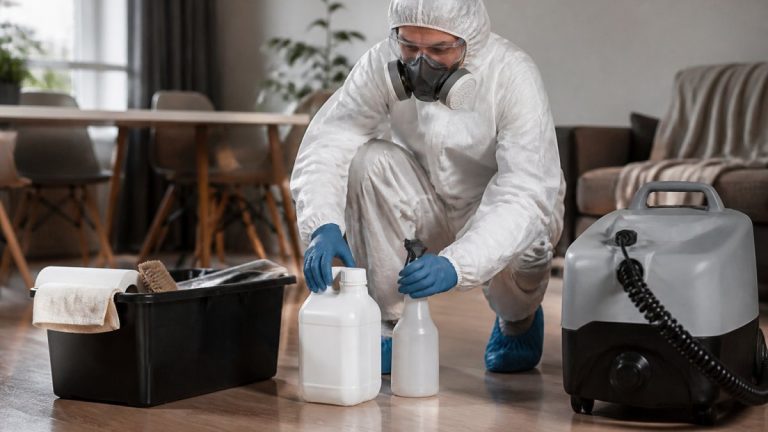
Unattended deaths and decomposition are among the most challenging. When a tenant passes away and isn’t discovered for days or weeks, decomposition releases pathogens and creates severe contamination requiring professional remediation. Services like After Death Cleaning specialise in these sensitive situations, handling the complete decontamination process with care and discretion.
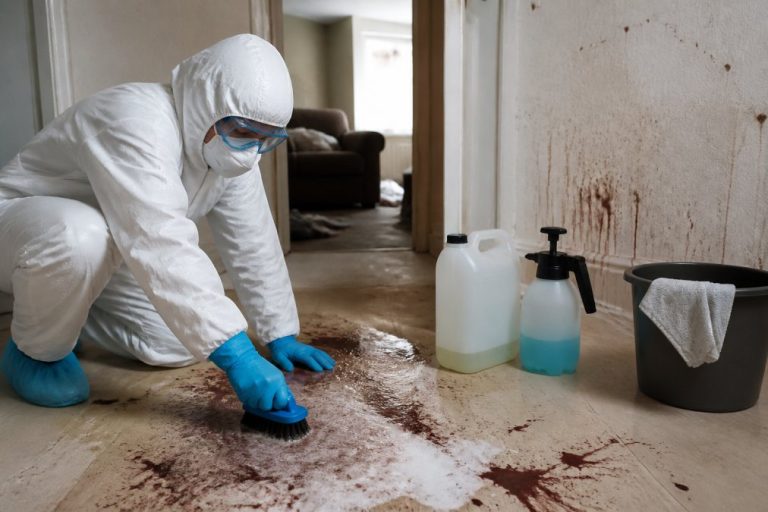
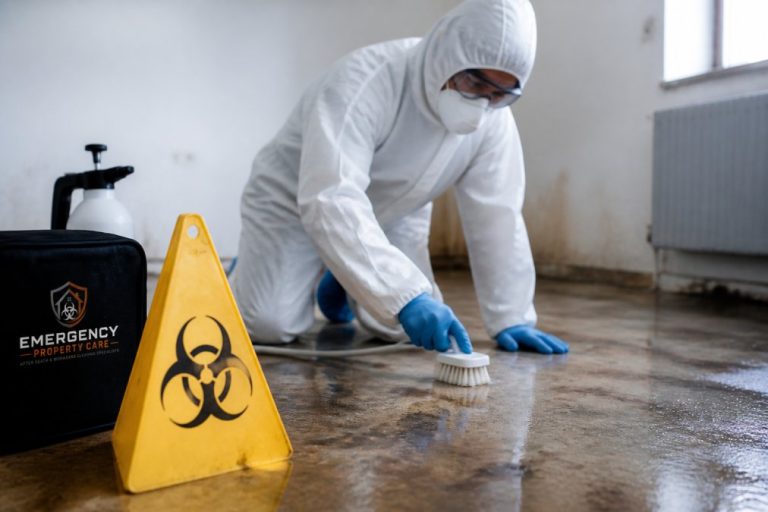
Trauma scenes, including suicide, accidents, or violent incidents, involve blood spatter, bodily fluids, and tissue contamination across multiple surfaces, requiring specialized decontamination using industrial-grade disinfectants and ozone generators.
Crime scenes fall under police jurisdiction initially, but landlords are responsible for post-forensic cleanup and decontamination once the scene is released.
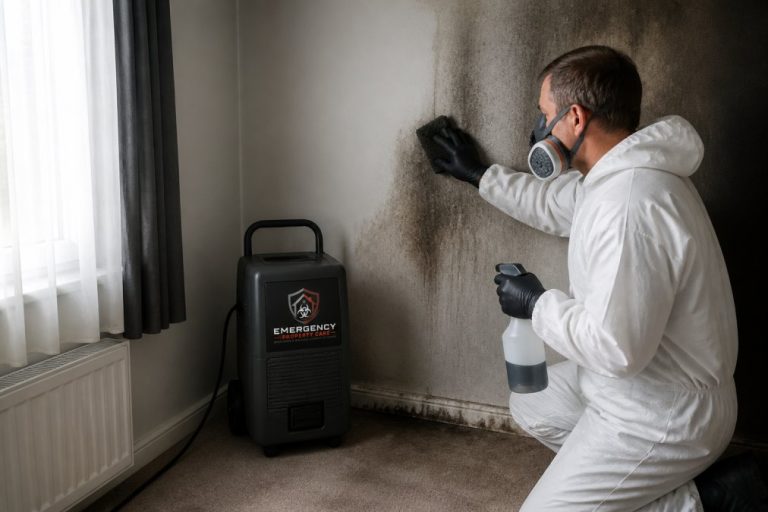
Hoarding situations often involve biohazard contamination from animal waste, mould, and decomposing materials, requiring comprehensive remediation including structural cleaning and hazardous waste removal.
Sewage backups and water contamination introduce faecal pathogens requiring professional disinfection and hazardous waste management. Flood Damage Cleaning and Drying services address water-related contamination and restoration comprehensively.
Drug manufacturing sites leave chemical residues and biohazard contamination demanding specialist remediation.
Each incident requires trained technicians, proper PPE, hazardous waste disposal protocols, and COSHH compliance. This is why professional biohazard cleaners alternatives exist.
Professional Biohazard Cleaning Providers
TrustedCare: 24/7 Nationwide Emergency Response
TrustedCare operates across England, Scotland, and Wales with 24/7 emergency response availability, 365 days a year. Their fully insured technicians specialise in biohazard, trauma, and disaster restoration. They handle not just biohazard decontamination but also flood damage, fire restoration, and sewage cleanup, providing a single point of contact for multiple property emergencies. TrustedCare’s technicians are trained in safe handling of bodily fluids, sharps disposal, and hazardous waste management under COSHH protocols, using professional-grade equipment. They provide professional assistance with insurance claims and operate with discretion and empathy.
Biohazard Cleaning Insurance Claims and Coverage
Insurance is critical when managing biohazard incidents. Most landlord policies include cover for accidental contamination, but unattended deaths, trauma scenes, and intentional contamination may fall into grey areas. When filing a claim, documentation is essential. Professional biohazard cleaners provide detailed reports including photographs, waste disposal records, and COSHH compliance evidence. Providers with insurance claim experience understand what documentation insurers require and can provide it as part of their service. Review your policy carefully and notify your insurer immediately. Professional remediation costs vary based on property size and contamination severity, but having professional documentation and compliance evidence significantly improves claim success rates.
The Risks of DIY Biohazard Cleanup
Attempting to clean biohazard contamination yourself exposes you to serious health, legal, and financial risks.
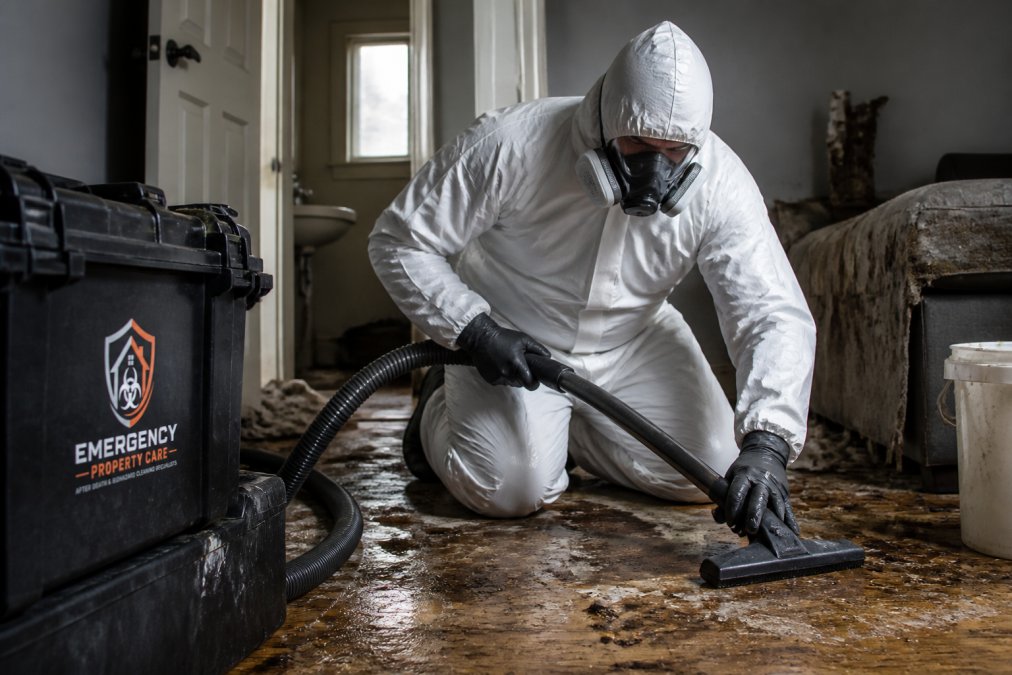
Health risks are immediate and severe. Bodily fluids and decomposition byproducts contain pathogens including hepatitis B, hepatitis C, HIV, and MRSA. Without proper PPE and training, exposure can result in serious infection. Standard cleaning supplies do not eliminate these pathogens.
Legal liability is substantial. If DIY cleanup fails to achieve proper decontamination, future tenants who become ill can pursue liability claims. You’re also violating COSHH regulations by handling hazardous biological materials without proper training and licensing.
Insurance complications arise quickly. Insurers may deny coverage based on improper remediation, and you’ve potentially voided your landlord insurance by failing to meet duty of care standards.
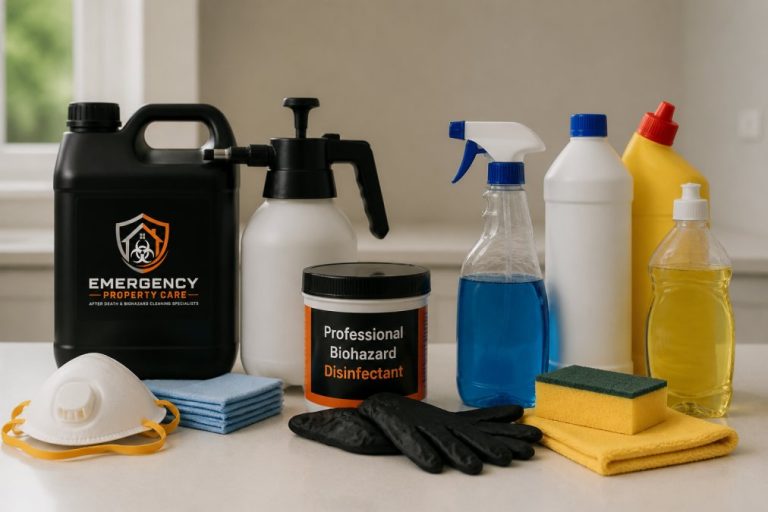
Odour neutralisation fails. DIY approaches cannot eliminate embedded odours, leaving properties unmarketable and extending vacancy periods.
Waste disposal violations occur. Biohazard waste must be transported and disposed of by licensed waste carriers. Improper disposal is illegal and can result in environmental enforcement action and fines.
The financial cost of DIY cleanup failure far exceeds the cost of professional remediation.
How to Choose the Right Provider for Your Property
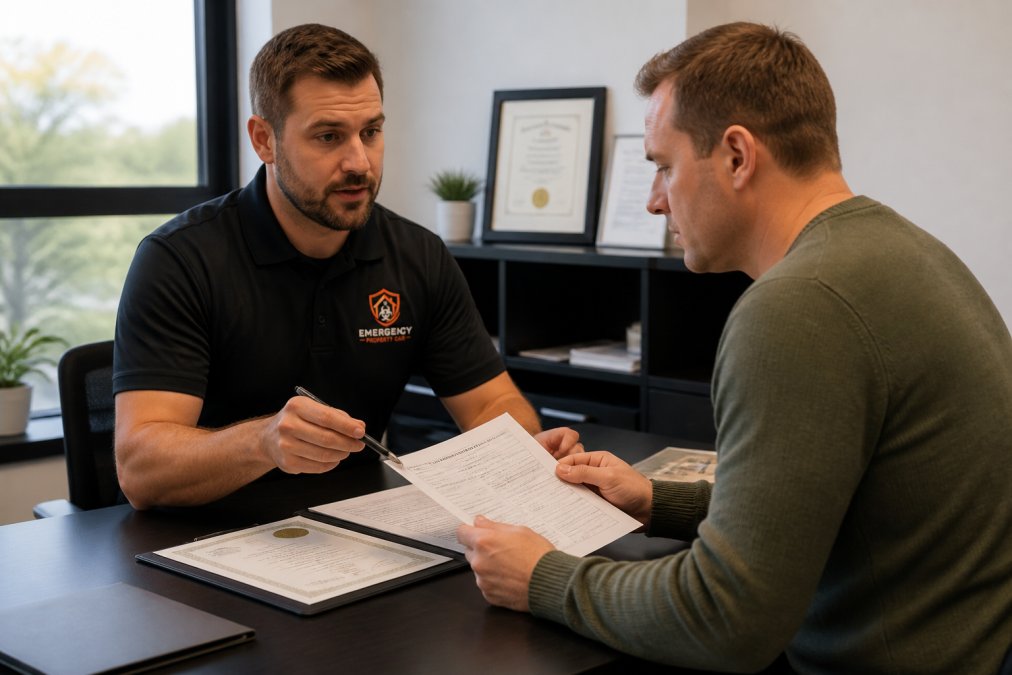
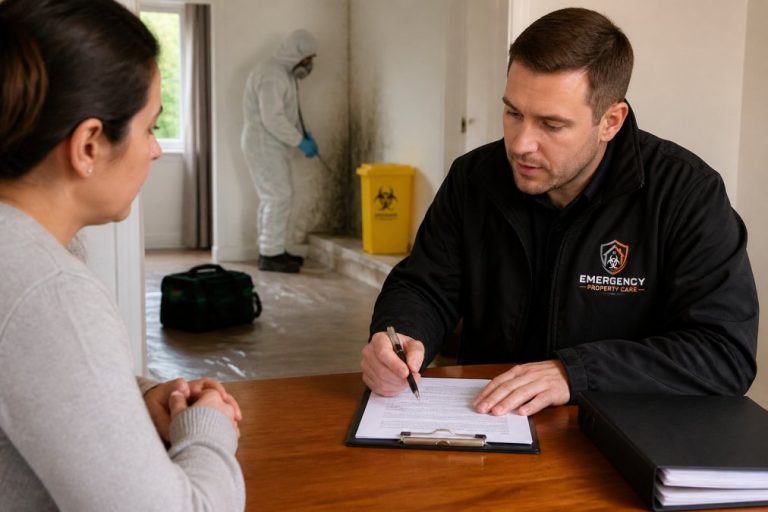
Start with verification of credentials and insurance. Ask for proof of waste carrier licensing, COSHH compliance certification, public liability insurance, and professional indemnity cover. Response time matters, particularly for time-sensitive incidents. Verify their actual response capability and geographic coverage. Experience with your specific incident type is essential. Ask about their experience with similar incidents and request references from previous clients. Insurance claim assistance is a practical differentiator. Discretion and compassion matter, particularly for sensitive incidents. Read reviews and speak with previous clients about the team’s approach. Pricing transparency is important; reputable providers will give you a ballpark estimate quickly. Finally, evaluate their commitment to ongoing support, including follow-up deodorisation if needed.
Managing biohazard incidents as a landlord requires balancing speed, compliance, and compassion. Professional biohazard cleaners alternatives provide the expertise, equipment, and regulatory compliance that DIY approaches cannot deliver. TrustedCare’s 24/7 nationwide response, fully insured technicians, and integrated approach to incident management make them a trusted partner for landlords facing biohazard situations. When an incident occurs, rapid professional intervention protects your health, your tenants, your property value, and your legal standing. Get help now with TrustedCare and access rapid, compliant biohazard remediation across England, Scotland, and Wales.
Housing Act 2004 guidance on landlord responsibilities
Hazardous Waste Regulations 2005 compliance requirements
Frequently Asked Questions
What is classed as a biohazard clean, and when do landlords need to use professional services?
A biohazard clean involves the safe removal and decontamination of bodily fluids, blood, sharps, and other potentially infectious materials. Landlords must use professional biohazard cleaners after unattended deaths, trauma incidents, crime scenes, sewage backups, or severe hoarding situations. These situations pose serious health risks and require specialist expertise to ensure proper disinfection, pathogen elimination, and compliance with hazardous waste regulations.
Are landlords legally required to use professional biohazard cleaners?
Yes. Under the Health and Safety at Work etc. Act 1974 and COSHH Regulations, landlords have a duty of care to ensure properties are safe and free from hazardous contamination before new tenants occupy them. Attempting DIY biohazard cleanup exposes you to legal liability, fines, and potential prosecution. Professional providers ensure full legal compliance and proper hazardous waste disposal with documented evidence for insurance and regulatory purposes.
How do biohazard cleaning insurance claims work, and will my provider help with the process?
Most landlord and property insurance policies cover biohazard cleaning after qualifying incidents such as unattended deaths or crime scenes. Professional biohazard cleaning providers work directly with insurers, providing detailed documentation, waste transfer notes, and compliance certificates. Many providers handle the claims process on your behalf, reducing your administrative burden. Always inform your insurer immediately and confirm coverage before work begins to avoid claim disputes.
What makes professional biohazard cleaners safer than DIY alternatives?
Professional biohazard cleaners use industrial-grade disinfection equipment, specialist PPE, and decontamination protocols that eliminate pathogens and viral loads. They understand cross-contamination risks, proper sharps disposal, and hazardous waste handling. DIY attempts risk exposure to bloodborne pathogens, infections, and psychological trauma. Professionals have insurance, training, and the equipment to safely restore properties while protecting your health and meeting legal requirements.

TrustedCare Editorial Team publishes UK guidance on specialist cleaning and biohazard remediation, including after-death cleaning, flood restoration and contamination control. Content is written for homeowners, landlords and housing providers seeking clear, practical information.