Biohazard Cleanup Certifications: What You Need
Table of Contents
- What Certifications Are Required for Biohazard Cleanup
- COSHH Regulations for Cleaners and Biohazard Work
- Biohazard Cleaning Training Courses and How to Enrol
- Clinical Waste Disposal Certification and Compliance
- Why Certification Matters for Safety and Liability
- Choosing an Accredited Training Provider
- Continuing Education and Renewal Requirements
Last Updated: August 22, 2026
What Certifications Are Required for Biohazard Cleanup
Biohazard cleanup certifications are the professional qualifications that enable technicians to safely handle contaminated environments, hazardous materials, and infectious waste. If you’re entering this field or hiring someone to manage a biohazard situation, understanding which certifications matter is essential, not just for legal compliance, but for genuine safety and liability protection.
The certification landscape for biohazard cleanup is fragmented across multiple regulatory frameworks and industry standards. There isn’t a single “biohazard cleanup licence” that covers everything. Instead, professionals typically need combinations of certifications depending on the specific work: trauma scene remediation, crime scene cleanup, clinical waste disposal, or general biohazard remediation. At TrustedCare, we understand that many property owners and managers don’t realise the difference between these qualifications, which can lead to hiring unqualified providers or overpaying for unnecessary certifications.
The core certifications fall into three categories: regulatory compliance certifications required by law (such as COSHH training), industry-recognised technical certifications (like biohazard remediation credentials), and specialised qualifications for specific waste types (clinical waste disposal certification). Each serves a different purpose, and most professional biohazard cleanup operations require multiple certifications working in combination.
COSHH Regulations for Cleaners and Biohazard Work
COSHH (Control of Substances Hazardous to Health) training is a legal requirement, not optional (hse.gov.uk). Any worker handling biohazard materials must complete COSHH training appropriate to their role. This regulation, enforced by the Health and Safety Executive (HSE), establishes the baseline for how hazardous substances, including bloodborne pathogens, infectious waste, and chemical contaminants, must be managed in the workplace.
COSHH training covers how to identify hazardous substances, assess the risks they pose, and implement control measures to protect workers and the public. For biohazard cleanup specifically, COSHH training addresses bloodborne pathogen exposure, respiratory hazards, skin contact risks, and proper use of personal protective equipment. The training must be tailored to the specific substances and scenarios your team encounters, generic COSHH training won’t suffice if your work involves trauma scene cleanup or clinical waste.
The HSE expects employers to provide COSHH training before workers start handling hazardous substances, and to refresh training regularly as new hazards or procedures emerge. Documentation of COSHH training is critical for liability purposes. If an incident occurs and your team lacks documented COSHH training, regulatory penalties and civil liability exposure increase dramatically. Many property owners ask TrustedCare about our qualifications specifically because they want proof that our technicians have completed proper COSHH training, it’s a red flag if any provider can’t produce training records.
COSHH alone isn’t sufficient for biohazard cleanup work, but it’s the foundation. You cannot legally operate without it.
Failing to provide COSHH training to your team exposes you to HSE enforcement action, unlimited fines, and personal liability. If a worker becomes ill due to pathogen exposure and lacks documented COSHH training, the employer is liable.
Biohazard Cleaning Training Courses and How to Enrol
Professional biohazard cleaning training goes beyond COSHH compliance. These courses teach the specific technical skills required for biohazard remediation, including site assessment, decontamination protocols, safe handling of infectious materials, and proper disposal of hazardous waste. The most widely recognised qualification in this space is certification through accredited training providers that align with industry standards for biohazard abatement.
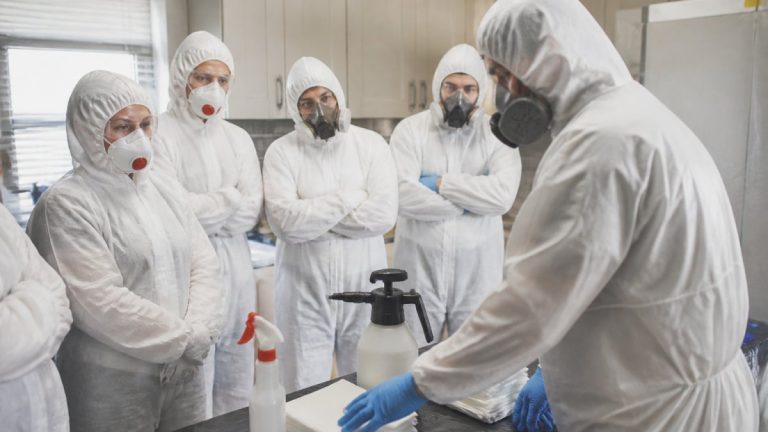
Biohazard cleaning training typically covers these core competencies: identifying different types of biohazard contamination (blood, bodily fluids, pathogenic materials), understanding cross-contamination prevention, selecting appropriate PPE and respiratory protection for each scenario, using decontamination equipment and chemicals safely, documenting contamination levels and remediation progress, and managing waste disposal in compliance with environmental regulations.
Most accredited biohazard cleaning courses run between three and five days of intensive instruction, combining classroom learning with practical hands-on training. Enrolment typically requires you to be at least 18 years old and to have completed COSHH training already. Some providers require basic first aid certification as well. The cost of training varies, but most accredited programmes range from several hundred to over a thousand pounds depending on depth and specialisation.
To find an accredited training provider, look for organisations that align with recognised industry standards and have demonstrated track records of placing graduates in professional roles. Ask potential providers for evidence of their accreditation, details of their curriculum, and references from employers who’ve hired their graduates. The best training providers offer ongoing support and can help connect you with employers in the biohazard remediation field.
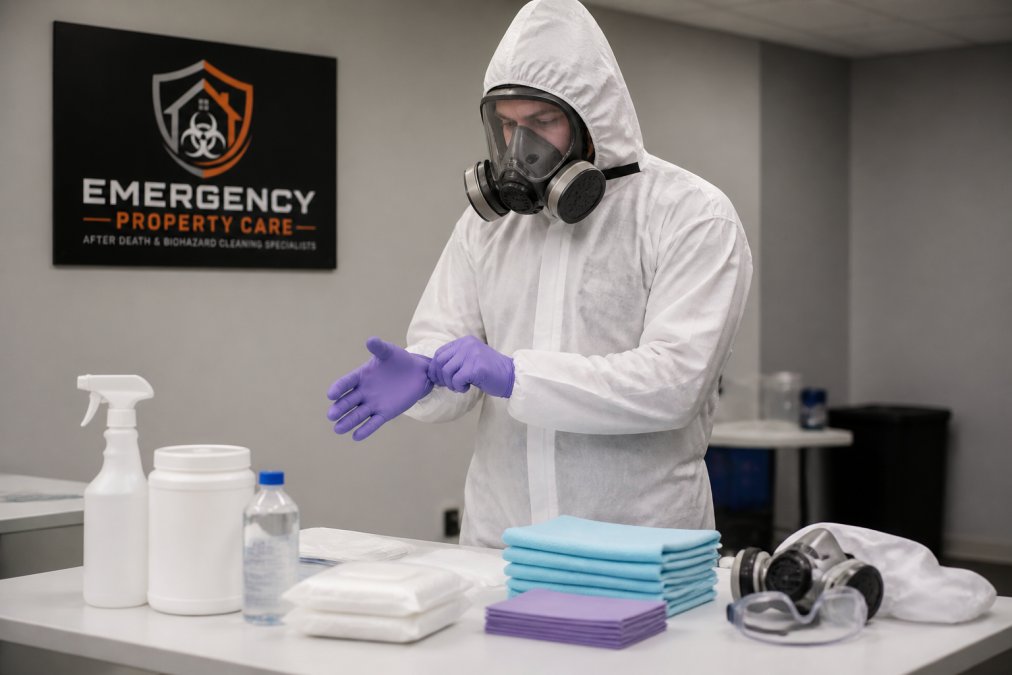
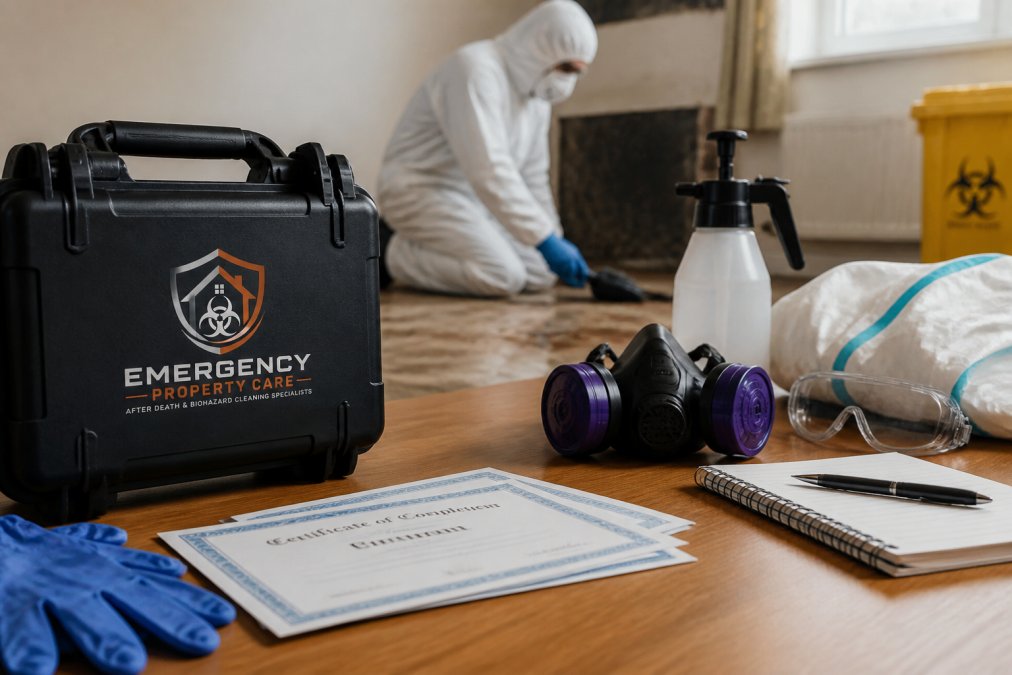
After completing training, many professionals pursue additional specialisations. Some focus on trauma scene remediation, others on crime scene cleanup, and others on clinical or infectious waste management. These specialisations build on the foundational biohazard cleaning training and allow technicians to command higher rates and take on more complex projects. Specialised training in areas like After Death Cleaning or Fire Damage Cleaning can open additional career pathways within the broader biohazard remediation industry.
When evaluating training providers, ask specifically about their placement rate, what percentage of graduates find work in biohazard remediation within six months? A high placement rate indicates the training is respected by employers.
Clinical Waste Disposal Certification and Compliance
Clinical waste disposal certification addresses a specific subset of biohazard work: the safe handling, segregation, and disposal of waste from healthcare settings, laboratories, and medical facilities. This certification is distinct from general biohazard remediation because clinical waste has its own regulatory framework and disposal requirements.
In the UK, clinical waste is regulated under Environmental Protection Act 1990 and the Environmental Permitting Regulations 2016 (legislation.gov.uk). Clinical waste includes items contaminated with blood, bodily fluids, or infectious material from healthcare environments, sharps, swabs, dressings, diagnostic samples, and pharmaceutical waste. Improper disposal of clinical waste can result in environmental contamination, regulatory fines, and criminal liability.
Clinical waste disposal certification trains technicians to identify what qualifies as clinical waste, understand segregation requirements (different waste streams require different containers and disposal methods), use the correct colour-coded containers and labelling, manage storage safely, and coordinate with licensed waste disposal contractors. The certification also covers documentation requirements, tracking clinical waste from point of generation through final disposal is mandatory for regulatory compliance.
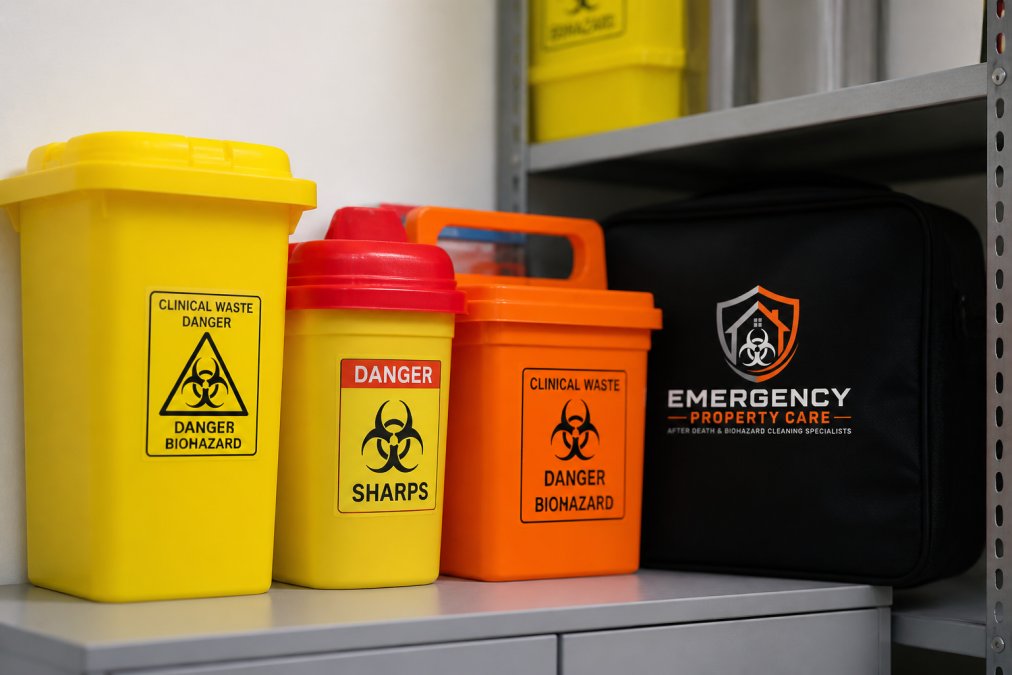
Many biohazard cleanup professionals hold both general biohazard remediation certification and clinical waste disposal certification because the work often overlaps. A property manager dealing with a situation involving medical waste needs someone who understands both the immediate biohazard remediation and the long-term waste disposal compliance. TrustedCare’s team holds relevant qualifications because our clients frequently need comprehensive support that extends beyond initial cleanup to proper waste management.
Clinical waste disposal certification is not optional if your work involves healthcare-related contamination. Improper disposal creates regulatory liability that extends far beyond the initial cleanup.
Why Certification Matters for Safety and Liability
The difference between certified and uncertified biohazard cleanup is the difference between professional remediation and a dangerous gamble. Certification matters for three interconnected reasons: worker safety, public health protection, and legal liability.
From a worker safety perspective, certified technicians have been trained to recognise hazards, use appropriate PPE, avoid cross-contamination, and respond to exposure incidents. Biohazard cleanup exposes workers to bloodborne pathogens, environmental contaminants, and physical hazards. Without proper training, workers face serious health risks. Hepatitis B, Hepatitis C, and HIV are genuine occupational hazards in this field. Certification training ensures workers understand these risks and know how to protect themselves.
From a public health perspective, improper biohazard cleanup can spread contamination beyond the initial site. Inadequate decontamination leaves residual pathogens that pose risks to future occupants, cleaning staff, or emergency responders. Improper waste disposal can contaminate soil and water. Certification requirements exist because the consequences of poor work extend far beyond the immediate job. This is particularly critical in scenarios involving Flood Damage Cleaning and Drying or Hoarder Cleaning, where secondary contamination risks are significant.
From a liability perspective, certification is your evidence that you’ve taken reasonable precautions. If an incident occurs, a worker becomes ill, contamination spreads, waste disposal violates regulations, your first defence is documentation that you hired certified professionals. Insurance companies recognise this. Many professional liability and workers’ compensation policies require evidence of proper certification before they’ll cover biohazard work. Without certification, you’re operating outside your insurance coverage, which means personal liability for any damages.
Property owners and managers also benefit from hiring certified providers. If you’re dealing with a biohazard situation on your property, hiring an uncertified cleaner creates legal exposure for you as well. You could be held liable if that cleaner causes harm or if contamination isn’t properly remediated. Certification provides assurance that the work meets regulatory standards.
Choosing an Accredited Training Provider
Not all biohazard training providers are equally rigorous. Some offer quick online courses that provide certificates but minimal genuine competency. Others deliver comprehensive, hands-on training that produces genuinely skilled technicians. Knowing how to evaluate providers is essential if you’re entering the field or hiring professionals.
Start by asking whether the training provider is accredited by a recognised industry body or aligns with established standards for biohazard remediation. In the UK, look for providers whose curriculum addresses COSHH compliance, bloodborne pathogen protocols, decontamination standards, and regulatory requirements. Legitimate providers will have detailed curriculum information available and can explain how their training maps to industry standards.
Check whether the training includes practical, hands-on components or is purely theoretical. Biohazard cleanup is a practical skill. Online-only courses that lack supervised practical training produce graduates who understand the theory but lack the muscle memory and real-world problem-solving skills needed on actual jobs. The best training combines classroom instruction with supervised practice in controlled environments.
Ask about the provider’s placement support. Do they help graduates find employment? Can they provide references from employers who regularly hire their graduates? A training provider with strong employer relationships and a track record of graduate placement is more likely to deliver training that meets actual industry needs.
Verify that the provider covers the specific areas relevant to your work. If you’re interested in trauma scene remediation, does their curriculum address trauma-specific decontamination? If your focus is clinical waste, do they cover the regulatory framework for clinical waste disposal? Generic biohazard training won’t adequately prepare you for specialised work.
Finally, check whether the provider offers continuing education or refresher training. Regulations change, new decontamination techniques emerge, and industry best practices evolve. A provider who supports ongoing professional development is more valuable than one offering only an initial certification.
Professionals seeking entry into biohazard remediation should prioritise providers with strong employer relationships, hands-on training components, and documented placement success.
Continuing Education and Renewal Requirements
Certification in biohazard cleanup isn’t a one-time achievement. Regulations change, new hazards emerge, and industry standards evolve. Continuing education and certification renewal are both professional best practices and, in many cases, regulatory requirements.
COSHH training requires refresher training at regular intervals. The HSE expects employers to update COSHH training when new substances are introduced, when procedures change, or when incidents suggest gaps in worker knowledge. Many employers refresh COSHH training annually as a standard practice, though the specific interval depends on your work environment and risk assessment.
Beyond COSHH, many professional biohazard certifications require renewal every two to three years. Renewal typically involves completing a refresher course or examination to demonstrate that your knowledge remains current. Some providers offer online renewal options, while others require in-person attendance.
Staying current with continuing education provides practical benefits beyond regulatory compliance. New decontamination techniques, improved PPE options, and updated regulatory guidance all emerge regularly. Professionals who engage with continuing education deliver better results and maintain competitive advantage in the job market. Employers increasingly expect their teams to maintain current certifications and demonstrate ongoing professional development.
For property owners and managers hiring biohazard cleanup services, asking about the provider’s continuing education practices is a useful quality indicator. TrustedCare maintains current certifications across our team and invests in ongoing training to ensure we’re delivering the latest techniques and maintaining the highest safety standards. Providers who take continuing education seriously are more likely to deliver professional, compliant work.
Getting help with biohazard cleanup starts with understanding what certifications your situation requires. If you’re dealing with a contaminated property, whether from trauma, crime scene, clinical waste, or other biohazard sources, hiring a certified professional isn’t just safer; it’s the only responsible choice. TrustedCare’s team holds comprehensive biohazard cleanup certifications, COSHH compliance, and clinical waste disposal qualifications. We provide rapid response across England, Scotland, and Wales, with 24/7 availability and full insurance coverage. When you need professional biohazard remediation backed by proper credentials and regulatory compliance, contact TrustedCare for a confidential consultation about your specific situation.
Frequently Asked Questions
What qualifications do I need to work in biohazard cleanup?
To work in biohazard cleanup, you need formal training in bloodborne pathogens, COSHH regulations, and hazardous waste handling. Most employers require relevant health and safety certification, plus specific biohazard remediation training from an accredited provider. You must also demonstrate competency in personal protective equipment use, decontamination protocols, and infection control. Insurance companies typically verify these qualifications before approving work on sensitive sites.
Are there legal requirements for handling clinical waste in the workplace?
Yes. Clinical waste handling is governed by the Environmental Protection Act 1990 and the Environmental Permitting Regulations 2016. All personnel handling clinical waste must be trained in segregation, storage, transport, and disposal. Your employer must ensure you understand the risks of pathogen exposure and cross-contamination. Clinical waste disposal certification confirms you can identify hazardous materials and follow proper containment and disposal routes. Failure to comply can result in significant fines and liability.
What is the difference between general cleaning and biohazard remediation?
General cleaning removes dirt and surface contamination. Biohazard remediation addresses infectious waste, bloodborne pathogens, and hazardous materials that pose serious health risks. Biohazard work requires specialist training in site assessment, pathogen exposure prevention, decontamination protocols, and safe disposal of infectious waste. Technicians must use respiratory protection, follow COSHH guidelines, and document their work to meet regulatory compliance. The two require entirely different skill sets and certifications.
Do biohazard cleaners need specific health and safety training?
Yes, absolutely. Biohazard technicians must complete training in bloodborne pathogens, COSHH regulations, personal protective equipment protocols, and hazard mitigation. Many employers require relevant health and safety certification. You also need instruction in respiratory protection, spill containment, site decontamination, and occupational health standards. This training is essential to prevent infection control failures and ensure you work safely around hazardous materials.
TrustedCare Copyrights 2026

TrustedCare Editorial Team publishes UK guidance on specialist cleaning and biohazard remediation, including after-death cleaning, flood restoration and contamination control. Content is written for homeowners, landlords and housing providers seeking clear, practical information.