Property Decontamination for Businesses: Emergency Response Guide
Contents
- When Business Property Decontamination Is Required
- Types of Commercial Property Contamination
- What Businesses Should Do Immediately
- COSHH and Workplace Contamination
- The Professional Decontamination Process
- Commercial Waste Responsibilities
- Biohazard Odour Treatment
- How Long Property Decontamination Takes
- Returning the Business to Use
- Frequently Asked Questions
Property decontamination for businesses may be required following sewage ingress, blood or bodily-fluid contamination, an unattended death, discarded sharps, pest contamination, flooding or fire-related residue.
These incidents can expose employees, contractors, customers and visitors to hazards that ordinary workplace cleaning procedures may not adequately control. The correct response depends on what happened, the materials affected and whether contamination has entered areas that cannot be cleaned easily.
TrustedCare can discuss the incident confidentially, help establish the likely cleaning requirements and confirm current availability. No universal attendance or completion time can be promised until the location, contamination and scope have been reviewed.
When Business Property Decontamination Is Required
Standard cleaning is generally intended to remove everyday dirt and maintain routine hygiene. Specialist decontamination addresses a known or suspected hazard requiring additional assessment, controls, equipment or waste arrangements.
Professional assistance should be considered where:
- Blood or bodily fluids affect an extensive area or absorbent materials
- An unattended death or trauma incident has occurred
- Sewage or contaminated floodwater has entered the premises
- Discarded needles or other sharps are present
- Contamination may have entered flooring, furniture or wall cavities
- Ordinary employees are not trained or equipped to complete the work
- Substantial contaminated waste must be removed
- Persistent odour suggests that contamination remains
- Fire, smoke or soot residue affects working areas
- The business cannot determine whether an area is suitable for continued use
The aim is not simply to make the area appear clean. The source must be understood, affected materials assessed and appropriate controls used to prevent contamination spreading into unaffected parts of the property.
Types of Commercial Property Contamination
Blood and bodily fluids
Blood and certain bodily fluids can contain microorganisms capable of causing infection. HSE guidance states that spillages should be made safe promptly while protecting anyone completing the work from exposure.
A small spill on a sealed workplace surface may be manageable under an established company spill procedure. More extensive contamination, contamination involving sharps or fluids entering absorbent materials may require specialist assistance.
Unattended death and trauma incidents
These incidents can involve biological contamination, affected furniture and flooring, odour, insects and significant emotional distress for employees or occupants. The scene must not be disturbed until the relevant authorities have released it for cleaning.
Once released, the work should be handled discreetly and with controlled access. Read more about TrustedCare’s after-death cleaning service.
Sewage and contaminated water
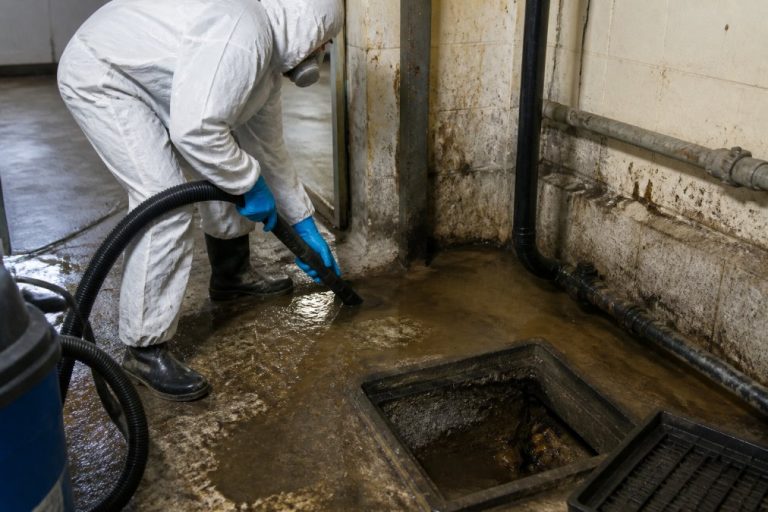
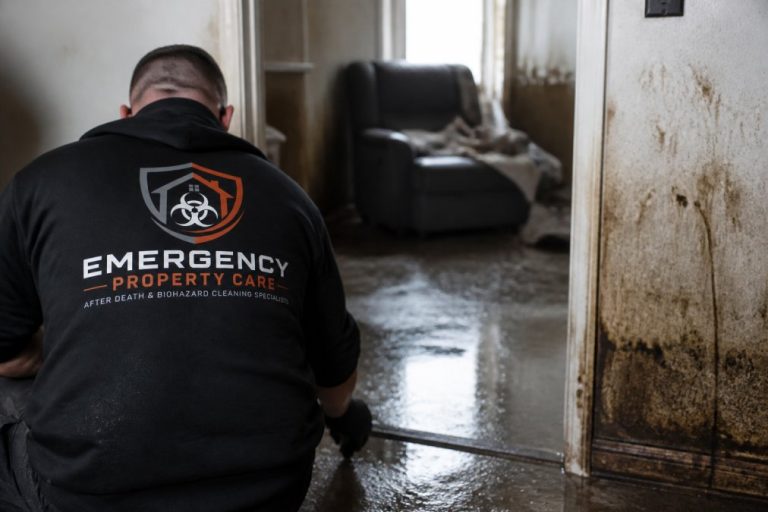
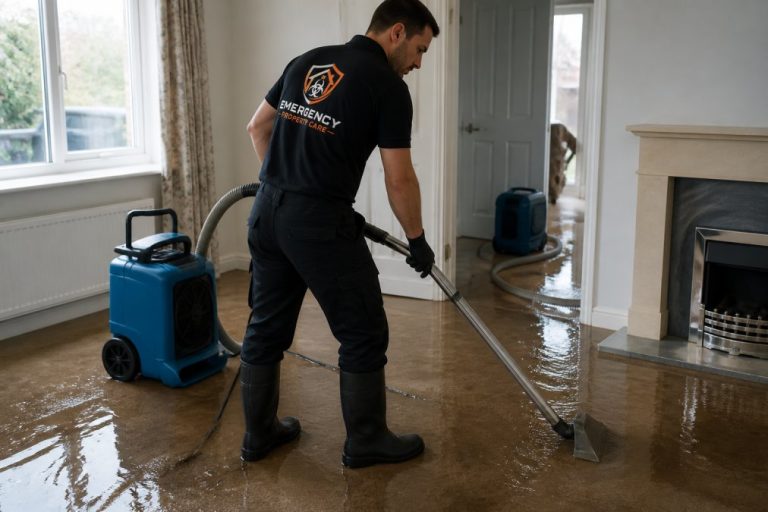
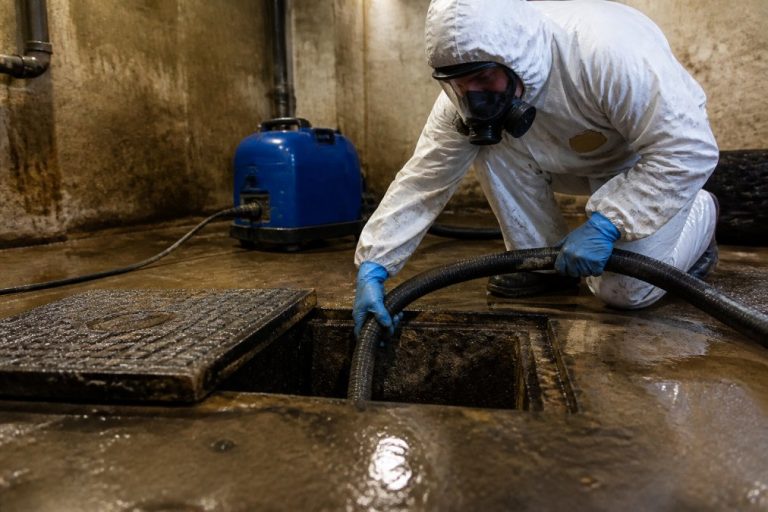
Sewage and external floodwater may contain harmful microorganisms, silt, chemicals and sharp objects. The source should be stopped or repaired before effective cleaning and drying can proceed.
Carpets, underlay, plasterboard, insulation and other absorbent materials require careful assessment. Some may be capable of treatment, while heavily contaminated materials may need removal.
Cleaning should be followed by appropriate moisture assessment and drying where water has entered the building structure. See our flood damage cleaning and drying service.
Fire, smoke and soot residue
Smoke and soot can spread beyond visibly burnt areas. The type of material burnt and surfaces affected will influence the cleaning method. Structural, electrical and fire-safety assessments may need to be completed by other appropriately qualified professionals before cleaning starts.
Incorrect cleaning can smear soot or drive residue further into surfaces. TrustedCare’s role concerns specialist cleaning rather than structural reconstruction. More information is available on our fire damage cleaning page.
Sharps and drug-related waste
Needles and other sharp items create puncture and potential infection risks. Staff should not pick them up by hand or place them in ordinary waste bags. A suitable assessment, handling method, sharps container and waste route are required.
What Businesses Should Do Immediately
1. Protect people first
Move employees, customers and visitors away from the affected area. If there is an immediate danger, serious injury, active fire, suspected crime or medical emergency, contact the appropriate emergency service first.
2. Restrict access
Close doors where possible and use barriers or clear signage to prevent accidental entry. Do not allow untrained employees to begin cleaning merely to reopen the area more quickly.
3. Preserve an official scene
If the incident involves a death, suspected crime or investigation, do not disturb the area until the police or other responsible authority confirms that cleaning can begin.
4. Record the incident safely
Record when and where the incident occurred, who discovered it and any known exposure. Take photographs only if this can be done without entering the affected area or compromising an official investigation.
5. Respond to employee exposure
Follow the business’s first-aid and exposure procedures. Blood or bodily-fluid contact with eyes, mouth, broken skin or a needlestick injury may require urgent medical or occupational-health advice.
6. Notify relevant parties
Depending on the premises and incident, this may include the building owner, landlord, facilities manager, insurer, health and safety adviser, water company or drainage contractor.
7. Check whether RIDDOR applies
Not every workplace contamination incident is reportable under RIDDOR. Reporting requirements apply only in defined circumstances, including certain injuries, occupational diseases and dangerous occurrences. Check the current HSE criteria rather than assuming every incident must be reported.
8. Contact an appropriate cleaning provider
Provide the postcode, type of premises, affected areas, known hazards and access arrangements. Current availability and the information needed for a quotation can then be confirmed.
COSHH and Workplace Contamination
The Control of Substances Hazardous to Health Regulations can apply to workplace exposure involving hazardous substances and biological agents. HSE states that COSHH covers both deliberate work with biological agents and incidental exposure arising from work activities or the working environment.
The employer remains responsible for managing workplace health and safety. Appointing a specialist contractor does not transfer every responsibility away from the business.
Depending on the incident, appropriate actions may include:
- Identifying the hazards and people who could be exposed
- Completing or updating the workplace risk assessment
- Preventing unnecessary access to the affected area
- Selecting suitable control measures and working methods
- Using appropriate protective equipment where required
- Providing suitable washing and welfare arrangements
- Managing contaminated clothing and equipment
- Recording significant employee exposure
- Reviewing whether health surveillance or occupational-health advice is needed
- Checking whether the incident meets RIDDOR reporting criteria
COSHH does not create one identical cleaning procedure for every incident. The controls should be proportionate to the hazard, exposure route and work being carried out.
Ask a prospective contractor for evidence relevant to the actual work, such as insurance, training, risk-control arrangements and waste authorisation. There is no single universal qualification covering every form of property decontamination.
The Professional Decontamination Process
Initial assessment
The assessment establishes the incident type, affected areas, surfaces involved, additional hazards and likely waste. Photographs may assist with initial planning, but complex contamination can require an on-site assessment.
Planning and area control
The work area may be isolated to prevent employees, customers or contractors entering. The required level of containment depends on the contamination and likelihood of it being transferred into adjoining spaces.
Removal of visible contamination
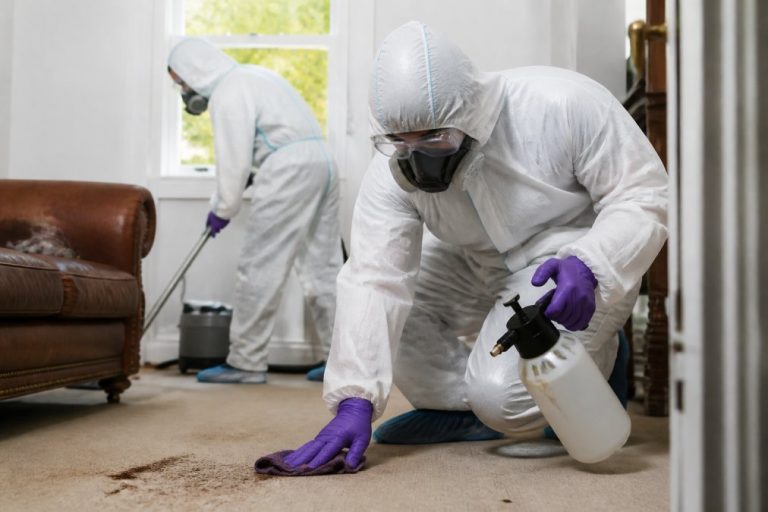
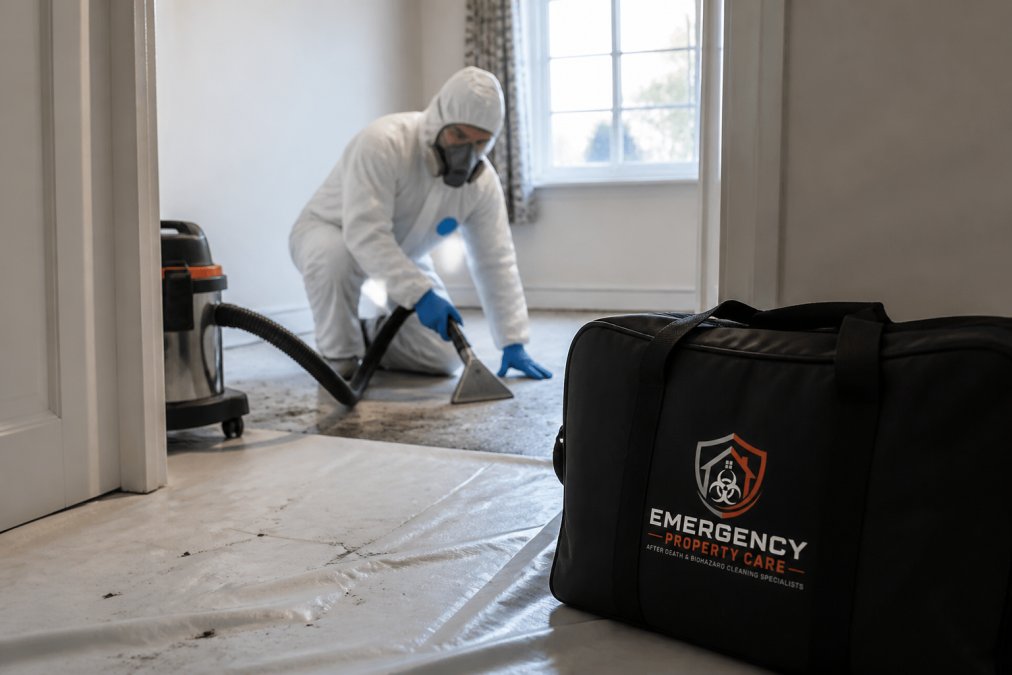
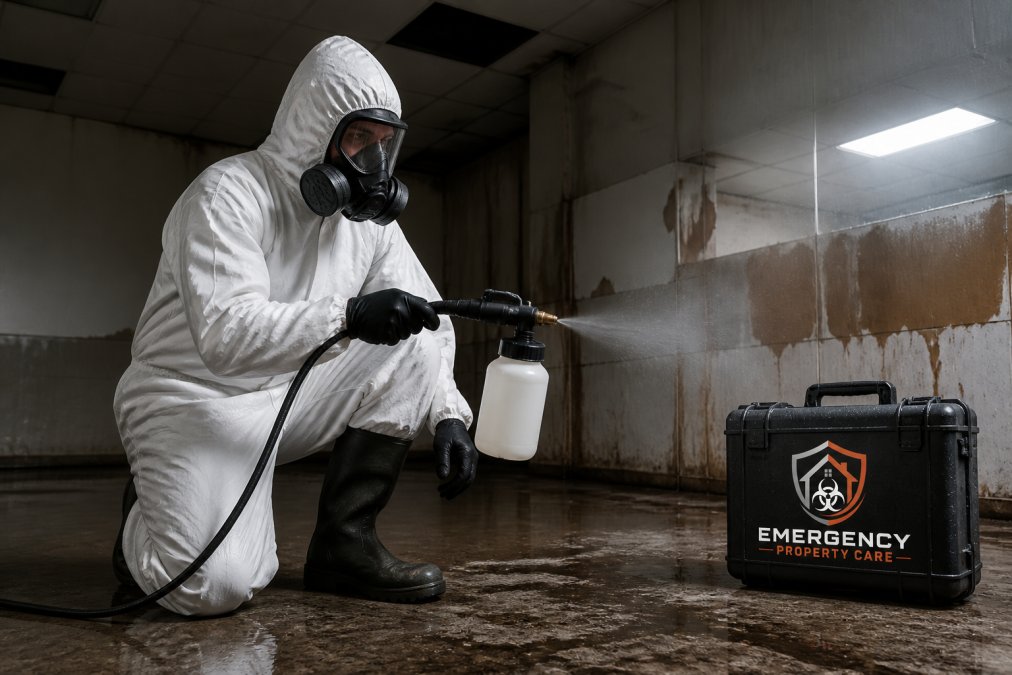
Visible biological material, sewage, soot or other residue is removed using methods suitable for the hazard and affected surface. Work should be organised to avoid splashing, aerosol generation, sharps injuries and cross-contamination.
Cleaning and decontamination
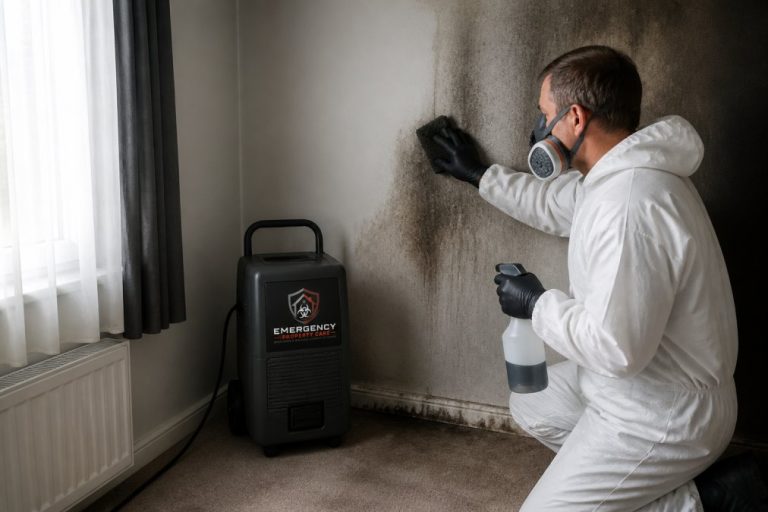
Products should be chosen for the contamination and surface and used according to their instructions. Correct concentration, contact time and application method matter. A stronger product or heavier spray does not automatically produce a safer result.
Assessment of materials
Hard, sealed surfaces may be capable of cleaning and treatment. Heavily affected absorbent materials can be more difficult to clean reliably and may require removal. Decisions should be based on the material and contamination rather than a blanket rule.
Waste handling
Waste is separated, contained and classified so that the correct transport and disposal route can be used. Waste paperwork should match the type and classification of material removed.
Completion review
The contractor should review the completed scope and identify any remaining repairs, drying or other work. Where a completion report or Certificate of Sanitisation is provided, it should accurately describe the areas treated and work completed.
Commercial Waste Responsibilities
Any waste produced through commercial activity is business waste. GOV.UK states that businesses must store waste safely, complete the appropriate paperwork and check that the person taking it is authorised.
The correct requirements depend on how the waste is classified. Not every item removed during decontamination is automatically hazardous, but contaminated materials must be assessed and managed correctly.
Before appointing a contractor, ask:
- Whether waste removal is included in the quotation
- Who will transport the waste
- Whether the carrier is appropriately registered
- Where the waste will be taken
- Whether a waste-transfer or hazardous-waste consignment note applies
- What copy of the paperwork the business will receive
The business should retain relevant waste documentation with its incident and contractor records.
Biohazard Odour Treatment
Persistent odour can indicate that the original source remains or that contamination has entered an absorbent material, void or concealed surface. Air fresheners and fragrance sprays may cover an odour temporarily but do not remove the cause.
A suitable odour-control process begins with:
- Locating the source
- Removing biological material and affected waste
- Cleaning accessible contaminated surfaces
- Assessing flooring, furniture and concealed spaces
- Removing materials that cannot be treated reliably
- Using an appropriate additional treatment where necessary
Dry steam, filtration, fogging and other treatments may be appropriate in some situations, but none is automatically required for every incident. Ozone should only be used following a suitable assessment and with strict controls because exposure can harm people and animals.
No responsible provider should promise complete odour removal before the source and affected materials have been assessed.
How Long Does Property Decontamination Take?
There is no standard completion time. A limited incident involving a small cleanable area may require several hours, while contamination affecting multiple rooms, absorbent materials or substantial waste can require several visits.
The programme may depend on:
- Size and layout of the affected area
- Type and extent of contamination
- Whether the scene has been released by the authorities
- Access restrictions and working hours
- Materials requiring removal
- Volume and classification of waste
- Whether moisture assessment and drying are needed
- Additional repairs or specialist contractors
Attendance time and completion time are different. TrustedCare will confirm current availability once the incident and location have been reviewed.
Returning the Business to Use
The business should not reopen an affected area simply because visible contamination has disappeared. The responsible manager should confirm that the agreed cleaning scope is complete and that any associated hazards have been addressed.
Before reoccupation, consider:
- Whether the source of contamination has been resolved
- Whether affected materials have been cleaned or removed
- Whether electrical, structural or drainage repairs remain outstanding
- Whether moisture and drying work is complete
- Whether waste has been removed through the correct route
- Whether the workplace risk assessment needs updating
- Whether exposed employees require occupational-health support
- Whether RIDDOR or other reporting requirements have been checked
- Whether staff need clear information before returning
A Certificate of Sanitisation or completion report can record the areas treated and work performed. It should not describe a property as sterile or completely risk-free unless appropriate testing supports that specific claim.
Frequently Asked Questions
How quickly can TrustedCare attend a commercial decontamination incident?
Availability depends on the postcode, type of incident, access and resources required. TrustedCare does not advertise one universal 24/7 attendance promise. Contact us so the circumstances and current availability can be checked.
What is the difference between ordinary cleaning and biohazard decontamination?
Ordinary cleaning deals with routine dirt and hygiene. Biohazard decontamination may require a specific risk assessment, controlled access, protective equipment, specialist working methods and an appropriate waste route.
Does COSHH apply to biological contamination?
It can. HSE states that COSHH applies to incidental workplace exposure to biological agents as well as deliberate work with them. The employer should assess the specific hazard and introduce proportionate controls.
Does every workplace contamination incident need reporting to HSE?
No. RIDDOR applies only to defined reportable injuries, occupational diseases and dangerous occurrences. The responsible person should check the current HSE reporting criteria for the particular incident.
What should a commercial decontamination contractor provide?
Ask for evidence relevant to the work, including suitable insurance, training, risk-control arrangements and any required waste authorisation. The quotation should describe the scope, exclusions, waste arrangements and documentation to be supplied.
Is a Certificate of Sanitisation legally required?
There is no single universal certificate required after every commercial decontamination job. A contractor may provide a Certificate of Sanitisation or completion report describing the areas treated and work performed. Its wording should reflect the actual scope and any testing completed.
When can employees return to the affected area?
That depends on the contamination, work completed and any remaining electrical, structural, moisture or health risks. The responsible manager should review the contractor’s completion information and update the workplace risk assessment where necessary.
Arrange Property Decontamination for Your Business
Contact TrustedCare with the property postcode, type of business, incident details and areas affected. We will handle the enquiry discreetly, explain what information is needed and confirm current availability.
Official UK Guidance
- HSE: The law on infections at work
- HSE: Decontamination of blood and bodily-fluid spills
- HSE: Types of RIDDOR-reportable incidents
- GOV.UK: Disposing of business and commercial waste

TrustedCare Editorial Team publishes UK guidance on specialist cleaning and biohazard remediation, including after-death cleaning, flood restoration and contamination control. Content is written for homeowners, landlords and housing providers seeking clear, practical information.