5 Best Professional Odour Removal Services UK 2026
Need urgent help? Odour can indicate that contamination, smoke residue or damp material remains inside the property. Removing the source is more important than temporarily covering the smell.
There is no single odour-removal method that suits every property. Decomposition odour, smoke contamination and sewage smells have different causes and may require different cleaning, removal and drying procedures.
This guide compares five types of professional odour-removal provider. It is not a league table of individual companies. The best choice is the provider whose experience, equipment and working methods match the source of the odour.
Contents
- What professional odour removal involves
- Comparison of five provider types
- After-death and biohazard specialists
- Fire and smoke restoration specialists
- Flood and sewage-cleaning specialists
- Property restoration contractors
- General cleaning providers
- How to choose a provider
- How TrustedCare can help
- Frequently asked questions
What Professional Odour Removal Involves
Domestic air fresheners and fragranced cleaning products may temporarily disguise a smell, but they do not remove contamination held in flooring, plasterboard, timber, insulation or soft furnishings.
A professional assessment should identify the likely source, determine which materials are affected and establish whether anything must be cleaned, disinfected, dried or removed. Treatment should only be selected after the source and extent of the problem are understood.
Depending on the incident, professional work may include:
- Inspecting the affected room and adjoining areas.
- Locating contaminated, damp or smoke-affected materials.
- Containing the work area where cross-contamination is possible.
- Removing materials that cannot be safely restored.
- Cleaning and treating remaining surfaces.
- Drying building materials following water damage.
- Checking the property after treatment before completing the work.
Masking is not removal: adding a stronger fragrance may make a property appear improved briefly, but the original smell is likely to return if its source remains.
Quick Comparison: Five Types of Provider
| Provider type | Most suitable for | Important capability | Possible limitation |
|---|---|---|---|
| After-death and biohazard specialist | Decomposition, bodily fluids and trauma-related contamination | Handling biological contamination and affected materials | Not every provider performs building repairs |
| Fire and smoke restoration specialist | Smoke, soot and fire-related odours | Cleaning residue from surfaces, contents and concealed areas | May not handle biological or sewage contamination |
| Flood and sewage specialist | Floodwater, sewage and persistent damp smells | Extraction, decontamination and structural drying | Odour treatment will not repair an unresolved leak |
| Property restoration contractor | Damage requiring cleaning, removal and reinstatement | Coordinating several restoration stages | Specialist cleaning may be subcontracted |
| General cleaning company | Light, non-hazardous household smells | Routine cleaning of accessible surfaces | Usually unsuitable for serious contamination |
1. After-Death and Biohazard Cleaning Specialists
This is normally the appropriate category when odour follows an unattended death, decomposition, trauma or contamination involving bodily fluids. These incidents require more than deodorising because contamination can pass through carpets and flooring into the materials beneath.
The contractor should assess the affected area, identify materials that can and cannot be restored, prevent contamination from spreading and explain how waste will be handled. The work must also be approached sensitively and discreetly.
Read about TrustedCare’s after-death cleaning service or see our guide explaining how long after-death cleaning may take.
2. Fire and Smoke Restoration Specialists
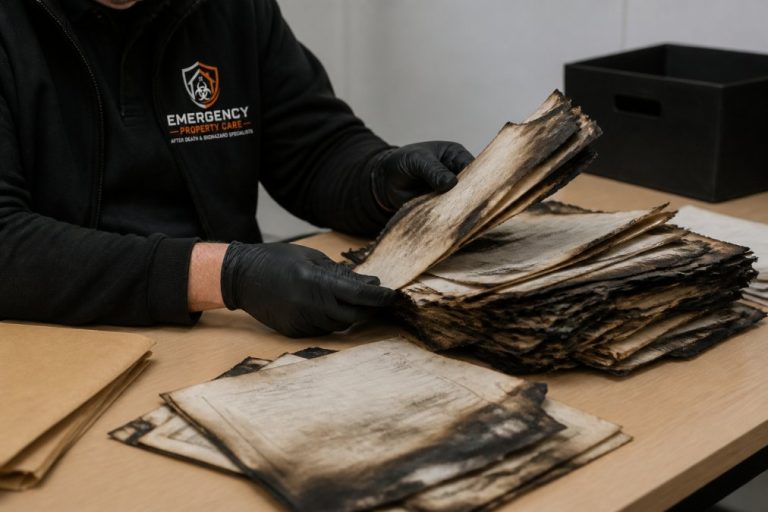
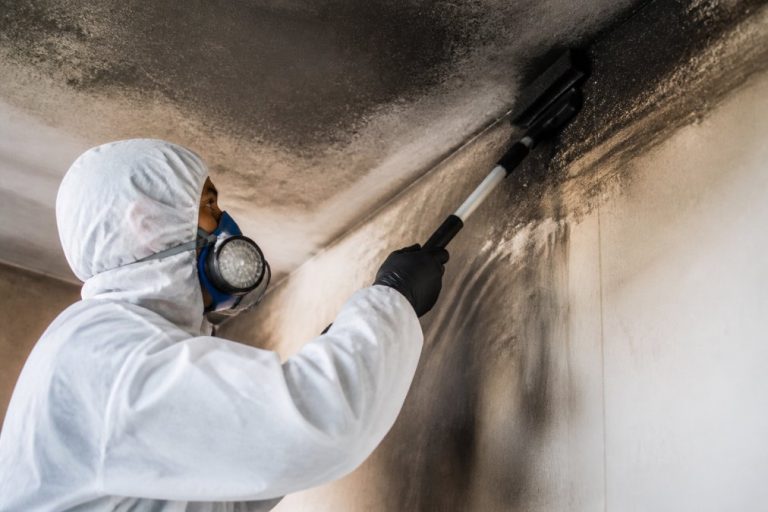
Smoke particles can travel beyond the room where a fire started. They may settle on walls, ceilings, furniture, fabrics, ventilation routes and inside concealed spaces. This is why an untreated property may begin to smell again after appearing clear for several days.
A suitable provider should consider both visible soot and less obvious smoke deposits. Cleaning methods must suit the affected surface because an unsuitable chemical or technique can spread residue or permanently mark materials.
For help following a fire, visit our fire and smoke damage cleaning service.
Unsure Which Service You Need?
Tell us what happened, when the problem started and which parts of the property are affected. We can help identify the most appropriate next step.
3. Flood and Sewage-Cleaning Specialists
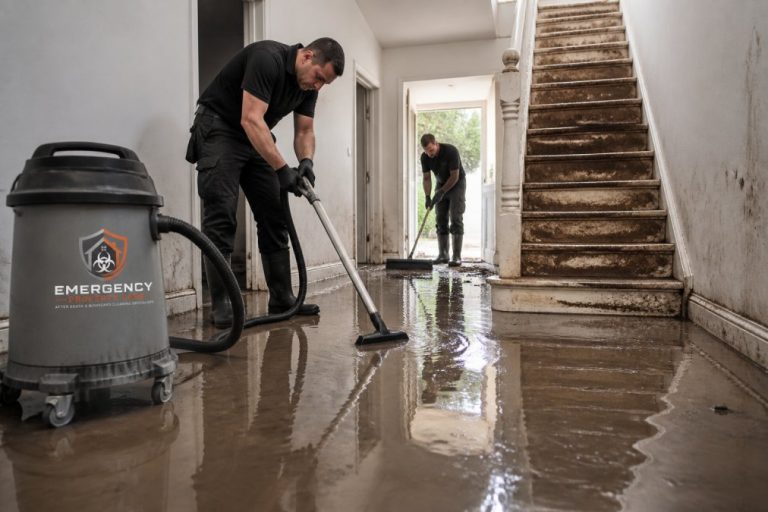
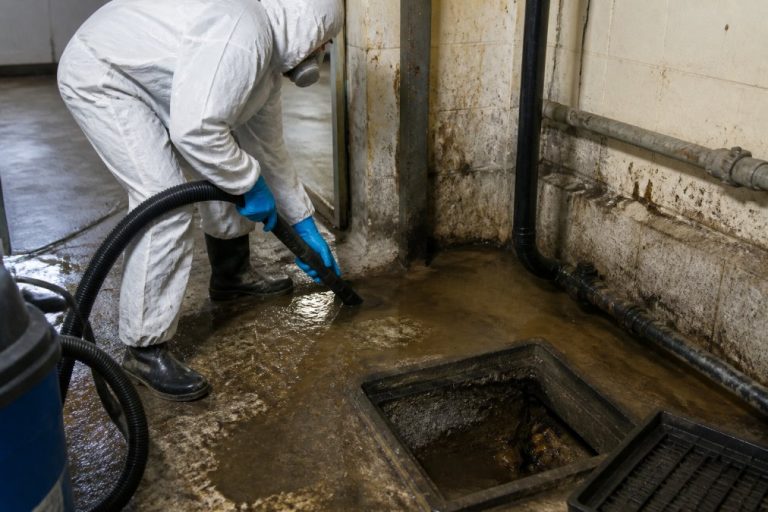
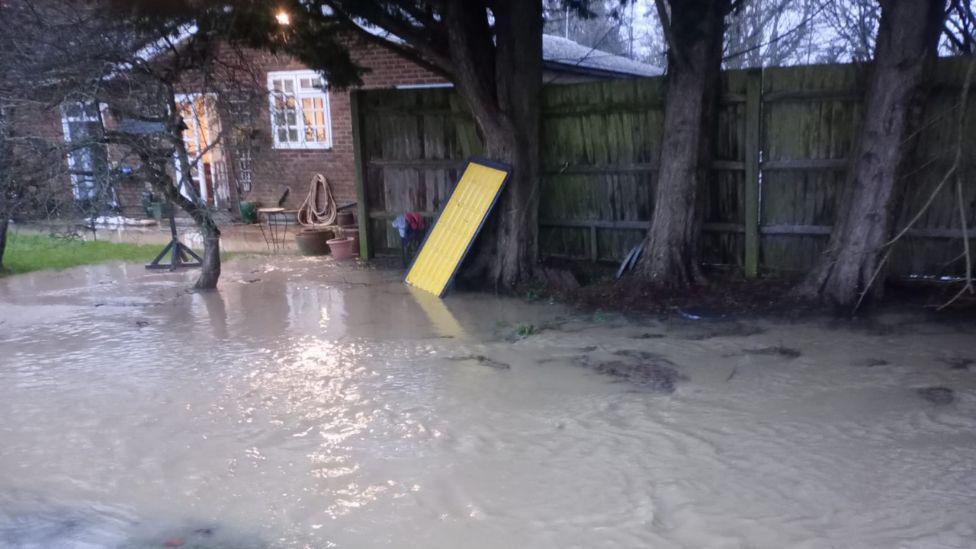
Odours following flooding can indicate contaminated material, trapped moisture or microbial activity. Where sewage or contaminated water has entered a property, deodorising should not be treated as a substitute for cleaning and decontamination.
A complete response may involve water extraction, removal of unsalvageable materials, cleaning, disinfection and structural drying. Moisture readings help determine whether water remains within flooring, walls or other building materials.
See our flood-damage cleaning and structural-drying service.
4. Property Restoration Contractors
A restoration contractor may be suitable when the damage extends beyond cleaning. For example, contaminated flooring may need to be removed before the subfloor can be treated, dried and prepared for reinstatement.
Ask which parts of the work the company completes itself and which are passed to subcontractors. You should also establish who is responsible for checking the cleaning and drying work before repairs begin.
5. General Cleaning Providers
A general cleaning company can be an economical option for mild, non-hazardous smells caused by cooking, pets, tobacco or an unoccupied property. A thorough clean of accessible surfaces, fabrics and waste areas may be sufficient when there is no contamination or structural damage.
However, general cleaners should not be expected to manage decomposition, bodily fluids, sewage, extensive mould or deeply embedded fire residue unless they have suitable specialist procedures, equipment and insurance.
How to Choose an Odour-Removal Provider
Do not select a contractor based solely on a claim that they can remove any smell. Ask how they intend to locate and treat its source.
Ask for an Assessment
A contractor may be able to provide an initial price range using photographs and a telephone conversation. However, severe or complex contamination may need a site assessment before the full scope and final cost can be confirmed.
Check Insurance and Working Procedures
Ask the provider to confirm that its insurance covers the type of work proposed. The contractor should also explain its controls for chemicals, contaminated materials and exposure risks.
The Health and Safety Executive provides guidance on the control of substances hazardous to health and employers’ liability insurance.
Ask What Must Be Removed
Some porous materials cannot be reliably restored after severe contamination. Ask which materials the contractor expects to clean, which may need removal and whether disposal or reinstatement is included in the quotation.
Get the Scope in Writing
A written quotation should describe the areas included, proposed work, exclusions, disposal arrangements and whether follow-up inspection or additional treatment is included.
Warning sign: be cautious if a provider promises permanent odour removal without asking about the source, affected materials, size of the area or length of time the problem has existed.
How TrustedCare Can Help
TrustedCare provides specialist cleaning and property-restoration support for situations involving after-death contamination, biohazards, flooding, sewage, fire and smoke damage.
Each enquiry is considered according to its cause and the materials affected. The objective is to deal with the underlying source wherever reasonably possible rather than simply adding fragrance to the property.
When contacting us, it helps if you can provide:
- The cause of the odour, if known.
- When the incident happened or the smell was first noticed.
- The rooms and materials affected.
- Whether water, sewage, smoke or biological contamination is involved.
- Photographs, where appropriate and safe to take.
- Details of any insurer, landlord or property manager involved.
Frequently Asked Questions
How do professionals remove deep-seated odours?
The process depends on the cause. It may involve removing contaminated porous material, cleaning retained surfaces, treating concealed areas and drying damp building materials. The source should be identified before a treatment method is selected.
Is professional odour removal covered by home insurance?
It may be covered when the odour results from an insured event such as fire, flooding or an escape of water. Cover varies between policies, so contact your insurer promptly and ask what evidence or approval it requires.
What is the difference between masking and neutralising an odour?
Masking adds another fragrance and normally provides temporary relief. Neutralisation targets the compounds causing the smell. However, treatment may still fail if contaminated or damp material remains in place.
How long does professional odour remediation take?
A contained surface-level problem may be treated relatively quickly. Severe contamination involving flooring, walls or several rooms can require removal, repeated cleaning or an extended drying period.
Can I stay in the property during treatment?
That depends on the contamination and treatment method. Some work can be completed with unaffected areas occupied, while other treatments require the property or work zone to remain vacant.
Speak to TrustedCare
If you are dealing with persistent odour following a death, flood, sewage incident or fire, contact TrustedCare for confidential guidance and to discuss the next step.

TrustedCare Editorial Team publishes UK guidance on specialist cleaning and biohazard remediation, including after-death cleaning, flood restoration and contamination control. Content is written for homeowners, landlords and housing providers seeking clear, practical information.