Emergency Restoration Services for Landlords: A 2026 Guide
Table of Contents
- What Emergency Restoration Services Cover for Landlords
- Emergency Property Restoration Response Times: What to Expect
- Landlord Emergency Repair Obligations Under UK Law
- How to Prepare Your Property for Flood Restoration
- Insurance Claims and Professional Restoration Support
- Why 24/7 Emergency Response Matters for Landlords
- Conclusion
Last Updated: August 23, 2026
What Emergency Restoration Services Cover for Landlords
Emergency restoration services for landlords provide rapid-response solutions for property damage from fire, flood, sewage contamination, and biohazard incidents. When disaster strikes, tenant safety, property preservation, insurance compliance, and legal liability converge immediately.
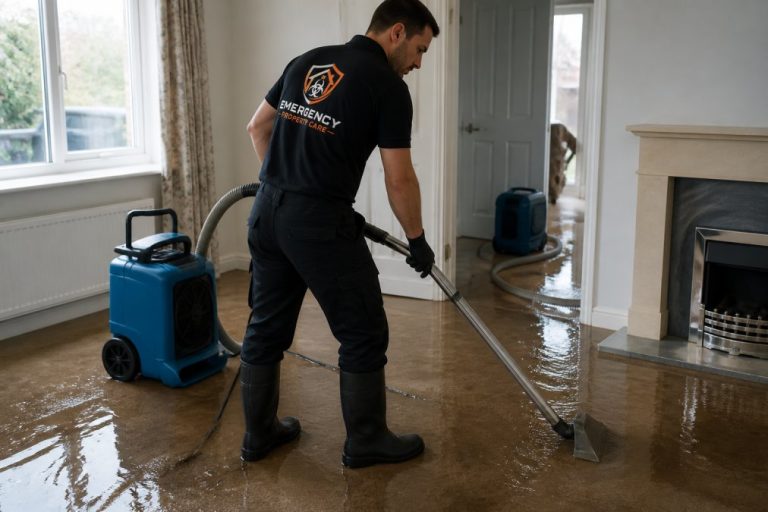
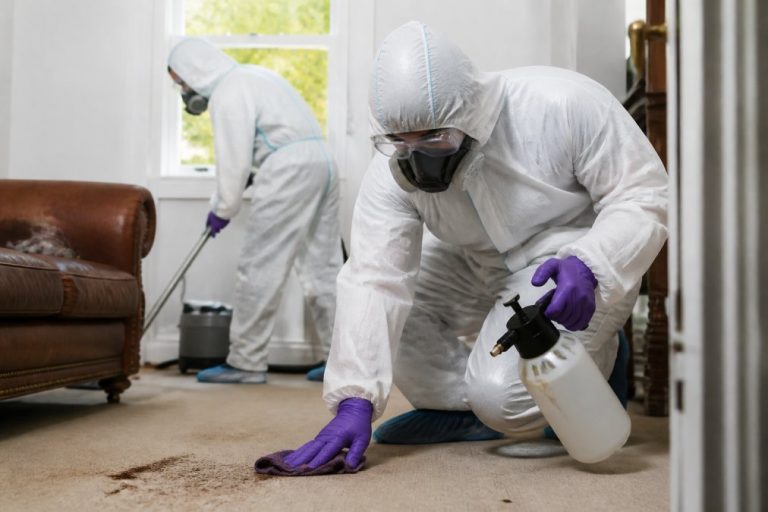
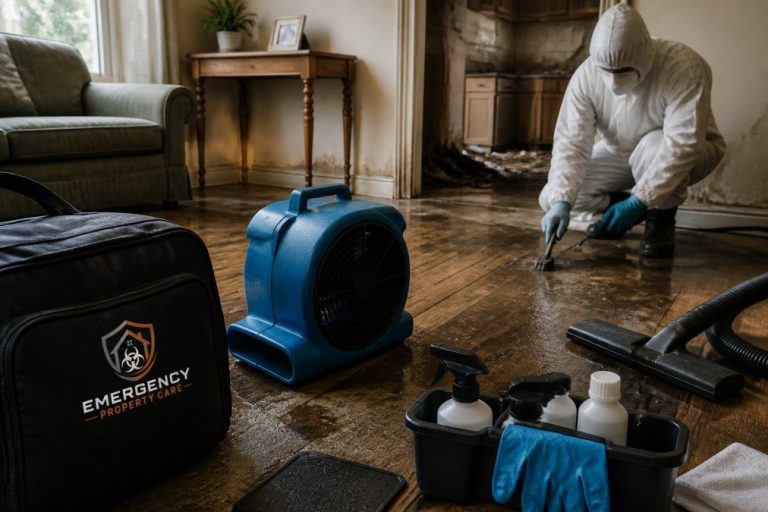
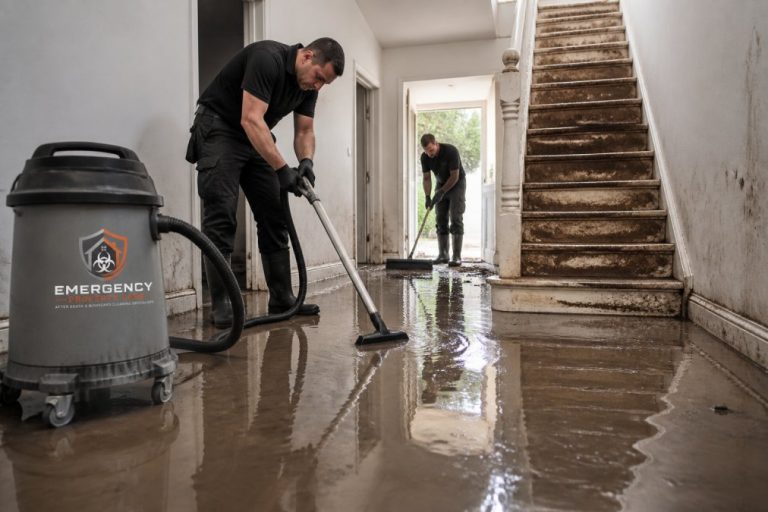
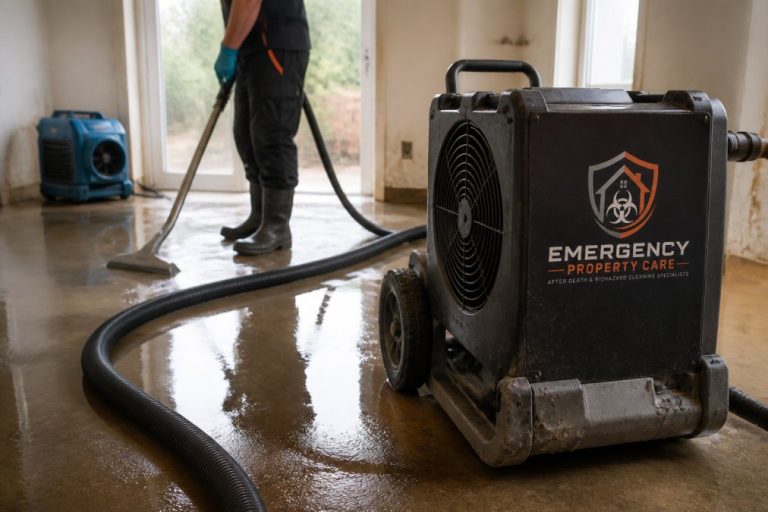
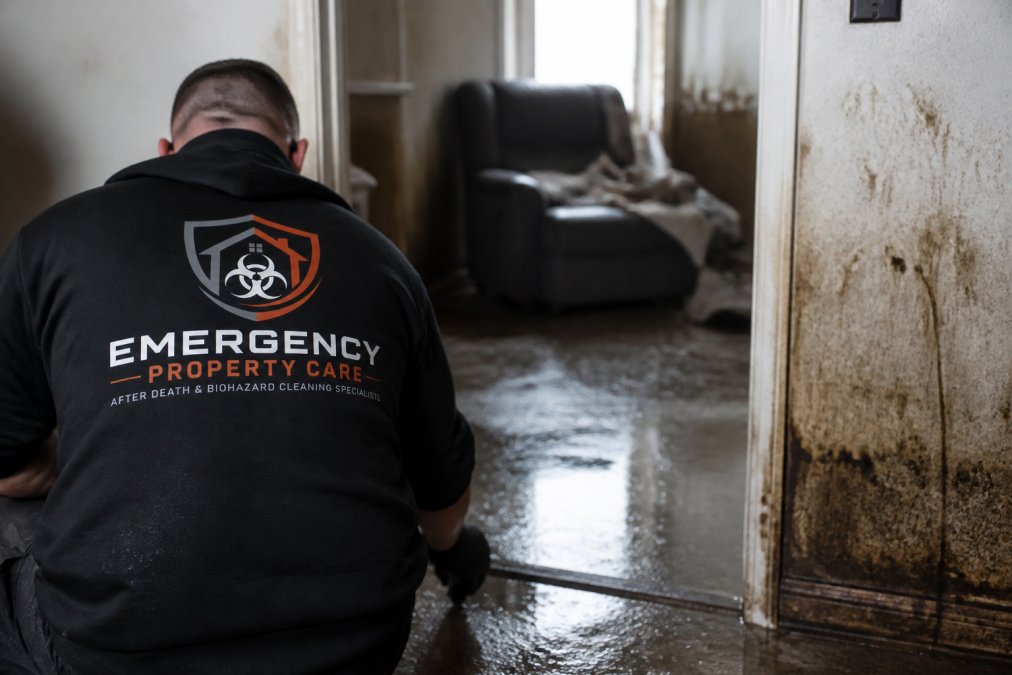
TrustedCare provides emergency restoration services for landlords across England, Scotland, and Wales, handling water extraction and structural drying after flooding, biohazard remediation, sewage cleanup and decontamination, fire damage restoration, and mould remediation. Professional teams conduct moisture mapping to identify hidden water damage, apply specialist dehumidification equipment to prevent secondary damage, and document every step for insurance claim purposes.
Keep a detailed inventory of your rental property’s condition before any emergency occurs. Photographs and written descriptions create a baseline for insurance claims and help restoration teams prioritise work effectively.
Emergency Property Restoration Response Times: What to Expect
The speed of response directly determines the extent of secondary damage. Water that sits for 24 hours begins compromising structural integrity. Mould spores proliferate within 48 hours in damp conditions. Fire damage deteriorates further when exposed to weather without proper containment.
Professional emergency restoration services operate 24/7, meaning technicians are deployed immediately, not scheduled for the next business day. The difference between a two-hour response and a 24-hour delay can determine whether a property recovers fully or faces permanent structural compromise.
Response times vary based on location and current demand. Urban areas typically see faster deployment than rural regions. Establishing a relationship with a reliable restoration provider before an emergency occurs ensures you’re already in their system when crisis strikes.
TrustedCare maintains rapid-deployment teams across its service regions, with emergency restoration services for landlords designed to arrive within hours of your call. The initial assessment determines the scope of work, equipment required, and estimated timeline for property recovery.
Do not delay calling for professional help while attempting DIY cleanup. Water damage worsens exponentially in the first 48 hours. Improper cleanup can spread contamination, invalidate insurance claims, and create liability exposure.
Landlord Emergency Repair Obligations Under UK Law
Landlords in the UK operate under specific legal obligations regarding property condition and habitability. Understanding these obligations is essential for responding appropriately to emergency damage.
Statutory Duties and the Housing Act 2004
The Housing Act 2004 establishes that landlords must maintain rental properties in a state of repair that makes them fit for human habitation. This duty applies to all rental properties regardless of lease terms.
Fit for human habitation means the property must have:
- Structural integrity and protection from weather and damp
- Safe and functional electrical systems
- Safe and functional heating and hot water systems
- Freedom from hazardous conditions including mould, pest infestation, and contamination
- Adequate ventilation and natural light
- Safe drainage and sanitation
When emergency damage occurs, the landlord’s duty to repair is triggered immediately. The property cannot legally remain occupied if it presents a hazard to tenant health or safety.
Failure to maintain fit-for-habitation standards can result in:
- Local authority enforcement notices requiring remediation within specified timeframes
- Rent repayment orders allowing tenants to recover up to 12 months of rent paid during uninhabitable periods
- Prosecution and fines for serious breaches
- Tenant rights to terminate the tenancy without notice
The Housing Health and Safety Rating System (HHSRS)
Local authorities use the HHSRS to assess whether properties meet statutory standards. Emergency damage typically creates Category 1 hazards:
Damp and mould growth: Flooding that isn’t remediated within 48 hours begins supporting mould growth. Mould is a Category 1 hazard because it causes respiratory illness, particularly in children and people with existing respiratory conditions. Flood Damage Cleaning and Drying services address water damage before mould development becomes a concern.
Excess cold: A property without functioning heating during winter months is a Category 1 hazard. If emergency damage disables the heating system, the landlord must restore heating or provide alternative accommodation immediately.
Fire safety: A property with fire damage, blocked escape routes, or non-functional fire safety equipment is a Category 1 hazard. Fire Damage Cleaning services restore properties affected by fire, removing soot, smoke residue, and structural damage.
Contamination: Sewage backup, biohazard contamination, or chemical spills create Category 1 hazards requiring professional decontamination and certification.
Structural defects: Flooding or fire damage that compromises structural integrity creates a Category 1 hazard. The property is unsafe for occupancy until structural repairs are certified.
When a local authority identifies a Category 1 hazard, they issue an enforcement notice requiring remediation within 7-28 days depending on severity. If the landlord fails to comply, the local authority can carry out remediation work and recover all costs from the landlord, issue a prohibition notice preventing the property from being let, or prosecute the landlord.
Health and Safety at Work Act 1974 and Environmental Protection Act 1990
The Health and Safety at Work etc. Act 1974 imposes a general duty on landlords to ensure properties are safe. Mould growth, structural damage, contaminated water, and fire damage all create statutory health and safety risks.
The Environmental Protection Act 1990 gives local authorities powers to take action on contaminated properties, particularly in cases of sewage backup or biohazard incidents.
Practical Compliance Steps After Emergency Damage
Document immediate action: Record the time you called the emergency restoration service and the name of the dispatcher. This documentation demonstrates that you acted promptly.
Engage professional assessment: Do not attempt to assess structural damage, contamination, or mould yourself. Professional restoration teams provide formal damage assessments that document hazard severity and remediation requirements.
Communicate with tenants in writing: Provide written notice of the damage, the remediation plan, and the timeline for restoration. This written communication demonstrates good faith and protects you if disputes arise.
Obtain professional certification: Once remediation is complete, request formal certification from the restoration company confirming that hazards have been removed and the property is safe for occupancy.
Maintain records for inspection: Keep all documentation, damage assessments, remediation reports, invoices, certifications, and tenant communications, for at least 6 years.
Delaying professional remediation after emergency damage is a breach of statutory duty that can result in enforcement action, fines, and rent repayment orders. The cost of immediate professional response is far lower than the cost of local authority enforcement or tenant claims.
How to Prepare Your Property for Flood Restoration
Preparation before water damage occurs and immediate actions after flooding begins both influence the final outcome significantly.
Preventative Maintenance to Reduce Emergency Risk
Many flood and water emergencies are preventable through routine maintenance. Burst pipes, boiler failures, and roof leaks account for the majority of water damage claims in rental properties.
Pipe and plumbing inspections: Have water pipes inspected annually, particularly in older properties. Ensure stop-taps are accessible and clearly labelled. Consider installing water leak detection systems in high-risk areas (under sinks, near boilers, in loft spaces).
Boiler servicing: Annual boiler servicing by a Gas Safe registered engineer prevents failures that often occur during winter when demand is highest.
Roof and gutter maintenance: Blocked gutters cause water to back up and penetrate walls and ceilings. Clear gutters twice yearly, particularly in autumn. Inspect roof condition annually and address missing tiles or flashing issues.
Tenant communication on maintenance: Ensure tenants know how to report leaks, drips, or water stains immediately. Provide written instructions on how to shut off the water supply and when to call emergency services.
Immediate Actions Before Professional Arrival
Stop the water source if safe: If a pipe has burst, turn off the main water supply immediately. If the flooding is from external sources, move to higher ground.
Turn off electricity to affected areas: Switch off the circuit breaker for flooded rooms to prevent electrical hazards.
Do not enter contaminated water: Sewage-contaminated water, floodwater from rivers or drains, or water of unknown origin presents biohazard risks.
Open windows and doors for ventilation: If the water source is clean, increase air circulation to slow mould development.
Move valuables to higher ground: If time permits and it’s safe, move important documents, electronics, and tenant belongings to upper floors.
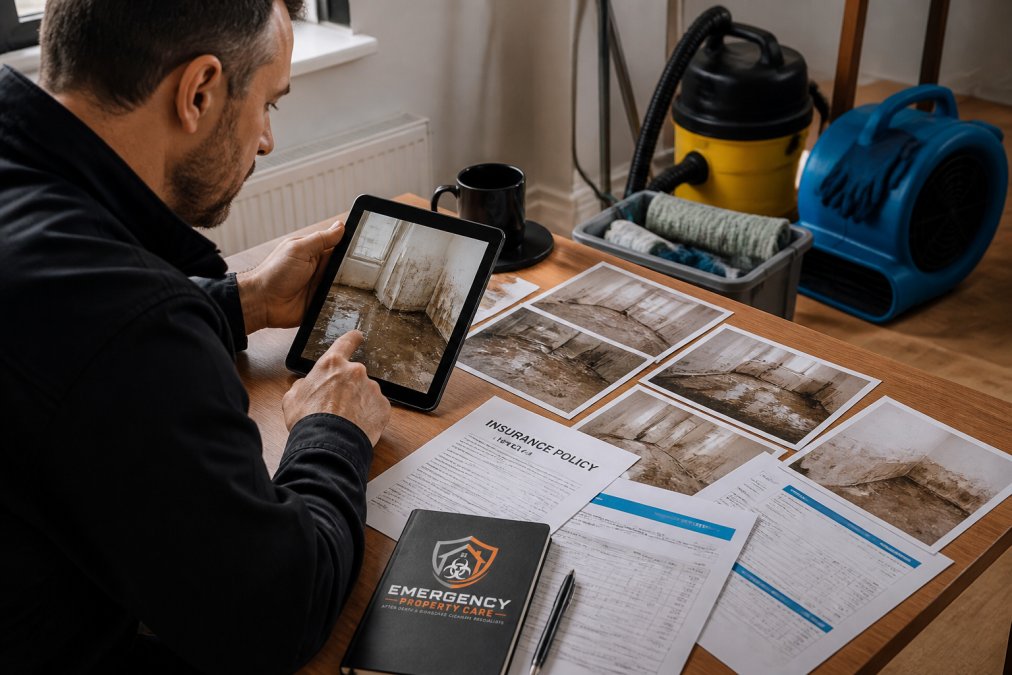
Document the damage visually: Photograph standing water, wet materials, and affected areas from multiple angles before any cleanup begins. Include water lines on walls and structural elements.
Contact your insurance provider immediately: Report the incident as soon as safely possible and ask about emergency mitigation coverage.
Landlord-Specific Documentation Checklist for Insurance Claims
Pre-damage baseline documentation:
- Photograph all rooms, fixtures, flooring, and finishes in normal condition
- Create a written inventory of fixtures and permanent fittings
- Store baseline photos and inventory in cloud storage separate from the property
Immediate post-damage documentation:
- Photograph all affected areas before any cleanup or removal of damaged materials
- Include water lines on walls, wet carpeting, damaged furniture, and affected structural elements
- Record the date, time, and weather conditions when damage occurred
Timeline and communication record:
- Record the exact time you discovered or were notified of the damage
- Document the time you called your insurance provider and the name of the person you spoke with
- Record the time you called the emergency restoration service
- Keep a log of all communications with the insurance adjuster
Professional documentation to request:
- Ask the restoration company for a formal damage assessment report
- Request itemised invoices that break down labour, equipment, materials, and disposal costs
- Ask for moisture mapping reports if structural drying was performed
- Request before-and-after photographs taken by the restoration team
- Ask for a certificate of completion confirming the property is safe for occupancy
Tenant communication documentation:
- Keep copies of all written communication with tenants about the damage and restoration timeline
- Document any alternative accommodation you provided or offered
- Keep records of rent adjustments or compensation offered during restoration
Insurance claim submission:
- Compile all photographs into a single folder with clear labelling
- Attach the professional restoration report and itemised invoices
- Include your timeline of events and communication records
- Submit this package to your insurance adjuster with a cover letter summarising the incident
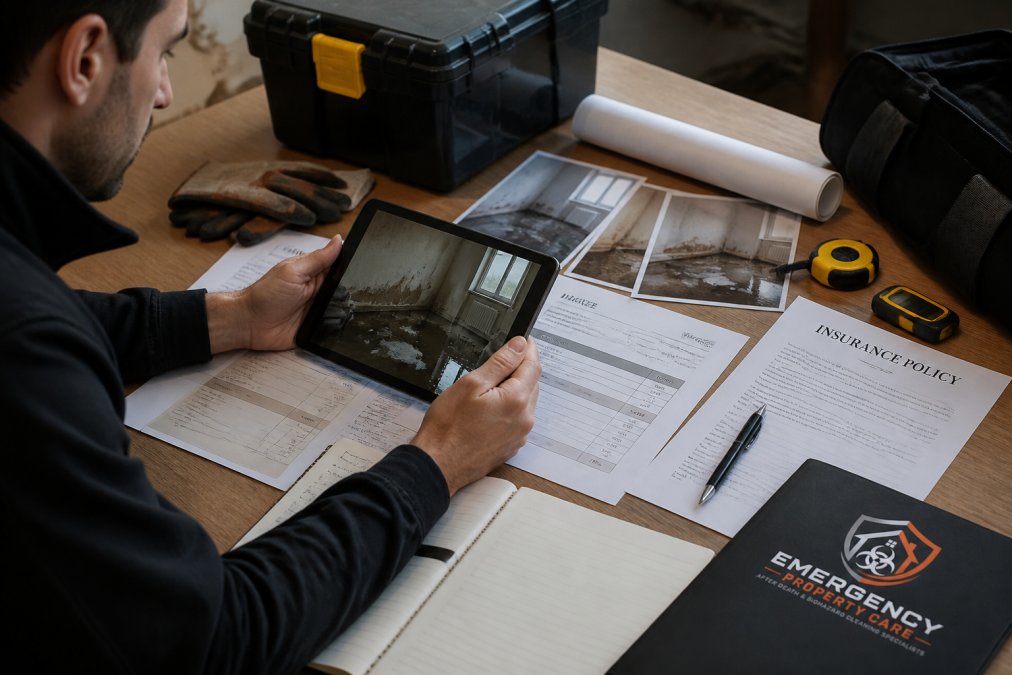
Structured documentation created before an emergency occurs and executed immediately after damage is discovered dramatically improves insurance claim outcomes and reduces disputes over claim amounts.
Insurance Claims and Professional Restoration Support
Professional restoration providers serve as critical partners in the insurance claim process. They understand what adjusters require, document work in claim-friendly formats, and communicate directly with insurance representatives.
Many landlord policies include coverage for emergency mitigation services, the immediate steps taken to prevent further damage. Professional restoration teams can work directly with insurers on a “loss payee” basis, meaning the insurer pays the restoration company directly rather than reimbursing the landlord after payment.
This arrangement benefits landlords significantly. Restoration work begins immediately without waiting for claim approval. The landlord isn’t required to front costs for emergency services. The restoration company has direct communication with the adjuster about scope and progress.
TrustedCare works with insurance adjusters regularly, understanding the documentation and communication standards that support claim approval. The restoration team provides photographic evidence of damage before work begins, detailed invoices showing all work performed, and a final report confirming the property’s restored condition.
Professional restoration companies that work directly with insurers eliminate the landlord’s financial burden during the emergency phase and ensure the claim process moves forward without delay.
Why 24/7 Emergency Response Matters for Landlords
Emergencies don’t wait for business hours. Water damage at 2 AM on a Sunday causes the same structural compromise as damage at 10 AM on a Tuesday. A landlord’s ability to respond immediately determines whether the property can be salvaged or whether losses become catastrophic.
24/7 emergency response means technicians are on call continuously. When you call, you’re reaching an active response team, not an answering service. This distinction is critical during the first hours when damage is still developing.
The cost of delay is substantial. Water damage doubles in severity within 48 hours if left unaddressed. Mould begins active growth within 72 hours. Fire damage deteriorates further as soot and smoke residue settle and react with moisture and air.
Beyond property damage, tenant safety is at stake. A flooded property is uninhabitable. A property with active mould growth creates health risks. A property with sewage contamination is a biohazard. Landlords cannot legally keep tenants in these conditions, meaning emergency response directly affects the landlord’s ability to maintain tenant occupancy and rental income.
Professional emergency restoration services for landlords that operate 24/7 provide peace of mind that help is available when needed. TrustedCare’s 24/7 availability across England, Scotland, and Wales means landlords can initiate response immediately, regardless of location or time.
The alternative, attempting DIY cleanup or waiting for standard business hours, typically results in worse outcomes, higher total costs, and more complex insurance claims.
Emergency situations demand immediate action and professional expertise. When flood damage, fire damage, or contamination affects your rental property, the first hours determine the final outcome. TrustedCare provides emergency restoration services for landlords with 24/7 response across England, Scotland, and Wales. Our teams conduct rapid hazard assessment, deploy specialist drying and decontamination equipment, and document every step for insurance purposes. Contact TrustedCare immediately when emergency damage occurs; rapid professional response protects your property, your tenants, and your investment.
Frequently Asked Questions
Q: What is classed as an emergency repair for landlords?
A: An emergency repair is any fault that makes a property unsafe or uninhabitable. This includes burst pipes, flooding, structural damage, gas leaks, loss of heating or hot water, electrical hazards, and contamination from sewage or biohazards. Under the Housing Health and Safety Rating System (HHSRS), landlords must address these hazards urgently. Emergency restoration services help you respond within the required timeframe and restore properties to a safe, usable state.
Q: How quickly can emergency restoration services actually respond to a flood or fire?
A: Professional emergency restoration teams operate 24/7 and aim to deploy technicians within hours of your call, even on weekends and bank holidays. Rapid response is critical because delays allow moisture to penetrate structural materials, mould to develop, and damage to worsen. The faster mitigation begins, the more of your property can be salvaged and the lower your overall restoration costs and insurance claim timeline.
Q: Do landlords have to pay for emergency restoration, or does insurance cover it?
A: Landlord buildings insurance typically covers emergency restoration for damage caused by insured events like flooding, fire, or burst pipes. However, you must act quickly to mitigate further damage, delaying professional response can void your claim. Professional restoration teams work directly with insurers and provide the documentation loss adjusters need. You should contact your insurer immediately and arrange professional assessment to protect your claim.
Q: What should I do immediately after discovering flood or fire damage to my rental property?
A: First, ensure tenant safety by evacuating if necessary and turning off utilities if safe to do so. Contact your emergency restoration service and your insurer immediately, document everything with photographs before professionals arrive. Remove portable items from affected areas if safe, and prevent further water ingress by opening windows or doors for ventilation. Do not attempt cleanup yourself; professional mitigation prevents contamination risks and ensures your insurance claim is valid.
TrustedCare Copyrights 2026

TrustedCare Editorial Team publishes UK guidance on specialist cleaning and biohazard remediation, including after-death cleaning, flood restoration and contamination control. Content is written for homeowners, landlords and housing providers seeking clear, practical information.