Do Restoration Companies Work with Insurance? 2026 Guide
Flood • Fire • Contamination
Insurance Claim Support for Property Cleaning and Restoration
Property restoration contractors can provide inspections, photographs, scopes of work and practical cleaning or drying services. However, the insurer—not the contractor—decides whether damage is covered and how much it will pay.
Do Restoration Companies Work With Insurance?
Yes, restoration companies can support work connected with an insurance claim. They may assess the property, record visible damage, prepare a proposed scope, provide quotations and carry out authorised cleaning, drying or restoration work.
The exact arrangement varies. An insurer may appoint a contractor from its own network, or the policyholder may approach an independent company. A contractor can provide information to an insurer or loss adjuster when authorised, but cannot confirm policy coverage or guarantee that an invoice will be paid.
Your insurance agreement is between you and your insurer. Your contract with an independently appointed restoration company may be separate. Establish who is responsible for payment, which costs have been authorised and whether you could remain liable for any shortfall.
Contents
How the Relationship Works
A property insurance claim can involve several people. Understanding their separate responsibilities helps prevent confusion about approvals, payment and the scope of work.
The policyholder
Reports the incident, checks the policy requirements, provides accurate information and agrees any contract for independently commissioned work.
The insurer or loss adjuster
Investigates the claim, considers policy coverage and decides which costs it is prepared to authorise or reimburse.
The restoration contractor
Assesses the work required, prepares a quotation or scope and performs the services agreed in its contract. It does not decide insurance coverage.
Not every claim involves a loss adjuster, and not every contractor communicates directly with the insurer. Ask who will exchange documents, who can approve changes and who will receive the invoice.
The Insurance Restoration Process
Every policy and incident is different, but the following sequence is common in UK property claims:
1Make the property safe
Follow emergency-service instructions and do not enter areas containing unsafe electrics, sewage, chemicals, fire damage or unstable materials.
2Notify the insurer
Report the incident promptly, obtain a claim reference and ask what immediate action the insurer wants you to take.
3Record the damage
If it is safe, take wide and close-up photographs before moving, cleaning or disposing of affected items.
4Confirm emergency authority
Ask which work can begin immediately and whether the insurer has a spending limit or appointed supplier.
5Obtain an assessment
The contractor identifies affected areas and proposes the cleaning, drying or restoration work required.
6Agree the payment route
Confirm what has been authorised, who receives the invoice and who is responsible for costs the insurer does not approve.
7Keep completion records
Retain reports, photographs, readings, invoices and any certificates supplied for the completed service.
GOV.UK flood guidance advises contacting the insurer, photographing the damage and speaking to the insurer before moving or throwing away affected items.
How to Document Property Damage
Good documentation helps the insurer understand what happened and helps the contractor explain the proposed work. Where it is safe, create a record before cleaning begins.
- Take wide photographs showing every affected area.
- Take close-up photographs of damaged surfaces, contents and fittings.
- Record water lines, staining, soot deposits or visible contamination.
- List damaged contents and their approximate age and condition.
- Keep receipts for emergency expenditure and replacement items.
- Save claim references, quotations and written approvals.
- Keep a dated record of important conversations.
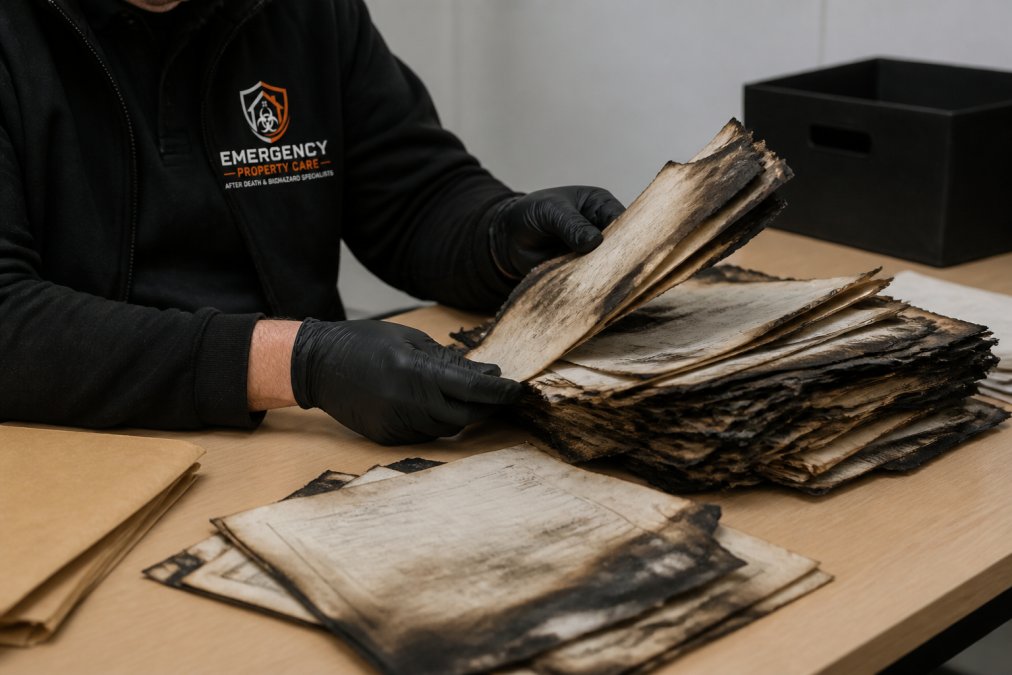
Read our guides to documenting fire damage and flood damage insurance claims.
Should Emergency Work Begin Before Approval?
Some incidents require immediate action to protect people or prevent conditions from becoming worse. This may include isolating a water supply, emergency water extraction, securing an opening or preventing access to contamination.
Contact the insurer as soon as possible and ask what it authorises. If urgent work must begin before full approval, keep the work proportionate, photograph the conditions and retain all records. Starting work does not automatically mean the insurer will reimburse every cost.
Safety comes first
Do not enter standing water where electricity may be present. Do not handle sewage, chemical contamination or fire-damaged materials without suitable controls.
Who Pays the Restoration Contractor?
There is no single payment method for every restoration claim. Confirm the arrangement in writing before substantial work begins.
Insurer-appointed contractor
The insurer may instruct a supplier and settle approved costs under its own arrangement. The policyholder may still be responsible for the excess or excluded work.
Policyholder-appointed contractor
The customer may pay the restoration company and claim the approved amount from the insurer. Reimbursement remains subject to the policy.
Agreed direct payment
An insurer may sometimes agree to pay an independent contractor directly. This must be confirmed before assuming the insurer will settle the invoice.
Choosing a Restoration Company
Some insurers offer an appointed contractor, while some policyholders prefer an independent specialist. Ask the insurer whether choosing another contractor changes the amount paid or any guarantee attached to the work.
Before signing, check:
- The contractor’s identity, address and contact details.
- Evidence of suitable insurance and relevant experience.
- A clear written scope and explanation of exclusions.
- The price, deposit and payment stages.
- Who is responsible for insurer payment shortfalls.
- How additional work must be authorised.
- Cancellation and complaint procedures.
Contract warning signs
Be cautious about pressure to sign immediately, vague costs, blank documents, unauthorised additional work or promises that an insurance claim is guaranteed to be accepted.
What If the Claim Is Delayed or Disputed?
Ask the insurer for a written explanation identifying the policy term or assessment behind its decision. Keep all correspondence and provide any missing photographs, estimates or reports promptly.
The FCA claims-handling rules require insurers to handle claims promptly and fairly and provide reasonable guidance to policyholders.
If the matter remains unresolved, use the insurer’s formal complaints procedure. The Financial Ombudsman Service explains how and when an insurance complaint can be referred to it.
How TrustedCare Can Help
TrustedCare provides specialist property cleaning, contamination cleaning and controlled drying services. Depending on the incident and agreed scope, support may include:
- Assessment of accessible affected areas.
- Photographs and a description of proposed work.
- A quotation or scope for agreed services.
- Moisture monitoring or service records where relevant.
- Communication with the insurer or loss adjuster when authorised.
- Waste or completion documentation where included.
- A Certificate of Sanitisation where applicable to agreed sanitisation or decontamination work.
TrustedCare cannot determine policy coverage or guarantee that an insurer will pay a claim or invoice.
Frequently Asked Questions
Do restoration companies work directly with insurers?
Some do when authorised. A contractor may provide quotations, photographs, reports and invoices, but the insurer decides coverage and settlement.
Do I have to use the insurer’s contractor?
This depends on the policy and settlement arrangement. Ask whether appointing an independent company affects the payment or repair guarantee.
Will the insurer pay TrustedCare directly?
Payment must be agreed for the individual job. Do not assume the insurer will settle the contractor’s invoice unless direct payment has been confirmed.
Can emergency cleaning start before an inspection?
Urgent safety or damage-limitation work may be necessary, but contact the insurer quickly and record the conditions and costs.
Does a contractor guarantee claim acceptance?
No. Only the insurer can decide whether the incident is covered. Be cautious of any contractor guaranteeing acceptance or full reimbursement.
Need Help With Property Damage?
Tell TrustedCare the property postcode, what happened, which areas are affected and whether an insurance claim has been opened.

TrustedCare Editorial Team publishes UK guidance on specialist cleaning and biohazard remediation, including after-death cleaning, flood restoration and contamination control. Content is written for homeowners, landlords and housing providers seeking clear, practical information.