Benefits of Hiring Local Trauma Cleaners in the UK
Benefits of Hiring Local Trauma Cleaners in the UK
Local specialist support can shorten the route from first assessment to safe, documented decontamination after a death, traumatic incident or biohazard event.
Discreet 24/7 response across England, Scotland and Wales
Hiring an experienced local trauma-cleaning team can mean quicker assessment, safer containment, appropriate decontamination, controlled waste handling and clearer records for the property owner, landlord or insurer. Availability and arrival time still depend on location, access and the nature of the incident.
Last updated: 20 September 2026
Why Local Trauma Cleaners Can Respond Faster
When biological contamination affects a property, early control matters. A local or regionally deployed team has less distance to cover and usually has better knowledge of access routes, local property types and nearby disposal arrangements. This can help the provider organise an assessment and explain the next safe steps sooner.
“Local” should not be confused with “general cleaner”. The important combination is proximity and specialist capability. Before booking, confirm that the company routinely handles the type of contamination present and can supply the documentation appropriate to the job.
Quicker assessment
Shorter travel distance can make it easier to assess urgent incidents and plan containment.
Clear coordination
One specialist point of contact can coordinate access, cleaning, waste and supporting records.
Relevant experience
Teams familiar with local homes, rentals and managed properties can anticipate common access issues.
Will the team that assesses the property also carry out or directly supervise the decontamination? A clear answer helps avoid gaps between assessment and delivery.
Trauma Cleaning vs Standard Deep Cleaning
Trauma cleaning deals with biological contamination such as blood, bodily fluids and decomposition residue after a death, accident or serious incident. Standard deep cleaning deals with ordinary dirt, grease, dust and general hygiene. The equipment, risk controls, products, waste route and evidence required can be very different.
| Factor | Standard deep cleaning | Specialist trauma cleaning |
|---|---|---|
| Primary purpose | Remove everyday dirt and grime | Control and remove biological contamination |
| Protective measures | Basic task-appropriate protection | Risk-assessed PPE, containment and controlled working methods |
| Affected materials | Usually surface cleaning | May include carpets, underlay, flooring, furnishings and other porous materials |
| Waste | Usually ordinary commercial or household waste | Classified, packaged, transported and disposed of according to the waste type |
| Records | Often a completion checklist | May include photographs, scope, waste records and post-cleaning evidence |
Avoid domestic vacuuming, pressure washing or unplanned removal of contaminated materials. These actions can spread residue, increase exposure and remove evidence an insurer or responsible party may need.
UK Compliance and Controlled Waste Handling
There is no single UK law called the “trauma-cleaning regulation”. Instead, several duties may apply depending on the property, the people carrying out the work, the substances present and how waste is classified.
A professional provider should be able to explain its site-specific risk assessment, control measures, PPE, cleaning method and waste route. Relevant requirements may include the Control of Substances Hazardous to Health Regulations 2002, workplace health-and-safety duties and the waste duty of care.
What good waste management looks like
- Waste is assessed and classified according to what it contains.
- Suitable containers and labels are used where required.
- A registered carrier is used when the law requires one.
- The receiving facility is authorised for that waste stream.
- Transfer or consignment documentation is retained where applicable.
- The customer receives relevant completion records.
Not every item from a trauma scene is automatically hazardous or infectious waste. Classification depends on the material and contamination present. A competent provider should make that decision as part of the job rather than applying one label to everything.
Need a Confidential Assessment?
Tell TrustedCare the property location, type of incident, areas affected and any access or insurer requirements.
Protection From Pathogens and Cross-Contamination
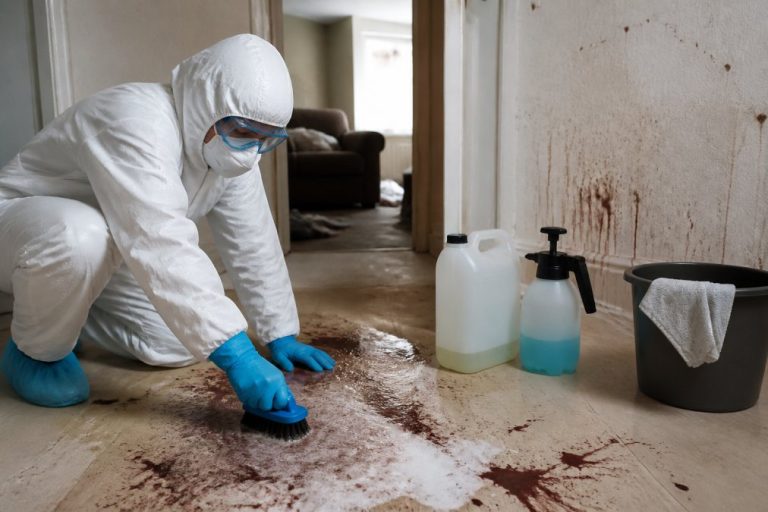
Contamination is not always limited to the visible mark. Fluids may penetrate seams, underlay, subfloors, skirting, grout or furniture. Footwear, tools and unsuitable cleaning equipment can then transfer residue beyond the original area.
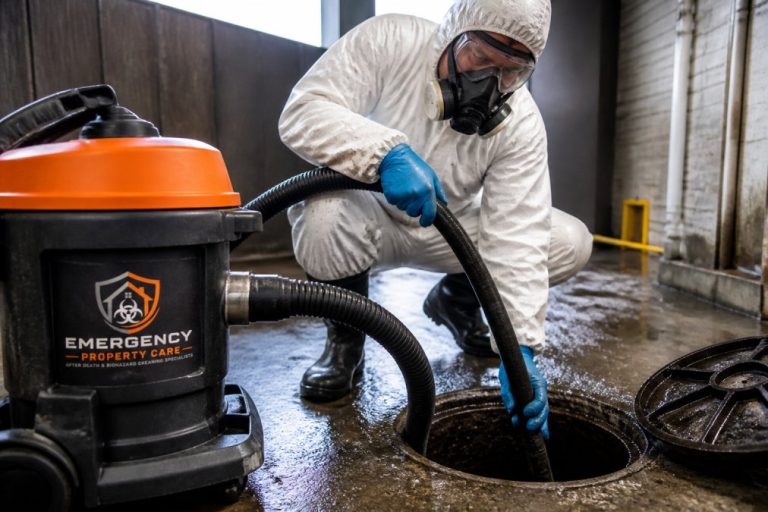
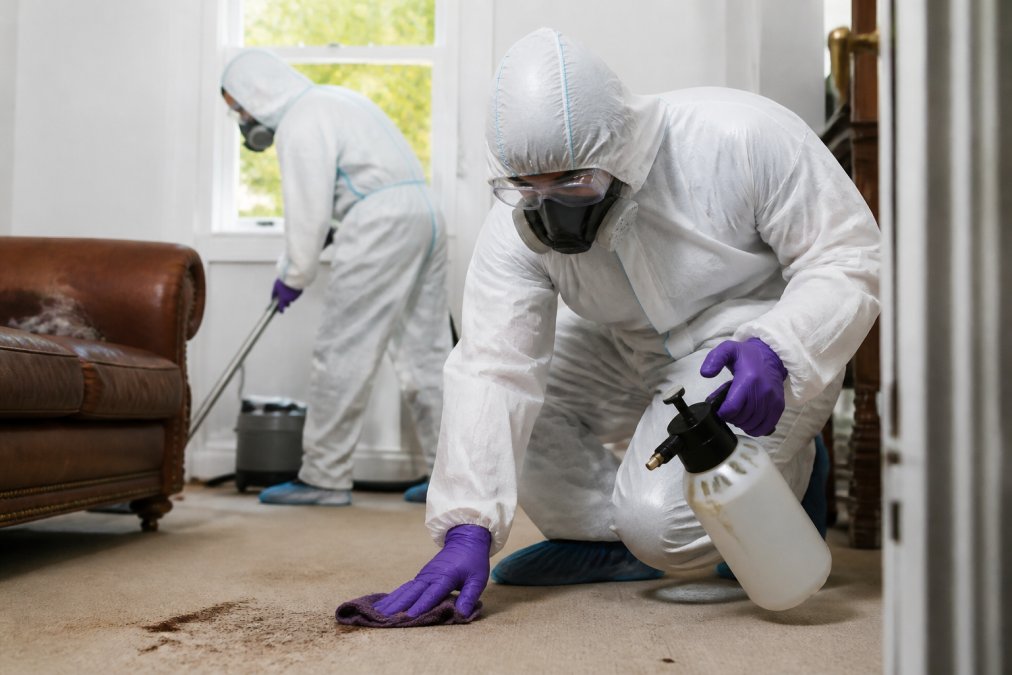
Specialist teams use controlled entry and exit, appropriate PPE, segregated equipment, containment and a planned clean-to-dirty workflow. Materials that cannot be safely retained may need agreed removal. Odour treatment should follow source removal and cleaning; fragrance alone does not resolve contamination.
Discretion, Privacy and a Trauma-Informed Approach
A death or traumatic incident is intensely private. Good trauma cleaners communicate calmly, avoid unnecessary detail, protect personal information and work with sensitivity around relatives, occupants and neighbours. Low-profile attendance may be available where operationally practical, but this should be discussed before arrival rather than assumed.
The person arranging the work should receive a clear explanation of access, what may need to be removed, what can potentially be retained and who will approve any change to the agreed scope.
Support With Insurance Claims and Property Management
Some home, landlord or commercial policies may cover eligible cleaning or property damage following a qualifying incident. Cover depends on the policy wording, exclusions, excess, cause of loss and insurer approval. Ask the insurer before authorising non-emergency disposal or major strip-out whenever circumstances allow.
A specialist cleaner can support the process by producing useful evidence, which may include:
- dated photographs taken before work or removal;
- a written scope and description of affected materials;
- cleaning and removal records;
- waste documentation where applicable;
- invoices that separate the principal stages of work; and
- post-cleaning or moisture records where relevant.
These records can help an insurer, loss adjuster, landlord, managing agent or housing provider understand what happened and why particular work was recommended. They do not guarantee that a claim will be accepted.
How Specialist Cleaning Helps Protect the Property
Incomplete cleaning can allow odour or contamination to remain in porous materials and concealed areas. That may cause repeat complaints, delay reoccupation and create additional repair costs. Proper assessment helps define the affected area before work begins and reduces the risk of cleaning only what is immediately visible.
Specialist remediation can help protect the property by:
- identifying the source and likely spread of contamination;
- separating salvageable items from materials requiring removal;
- cleaning in a sequence designed to limit transfer;
- treating odour after source contamination is addressed;
- recording the work completed; and
- highlighting repairs or reinstatement that fall outside cleaning.
How to Choose a Local Trauma-Cleaning Company
Ask direct questions and expect direct answers. A reputable provider should explain limitations as clearly as capabilities.
- Confirm relevant experience. Ask whether the team routinely handles the incident type involved.
- Check insurance. Request evidence of suitable public and employers’ liability cover.
- Ask about waste. Confirm who carries it, where it goes and which records will be supplied.
- Request a written scope. It should describe inclusions, exclusions, likely removals and pricing assumptions.
- Clarify attendance. Ask for a realistic mobilisation estimate based on the postcode and access.
- Understand verification. Ask how the team decides that cleaning is complete and what evidence you receive.
Establish who can authorise access and work before attendance. Keep the quotation, approval trail, photographs, waste records and completion information together in the property file.
Frequently Asked Questions
What does a trauma cleaner do?
A trauma cleaner assesses, contains, cleans and decontaminates affected areas after incidents involving blood, bodily fluids, decomposition or other biological contamination. The work may also include controlled removal, odour treatment, waste handling and completion records.
Why is specialist training required?
The work can involve exposure risks, porous materials, concealed contamination and waste that requires controlled handling. Training supports safer risk assessment, PPE selection, containment, cleaning and disposal.
Are local trauma cleaners always faster?
They may have a shorter journey, but no responsible provider should promise a fixed arrival time without checking the postcode, team availability, traffic, access and incident details. Confirm the expected attendance time when booking.
Can ordinary cleaners handle a trauma scene?
Routine cleaners may not have the risk controls, PPE, equipment, waste arrangements or relevant experience required. Use a provider that can demonstrate competence for the specific contamination involved.
Can trauma cleaning be covered by insurance?
Possibly. It depends on the cause of loss and the individual policy. Contact the insurer promptly and ask what evidence or approval is required before major removal work begins.
What should I do before the team arrives?
Keep people and pets away, do not touch or clean the area, preserve any relevant evidence and follow police, coroner, landlord or insurer instructions. Tell the provider about access restrictions and any known hazards.
Arrange a Trauma-Cleaning Assessment
Contact TrustedCare for discreet specialist support for homes, rental properties, businesses and managed accommodation across England, Scotland and Wales.

TrustedCare Editorial Team publishes UK guidance on specialist cleaning and biohazard remediation, including after-death cleaning, flood restoration and contamination control. Content is written for homeowners, landlords and housing providers seeking clear, practical information.