How to Choose Professional Odor Removal Insurance Coverage
UK Customer Guide
Professional Odour Removal Insurance: What Customers Should Check
Insurance is only one part of choosing an odour-removal contractor. Learn which documents to request, what the wording may mean and why the treatment method must match the contractor’s declared activities.
Odour-removal and specialist-cleaning assistance across England, Scotland and Wales. The treatment scope and availability are confirmed when you enquire.
A contractor saying that they are “fully insured” does not tell you which activities, treatment methods or types of damage are covered. Before specialist odour work begins, ask for evidence that relates to the business, the job and the proposed method.
This matters because professional odour removal can involve cleaning chemicals, contaminated materials, air-treatment equipment, fogging or other controlled processes. The correct approach depends on the source of the smell. Insurance cannot make an unsuitable method safe, and it does not guarantee that an odour can be removed without addressing its source.
Ask for a current insurance certificate, check that the insured business name matches the contractor, confirm the policy dates and limits, and ask whether the proposed odour-removal activities are included. For an unusual treatment, request written confirmation rather than relying on “it should be covered.”
Why Insurance Checks Matter for Odour-Removal Work
Odour removal ranges from source cleaning and disposal of contaminated materials to specialist treatment of smoke, decomposition, sewage, mould-related smells or persistent organic contamination. Each job can present a different combination of property, health, chemical and equipment risks.
A customer may need to know whether the contractor’s insurance can respond if, for example:
- a visitor slips in the controlled work area;
- a treatment product marks or discolours a surface;
- equipment damages flooring, doors or furnishings;
- work in a flat allegedly affects an adjoining property;
- an employee is injured during the work; or
- professional advice or a specified treatment is alleged to have caused financial loss.
Whether a policy would actually respond depends on its wording, the declared activities, the cause of the loss, exclusions, conditions, limits and excess. A certificate confirms that a policy exists for a stated period; it does not reproduce every term or prove that every possible claim is covered.
The Main Types of Business Insurance
Public liability
May respond to certain claims by clients or members of the public for injury or property damage arising from the business’s work. It is not generally compulsory by law, although clients and contracts often require it.
Employers’ liability
Covers qualifying claims from employees for work-related injury or illness. Most UK businesses employing staff must hold this cover, subject to limited exemptions.
Professional indemnity
May cover certain claims arising from professional advice, design or an alleged professional error. It is not generally compulsory for cleaning contractors and must not be assumed to cover faulty workmanship.
Tools and equipment
Can protect the contractor’s own or hired equipment against specified loss or damage. This does not normally protect the customer’s property.
Environmental or pollution liability
May be relevant where work could involve contamination or pollution. Ordinary public-liability wording may restrict or exclude some pollution-related claims.
Vehicle and treatment risks
Commercial vehicles, products, hired equipment and specialist processes may require separate sections, endorsements or policies depending on how the business operates.
Employers’ liability insurance is legally required for most UK employers and must provide at least £5 million of cover. Public liability and professional indemnity are not automatically compulsory for a general cleaning contractor, although a customer, landlord, insurer or commercial contract may require them.
Government guidance explains the main employers’ liability insurance requirements and exemptions. For any other policy, the cover must be checked against the actual wording rather than inferred from the policy name.
What to Check on the Insurance Evidence
Ask for current evidence before instruction, especially where a job involves contamination, shared buildings, valuable contents or an unoccupied treatment process.
| Check | What to look for | Why it matters |
|---|---|---|
| Insured name | The legal business or trading name carrying out the work | A certificate for a different entity may not relate to your contractor |
| Policy dates | Cover in force for the whole planned job | An expired certificate is not evidence of current insurance |
| Insurer and policy number | Enough information to identify the cover | Allows clarification if the evidence is incomplete |
| Limit of indemnity | The maximum shown for the relevant section | The required level may depend on the property or contract |
| Business description | Wording that reasonably reflects specialist cleaning and proposed treatments | General domestic cleaning may not describe the actual risk |
| Employees and subcontractors | Who is working and how they are covered | The main contractor’s certificate may not automatically extend to every subcontractor |
| Restrictions | Relevant exclusions, endorsements, conditions and territorial limits | These can materially narrow what the headline certificate appears to offer |
| Treatment method | Confirmation that the proposed process is declared and not excluded | Particularly important for fogging, ozone, oxidising products or heat-based work |
If the job is high value or uses an unusual treatment, ask the contractor to obtain written confirmation from its broker or insurer. A customer usually cannot determine complete coverage from a one-page certificate alone.
Why the Treatment Method Affects the Risk
The safest and most reliable odour strategy usually begins with finding and addressing the source. Air treatment alone cannot compensate for contaminated carpet, underlay, plasterboard, insulation, furnishings or residues that remain in place.
Source removal and physical cleaning
Removing contaminated materials and cleaning affected surfaces may be the core work. The scope should identify what will be retained, what will be removed, how waste will be handled and which repairs or reinstatement are excluded.
Fogging and applied products
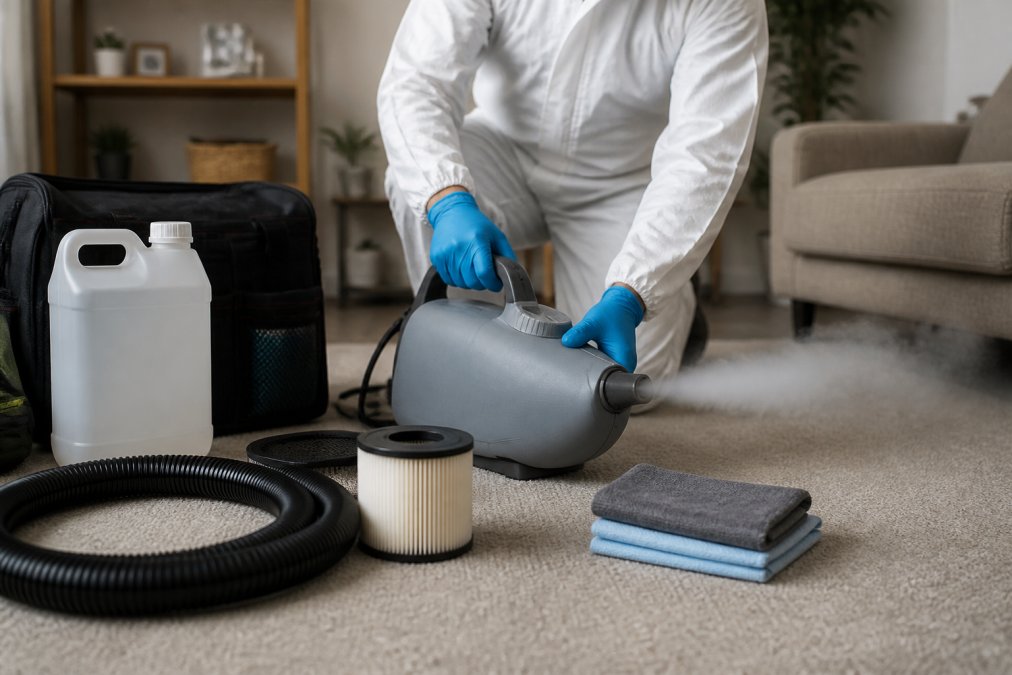
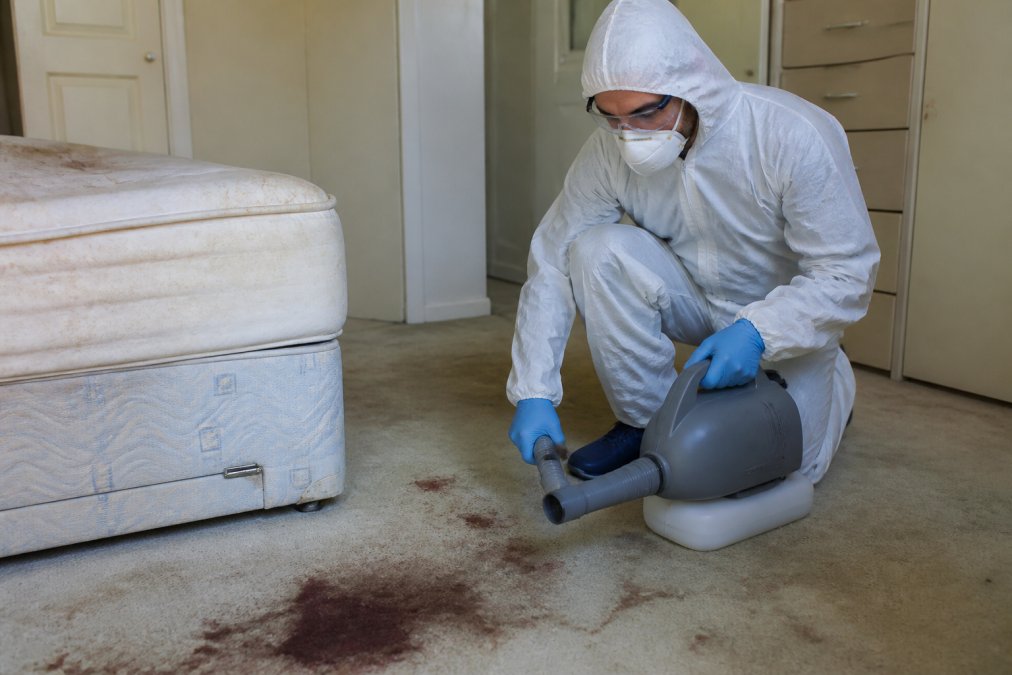
Fogging disperses a product into an area and may be used as one part of a wider process. The contractor should explain the product, target surfaces, access restrictions, ventilation, residue considerations and re-entry arrangements. “Fogging” is not a complete specification.
Ozone treatment
Ozone can damage health when inhaled and can affect some materials. Any proposed use requires controlled access, a suitable risk assessment, clear warning arrangements and a defined method for determining when the area may be re-entered. The Health and Safety Executive publishes specific guidance on ozone hazards and control measures.
Hydroxyl and air-filtration equipment
Equipment described as hydroxyl generation, air purification or filtration varies considerably. Ask what the unit does, whether it is suitable for occupied use, how long it will operate and what evidence supports the proposed application. Do not rely on a marketing label as proof of safety or effectiveness.
Oxidising or disinfecting products
Where chemicals or in-situ generated biocides are involved, the contractor should work from the relevant product information, safety data and risk assessment. HSE guidance for cleaners explains the need to assess and control exposure under COSHH.
Some odours return because the source remains, moisture is continuing or contamination has entered hidden materials. Ask what happens if the smell persists and whether further investigation or additional work would be charged separately.
Need Help With a Persistent Property Odour?
Tell TrustedCare what caused the smell, which rooms and materials are affected and what has already been tried. We can discuss the likely assessment and treatment options.
Insurance Is Not the Only Contractor Check
A policy is financial protection for certain insured events. It is not a competence certificate, a method statement or proof that a contractor has correctly diagnosed the odour source.
Before booking, ask the contractor to explain:
- The likely source. What evidence points to smoke, decomposition, sewage, dampness, animals, cooking residues or another cause?
- The affected materials. Which surfaces, furnishings, cavities or building materials may be holding the odour?
- The proposed stages. What will be removed, cleaned, treated, dried, sealed or left untouched?
- The safety controls. Must occupants, pets or staff leave, and what determines safe re-entry?
- The limitations. Which results cannot be guaranteed and what conditions could cause the odour to return?
- The waste route. How will contaminated or unsalvageable materials be contained and removed?
- The evidence. What photographs, treatment records or handover information will be supplied?
- The total price. Are repeat visits, equipment hire, waste, VAT and additional treatment included?
For related information, see TrustedCare’s guides to professional biohazard odour removal, smoke-odour removal methods and professional smoke-smell removal.
Scope, Condition Records and Handover
A written job record protects both the customer and the contractor. It distinguishes pre-existing staining, wear or damage from anything alleged after treatment and makes the agreed service easier to compare with the final invoice.
A clear pre-work record may include:
- photographs of the affected rooms and important contents;
- the suspected odour source and areas included;
- materials that may react to or be damaged by treatment;
- items that must be removed, protected or left in place;
- the treatment products and equipment proposed;
- occupancy, isolation, ventilation and re-entry arrangements;
- the expected number and duration of visits;
- pricing, exclusions and the process for approving additional work; and
- what evidence or completion information the customer will receive.
After the work
Ask the contractor to identify the areas treated, materials removed, products or equipment used, outstanding limitations and any re-entry or ventilation instructions. If drying is part of the job, moisture readings and monitoring may be more useful than an unsupported statement that the property is dry.
Most disputes begin with a difference between what the customer assumed and what the contractor priced. The quotation should say what is included, what is excluded and how extra work will be agreed before it proceeds.
What to Do if Damage Is Alleged
If you believe treatment has caused injury or property damage, act promptly without disturbing more than is necessary for safety.
- Stop the work or isolate the affected area where it is safe to do so.
- Take photographs and record when the problem was discovered.
- Notify the contractor in writing and describe the alleged damage clearly.
- Keep the quotation, invoices, messages, pre-work photographs and treatment records.
- Avoid disposing of relevant damaged items until the contractor or insurer has had a reasonable opportunity to inspect them, unless safety requires removal.
- Notify your own property insurer where the incident may fall within your policy or where it requires prompt reporting.
- For a significant loss, consider independent professional or legal advice.
The contractor should notify its insurer in accordance with its policy conditions. Do not assume that an insurance certificate guarantees that the insurer will accept liability; the insurer will assess the facts and policy wording.
Can Home or Business Insurance Pay for Odour Removal?
Sometimes, but the answer normally depends on the event that caused the odour rather than the smell alone. A policy may respond to insured fire, escape-of-water or other covered damage while excluding maintenance, gradual deterioration, wear, contamination or the original source.
Before authorising non-urgent work as part of a claim, ask the insurer:
- whether the cause is potentially covered;
- whether emergency mitigation can begin immediately;
- whether photographs or a loss adjuster’s visit are required first;
- whether the contractor must be approved;
- which parts of cleaning, removal, odour treatment and reinstatement are covered;
- whether damaged items must be retained for inspection; and
- what excess, limit or exclusion may apply.
In an urgent health or safety situation, take reasonable steps to protect people and prevent further damage, while keeping records and notifying the insurer as soon as possible.
Frequently Asked Questions
What insurance should a professional odour-removal contractor have?
Public liability is commonly expected, and employers’ liability is required for most businesses employing staff. Other cover may be relevant depending on the contractor’s advice, equipment, vehicles, treatment methods and pollution risk. The correct package is specific to the business and job.
Is public liability insurance compulsory for cleaners?
Public liability is not generally a statutory requirement for an ordinary cleaning business, but clients, landlords, managing agents and contracts may require it. Employers’ liability is the compulsory cover for most employers, subject to limited exemptions.
Does public liability automatically cover accidental damage?
No. A policy may cover certain third-party property-damage claims, but the response depends on the cause, declared business activities, exclusions, conditions, excess and other wording. Ask for clarification where the proposed treatment presents a specific risk.
Is professional indemnity insurance legally required for odour removal?
Not generally for a cleaning contractor. It may still be useful where the business provides professional advice, specifications or assessments that could lead to a claim for financial loss. Its scope varies and it should not be treated as a substitute for public liability.
Can I verify a contractor’s insurance certificate?
You can check that the insured name, policy dates, insurer, policy number and limits appear consistent. If there is doubt or the job is high risk, ask the contractor to obtain written confirmation from its broker or insurer that the relevant activity is covered.
Does insurance prove that the contractor is competent?
No. Insurance addresses certain financial risks. Competence should be assessed from the proposed method, relevant training and experience, risk controls, equipment, records, references where appropriate and the clarity of the written scope.
Should people and pets leave during odour treatment?
It depends on the products and equipment used. Some processes require the area to be unoccupied and controlled until treatment, ventilation and any required checks are complete. The contractor should give written access and re-entry instructions before work starts.
Will property insurance cover professional odour removal?
It may contribute where the odour results from an insured event, but cover varies. The insurer may distinguish between cleaning, removal, treatment and reinstatement, and exclusions may apply to gradual damage or maintenance. Ask the insurer before authorising non-urgent claim-related work.
General information only: this guide does not provide legal, insurance-broking or coverage advice. Policy terms and individual circumstances determine whether a claim is covered.
Discreet UK Assistance
Ask TrustedCare About Professional Odour Removal
Tell us what caused the odour, how long it has been present and which rooms or materials are affected. We can discuss the likely assessment, cleaning and treatment requirements.
You can also send an enquiry through the TrustedCare contact page.

TrustedCare Editorial Team publishes UK guidance on specialist cleaning and biohazard remediation, including after-death cleaning, flood restoration and contamination control. Content is written for homeowners, landlords and housing providers seeking clear, practical information.