Emergency Decontamination Training for Residential Staff
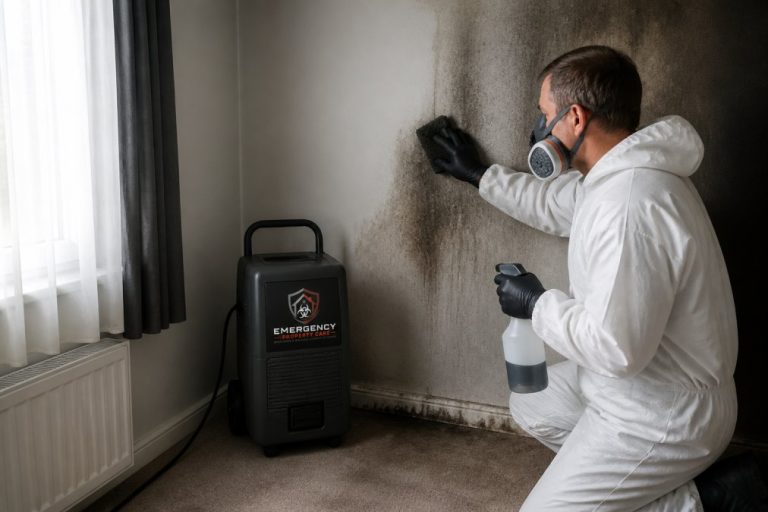
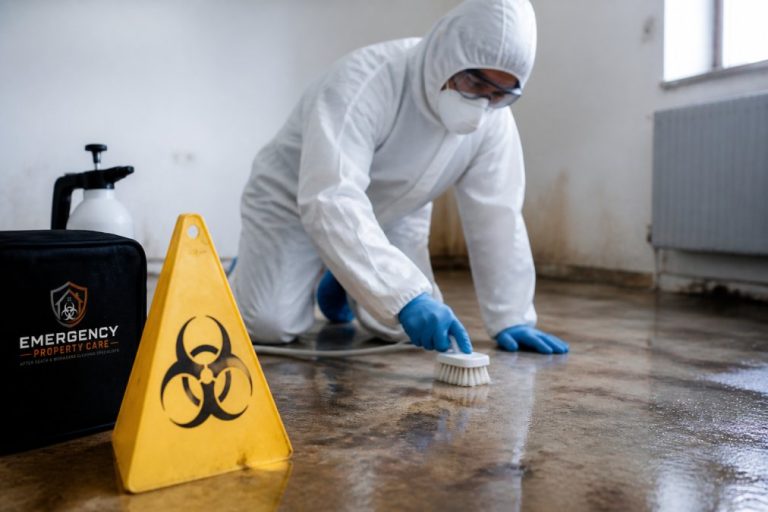
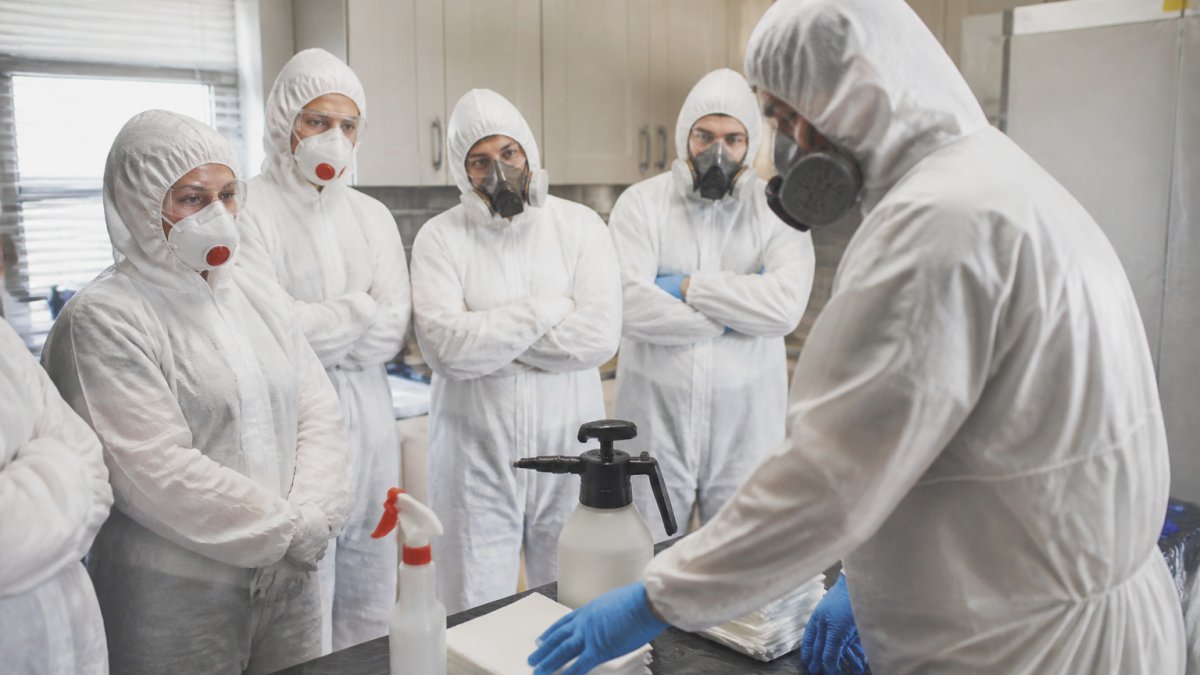
Emergency decontamination training for residential staff should focus on the first safe decisions: do not touch, keep people away, report what can be seen from a safe position and escalate when the hazard is outside the team’s competence. It should not encourage a caretaker, concierge or housing officer to tackle blood, sewage, sharps, decomposition or an unknown substance with an improvised cleaning kit.
What residential staff training should achieve
In a block of flats, supported-living property, student residence or housing portfolio, the first person to notice a contamination incident may not be a cleaner. It may be a concierge responding to an odour, a caretaker finding a discarded needle, a housing officer attending a welfare concern or a maintenance worker entering a plant room after a sewage leak.
Their training needs to match that role. The aim is recognition, safe withdrawal, access control, accurate reporting and timely escalation. A sensible programme also makes the limits clear: staff should only carry out a cleaning task when it has been assessed, it is within their competence and they have the correct equipment, instructions and waste route.
| Residential staff can be trained to | Specialists may be needed to |
|---|---|
| Recognise signs of a possible biological, chemical or sharps hazard | Identify the correct remediation method and establish controlled work zones |
| Keep residents, visitors and contractors away without blocking a safe escape route | Remove blood, bodily fluids, sewage, decomposition residue or porous contaminated materials |
| Record what is visible without disturbing the scene | Select and use task-specific PPE, RPE, disinfectants and specialist equipment |
| Contact managers, emergency services or an approved contractor | Package, classify and transfer waste through an appropriate authorised route |
| Support factual, privacy-conscious resident communication | Document the remediation and hand the area back when agreed criteria are met |
This approach protects staff and residents while reducing the chance of contamination being transferred to keys, radios, lift buttons, door handles, cleaning trolleys and communal floors.
A five-step incident response plan
There is no single statutory “five stages” formula for every residential decontamination job. A property-specific plan is more useful. The following five-step workflow gives staff a memorable structure while leaving technical decontamination to people who are trained and equipped for it.
Protect residents without oversharing
Resident messages should be calm and operational: which area is closed, which alternative route to use, how to request assistance and when another update is expected. Avoid naming a resident or sharing sensitive details. Where a corridor or lift lobby is affected, plan for disabled residents, carers, deliveries and emergency access rather than simply applying tape and walking away.
A useful first report
“Possible contamination outside Flat 12. No one has touched it. The east landing is being kept clear, the west stair remains available and no one is reporting symptoms. There is visible dark fluid across approximately one square metre and one discarded sharp nearby.”
Clear facts help the manager or specialist decide what resources are needed. Guessing at the substance does not.
Common hazards in residential buildings
Training should use scenarios that reflect the property. A general-needs tower block, supported-living scheme and student residence will not have identical risks, staffing or evacuation arrangements. Your assessment may need to cover:
- blood or bodily fluids following injury, violence or a welfare incident;
- an unattended death and possible decomposition contamination;
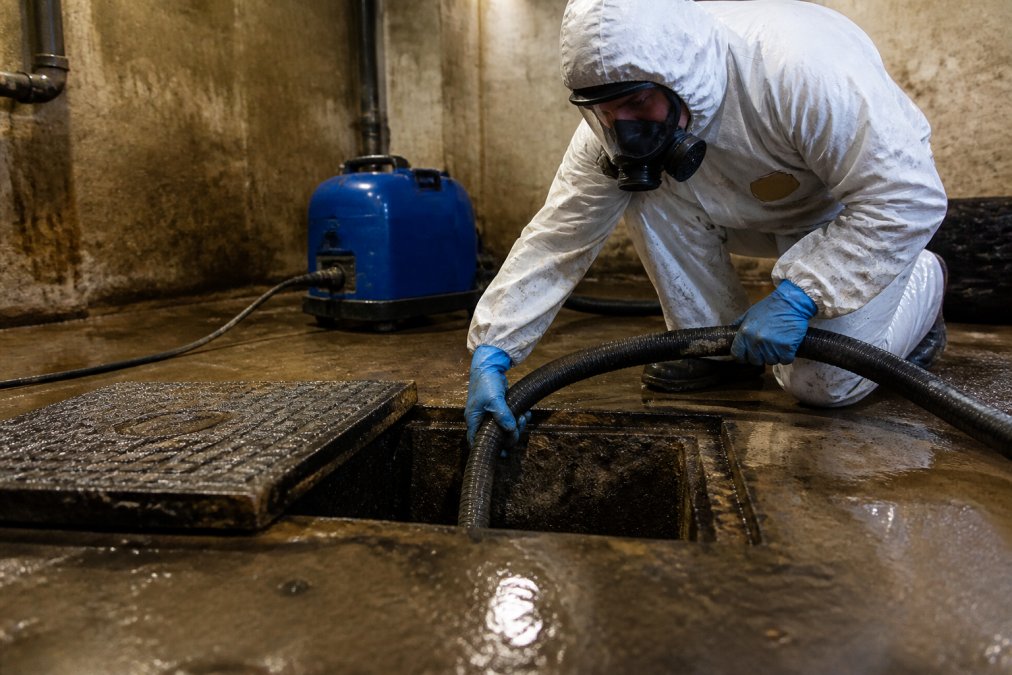
- sewage backing up through a toilet, drain or lower-ground area;
- discarded needles, blades or drug paraphernalia;
- animal waste, rodent contamination or severe hoarding conditions;
- floodwater that has mixed with sewage or other contaminants; and
- an unknown powder, liquid, gas or vapour.
An unusual odour can be an important warning sign, but odour alone does not identify the hazard or prove that infectious material is airborne. Staff should not investigate an unknown smell by entering a closed room. If a chemical, gas or vapour is suspected, keep away and use the emergency plan; a particulate respirator is not a general-purpose defence against gases or vapours.
Set thresholds before the incident
A written risk assessment should describe the limited tasks staff may perform and the conditions that trigger escalation. Size matters, but so do location, material, surface, ventilation, vulnerable occupants, presence of sharps and the chance that contamination has spread. A small blood spot on a non-porous surface is not the same job as blood absorbed into carpet or tracked through a lift.
For further planning, see TrustedCare’s guides to emergency decontamination in public housing, sewage backup safety and checking biohazard cleaning competence.
PPE, RPE and the limits of protection
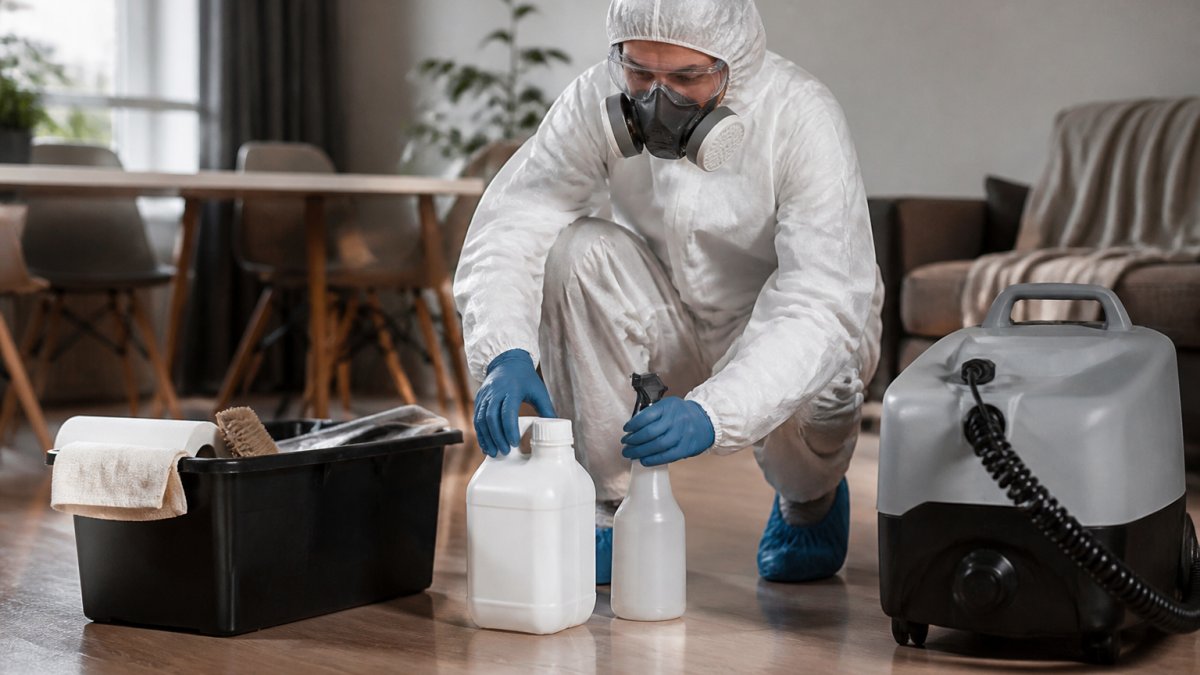
PPE must follow the risk assessment; it should not be a shopping list copied into every incident plan. The correct combination may include suitable gloves, eye or face protection, protective clothing and footwear. Selection depends on the contaminant, exposure route, cleaning method, duration, wearer and compatibility between items.
The Health and Safety Executive explains that PPE is used to control risks at work, but it sits behind more effective controls such as avoiding entry, isolating the area and using a competent contractor. Employers must provide suitable PPE where it is required, maintain it and give information, instruction and training.
Respiratory protection is not interchangeable
An FFP3 filtering facepiece filters particles when it is suitable for the task and worn correctly. It does not protect against every gas or vapour. Tight-fitting respiratory protective equipment depends on a seal to the face and requires an appropriate face-fit test for the individual and the selected mask. Facial hair or an incompatible combination of eyewear and mask can prevent a reliable seal.
If staff are expected to wear tight-fitting RPE for a defined task, the programme needs proper selection, face-fit testing, wearer checks, training, storage and supervision. Refer to the HSE’s fit-testing basics. Do not give an untested mask to an employee and send them into an unknown atmosphere.
Putting PPE on and taking it off
Removal can contaminate hands, clothing and surrounding surfaces. Where staff have an approved limited task, they need a practised sequence based on the manufacturer’s instructions and the risk assessment, plus a clean changing point, hand hygiene, supervision where appropriate and a known waste route. The order is not universal: it depends on the items and task, so a generic “reverse the donning order” rule is not enough.
Building an effective training programme
There is no universal half-day course or automatic annual refresher that makes every residential team competent. Training should be proportionate to the hazards, the employee’s duties and the complexity of the controls. Refresh it when the assessment changes, new equipment or substances are introduced, staff show uncertainty, or an incident exposes a gap.
Use drills that expose real weaknesses
A short scenario is often more valuable than another slide deck. Place a fictional incident at the most difficult location in the building: a lift threshold, single-access corridor, basement plant room or accessible entrance. Ask staff to demonstrate who takes control, how alternative routes are maintained, what information is recorded and who contacts the specialist.
Review whether out-of-hours staff can find the response plan, whether contractor details are current, whether residents who need assistance are accounted for and whether barrier equipment can be used without blocking an escape route. Record the corrective actions and repeat the drill when those actions are complete.
Legal duties, records and contaminated waste
Residential employers and dutyholders need arrangements that fit their work and premises. The Health and Safety at Work etc. Act 1974 provides the broad framework. The Management of Health and Safety at Work Regulations require suitable and sufficient assessment of employee and relevant non-employee risks. Where work can expose staff to substances hazardous to health—including biological agents—the COSHH framework may apply.
A practical compliance file may include the current risk assessment, emergency contacts, role-based training records, PPE or RPE arrangements, equipment checks, exposure and incident reports, contractor competence checks, waste transfer documentation and the final handback record.
Waste must be classified, not guessed
Not every used glove, coverall or cleaning cloth automatically has the same legal classification. The waste producer must identify the waste and its properties so it can be packaged, stored, described and transferred correctly. Contaminated items may require a specialist route, but the classification depends on what the waste contains and the applicable rules.
Do not put potentially infectious, chemically contaminated or sharps waste into a communal refuse bin. Keep it secure and obtain advice from a competent waste contractor. The government’s hazardous waste guidance is a useful starting point; requirements and terminology can vary across England, Scotland, Wales and Northern Ireland.
When to call a specialist decontamination team
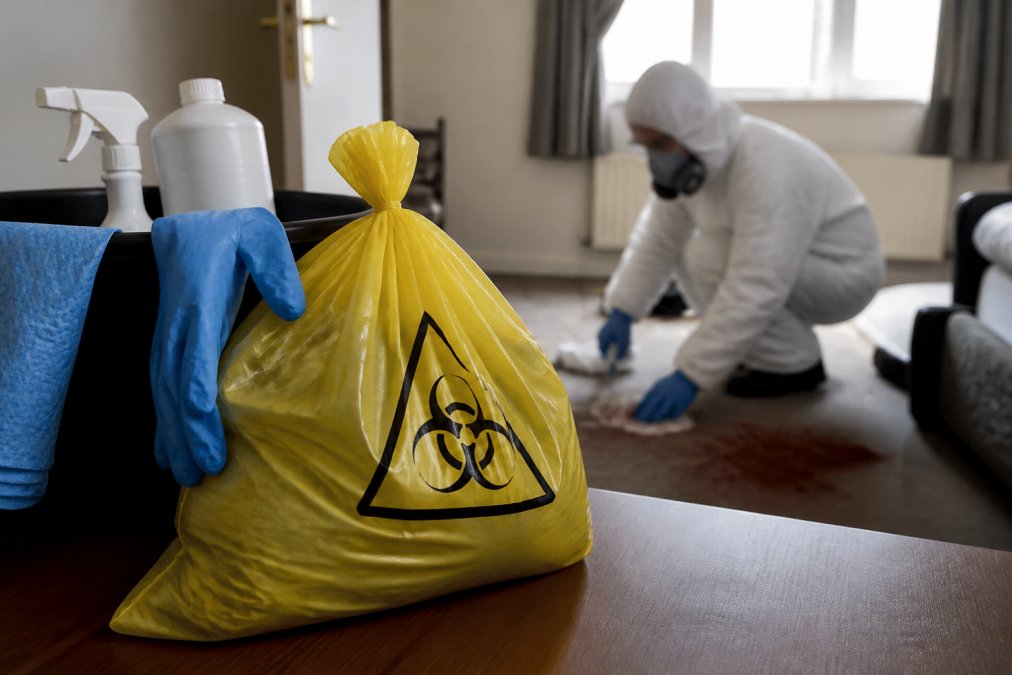
Escalation should be prompt when the hazard is unknown or the work exceeds the team’s assessed capability. Contact emergency services first where there is immediate danger or a medical emergency. A specialist cleaning contractor may be appropriate for:
- an unattended death, decomposition or extensive biological contamination;
- blood or bodily fluids spread across porous materials or multiple areas;
- sewage, contaminated floodwater or material entering voids and floor build-ups;
- sharps, drug paraphernalia or mixed hazards;
- a sensitive welfare, hoarding or safeguarding situation requiring careful access planning;
- an incident needing controlled removal, specialist equipment or documented waste handling; or
- any scene where staff cannot identify a safe method from the existing risk assessment.
When you call, share what can be observed safely, the property type, access restrictions, whether emergency services are involved, affected surfaces and any vulnerable occupants. Photographs may help if they can be taken without entering or compromising privacy.
You can also read about professional biohazard cleaning, when sewage cleanup needs specialist help and what to check before appointing a remediation contractor.
Need a safe plan for a contamination incident?
TrustedCare handles sensitive biohazard and decontamination enquiries. Tell the team what has happened, where the contamination is located and whether the area has been isolated. You will receive practical next-step guidance based on the information available.
Frequently asked questions
What should emergency decontamination training cover?
It should cover hazard recognition, safe withdrawal, area restriction, reporting, emergency-service thresholds, role limits, resident communication and the site’s escalation process. Staff assigned a specific limited cleaning task also need practical instruction in the approved method, equipment, PPE, hygiene and waste arrangements.
How often should residential staff receive refresher training?
Use the risk assessment and performance evidence rather than relying on a universal interval. Refresh training when duties, equipment, substances or procedures change; when staff cannot demonstrate the process; or after an incident or drill identifies a weakness. Planned periodic practice can help keep rarely used emergency steps familiar.
Can a caretaker clean a small amount of blood?
Only if the employer has assessed the task, defined its limits, provided a safe procedure and suitable equipment, trained the person and arranged the correct waste route. Sharps, porous contamination, splashing, unknown sources or contamination beyond the procedure should trigger escalation.
Does an FFP3 mask protect against decomposition odour or chemicals?
No mask should be selected from odour alone. An FFP3 filtering facepiece is designed for particles and is not a general defence against gases or vapours. Tight-fitting RPE also depends on correct selection, face-fit testing and wearer checks. Unknown atmospheres require withdrawal and competent assessment.
Should staff move a discarded needle into a sharps bin?
Only staff specifically trained, equipped and authorised under the site procedure should retrieve sharps. Other staff should stop access, avoid touching the item and report its exact location. Never recap, bend or carry a sharp by hand.
When should a residential manager call TrustedCare?
Call when biological contamination, sewage, decomposition, sharps or a mixed hazard is outside the team’s assessed capability, or when you need to discuss professional remediation. For injury, acute illness, fire, gas, suspicious substances or immediate danger, contact the appropriate emergency service first.

TrustedCare Editorial Team publishes UK guidance on specialist cleaning and biohazard remediation, including after-death cleaning, flood restoration and contamination control. Content is written for homeowners, landlords and housing providers seeking clear, practical information.