Professional Biohazard Odour Removal: Is It Worth It?
Is Professional Biohazard Odour Removal Worth It?
When biological contamination has reached absorbent materials or concealed surfaces, treating the source professionally can prevent the smell from returning.
Professional biohazard odour removal is worth considering when the smell comes from blood, bodily fluids, decomposition, sewage, animal contamination or another biological source that ordinary cleaning cannot reach. It may be unnecessary where the problem is a routine household odour with no biological contamination.
The key question is not how strong the smell is. It is whether the material causing it remains in the property. Air fresheners, fragrances and surface cleaning may change the smell temporarily, but they cannot resolve contamination beneath flooring, inside furnishings or within other absorbent materials.
When Is Professional Biohazard Odour Removal Worth It?
There is a known biological source
Blood, bodily fluids, decomposition, sewage or animal waste has affected the property.
Absorbent materials are affected
Contamination may have reached carpet, underlay, mattresses, soft furniture, timber or subflooring.
The smell returns
The room smells again after ventilation or surface cleaning, suggesting that the original source remains.
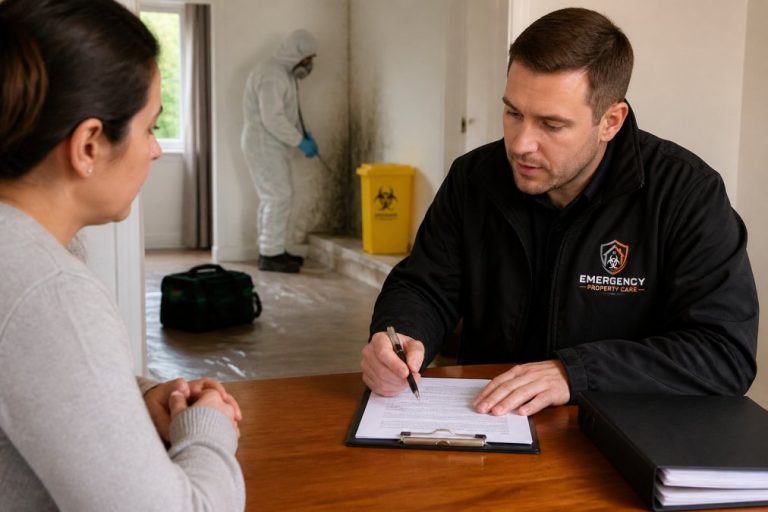
Professional assessment is also sensible when the affected area is concealed, the property must be re-let or handed back, vulnerable occupants use the building, or contaminated material may require controlled handling. Following an unattended death, specialist work may be necessary even when the visible area appears small because fluids can pass through several layers of flooring.
Not every unpleasant smell needs a biohazard cleaner. Cooking odours, tobacco smoke, pet smells without widespread waste, damp and drainage faults may require a different service. A responsible provider should identify the likely cause before recommending treatment.
Why Biohazard Odours Can Return After Cleaning
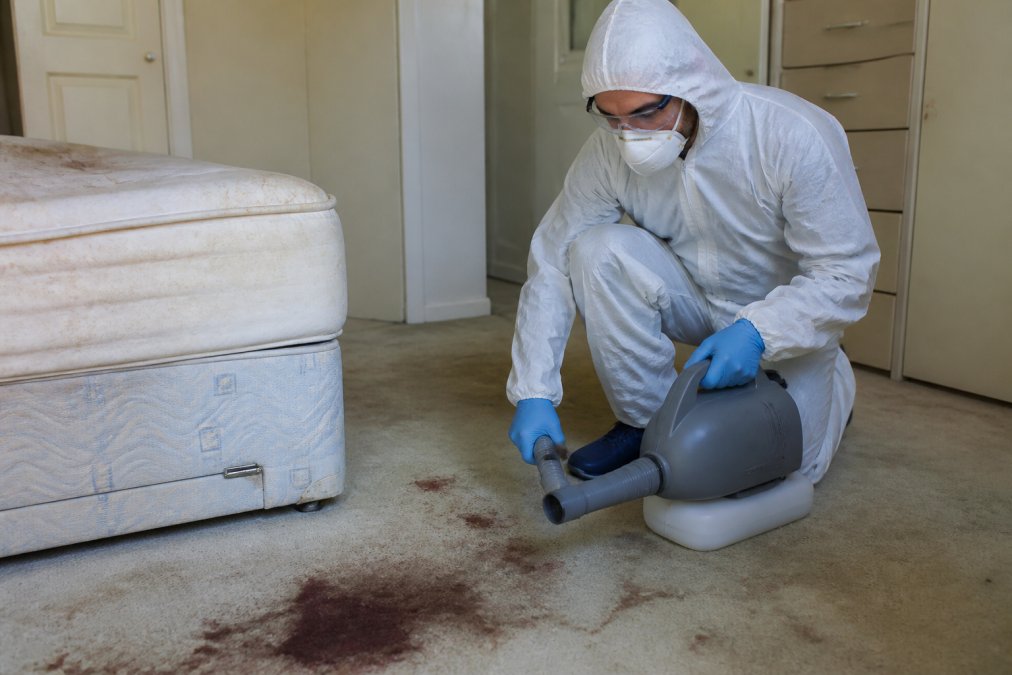
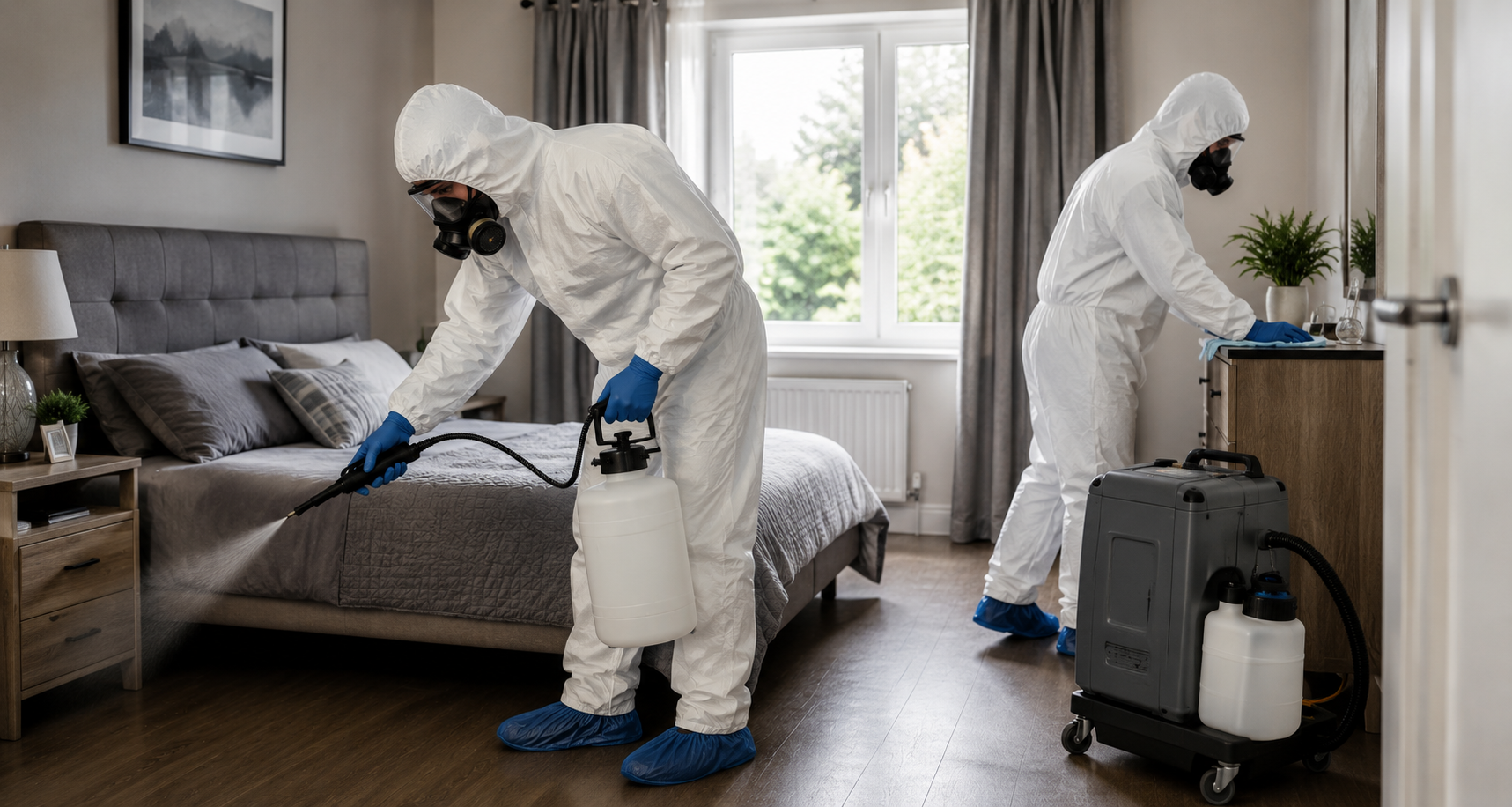
Ordinary cleaning deals mainly with accessible surfaces. Biological fluids can soak through carpet into underlay, pass between floorboards, enter joints around skirting or remain inside a mattress or upholstered item. The surface may look clean while affected material remains underneath.
Temperature, ventilation and humidity can change how noticeable an odour is. This is why a room may seem improved immediately after cleaning and smell again later. The answer is to find and deal with the remaining source, rather than repeatedly adding fragrance or applying more liquid to the visible surface.
Painting, sealing or covering an affected area before the source is assessed may make later investigation harder. These treatments may form part of wider property restoration, but they should follow appropriate source removal and cleaning.
How Professional Biohazard Odour Removal Works
The exact method varies. A small blood spill on a suitable sealed surface requires a different response from decomposition contamination that has entered flooring. A typical process may include:
- Initial discussion and assessment. The circumstances, property type, affected rooms, visible contamination and odour are reviewed.
- Controlled access. The affected area is kept separate from people who do not need to enter. Additional containment is used where the assessment shows it is required.
- Locating the source. Furniture, flooring and adjoining materials may need inspection to establish how far contamination has travelled.
- Removing unsuitable materials. Items that cannot reasonably be cleaned may need controlled removal so surfaces beneath them can be reached.
- Cleaning and appropriate treatment. Suitable surfaces are cleaned and treated using products and methods chosen for the material and contamination involved.
- Odour treatment. Further treatment may be used after the physical source has been reduced or removed. It does not replace source removal.
- Drying and review. Wet materials may need drying or removal. The completed work is then inspected and any remaining repair requirements explained.
The Health and Safety Executive’s COSHH guidance explains why workplace exposure to substances hazardous to health must be assessed and controlled. The controls, protective equipment and products used should follow the actual risk assessment for the job.
Unsure Whether the Odour Needs Specialist Cleaning?
Tell us what happened, the property postcode, where the smell is strongest and which materials may be affected. We can discuss the likely next step confidentially.
Biohazard Cleaning Compared With Standard Deep Cleaning
| Point | Standard deep cleaning | Biohazard cleaning |
|---|---|---|
| Primary purpose | Removing ordinary dirt, grease and general soiling. | Dealing with identified or suspected biological contamination. |
| Assessment | Usually based on visible condition and the requested cleaning tasks. | Considers the source, routes of contamination, affected materials and exposure risks. |
| Access and controls | Normal arrangements for occupied or empty properties. | Access may be restricted and the affected area may need to be kept separate. |
| Materials | Most items are cleaned in place where practical. | Absorbent materials that cannot be treated effectively may need removal. |
| Waste | Usually ordinary household or commercial cleaning waste. | Waste is assessed and handled according to what it contains and the applicable requirements. |
| Completion | Normally based on the agreed cleaning standard. | Includes review of the treated area and advice about any remaining removal or repair work. |
This does not mean every biohazard job requires the same equipment or level of containment. The response should be proportionate to the type and extent of contamination found.
When DIY Odour Removal Is Unsuitable
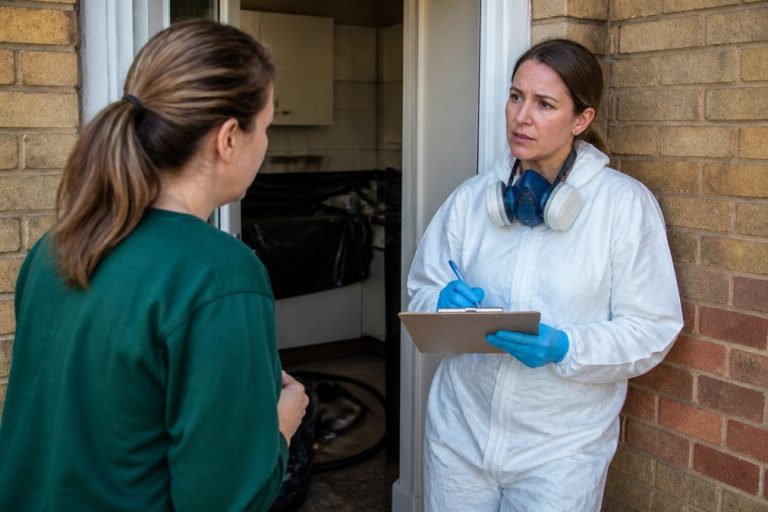
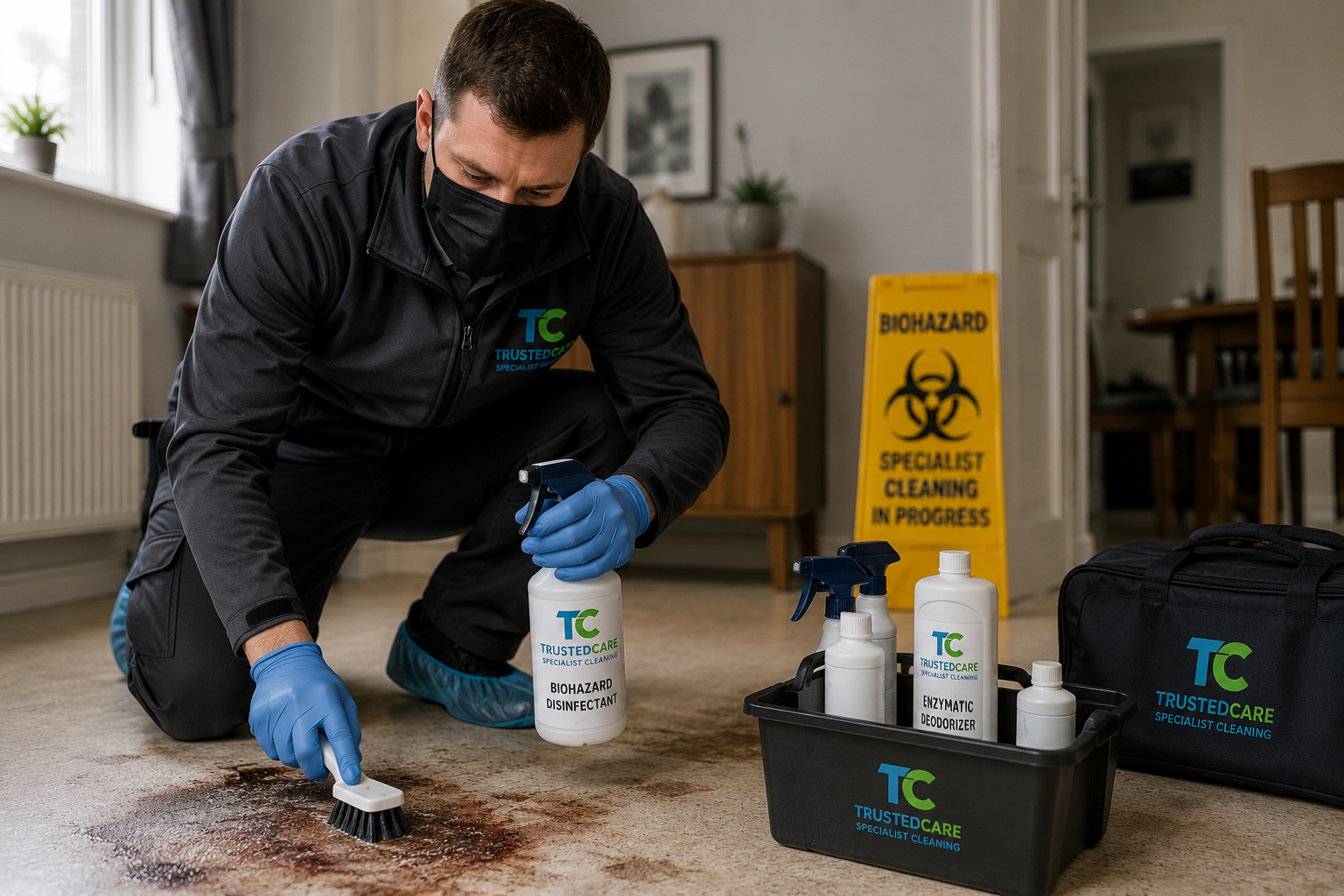
Do not attempt to clean an area yourself when blood, bodily fluids, decomposition residue, sewage or extensive animal waste has entered porous materials, the source is unknown, sharps may be present, or contaminated items would need to be lifted and removed.
Domestic vacuum cleaners, carpet machines and reusable mops can spread contamination to equipment and other rooms. Excessive wetting may also carry residue further into flooring or furnishings. Keep people and pets away, avoid disturbing the area and ask for advice before moving affected contents.
Small, everyday spills with no wider contamination may be manageable using the product or surface manufacturer’s instructions and appropriate hygiene precautions. If there is uncertainty about the source or the affected material, an assessment is safer than repeated trial-and-error cleaning.
How Long Does Biohazard Odour Removal Take?
There is no reliable standard duration. A contained incident on accessible surfaces may be dealt with much more quickly than contamination beneath flooring or inside furnishings. The time required can also change once affected layers are lifted and the full extent becomes visible.
The main factors are the number of affected areas, material penetration, access, removal and waste requirements, drying needs and whether other contractors must complete repairs. TrustedCare confirms the likely schedule after the scope is understood.
What Affects the Cost?
Professional biohazard odour removal is priced according to the work required, not the smell alone. Important cost factors include:
- the type and extent of contamination
- the number and size of affected areas
- whether carpet, underlay, furniture, flooring or other materials need removal
- access, parking and property layout
- controlled handling and waste requirements
- odour-treatment and drying requirements
- whether further inspection is needed after affected materials are removed
A quotation should explain the agreed scope and any assumptions. A price given from a short phone description can only be provisional when the extent beneath surfaces is unknown. For related pricing information, see our guide to emergency biohazard cleaning costs.
Insurance and Documentation
Some buildings, contents or landlord policies may contribute to cleaning or property remediation, but cover depends on the cause of the incident, the policy wording, exclusions, excess and insurer approval. Do not assume the work is covered.
Contact the insurer promptly and ask whether it requires photographs, a loss-adjuster visit or approval before significant work and disposal begin. Where safe, record the affected rooms and damaged contents. Retain quotations, invoices and any job documentation supplied.
Landlords and property managers should also record the cleaning and any follow-on repairs before re-letting. The appropriate evidence depends on the incident and the agreed scope; air sampling is not an automatic requirement for every biohazard odour job.
What to Ask Before Instructing a Biohazard Cleaner
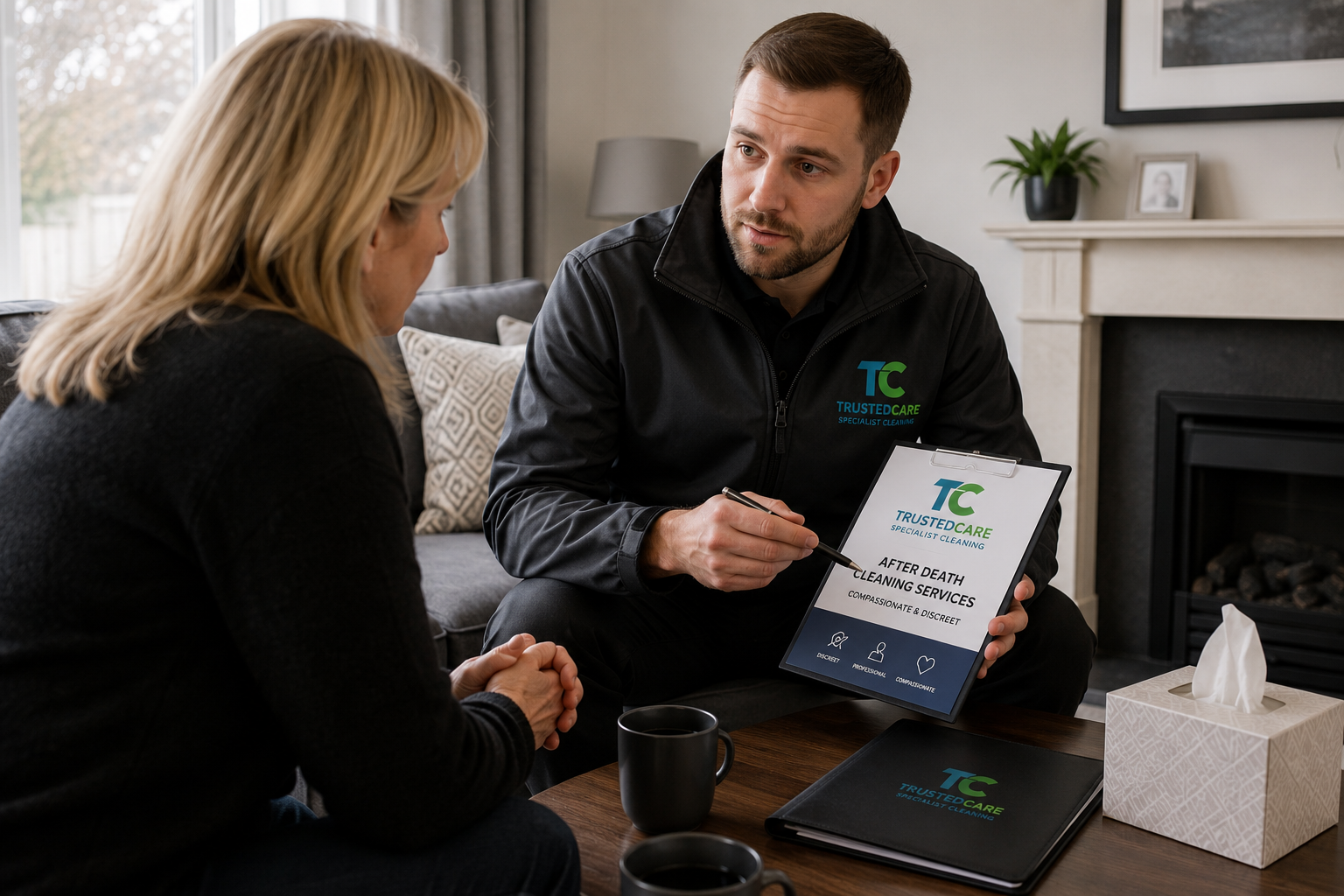
- What information do you need to assess the source and affected materials?
- What work is included in the quotation?
- Which items or materials may need removal, and why?
- How will affected waste be handled?
- What odour treatment is proposed after source cleaning?
- What documentation will be supplied when the agreed work is complete?
- Which repairs or services fall outside the cleaning scope?
Be cautious if a provider promises to remove every odour without assessing the property, suggests fragrance or ozone as a substitute for source removal, or cannot explain what is included in the price.
Learn more about choosing a biohazard remediation provider, biohazard cleaning in the UK and our after-death cleaning service. For sewage contamination, read when professional sewage cleaning is necessary.
Frequently Asked Questions
Why does a biohazard odour return after ordinary cleaning?
The contamination may remain beneath the cleaned surface or inside absorbent materials such as carpet, underlay, timber, mattresses or upholstery. Ventilation and fragrance can reduce the smell temporarily without dealing with its source.
Can odour treatment remove decomposition smells permanently?
Results depend on finding and dealing with the source and affected materials. Odour treatment can support the process after source removal and cleaning, but it should not be presented as a substitute for them.
Is ozone necessary for biohazard odour removal?
No single treatment is necessary or suitable for every job. Ozone presents exposure risks and should not be treated as a DIY solution. The method should follow the assessment, and source removal remains the priority.
How much does professional biohazard odour removal cost?
Cost depends on the contamination, affected area, material removal, access, waste, drying and treatment required. An assessment or detailed information is normally needed before the scope and price can be confirmed.
Will insurance pay for biohazard odour removal?
It may contribute in some circumstances, but cover varies. Ask the insurer to confirm what the policy covers and whether approval or a loss-adjuster inspection is required before work begins.
Can I stay in the property during the work?
This depends on the location and extent of contamination and the controls required. People should not enter the affected area during cleaning. TrustedCare can discuss access after assessing the individual situation.
Speak to TrustedCare
TrustedCare provides discreet biohazard and odour-source cleaning across England, Scotland and Wales. Contact us with the postcode and a brief description for practical advice and a quotation.

TrustedCare Editorial Team publishes UK guidance on specialist cleaning and biohazard remediation, including after-death cleaning, flood restoration and contamination control. Content is written for homeowners, landlords and housing providers seeking clear, practical information.